Aa
  • Read, Watch, Listen
  • TJI Series
  • Community Action
  • Events
  • Zedi
Follow us and continue the conversation
  • LinkedIn
  • Instagram
  • FaceBook
  • X
  • YouTube
Test yourself with the TJI Quiz!

Adjust size of text

Aa

Follow us and continue the conversation

  • LinkedIn
  • Instagram
  • FaceBook
  • X
  • YouTube

Your saved articles

You haven't saved any articles

What are you looking for?

Original reporting, insightful analysis and diverse views, delivered straight to your inbox

  • LinkedIn
  • Instagram
  • FaceBook
  • X
  • YouTube
Your support fuels our mission to inform, entertain and inspire.

The Jewish Independent is bound by the Standards of Practice of the Australian Press Council. If you believe the Standards may have been breached, you may approach The Jewish Independent or make a complaint to the Australian Press Council in writing at www.presscouncil.org.au. The Council may also be contacted on 1800 025 712.

  • Our Story
  • Contact us
  • Our Team
  • Support us
  • Guidelines
  • Pitch your idea
  • Republishing us
  • Community Action
  • Our Awards
  • LinkedIn
  • Instagram
  • FaceBook
  • X
  • YouTube
Aboriginal FlagTorres Strait Islanders Flag

The Jewish Independent acknowledges Aboriginal and Torres Strait Islander peoples as the Traditional Owners and Custodians of Country throughout Australia. We pay our respects to Elders past and present, and strive to honour their rich history of storytelling in our work and mission.

© The Jewish Independent 2026All Rights Reserved
Website design and development by Your Creative, MelbourneTerms & ConditionsPrivacy Policy
HomeRead, Watch, ListenAustralia
FeatureAustralia

Are we exaggerating the extent of antisemitism?

Michael Liffman
Print this
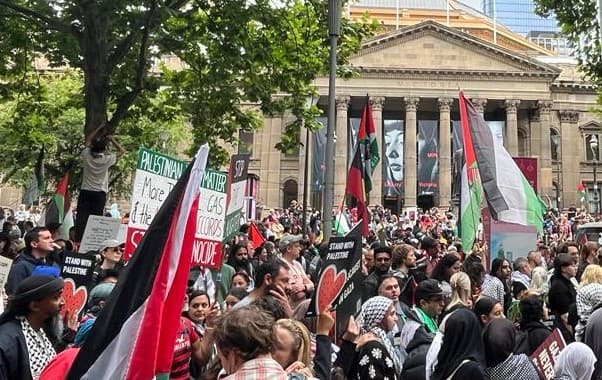
Many people and flags in front of a building with columns

Pro-Palestinians demonstrators in front of the State Library of Victoria, where a Hebrew manuscripts exhibition is not being advertised because of fear of attacks (Sidra Kranz Moshinsky)

Published: 14 December 2023

Last updated: 5 March 2024

MICHAEL LIFFMAN considers to what extent visceral antisemitic impulses are embedded in the pro-Palestinian movement.

As a secular Jew whose parents were forever grateful for the refuge they found in Australia from Nazi Germany in 1939, I have always thought this to be the safest country in which to live as a Jew. While events since 7 October 2023 have led me to ask if that is still the case, on balance I believe it is.

It is beyond doubt that there has been an increase in disturbing, offensive and even dangerous incidents that can only be described as antisemitic. Many of these derive from the licence social media gives for the expression of enduring views that in earlier times would have found no outlet and little wider support, and from the global drift to polarisation and populism.

The question I am grappling with, however, is to what extent the more widespread escalation of strident manifestations of pro-Palestinian support in recent weeks is indeed evidence of an alarming rebirth of antisemitism, as many now claim.

Certainly, in my view, that support is often naively wrong-headed, historically ill-informed, based on values or intellectual frameworks I don’t share, and captured by polarised and binary thinking. But is that, of itself, evidence of the re-emergence of the deep groundswell of latent antisemitism that has dogged Jewish history for 2000 years?
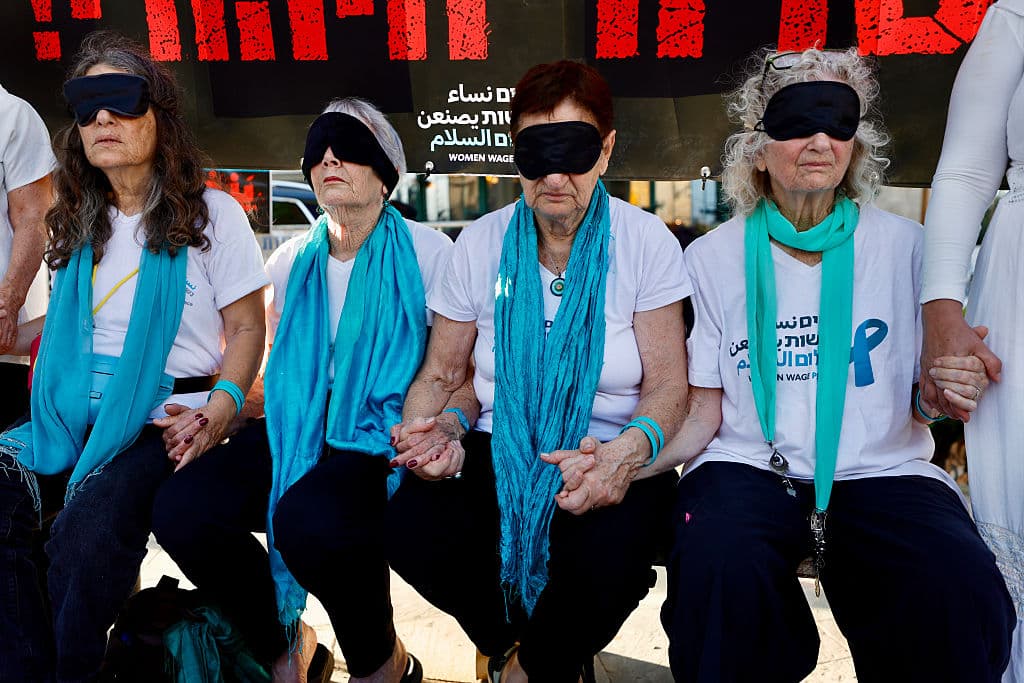

We need a more sophisticated and nuanced vocabulary to properly understand what we commonly describe as ‘antisemitism’.

It seems to me that, like the observation that the Inuit of Canada have multiple words to recognise the various forms of what we understand simply as ‘snow’, we need a more sophisticated and nuanced vocabulary to properly understand what we commonly describe as ‘antisemitism’.

So, what are the various motivations and perspectives that animate the pro-Palestinian momentum? It is not difficult to posit several.

Possibly the most obvious and potent is the ‘tribal’ one. People whose origins, ancestors, religion or ethnicity are located in one side of a geographic conflict will most probably, although not inevitably, have a strong loyalty to that position. Others will have had personal or professional relationships or experiences that have generated a quasi-tribal affinity to the Palestinian cause.

Another is what I would call the ‘empathic’ motivation: the natural, human and commendable concern at the suffering of others. 

Explicitly antisemitic views are rarely evident at rallies, other than by fringe extremists, and are disavowed by their organisers.

Because we all relate to suffering, especially when shown so graphically and constantly in the media, this motivation can readily galvanise masses and very emotional solidarity.

Related to this is the ‘social justice’ perspective, based on real concerns about rights, equality, and the like.

At the same time, others on the progressive left are reshaping – and arguably distorting – this perspective to fit the more ideological framework, borne of post-modernism, intersectionality and liberationist thinking that imposes a formulaic view about colonial, settler oppression onto complex and wicked problems.

Also, though subtle and rarely recognised, is what might be described as ‘philosemitism’. Almost the reverse of antisemitism, this view admires, even envies, Jews. It reflects post-Holocaust guilt, as well as other perceptions, and has high, elevated expectations of Jews. It finds expression in the singular criticism of Israel, compared to other nations, that says, “We would have expected better of Jews and of Israel.”

It is these – often laudable – motivations that I would be cautious in subsuming under the charge of antisemitism, although they can be conflated with, hide, or give cover to it.

In contrast, other motivations can more readily be described as indeed antisemitic. They are easily recognised as, tragically, history abounds in them, so much so that they require little elaboration.

The repudiation of antisemitism by demonstrators would be more convincing if their rallies took place outside Israeli embassies rather than in city streets and Jewish areas.

The oldest, of course, is rooted in deep history and theology: Jews as Christ-killers. Others are borne of the need to scapegoat, the wish to exclude, acceptance of pernicious and ignorant prejudices, and a parochial discomfort with cosmopolitanism. The newest is the Islamist Jihadism from which Hamas derives.

Australia has little history of these forms of antisemitism, or, if it does, their expression has been largely confined to negative stereotypes and social attitudes rather than to virulent hostility.

Explicitly antisemitic views are rarely evident at rallies, other than by fringe extremists, and are disavowed by their organisers. That said, the repudiation of antisemitism by demonstrators would be more convincing if their rallies took place outside Israeli embassies rather than in city streets and Jewish areas to indicate that their quarrel was with the policies of the government of Israel rather than the Jewish community at large.

At face value, then, one could suggest that the description of the pro-Palestinian movement as antisemitic, at least in Australia, might be exaggerated. Moreover, this exaggeration is perhaps ill-advised as it risks antagonising people of good faith and fueling the problem it identifies.

However – and there is always a ‘however’ in speculations such as this – there is a less reassuring counter-argument.

Might it be – as many believe – that, nonetheless, behind the pro-Palestinian motivations that do not necessarily appear be antisemitic are the less conscious but visceral antisemitic impulses that our history shows are deeply embedded in Christian and probably Islamic DNA, and that surface from time to time at the immense cost to the world’s Jews?

In support of this is the ‘double standards’ observation, often made by critics of the pro-Palestine movement, that the movement is disturbingly selective in the way it singles out for its outrage the conduct of Israel while ignoring far worse conduct, causing vastly more injustice to far more people, in so many other parts of the world.

This is a potent observation that points to a fundamental vulnerability in the moral and intellectual position of the pro-Palestine movement. Even so, I would prefer to think it is explained by the central place of Jews in the history and psyche of the western world, and even an element of philosemitism, rather than by antisemitism. 

Unhappily, however, history seems to have vindicated the pessimism of those who have never doubted the permanence of antisemitism rather than the optimism of those who have downplayed it.

This article was first published by Rationale Magazine.

RELATED STORIES

The university presidents were right and American Jews’ moral panic is wrong (The Forward)
Joining a right-wing war on higher education will not make us any safer.

US antisemitism up 337%, Australia up 591% says ADL (Times of Israel)
Antisemitic incidents in the US hit an unprecedented record in the two months since Hamas’s shock attack on Israel on October 7, the Anti-Defamation League announced Monday.

You might also like
  • Western ‘Palestinianism’ colonises everything – and hurts Palestinians
    Andres Spokoiny
  • Rachel Moshel: Creating a space for Jewish art and joy
    Gideon Cohen
  • Israel is cementing its control over the West Bank and East Jerusalem while the world is distracted
    Martin Kear
logomark.67a07ee3
We believe in the free flow of information

Republish our articles for free, online or in print, by using our Creative Commons licence

You might also like

    chanukah by the sea bondi
    Royal CommissionOpinionAustralia

    Safety not just security: the last word to the Royal Commission

    Yehoram Ulman 1
    Jewish word map
    FeatureArts & Culture

    Was the barmi a shemozzle? How Australians use Jewish words 

    Caroline Hendy & Emma Breslow 1
    Commissioner Virginia Bell
    Royal CommissionAnalysisAustralia

    Now is the time for the Royal Commission to deliver, not be politicised

    Dean Sherr 2

About the author

Michael Liffman

Michael Liffman

Associate Professor Michael Liffman is Director, Asia Pacific Centre for Social Investment and Philanthropy at Swinburne University.

More from the author

OpinionWorld

The double-edged sword of ‘Jewcentricity’

OpinionIsrael

15 things I believe about Israel-Palestine