Aa
  • Read, Watch, Listen
  • TJI Series
  • Community Action
  • Events
  • Zedi
Follow us and continue the conversation
  • LinkedIn
  • Instagram
  • FaceBook
  • X
  • YouTube
Test yourself with the TJI Quiz!

Adjust size of text

Aa

Follow us and continue the conversation

  • LinkedIn
  • Instagram
  • FaceBook
  • X
  • YouTube

Your saved articles

You haven't saved any articles

What are you looking for?

Original reporting, insightful analysis and diverse views, delivered straight to your inbox

  • LinkedIn
  • Instagram
  • FaceBook
  • X
  • YouTube
Your support fuels our mission to inform, entertain and inspire.

The Jewish Independent is bound by the Standards of Practice of the Australian Press Council. If you believe the Standards may have been breached, you may approach The Jewish Independent or make a complaint to the Australian Press Council in writing at www.presscouncil.org.au. The Council may also be contacted on 1800 025 712.

  • Our Story
  • Contact us
  • Our Team
  • Support us
  • Guidelines
  • Pitch your idea
  • Republishing us
  • Community Action
  • Our Awards
  • LinkedIn
  • Instagram
  • FaceBook
  • X
  • YouTube
Aboriginal FlagTorres Strait Islanders Flag

The Jewish Independent acknowledges Aboriginal and Torres Strait Islander peoples as the Traditional Owners and Custodians of Country throughout Australia. We pay our respects to Elders past and present, and strive to honour their rich history of storytelling in our work and mission.

© The Jewish Independent 2026All Rights Reserved
Website design and development by Your Creative, MelbourneTerms & ConditionsPrivacy Policy
HomeRead, Watch, ListenAustralia
AnalysisAustralia

October 7 profoundly changed the Australian Jewish community

October 7 and the Gaza war challenged the confident integration which has defined the Australian Jewish community.
Vanina Vaisman-Levy
Print this
A Palestinian flag being waved in front of a crowd with the Sydney opera house in the background.

Demonstrators on October 9, 2023 wave Palestinain flags outside the Sydney Opera House, which was lit in blue and white to express solidarity with Israel following the October 7 Hamas attack (TJI)

Published: 6 October 2025

Last updated: 7 October 2025

For nearly two and a half centuries, Australian Jewry has been shaped by migration, inclusion and civic engagement. From the earliest convicts on the First Fleet to free settlers, Holocaust survivors and later arrivals, each wave carried its own challenges, yet together they forged a community that flourished while remaining deeply connected to its heritage.

This dynamic enabled a robust cultural presence while becoming an integral part of the nation’s multicultural fabric.

Out of this long-standing history of stability emerged a distinctive “DNA”: a synthesis of security, belonging, and societal participation that seemed unshakable. This is not to suggest that antisemitism was absent from Australia’s past, but such episodes were generally less pronounced and did not fundamentally undermine the community’s sense of personal safety. The resulting balance fostered lasting confidence in an established system that promised both acceptance and opportunity.

That equilibrium was profoundly upended on 7 October 2023. The atrocities perpetrated by Hamas reverberated far beyond Israel’s borders, reaching diaspora populations across the globe. For Australian Jews, the immediacy of the tragedy, with family members and friends directly affected, was compounded by its aftermath, as local discourse and political reactions exposed fissures in the covenant of trust with the society they had embraced for generations.

For a community whose DNA had been defined by its confident integration, this dislocation has been particularly destabilising.
 These events punctured an entrenched assumption that the security at home could remain impervious to the turbulence of global antisemitism, leaving them to grapple with a rapidly transformed landscape.

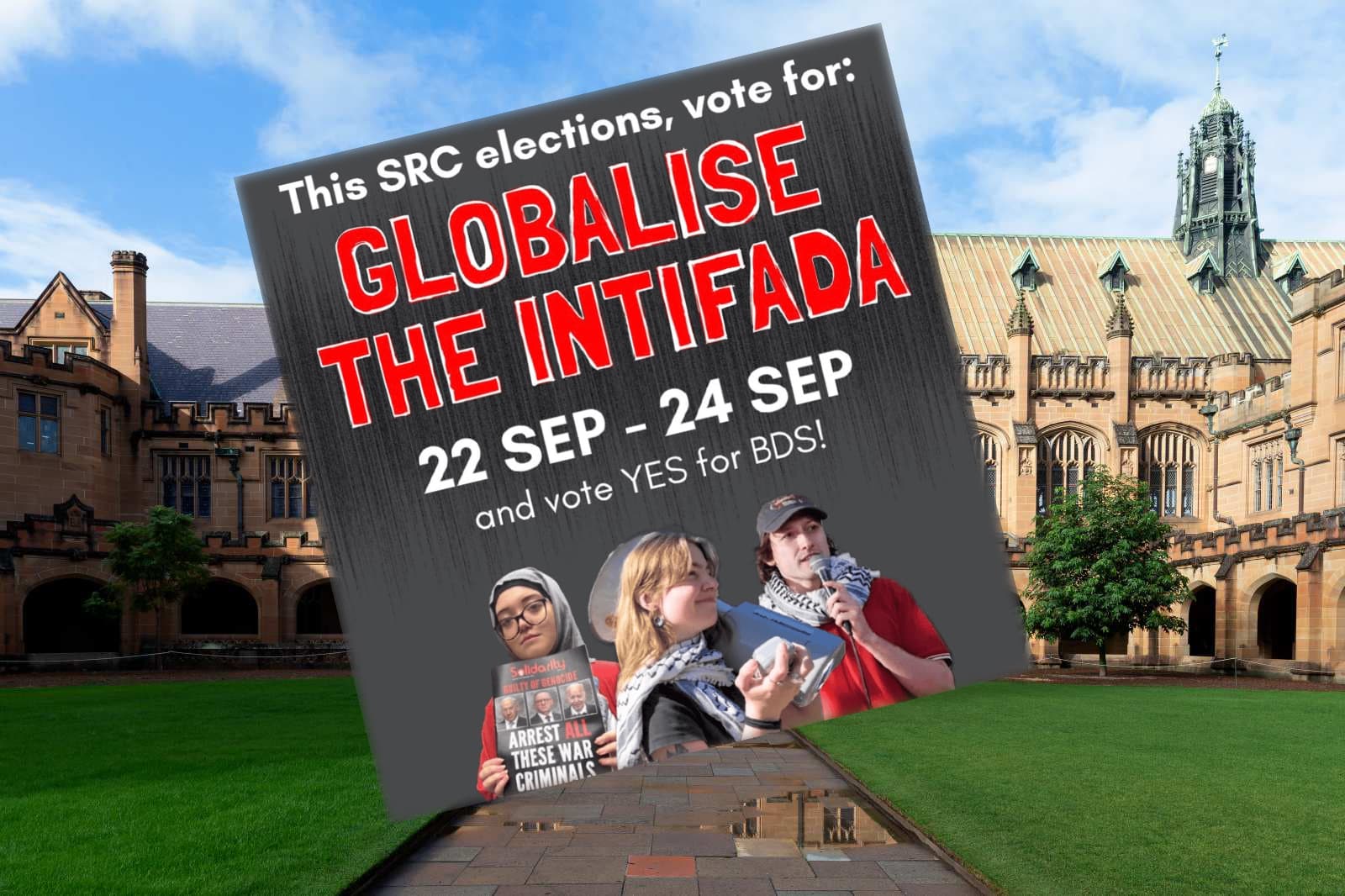
What emerged was a rupture, not only emotional, but also striking to its social foundation. The carefully cultivated sense of belonging suddenly appeared fragile. Mass demonstrations in Australia’s cities dismissed or denied Jewish grief, and university campuses, spaces meant for learning and the exchange of ideas, were transformed into unsafe and unwelcoming environments for Jewish students and staff. A surge of vitriol in online platforms and public discourse left many with an acute sense of vulnerability, heightened by institutional silences that seemed to betray the long-standing trust in the broader societal framework.

For a community whose DNA had been defined by its confident integration, this dislocation has been particularly destabilising.
Divergent responses

The disillusionment that followed unfolded in multiple, sometimes contradictory, directions. For some, it was directed outward, towards state and national authorities, whose perceived ambivalence was interpreted as abandonment. For others, it was aimed at Israel, where grief over the suffering of Israelis coexisted with unease over its government’s priorities. Still others looked inward, questioning whether representative bodies, long regarded as stable anchors, possessed the agility and vision to respond to the new climate. The communal fabric had been strained, revealing tensions beneath the surface of cohesion.

Amid this upheaval, a surge of intense identification, solidarity, and homegrown activism emerged. Vigils and rallies brought thousands together in public displays of unity, and volunteer-led campaigns have proliferated, demonstrating that rupture can also generate resilience.

Yet the landscape is not uniform. A subset of the country’s Jewish population, traditionally identified with progressive politics, experienced both a profound sense of dissonance and double alienation. Firmly committed to causes of social justice, equality, and reconciliation, some now feel estranged from progressive spaces that have often been dismissive or hostile towards Jewish suffering.

This liminal position left them in an ideological and cultural vacuum. In response, many were compelled to create their own initiatives, forums, or organisations where they could explore their values, engage in dialogue, and sustain their Jewish identity, contributing to a growing polarisation within the community.

Conversely, the attacks of October 7 represented a pivotal turning point for Israelis, many of whom had previously remained on the periphery, sometimes blending in and sometimes feeling excluded from mainstream circles. The events of that day galvanised responsibility and urgency. Many became actively involved in advocacy and grassroots initiatives, while also establishing support networks and forums to navigate the crisis and provide mutual aid.

The communal DNA is now being tested in unprecedented ways

The developments of the last two years simultaneously strengthened communal bonds for many while exposing underlying differences for others. The reckoning, then, is multi-faceted. The interplay between the individual and the collective experience, combined with the external and internal dilemmas, emphasises the complexity of this new reality. Externally, Jews confront a climate in which antisemitism, once considered marginal, has emerged with unexpected force. Internally, they must contend with ideological divides and reassess the cohesiveness that was once assumed, as well as the traits that embodied their shared DNA, previously taken for granted but now contested.

However, fracture does not necessarily presage dissolution. The post-October 7 moment is thus not just a crisis, but a catalyst. The Australian Jewish community is redefining its voice. Education and interfaith programs are being rolled out alongside initiatives to combat antisemitism. Its leadership is responding in ways that reflect a distinctive character: steady resolve, diplomacy, and a commitment to collective dignity, while members are showing a renewed capacity to endure and respond.

This is a watershed moment for Australian Jewry. Reliance on social and political structures has been shaken, internal rifts within persist, and the challenge of maintaining stability and inclusion has intensified. Yet history offers perspective: for nearly 240 years, it has navigated external pressures and internal debates with strength and determination.

The communal DNA is now being tested in unprecedented ways. The question is whether this deeply ingrained identity will endure, or if recent events have fundamentally altered their perception of home and safety, leaving a lasting mark on the collective psyche. The outcome will shape not only the future of Jewish life in the country but also the contours of Australian multiculturalism itself.

You might also like
  • ‘Israel is systemically eliminating Palestinian collective life’:  B’Tselem
    Deborah Stone
  • Antisemitism, homophobia and a radical response to both
    Dennis Altman
  • Tame apologises – but with little grace
    Deborah Stone
logomark.67a07ee3
We believe in the free flow of information

Republish our articles for free, online or in print, by using our Creative Commons licence

You might also like

    Generation Change: Rachel Moshel
    Generation ChangeInterviewArts & Culture

    Rachel Moshel: Creating a space for Jewish art and joy

    Gideon Cohen
    ANNIKA WELLS PRESSER
    Israel Hamas WarNewsAustralia

    No action to stop Hezbollah ally beaming antisemitic and anti-Israel content into Australia

    Michael Visontay
    Commissioner Virginia Bell
    Royal CommissionAnalysisAustralia

    Now is the time for the Royal Commission to deliver, not be politicised

    Dean Sherr 2

Comments1

  • Avatar of Vic Alhadeff

    Vic Alhadeff7 October at 06:36 am

    Vanina has captured it well. There’s no going back to what was. We have to carefully figure out the best way forward.

About the author

Vanina Vaisman-Levy

Vanina Vaisman-Levy

Vanina Vaisman-Levy is an Israeli lawyer and a Postgraduate researcher in the field of Migration with a focus on comparative studies at the University of Sydney.