Aa
  • Read, Watch, Listen
  • TJI Series
  • Community Action
  • Events
  • Zedi
Follow us and continue the conversation
  • LinkedIn
  • Instagram
  • FaceBook
  • X
  • YouTube
Test yourself with the TJI Quiz!

Adjust size of text

Aa

Follow us and continue the conversation

  • LinkedIn
  • Instagram
  • FaceBook
  • X
  • YouTube

Your saved articles

You haven't saved any articles

What are you looking for?

Original reporting, insightful analysis and diverse views, delivered straight to your inbox

  • LinkedIn
  • Instagram
  • FaceBook
  • X
  • YouTube
Your support fuels our mission to inform, entertain and inspire.

The Jewish Independent is bound by the Standards of Practice of the Australian Press Council. If you believe the Standards may have been breached, you may approach The Jewish Independent or make a complaint to the Australian Press Council in writing at www.presscouncil.org.au. The Council may also be contacted on 1800 025 712.

  • Our Story
  • Contact us
  • Our Team
  • Support us
  • Guidelines
  • Pitch your idea
  • Republishing us
  • Community Action
  • Our Awards
  • LinkedIn
  • Instagram
  • FaceBook
  • X
  • YouTube
Aboriginal FlagTorres Strait Islanders Flag

The Jewish Independent acknowledges Aboriginal and Torres Strait Islander peoples as the Traditional Owners and Custodians of Country throughout Australia. We pay our respects to Elders past and present, and strive to honour their rich history of storytelling in our work and mission.

© The Jewish Independent 2026All Rights Reserved
Website design and development by Your Creative, MelbourneTerms & ConditionsPrivacy Policy
HomeRead, Watch, ListenLifestyle
Gen ZehReflectionLifestyle

Being a Jewish student in a world that keeps burning

To be a Jewish university student at this moment is to walk a strange line. We carry grief and pride. Fear and strength. Silence and song.
Chloe Green
Print this
World burning

“I would come home, crawl into bed, and scroll endlessly through coverage of the hostages, the war, the vigils” (Image: TJI).

Published: 26 June 2025

Last updated: 15 September 2025

It was the missile alerts over Tel Aviv that brought it all flooding back.

The shakiness. The tension. The feeling that something is breaking — again.

In recent weeks, as ballistic missiles flew between Iran and Israel, it began to feel like we were living through another October 7. Not the same event. But the same fear. The same sickening anxiety that things are spinning out of control. That Jews, once again, are being told to brace.

The coverage has been relentless — images of oil depots in flames, headlines about nuclear threats and Mossad strikes, a ceasefire reached only after a dozen terrifying days. And layered over all of that is the unsettling sense that the world still doesn’t really understand what this means... for us.

For Jewish students. For young people. For anyone trying to make sense of this moment from within it.

I tried to share the grief, the fear, the heartbreak. But I was met with confusion, or silence, or indifference.

This piece isn’t about government or policy. This is about how it feels to be a Jewish university student right now — watching history unfold in real time, while carrying the weight of personal, generational and communal trauma on your back.

Because while these headlines might feel new for some, for many of us, the sense of existential threat has been simmering since October 7.

That day, something shifted. Something in my being.
I’d grown up in Australia, proud of my heritage but not especially involved in the Jewish community. I went to a public school. I had mostly non-Jewish friends. I believed, naively, that people cared about justice for everyone. That “Never Again” meant something. That antisemitism lived in textbooks, not in the world around me.

But in the aftermath of October 7, that illusion shattered.

People I thought I was close to went quiet. Or worse — they justified violence. Others turned their social media into loud political battlegrounds, without once asking how I was. I tried to explain what I was feeling. I tried to share the grief, the fear, the heartbreak. But I was met with confusion, or silence, or indifference.

It was like I had suddenly become an alien in my own life.

I withdrew. I hibernated in my room. I was living with two kind, non-Jewish housemates who cared for me, but couldn’t understand the intensity of what I was going through. After work — I’m a disability support worker — I would come home, crawl into bed, and scroll endlessly through coverage of the hostages, the war, the vigils. I wasn’t just consuming news. I was trying to anchor myself to something. Trying to feel less helpless.

I remember one day in particular, watching the news at a client’s house, as another barrage of images from Israel flashed across the screen. I couldn’t take it anymore. I got in my car and drove straight to my dad. I walked through the door and just collapsed into his arms. He didn’t need me to explain. He knew. Because he’s carried this fear his whole life. I was just catching up.

That moment changed me.

Since then, I’ve thrown myself deeper into the Jewish community. AUJS became more than just a student society. It became a home. A lifeline. A place where I didn’t have to explain myself.

I’ve come to understand something else: often, the loudest voices don’t represent the true majority. We do have allies. We are heard — more than we think.

But now, with the war in Iran still fresh, and missile sirens once again interrupting daily life in Israel, that old feeling has crept back in: of being watched, judged, misrepresented. Of waiting to see who will stand with us — and who will turn away.

It’s exhausting.

It’s exhausting to feel like we’re constantly justifying our pain. To feel like Jewish grief is somehow a controversial emotion. To see people — many of whom I've marched beside in solidarity for other causes — unable or unwilling to do the same for us.

And yet, despite the exhaustion, there’s also pride.

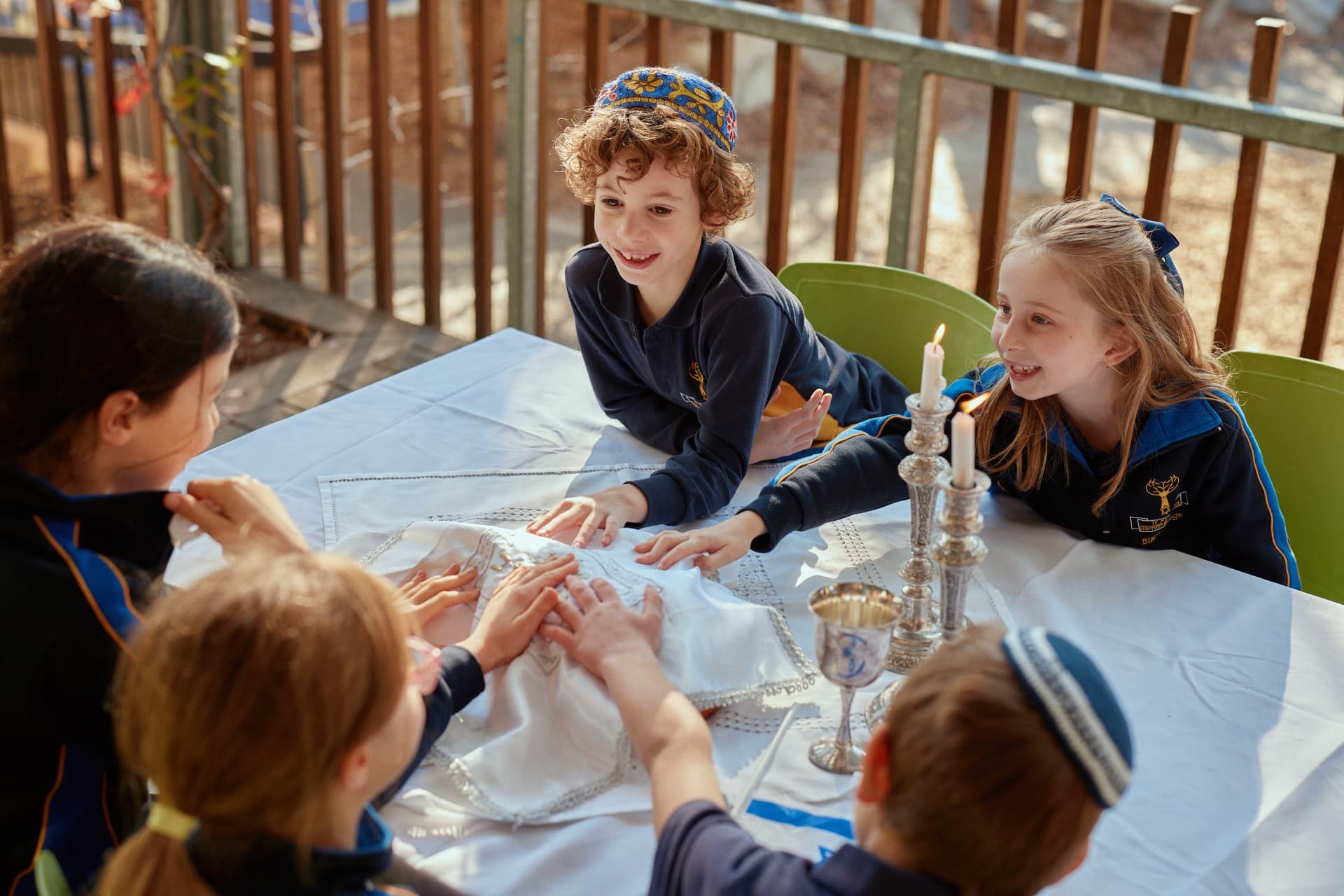
I’ve seen the strength of our community. I’ve felt the warmth of real allyship. I’ve watched my Jewish peers show up for one another — not just in moments of crisis, but in everyday resilience. The Shabbat dinners. The protests. The prayer circles. The campus conversations that aren't always easy, but are always necessary.

And I’ve come to understand something else: often, the loudest voices don’t represent the true majority. We do have allies. We are heard — more than we think.

To be a Jewish university student at this moment is to walk a strange line. We carry grief and pride. Fear and strength. Silence and song. We scroll through headlines about ballistic missiles, then return to our essays. We light candles for hostages, then sit for exams. We are living in two worlds at once.

And to our family in Israel — and to every Jewish person feeling unmoored right now — know this: your pain is seen. Your strength is honoured. Despite everything, we will dance again.

You might also like
  • ‘Israel is systemically eliminating Palestinian collective life’:  B’Tselem
    Deborah Stone
  • Tame apologises – but with little grace
    Deborah Stone
  • Confronting Richard Flanagan and the myth of the Israel lobby
    Mary Garden
logomark.67a07ee3
We believe in the free flow of information

Republish our articles for free, online or in print, by using our Creative Commons licence

You might also like

    Futurism
    OpinionLifestyle

    Jewish Futurism? We’ve been practising it for millennia 

    Renata Zimbarg 1
    Keshet
    FeatureLifestyle

    ‘We won’t ever leave’: Keshet Europe’s fight for Jewish LGBT+ inclusion

    Gideon Cohen
    original-6ACA4B6A-4208-4277-A4EE-E687C3C87523
    FeatureLifestyle

    The right to an ordinary Jewish life

    Jarod Rhine-Davis

About the author

Chloe Green

Chloe Green

Chloe Green (23) is the Social Media and Marketing Officer for AUJS NSW and a member of the Reconciliation Action Plan (RAP) working group. She studies a Bachelor of Science and Education (Secondary) at Macquarie University, with a passion for inclusive education. Chloe is deeply committed to disability advocacy, Indigenous education, and fostering cross-cultural understanding through a lens of Tikkun Olam. She also works to inspire a love of STEM and supports Israel advocacy within and beyond campus life.

Comments

No comments on this article yet. Be the first to add your thoughts.