Aa
  • Read, Watch, Listen
  • TJI Series
  • Community Action
  • Events
  • Zedi
Follow us and continue the conversation
  • LinkedIn
  • Instagram
  • FaceBook
  • X
  • YouTube
Test yourself with the TJI Quiz!

Adjust size of text

Aa

Follow us and continue the conversation

  • LinkedIn
  • Instagram
  • FaceBook
  • X
  • YouTube

Your saved articles

You haven't saved any articles

What are you looking for?

Original reporting, insightful analysis and diverse views, delivered straight to your inbox

  • LinkedIn
  • Instagram
  • FaceBook
  • X
  • YouTube
Your support fuels our mission to inform, entertain and inspire.

The Jewish Independent is bound by the Standards of Practice of the Australian Press Council. If you believe the Standards may have been breached, you may approach The Jewish Independent or make a complaint to the Australian Press Council in writing at www.presscouncil.org.au. The Council may also be contacted on 1800 025 712.

  • Our Story
  • Contact us
  • Our Team
  • Support us
  • Guidelines
  • Pitch your idea
  • Republishing us
  • Community Action
  • Our Awards
  • LinkedIn
  • Instagram
  • FaceBook
  • X
  • YouTube
Aboriginal FlagTorres Strait Islanders Flag

The Jewish Independent acknowledges Aboriginal and Torres Strait Islander peoples as the Traditional Owners and Custodians of Country throughout Australia. We pay our respects to Elders past and present, and strive to honour their rich history of storytelling in our work and mission.

© The Jewish Independent 2026All Rights Reserved
Website design and development by Your Creative, MelbourneTerms & ConditionsPrivacy Policy
HomeRead, Watch, Listen
Opinion

Bennett responds like an abuser, with gaslighting not compassion

Elana Sztokman
Print this

Published: 17 May 2022

Last updated: 4 March 2024

The Prime Minister's response to the killing of Shireen Abu Akleh mirrors the dynamics of abuse, writes ELANA SZTOKMAN

IMMEDIATELY after Palestinian journalist Shireen Abu Akleh was killed during a gunfight in Jenin last week, two opposing sets of reactions illustrated a toxic dynamic that remains at the root of this conflict.

From the Palestinian side, people were wailing in agony and anger. The killing of their star anchor – a woman with a 25-year visual presence in their world akin to that of Barbara Walters in the US or Tracy Grimshaw in Australia – was shocking and seemed personal.

The anger also reflects a deep-seated fear that if there are no protections for journalists – who are essential protectors of democracy and human rights – then nobody is safe. 

Palestinians have been trying to get the world’s attention about this for some time. Two weeks ago, the International Federation of Journalists filed a complaint with the International Criminal Court over "Israel’s systematic targeting of journalists working in Palestine". Three days before Shireen’s death, IDF soldiers were caught on camera beating and arresting Palestinian journalist Basil Al-Adraa.

But while Palestinians dealt with their grief, anger, and fear, Israeli leadership reacted as if they are living in an alternate universe. PM Naftali Bennett’s first statement was that the Palestinians probably killed her. There was no remorse, no sadness, no acknowledgement of the pain. Just an immediate, knee jerk version of “They’re lying” and “They did it to themselves”.

If your sole argument is that the other side is lying, you probably do not have right on your side

To be sure, the investigation of the death has not been completed and has predictably become a political tug of war. But Bennett’s reaction is so tone-deaf and obnoxious that it tells us everything we need to know about how our leaders relate to this conflict.
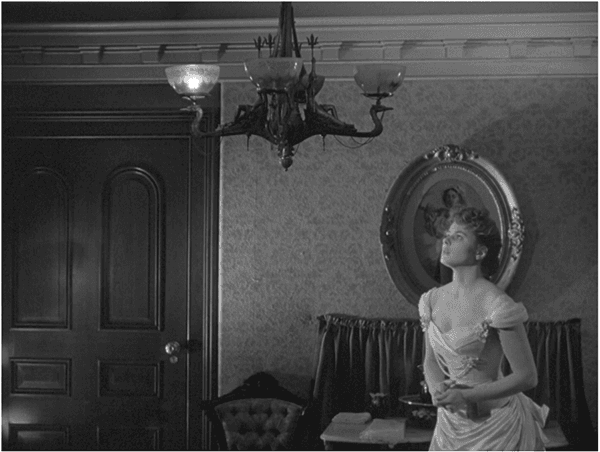

In a word: gaslighting.

Gaslighting is a common reaction by an abuser to being accused of abuse. Instead of acknowledging the experience of the victim, the abuser works to replace the victim’s narratives with lines like “You’re imagining things” or “You did this to yourself”. The goal is to disarm the victim by making them doubt themselves and lose their hold on reality – and their sanity. (The term is derived from a film about an abusive husband.)

Israeli strategy when accused of human rights abuses is to prove that the Palestinians are lying, or that if something bad happened to them, it’s their own fault.

I know that this is our strategy because I was part of it for a long time. From the time I was in high school in Brooklyn, New York, studying at the same yeshivah that produced Meir Kahana and Baruch Goldstein, I was being trained as a soldier in the rhetorical battle. In our ninth-grade Zionism class, we were taught how to “prove” that Palestinians were lying about everything they say – from what happened at Deir Yassin to whether there is a such thing as a Palestinian nation. We were 14 years old, had never met a Palestinian, and could not locate Deir Yassin on a map, but we were experts in telling Palestinians that they were making things up.

For years – through college and early adulthood – I was a strong and vocal spokesperson for the ideology, and dedicated my entire life to these ideas. At the tender age of 23, I made Aliyah with my new husband and baby. I worked for Zionist organisations, I became a Jewish educator, and even lived over the Green Line for a while. I was doing my part as a soldier in the battle over national narratives.

And then, one day, I got a position as a writer for an “Israel advocacy” organisation, in the marketing writing department. I had one job to do: to read articles written by Palestinians and disprove them. My job was, literally, to write text showing that Palestinians who said bad things about Israel were lying.

This felt wrong to me. It undermined basic humanity. One day, in a staff meeting, I asked, “Why can’t we allow Palestinians to have their narratives?” The room went silent. I left the job shortly thereafter.

Ingrid Bergman in the film Gaslight, which gave its name to the phenomenon of denying victims' experience of abuse

That was a turning point for me, and sent me on a journey of starting to listen for myself. I realised something very important: If your sole argument is that the other side is lying, you probably do not have right on your side.

In my work researching sexual and emotional abuse in our communities, I have become aware of the importance of gaslighting in the dynamics of abuse.

When Bennett responds to the very real pains of the Palestinians with, “They are lying” or “They brought it on themselves,” those lines are instantly recognisable from so many stories of abuse. It is gaslighting the Palestinians on a national scale.

 And Bennett, who literally campaigned on the slogan, “Never apologise” – another classic tactic used by the abuser – is the perfect executioner of this practice. These tactics have served him well.

If there is ever going to be an end to this bloody conflict, it will have to start with an end to our communal gaslighting. If Palestinians are hurting, we can start by acknowledging their pain and examining our own roles in causing that pain. Replacing abusive interactions with compassionate ones has been a vital starting point in reconciliation around the world, including Ireland and Australia.

But in Israel, we have never tried it. We as a people have never tested the practice of engaging in civil, compassionate discourse with the Palestinians. Now would be a perfect time to start.

Photo: Funeral procession of Al Jazeera journalist Shireen Abu Akleh in Jerusalem (AAP/Sipa USA/Eyal Warshavsky)

You might also like
  • Western ‘Palestinianism’ colonises everything – and hurts Palestinians
    Andres Spokoiny
  • Israel is cementing its control over the West Bank and East Jerusalem while the world is distracted
    Martin Kear
  • Abuse by IDF soldiers humiliates Muslim Palestinians
    Ben Lynfield
logomark.67a07ee3
We believe in the free flow of information

Republish our articles for free, online or in print, by using our Creative Commons licence

You might also like

    Alerts over antisemitic threats and attacks in Europe and US

    TJI Wrap
    Feature

    While still holding off the ground invasion, Israel praises Qatar over hostage talks

    TJI Wrap
    Feature

    Israel bows to pressure by restoring water flow, ICC investigates both sides

    TJI Wrap

About the author

Elana Sztokman

Elana Sztokman

Dr Elana Sztokman is an award-winning Jewish feminist author, anthropologist, and activist. Her latest book is 'When Rabbis Abuse: Power, Gender, and Status in the Dynamics of Sexual Abuse in Jewish Culture'.

More from the author

ReflectionIsrael

How I changed my mind about the Zionist narrative

ReflectionIsrael

The painful process of truly listening to Palestinian pain

Arts & Culture

Hear us sing: Women musicians raise their voices against discrimination

Israel

Signs of change on the streets of Jaffa