Published: 3 February 2023
Last updated: 5 March 2024
DEBORAH STONE visits Israel’s oldest civil society organisation and learns how changemaking has changed.
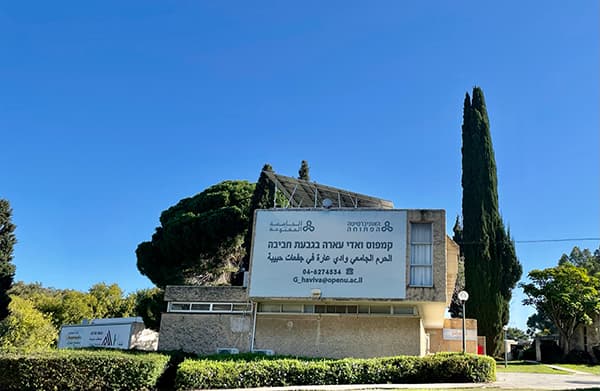
As the staff of Givat Haviva Center for Shared Society gathered to light Chanukah candles recently, team leaders – Jewish, Muslim and Christian – each lit a candle and spoke of the light their work brings into a dark time.
Executive Director Michal Sella exhorted the team to remain hopeful. “Yes, we are in a period of darkness, but we don’t always need a miracle. We can bring light. What I always say is Givat Haviva will still be here in in five years’ time when this government is not.”
Founded in 1949 as the study centre of the kibbutz movement, Givat Haviva was the first initiative in the peacebuilding field when it opened its Jewish-Arab Center for Peace in 1963.
It now runs a remarkable range of programs including language, sport, arts, international studies, employment preparation, teacher exchange and advocacy.
Understanding what is needed to create a shared and equal society for Jews and Arabs in Israel has changed, the Director of Strategy, Mohammad Darawshe, told The Jewish Independent.
Arabs make up 21% of Israeli citizens. In 2003, Arabs were only 3.5% of students in Israeli universities, today they are 20%.
“When we started it was a very goodwill, naïve approach to Jewish-Arab relations. It was called the social contact theory and was supposed to produce humanisation of the other and coexistence.”
Givat Haviva provided encounter opportunities for 10,000 people a year, and long-term evaluation has concluded it helped – but not enough. The programs couldn’t reach enough people and too many were subject to “returning home syndrome”.
“People would go back into their separate communities – and 92% live in separate communities and those who live in mixed cities live in separate neighbourhoods. People would say, ‘So you met 20 good Jews, they are the only 20 good Jews’ or ‘You met 20 good Arabs, the rest want to kill us’,” Darawshe says.