Aa
  • Read, Watch, Listen
  • TJI Series
  • Community Action
  • Events
  • Zedi
Follow us and continue the conversation
  • LinkedIn
  • Instagram
  • FaceBook
  • X
  • YouTube
Test yourself with the TJI Quiz!

Adjust size of text

Aa

Follow us and continue the conversation

  • LinkedIn
  • Instagram
  • FaceBook
  • X
  • YouTube

Your saved articles

You haven't saved any articles

What are you looking for?

Original reporting, insightful analysis and diverse views, delivered straight to your inbox

  • LinkedIn
  • Instagram
  • FaceBook
  • X
  • YouTube
Your support fuels our mission to inform, entertain and inspire.

The Jewish Independent is bound by the Standards of Practice of the Australian Press Council. If you believe the Standards may have been breached, you may approach The Jewish Independent or make a complaint to the Australian Press Council in writing at www.presscouncil.org.au. The Council may also be contacted on 1800 025 712.

  • Our Story
  • Contact us
  • Our Team
  • Support us
  • Guidelines
  • Pitch your idea
  • Republishing us
  • Community Action
  • Our Awards
  • LinkedIn
  • Instagram
  • FaceBook
  • X
  • YouTube
Aboriginal FlagTorres Strait Islanders Flag

The Jewish Independent acknowledges Aboriginal and Torres Strait Islander peoples as the Traditional Owners and Custodians of Country throughout Australia. We pay our respects to Elders past and present, and strive to honour their rich history of storytelling in our work and mission.

© The Jewish Independent 2026All Rights Reserved
Website design and development by Your Creative, MelbourneTerms & ConditionsPrivacy Policy
HomeRead, Watch, ListenIsrael
AnalysisIsraelWorld

Both global left and Israeli right threaten Jewish safety

To counter rising antisemitism, Jews must be vigorously anti-authoritarian, outward-looking and open to liberal Palestinian movements.
Ivor Chipkin
Print this
Right left polarisation

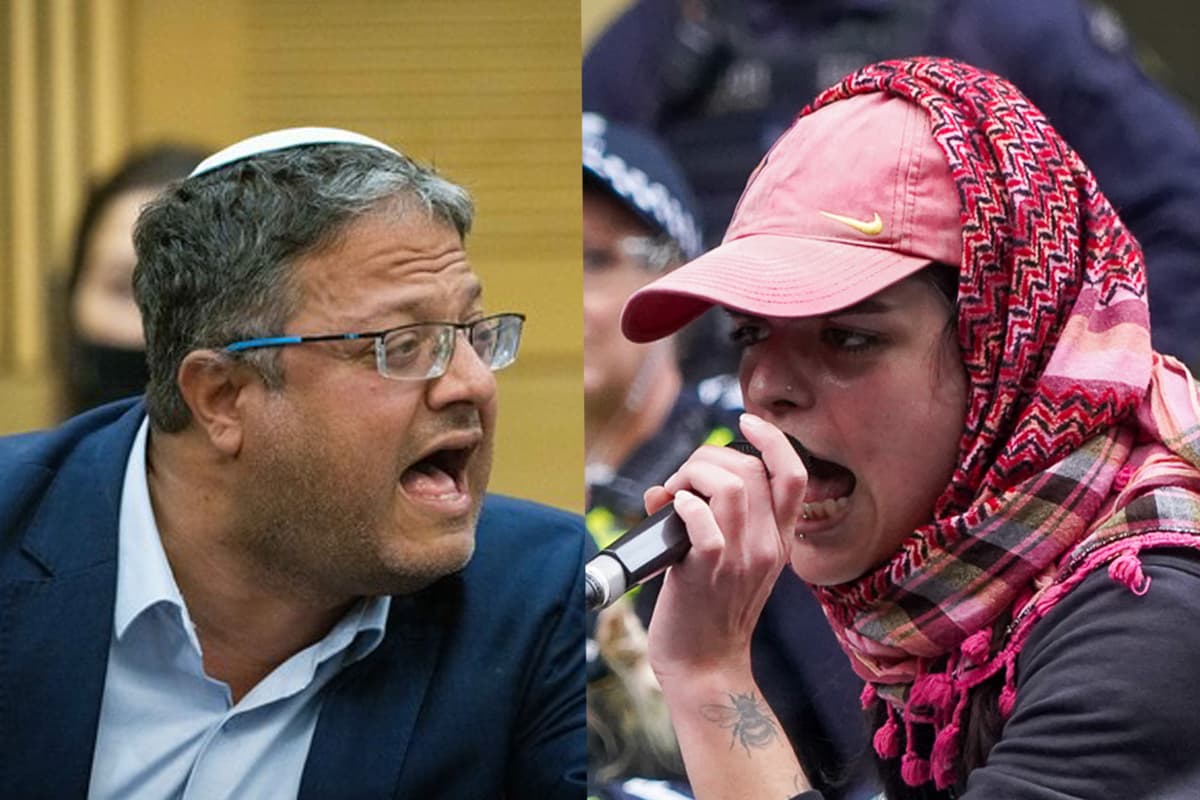
Far-right Israeli politician Itamar Ben-Gvir, left (Yonatan Sindel/Flash90)/ Pro-Palestinian protester in Melbourne (Ben Bresley)

Published: 23 February 2026

Last updated: 26 February 2026

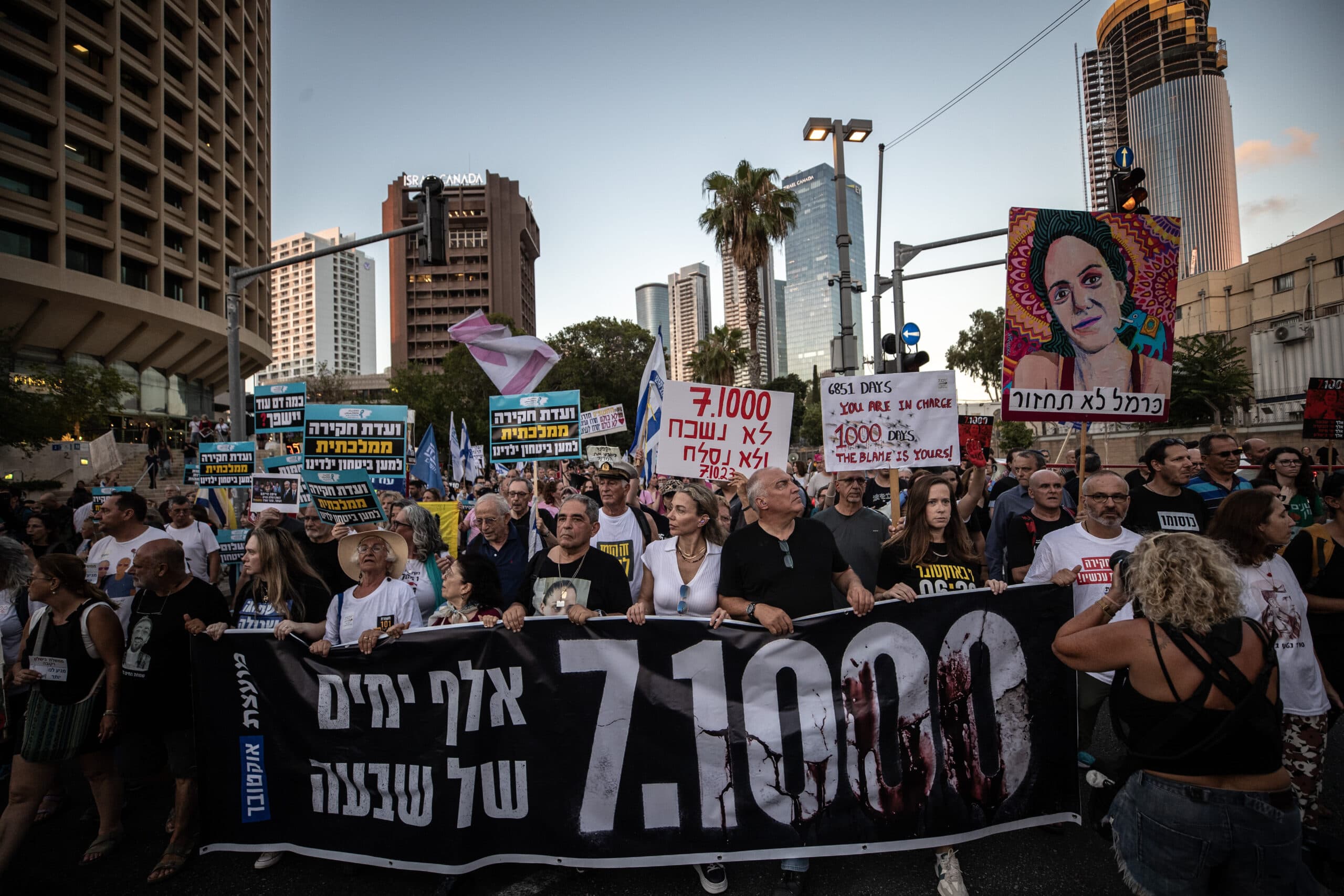
In the aftermath of October  7, academic and political elite across the West rushed to excuse these barbarous attacks against Israelis as Jews – frequently in terms that drew on the full repertoire of antisemitic tropes: “There are no civilians in Israel”, “All Israelis are legitimate targets”, “Zionism is Nazism”, “Zionists killed Israelis on October 7”, “Claims of mass rape was Zionist propaganda”, and so on.

This response requires us to revisit some core assumptions about liberal and progressive elites and the institutions that they run.

I no longer believe that liberal, democratic institutions are enough. They are too easily transformed into authoritarian bodies especially for Jews who are a forever minority.

Thomas Picketty coined the expression ‘Brahmin elites’, to describe how from the 1970s left-wing parties came to be dominated by highly-educated elites that were culturally liberal, supported environmental causes and preoccupied with questions of identity. These elite populists have more and more taken up the ‘Palestinian cause’ as their own.

This new revolution reproduces cliches about Jews and ‘Zionists’ drawn from Nazi, Arab-Nazi and Stalinist propaganda. These are racist tropes that have gained respectability in the current moment because their origins are hidden.

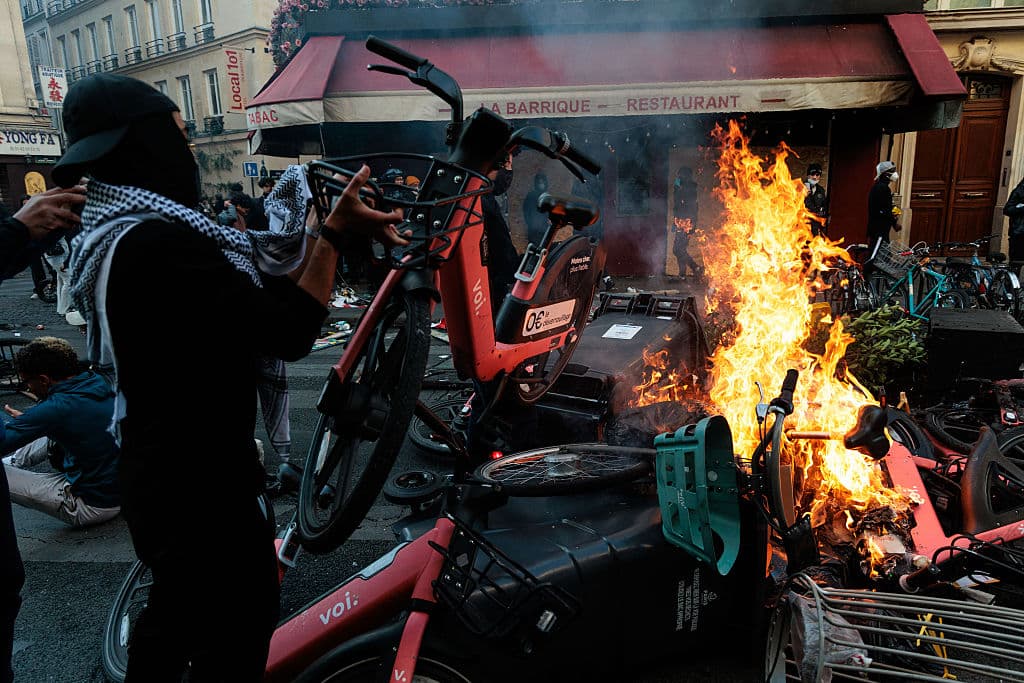
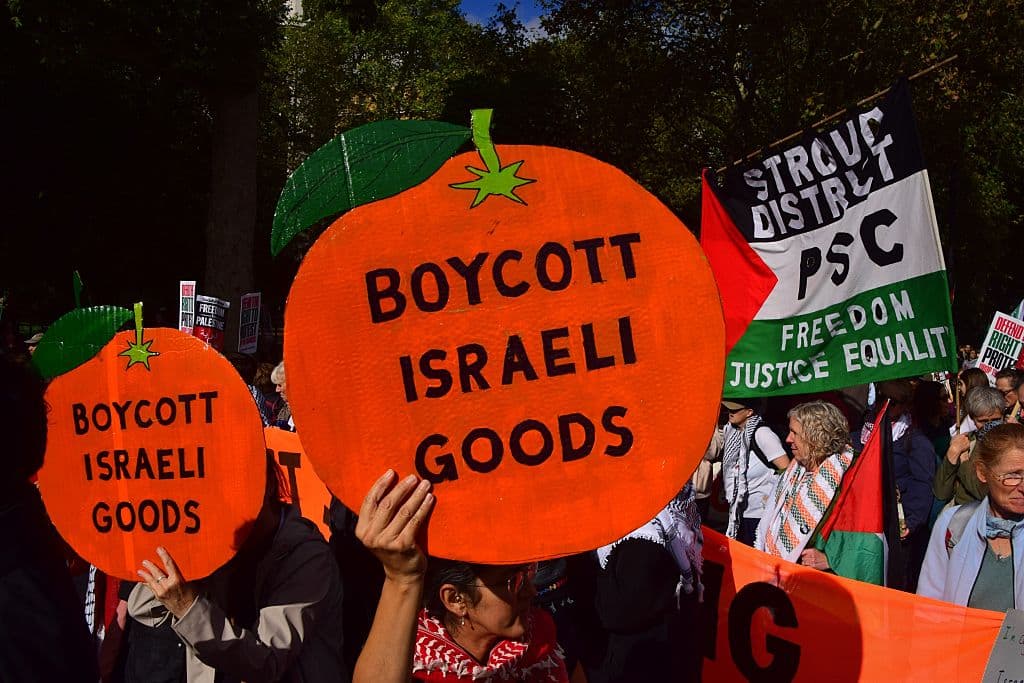
Contemporary anti-Zionist politics, including amongst self-identifying Jewish organisations, correctly reject and oppose the chauvinism, racism and violence of Israeli governments, all the while shielding, legitimising and excusing spaces contaminated with antisemites. Anti-Zionist spaces are largely new spaces of Jew hatred.
Two understandings of Zionism

A war in Gaza is coming to an end that whatever the International Court of Justice comes to call it, it has taken a terrifying toll on civilians and civilian life. Terrible war crimes have been committed in Gaza, some of which, like deliberate starvation, may have satisfied the definition of genocide. A war that started in legitimate self-defence has mutated into something monstrous. A terrible reckoning is coming for Netanyahu and his government.

There is still a chance that the Palestinian question and the Jewish question can be reconciled as democratic questions. We have numerous examples of what this looks like: in the provisions of the 1947 and 1948 constitutional proposals that would have established Israeli citizenship on universal principles, in the constitutional coup of 1995 that established the Israeli Supreme Court as a de facto constitutional court, and in the jurisprudence and philosophy that insists that the Jewish character of the state should be expressed in the respect of universal human rights, as fundamentally Jewish values.

The central concern of early Zionism was not the cultivation of a particular cultural or theological identity, but the restoration of political significance to a population rendered vulnerable by exclusion from sovereign protection across the Diaspora.

Zionism was not inherently bound to a single ideological form. Rather, it generated a wide range of political articulations, including socialist and anti-imperial currents, secular republican projects, liberal-democratic frameworks, as well as religious-nationalist strands that exhibited authoritarian or fascist tendencies. These orientations often coexisted in hybrid and contested forms.

The period from the early 1990s to the end of the decade is frequently identified as the most liberal phase in Israel’s political and constitutional development, coinciding with Yitzhak Rabin’s leadership.

On the diplomatic front, this era was marked by the negotiation of the Oslo Accords, which sought to resolve the conflict with Palestinians in the West Bank and Gaza. Domestically, it was also during this time that the Israeli Supreme Court issued its landmark ruling in Qaadan, which prohibited discrimination between Jewish and Arab citizens in access to state land.

Diaspora Jews must vigorously oppose fascist and authoritarian forces in Israel and in the Jewish diaspora

Chief Justice Aharon Barak argued that Israel’s Jewish character was to be located not in material preferences or territorial allocation, but in a set of Jewish values that were compatible with—and indeed demanded—liberal principles, including equality.

The enactment of the Jewish Nation-State Law under Benjamin Netanyahu can be read as a direct response to the Qaadan decision and to the broader “constitutional revolution” associated with it. The law explicitly affirms the exclusive right of Jews to national self-determination in Israel and commits the state to actively promoting Jewish settlement.

What is ultimately at issue, therefore, is a contest between two divergent understandings of Zionism: one that defines Jewishness in ethical and civic terms, and another that anchors it in territorial control and settlement. This nationalist and fascist turn has proved itself, not only to be grossly incompetent and corrupt, but it has also taken Israel to the brink of catastrophe. It has been murderous for Palestinians.

This is why movements like the The London Initiative are so important, bringing international support to courageous democratic movements and activists inside Israel.

At the same time, there is no prospect of lasting peace as long as major Palestinian political movements draw on a schematic history of the region, ally with racist and authoritarian governments in the region and elsewhere and/or draw on antisemitic conceptions of Jews and of Zionists as inherently evil.

When are Jews safe?

The events of the last 24 months have made clear the depth and extent of Jew hatred in the West, within Palestinian organisations and solidarity movements. Anti-Zionism is not necessarily antisemitism, but when it comes from Hamas and fellow-traveller organisations prepared to repeat, amplify, excuse and legitimise antisemitic cliches of Nazi, Stalinist and Muslim Brotherhood provenance then it unambiguously is.

When Palestinian solidarity marches target areas where lots of Jews live as a protest against Zionism, we know fully well what is going on.

It is time, I believe, to return to the underlying question of Zionism: Under what conditions are Jews safe?

I no longer believe that liberal, democratic institutions are enough. They are too easily transformed into authoritarian bodies especially for Jews who are a forever minority.

1. Contemporary Jewish politics must be vigorously anti-authoritarian. Our biggest enemies today come from racist, authoritarian individuals and groups on the left (third-world nationalists, Stalinists) and those that protect and defend them (Brahmin elites), as well as Islamists, neo-Nazis and white nationalists on the right.

2. Diaspora Jews must vigorously oppose fascist and authoritarian forces in Israel and in the Jewish diaspora itself. These groups represent an existential threat to Jewish life, both because they contradict Jewish values, weaken Jewish solidarity and empower Israel’s enemies.

3. Palestinian movements that resist antisemitic ideas and that oppose Israeli politics in the name of deepening and strengthening democracy are not our enemies. These are forces to embrace.

4. Jewish organisations and individual Jews must refuse to be ghettoised (or to ghettoise ourselves). We must use our constitutional rights to assert our presence in the public domain, whether in public spaces, institutions and in universities, to oppose racist and authoritarian movements, even when they are embedded in the state.

5.  We must deepen and build our relationships with individuals and communities that are hostile to antisemitism and to authoritarianism.

6. We must internationalise our relationships, building stronger relationships and solidarities between and across Jewish communities around the world. We must become more aware of Jewish communities wherever they are, and we must build relationships, exchanges, solidarities with them.

You might also like
  • How not to apologise
    Zac Klugman
  • Israel election explainer: the main parties
    Shahar Burla
  • Proposed digital care law to offer protection against online antisemitism
    Deborah Stone
logomark.67a07ee3
We believe in the free flow of information

Republish our articles for free, online or in print, by using our Creative Commons licence

You might also like

    JDC Joint Nepal
    FeatureWorld

    ‘Your help is extremely needed’: Jewish aid group on the ground after Nepal flood

    Peter Kohn 1
    bialik Jewish schools shabbat
    OpinionAustralia

    Jewish schools are the marinade that infuses continuity

    Jeremy Stowe-Lindner
    Netanyahu
    Israel Hamas WarFeatureIsrael

    New evidence Netanyahu was warned about October 7

    Shahar Burla 2

About the author

Ivor Chipkin

Ivor Chipkin

Ivor Chipkin is the Director of the New South Institute, a global think tank based in South Africa and with offices in Sao Paulo and Belgrade. He also teaches public policy at the Gordon Institute of Business Science (GIBS) at the University of Pretoria.

More from the author

OpinionWorld

ME Peace conference blacklisted: a dark day for South African democracy

AnalysisWorld

South Africa’s Faustian bet on everything from electricity to Israel

Comments

No comments on this article yet. Be the first to add your thoughts.