Aa
  • Read, Watch, Listen
  • TJI Series
  • Community Action
  • Events
  • Zedi
Follow us and continue the conversation
  • LinkedIn
  • Instagram
  • FaceBook
  • X
  • YouTube
Test yourself with the TJI Quiz!

Adjust size of text

Aa

Follow us and continue the conversation

  • LinkedIn
  • Instagram
  • FaceBook
  • X
  • YouTube

Your saved articles

You haven't saved any articles

What are you looking for?

Original reporting, insightful analysis and diverse views, delivered straight to your inbox

  • LinkedIn
  • Instagram
  • FaceBook
  • X
  • YouTube
Your support fuels our mission to inform, entertain and inspire.

The Jewish Independent is bound by the Standards of Practice of the Australian Press Council. If you believe the Standards may have been breached, you may approach The Jewish Independent or make a complaint to the Australian Press Council in writing at www.presscouncil.org.au. The Council may also be contacted on 1800 025 712.

  • Our Story
  • Contact us
  • Our Team
  • Support us
  • Guidelines
  • Pitch your idea
  • Republishing us
  • Community Action
  • Our Awards
  • LinkedIn
  • Instagram
  • FaceBook
  • X
  • YouTube
Aboriginal FlagTorres Strait Islanders Flag

The Jewish Independent acknowledges Aboriginal and Torres Strait Islander peoples as the Traditional Owners and Custodians of Country throughout Australia. We pay our respects to Elders past and present, and strive to honour their rich history of storytelling in our work and mission.

© The Jewish Independent 2026All Rights Reserved
Website design and development by Your Creative, MelbourneTerms & ConditionsPrivacy Policy
HomeRead, Watch, ListenWorld
OpinionWorld

ME Peace conference blacklisted: a dark day for South African democracy

The battle over a recent conference in South Africa demonstrates the fragility of the country’s democratic public domain.
Ivor Chipkin
Print this
conhill south africa

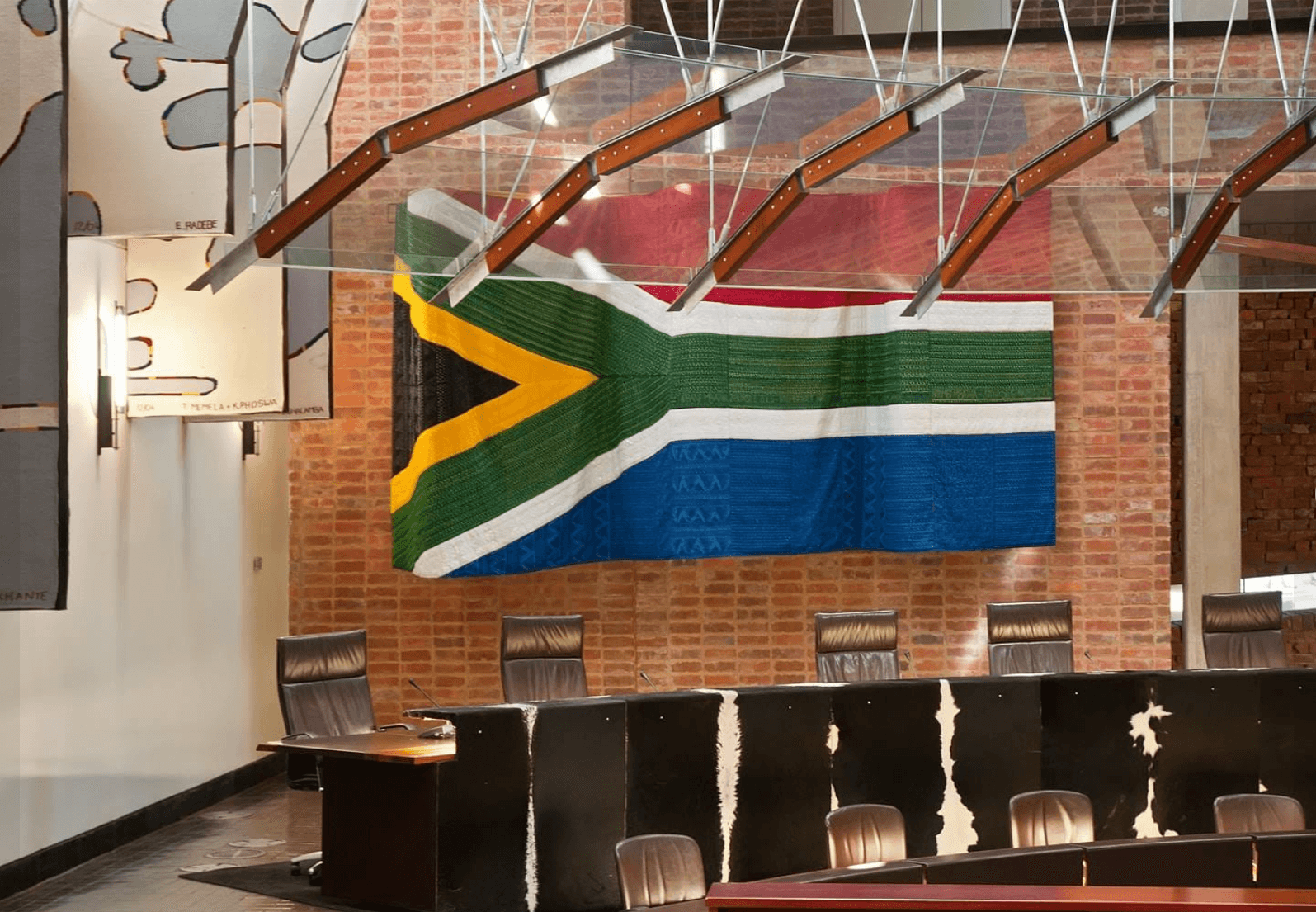
Constitution Hill in Johannesburg: the Human Rights precinct that banned a Middle East peace conference (Conhill)

Published: 8 November 2024

Last updated: 8 November 2024

In September 2024, a network of activists, some embedded in the state and in government, others in senior roles in public universities and still others with strong links to the centres of political power, mobilised to expel a conference from the site of the Constitutional Hill in Johannesburg.

The conference, entitled Narrative Conditions Towards Peace in the Middle East, brought together international experts seeking a nuanced discussion of the conflict.

It was this year’s African Global Dialogue, an annual public policy event, which is an initiative of the New South Institute (NSI), a public policy thinktank. The NSI works on institution building and democratization in complex environments, largely post-colonial and post-socialist.

Believing in the simple mantra that good policy is evidence-based the NSI decided to host a series of discussions to better understand the history, the politics and the legal situation in the Middle East.

When the war in Gaza is over, unless there are major shifts in the political environment, including in the political discourses that frame the situation, there will be another war – as has been happening since 1948. What role could South Africa play in disrupting this cycle positively?

This question is especially relevant in the light of two local developments: Firstly, since the South African government took Israel to the International Court of Justice, there has been an election, and a Government of National Unity has been formed.

Secondly, in December 2024, South Africa will chair the G20 group of countries and there is an opportunity, at least formally, to shape the global, political agenda. In addition, as the NSI we wanted to have such a discussion in Johannesburg, South Africa, to insist on the importance of hosting discussions on major, global topics in the global South, and not just in Washington or London.

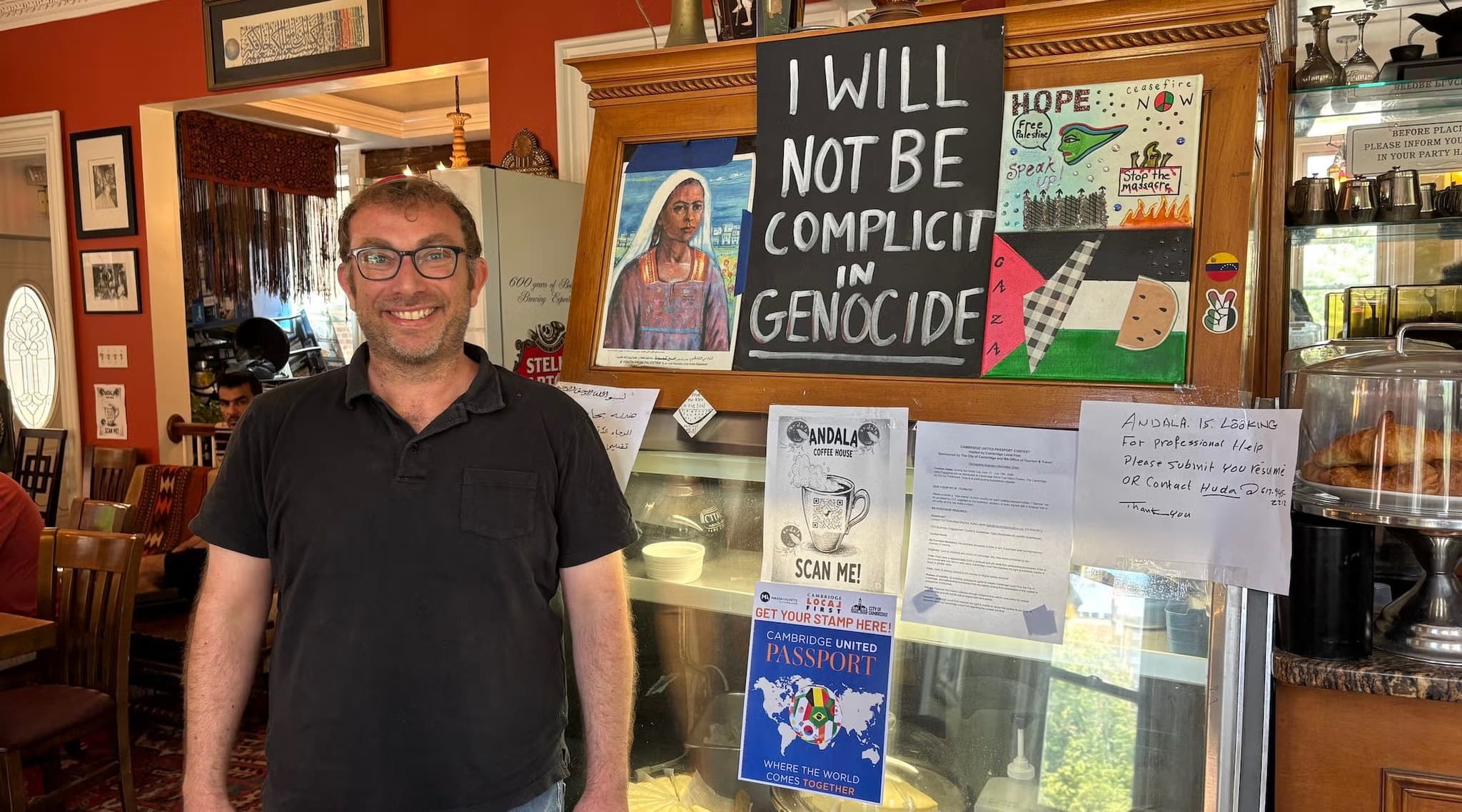
The Boycott, Divestment and Sanctions campaign claimed that we were a Zionist front trying to whitewash the genocide in Gaza.

We approached many people, all of great experience and expertise in their fields, though not necessarily people we know or agree with. We approached historians and sociologists, psychoanalysts, and major legal experts, we approached scholars either close politically or close in sympathy to radical Palestinian groups. Some replied to our invitation, some did not. Some were available, some were not. Some liked our broad approach and others did not. Nonetheless, we put together an excellent and diverse programme, including, important South African and global experts, many of whom had never been heard before in South Africa.

In the words of Ta-Nehisi Coates, the point of dialogue is not to reach a consensus; it is to show that it is possible to create a space in which multiple perspectives can be represented, on their own terms and without illusions.

A disinformation campaign

Then something unexpected happened. Somebody leaked the list of invitees and circulated it in the public domain, where it was given a sinister spin. People on the list were told that we had added them on the program without telling them. This was not true. We had already created a website and the list of speakers who had agreed to participate had long been made public. There was no-one on the program who had not agreed to be. It was said that we had deliberately shared the invitation list as if it was a list of confirmed attendees. This was also not true.

The Boycott, Divestment and Sanctions campaign claimed that we were a Zionist front trying to whitewash the genocide in Gaza. Invited guests were encouraged to denounce the event and speakers were approached to cancel.

Achille Mbembe, the biggest name in post-colonial studies, claimed that he knew nothing about the event and dismissed the mention of his name as ‘false publicity’. In fact, he had asked to be included on the program, had received the program with his name on by email and had formally registered for the conference on the August 17, when he would have seen his name on the list of speakers on the website .

Etienne Balibar, a philosopher who is also a major figure on the global left, was pressured to withdraw but chose to participate on the condition he could read out his full conference memorandum.

This was not simply a case, however, of cancel culture manifesting at a university event or at a private institution. At stake, I argue, is the integrity of South Africa’s public domain.

Some criticized us for not having consulted the ‘progressive movement’ when we organized the dialogue, a strange Stalinist request. Others denounced us for having invited the controversial Israeli historian, Benny Morris, even though Mehdi Hassan had hosted him on Al Jazeera just two weeks before.
Expulsion

On September 12, the acting CEO of the conference venue ConHill wrote to say that the venue was “no longer available”. We had booked the location on June 25, had paid a deposit and had a signed contract.

Beyond the contractual issues, the withdrawal of the venue represented a physical and symbolic attack on South Africa’s public domain. It is likely that the African Global Dialogue was prevented from using the site because several advocacy groups, supported, it seems, by politicians in the Gauteng Provincial Government and senior public servants, disagreed with the nature of the event and opposed the presence of some of the speakers. At stake was the very principle of ConHill as a site of open, democratic discussion.

In the face of such a serious challenge to South Africa’s constitutional promise, incredibly, on the very site of the Constitutional Court, South Africans should have expected a more fulsome defence of the principle of dialogue from the company’s trustees. Instead, they publicly washed their hands of the whole thing, issuing a statement that seemed to distance themselves more from the African Global Dialogues itself, rather than from those seeking to close it down.

The withdrawal of the venue was celebrated as a triumph by the BDS movement.

The conference went ahead at a different venue. The BDS movement’s claims about the event – that it was a genocide denying event intended to discredit South Africa’s case at the ICJ — are easily dismissed by the content which included Etienne Balibar’s intervention; Radmila Nakarada, the former chair of the Truth and Reconciliation Commission established at the end of the Yugoslav wars; and or Nicole Fritz’s very moving and compelling defence of South Africa’s ICJ case.

All of this, together with speaker’s written comments, will soon be available on the African Global Dialogue website - the real one, that is, not the fake ‘parody’ account with its crude, racist tropes created by the conference’s opponents.

An authoritarian frenzy

This was not simply a case, however, of cancel culture manifesting at a university event or at a private institution. At stake, I argue, is the integrity of South Africa’s public domain.

Important political figures, senior government officials, together with well organised activists, worked together to purge the public domain of an initiative with which they disagreed. The Deputy Secretary General of the ANC, Nomvula Mokonyane, participated in the protests and according to the BDS promised to enlist the Premier of Gauteng himself, Panyaza Lesufi, to pressure the ConHill to cancel the event

In other words, the African Global Dialogue appears to have been expelled from ConHill by people who occupy senior positions in university administrations, who are embedded in powerful political networks and with access to state power. These were not students or subalterns speaking truth to power. This was power itself interrupting the search for truth.

When an individual or a political party claims that the place of power coincides with them — when, for example, they claim to be the sole authentic representative of the people, such that the people itself would be deprived of power if they were removed — then democracy becomes its opposite. In a similar vein, when individuals or ideas are driven out of the public domain by those in power, then the ‘place of power’ loses its democratic character.

Without irony, those who disrupted the conference celebrated this purge as a democratic victory, conflating the public domain with themselves, and literally occupying the site. In this way, they revealed their authoritarian political cultures and together with the dozens of people that joined in the frenzy of denunciations, subverted the idea and practice of democracy in democracy’s name.

You might also like
  • ALP draft stained by Hamas omission but conference set to maintain status quo
    Dean Sherr
  • New wave of Russian-speaking migrants may be key to Israel’s future
    Ittay Flescher
  • Netanyahu pre-election juggling act
    Eetta Prince-Gibson
logomark.67a07ee3
We believe in the free flow of information

Republish our articles for free, online or in print, by using our Creative Commons licence

You might also like

    bialik Jewish schools shabbat
    OpinionAustralia

    Jewish schools are the marinade that infuses continuity

    Jeremy Stowe-Lindner
    Pro-Palestine Rally Outside Foreign Commonwealth Development Office
    AnalysisWorld

    UK’s dramatic policy change on Israel-Palestine

    Colin Shindler 3
    Shocked New Yorker Watches the World Trade Center on September 11, 2001
    ReflectionWorld

    A new generation reckons with 9/11

    Gideon Cohen

About the author

Ivor Chipkin

Ivor Chipkin

Ivor Chipkin is the Director of the New South Institute, a global think tank based in South Africa and with offices in Sao Paulo and Belgrade. He also teaches public policy at the Gordon Institute of Business Science (GIBS) at the University of Pretoria.

More from the author

AnalysisIsrael

Both global left and Israeli right threaten Jewish safety

AnalysisWorld

South Africa’s Faustian bet on everything from electricity to Israel

Comments1

  • Avatar of philip mendes

    philip mendes12 November at 09:24 pm

    Disturbing but not at all surprising to read this piece on the BDS movement’s attempt to prevent dialogue, debate, and above all any potential for constructive solutions. I have been arguing against the BDS movement since it first emerged in Australian in mid-2002 under the leadership of two long-time anti-Zionist fundamentalists: John Docker and Ghassan Hage. It gives me no pleasure to say that I was right all along as usually you can judge a movement by the merits or otherwise of its key leaders. The BDS continues (to paraphrase the famous Black rights leader Eldridge Cleaver) to be part of the problem, not the solution: