Aa
  • Read, Watch, Listen
  • TJI Series
  • Community Action
  • Events
  • Zedi
Follow us and continue the conversation
  • LinkedIn
  • Instagram
  • FaceBook
  • X
  • YouTube
Test yourself with the TJI Quiz!

Adjust size of text

Aa

Follow us and continue the conversation

  • LinkedIn
  • Instagram
  • FaceBook
  • X
  • YouTube

Your saved articles

You haven't saved any articles

What are you looking for?

Original reporting, insightful analysis and diverse views, delivered straight to your inbox

  • LinkedIn
  • Instagram
  • FaceBook
  • X
  • YouTube
Your support fuels our mission to inform, entertain and inspire.

The Jewish Independent is bound by the Standards of Practice of the Australian Press Council. If you believe the Standards may have been breached, you may approach The Jewish Independent or make a complaint to the Australian Press Council in writing at www.presscouncil.org.au. The Council may also be contacted on 1800 025 712.

  • Our Story
  • Contact us
  • Our Team
  • Support us
  • Guidelines
  • Pitch your idea
  • Republishing us
  • Community Action
  • Our Awards
  • LinkedIn
  • Instagram
  • FaceBook
  • X
  • YouTube
Aboriginal FlagTorres Strait Islanders Flag

The Jewish Independent acknowledges Aboriginal and Torres Strait Islander peoples as the Traditional Owners and Custodians of Country throughout Australia. We pay our respects to Elders past and present, and strive to honour their rich history of storytelling in our work and mission.

© The Jewish Independent 2026All Rights Reserved
Website design and development by Your Creative, MelbourneTerms & ConditionsPrivacy Policy
HomeRead, Watch, ListenIsrael
Israel Votes 2026AnalysisIsrael

Netanyahu pre-election juggling act

Elections are required this year but timing is difficult and democratic interference far from impossible
Eetta Prince-Gibson
Print this
Netanyahu election juggle

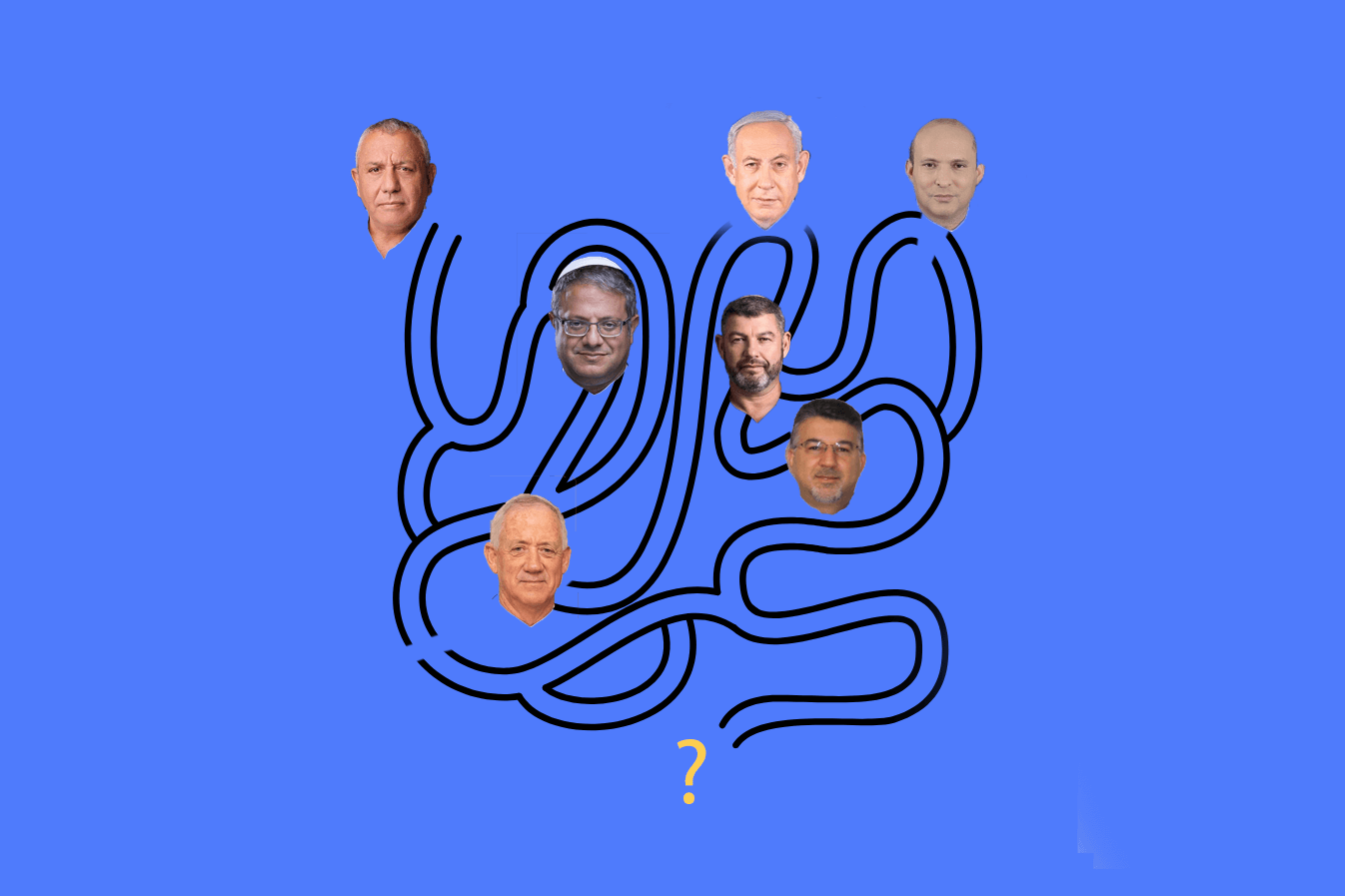
PM Netanyahu juggles democratic and political pressures (Image created by AI)

Published: 19 May 2026

Last updated: 19 May 2026

In mid-May, Prime Minister Benjamin Netanyahu’s ruling coalition submitted legislation to dissolve the Knesset.

In accordance with Israeli law, elections must be held within three months of the passage of that legislation. In accordance with Israeli political reality, however, the most reasonable assessment is that while elections are indeed, the most plausible possibility, it is not certain that the Knesset will in fact be dissolved or that Israelis will be going to the polls any time soon.

Elected in 2022, this government and the Knesset would have come to its lawful end by, at the latest, October 27, 2026.  Israel does, however, allow for the Knesset to be dissolved earlier, through passage of legislation by a simple majority. And since the coalition itself submitted the legislation, it is, indeed, likely to obtain the majority.

The issue of military conscription for Haredi men was the immediate reason for the crisis that led the government to present this legislation. As the government neared the end of its four-year term, the ultra-Orthodox parties concluded that Netanyahu could not deliver on his promise to pass legislation – guaranteeing broad exemptions from military service for Haredi yeshiva students and intimated they were unlikely to continue to support his government. 

Netanyahu knows that he cannot fully give in to the ultra-Orthodox demands.  His base is made up of nationalist and right-wing voters who, since October 7, 2023, have served repeated reserve-duty tours, paying high prices in terms of their physical, mental, economic, and social health.  Their resentment against the exemptions for the ultra-Orthodox is intensifying and many have come to view the broad draft exemptions for an estimated 80,000 eligible, army-age young men from service as politically, morally and religiously unacceptable.  At the same time, Netanyahu’s coalition depends heavily on the ultra-Orthodox parties, who largely support his political agendas, so long as they continue to receive stipends for their schools and yeshivot, and as long as they believe that he will pass the non-conscription legislation.  

The Supreme Court intensified the crisis even further by ruling that the government can no longer continue financing the ultra-Orthodox yeshivot, which are filled with young men who are, according to the current law, evading mandatory service.

Netanyahu’s coalition could be imploding from within and he may be forced to deal with the mutually exclusive political demands he has spent decades trying to avoid.

Fearing that the ultra-Orthodox parties would join an opposition’s no-confidence vote, Netanyahu preempted and one-upped them by tendering his own legislation to dissolve the Knesset and spin the country into elections.

In the past, legislation to dissolve the Knesset has almost always included a proposed date for elections, but this proposal does not. This is because the date of the elections is a politically and logistically complicated issue. In Israeli politics, a date is not merely a mark on a calendar – it is about the emotional atmosphere under which they occur and the narrative that surrounds them.

Like all legislation, a proposal to dissolve the Knesset must go through a preliminary reading and then be returned to committee for possible changes; only after the committee has completed its work, can the proposal be brought to the Knesset for consecutive second and third readings.  Furthermore, the election campaign must, by law, go on for a minimum of thirty days.  This means that, even if the Knesset managed to pass the legislation this month, elections could not be held before late August.

By initiating the dissolution process, Netanyahu is attempting to preserve control over timing and maintaining leverage to continue to negotiate with his coalition partners to resolve the impasse. He would like to postpone the elections as close to the default deadline of October 27. This would provide his coalition with maximal time to push through their legislative agenda, including their attack on the independence of the media, the judiciary, law enforcement agencies and the attorney-general. Later elections also provide him with an opportunity to campaign with greater successes in Iran and against Hezbollah in Lebanon.

He certainly would not want elections to take place in early October, when the country will be commemorating the catastrophic events of October 7, 2023. At that time, the opposition will most likely create an emotional atmosphere framing the elections as a referendum on Netanyahu’s responsibility, and centering on government failures before and during the attack, the hostage crises, the prolonged wars, the apparent failure to dismantle Hamas, and the refusal to establish a national commission of inquiry.

The ultra-Orthodox are adamant that the elections will take place in mid-August, when the yeshiva students return from vacation and can easily be mobilised and their constituency is not preoccupied with the religious and practical preparations for the high holidays.

However, Netanyahu is a master politician-magician, and may still have rabbits to pull out of the coalition’s hat.  He may still try to reach some temporary agreement on conscription that would be vague enough to satisfy both his base and the ultra-Orthodox. Indeed, some commentators contend that the whole ostensible “crisis” between Netanyahu and the Likud is a coordinated move to enable Netanyahu to move the elections to mid-September – after the holidays but before the October 7 massacre memorial ceremonies.

A more troubling question is whether Netanyahu will try to extend his government beyond the October 27 deadline by postponing the elections, perhaps even indefinitely. It would not be the first time that Netanyahu was able to defy and even exploit the ostensibly inevitable. Under normal democratic circumstances, postponing national elections would be politically unthinkable. But these are not normal circumstances. Israel remains formally at war on multiple fronts. Gaza remains unresolved. Regional tensions with Hezbollah and Iran continue. Security instability provides Netanyahu with an argument – one he has already used repeatedly – that wartime leadership continuity is a national necessity. 

Meanwhile, whenever, and if, elections do take place, they will be taking place under very difficult circumstances and may not be conducted according to proper democratic processes.

Under pressure from the Likud party, who have taken on themselves to weaken all the democratic institutions that support the elections process, the Central Elections Committee's Director General, Orly Ades, informed the committee's chairman on Wednesday that she will resign after more than 15 years in office.  The new director general will be chosen by a search committee, which has yet to be established. The committee also has a legal adviser, who is responsible for interpreting election law, representing the committee in court, certifying candidates' qualifications, and insuring a fair count at polling places. The adviser may also be asked to advise the chair on more controversial matters, such as determining whether a party’s messaging is “scurrilous” – a deep-fake advertisement or social-media post, for example – and so must be taken down, pending appeal on free-speech grounds.

Throughout his career, Netanyahu has repeatedly redefined political norms when cornered.  Once it was impossible to even imagine that he might actually interfere with the democratic electoral process. Sadly, today, it is quite possible to imagine that he might.

You might also like
  • Tame apologises – but with little grace
    Deborah Stone
  • Confronting Richard Flanagan and the myth of the Israel lobby
    Mary Garden
  • UK’s dramatic policy change on Israel-Palestine
    Colin Shindler
logomark.67a07ee3
We believe in the free flow of information

Republish our articles for free, online or in print, by using our Creative Commons licence

You might also like

    Woman with land and houses behind her
    NewsAustralia

    Australia to increase sanctions against West Bank settlements

    Deborah Stone
    Yoav Segalovitz Mansour Abbas
    Israel Votes 2026OpinionIsrael

    Because of my Zionist values, I’m joining an Arab party

    Yoav Segalovitz 1
    haredi street guitar
    Photo EssayArts & Culture

    Jerusalemites through the lens

    Sharon Gabay

About the author

Eetta Prince-Gibson

Eetta Prince-Gibson, who lives in Jerusalem, was previously Editor-in-Chief of The Jerusalem Report, is the Israel Editor for Moment Magazine and a regular contributor to Haaretz, The Forward, PRI, and other Israeli and international publications.

More from the author

AnalysisIsrael

Segalovitz decision to join Arab party is a paradigm change for Israel

AnalysisIsrael

Women disadvantaged by new powers for Israel’s religious courts

AnalysisArts & Culture

The Sea: deserving award-winning film or one-sided disgrace?

Comments1

  • Avatar of Mark Ian

    Mark Ian20 May at 01:11 am

    The anger against the Haredim draft exemption and the failures of October 7 could be enough to propel the opposition Zionist Parties to a slim Majority but Netanyahu is still supported by a considerable block for his recovery and resilience after the catastrophe of October 7 yet the courage and competence of the IDF and the Political Leadership after this in severely weakening of Hamas Hezbollah and Iran.

    Likud could form a Coalition of Unity with Zionist opposition parties Eisenkot‘s Yashar and Bennett’s and Lapid ‘s Yachad are trending to over 40 mandates with Likud at at least 25 it is a Majority if they all Unite.
    Ironically it is likely there will be a Ceasefire and less urgency to constrict Haredim .
    Bringing in Haredim with economic incentives as well
    as appealing to ideological arguments for the Haredim not committed to full Torah study is a path least likely to cause conflict .
    Netanyahu could be an alternative prime minister for the last year of the Coalition and National Security and Innovation Minister .
    It’s a pragmatism to strengthen the Jewish and Democratic State .