Aa
  • Read, Watch, Listen
  • TJI Series
  • Community Action
  • Events
  • Zedi
Follow us and continue the conversation
  • LinkedIn
  • Instagram
  • FaceBook
  • X
  • YouTube
Test yourself with the TJI Quiz!

Adjust size of text

Aa

Follow us and continue the conversation

  • LinkedIn
  • Instagram
  • FaceBook
  • X
  • YouTube

Your saved articles

You haven't saved any articles

What are you looking for?

Original reporting, insightful analysis and diverse views, delivered straight to your inbox

  • LinkedIn
  • Instagram
  • FaceBook
  • X
  • YouTube
Your support fuels our mission to inform, entertain and inspire.

The Jewish Independent is bound by the Standards of Practice of the Australian Press Council. If you believe the Standards may have been breached, you may approach The Jewish Independent or make a complaint to the Australian Press Council in writing at www.presscouncil.org.au. The Council may also be contacted on 1800 025 712.

  • Our Story
  • Contact us
  • Our Team
  • Support us
  • Guidelines
  • Pitch your idea
  • Republishing us
  • Community Action
  • Our Awards
  • LinkedIn
  • Instagram
  • FaceBook
  • X
  • YouTube
Aboriginal FlagTorres Strait Islanders Flag

The Jewish Independent acknowledges Aboriginal and Torres Strait Islander peoples as the Traditional Owners and Custodians of Country throughout Australia. We pay our respects to Elders past and present, and strive to honour their rich history of storytelling in our work and mission.

© The Jewish Independent 2026All Rights Reserved
Website design and development by Your Creative, MelbourneTerms & ConditionsPrivacy Policy
HomeRead, Watch, ListenLifestyle
Be FruitfulReflectionLifestyle

Breaking the silence of early pregnancy loss

Up to 150,000 families experience miscarriage in Australia each year, but discomfort, persistent taboo and sub-standard healthcare prevent us from coping with the loss.
Isabelle Oderberg
Print this
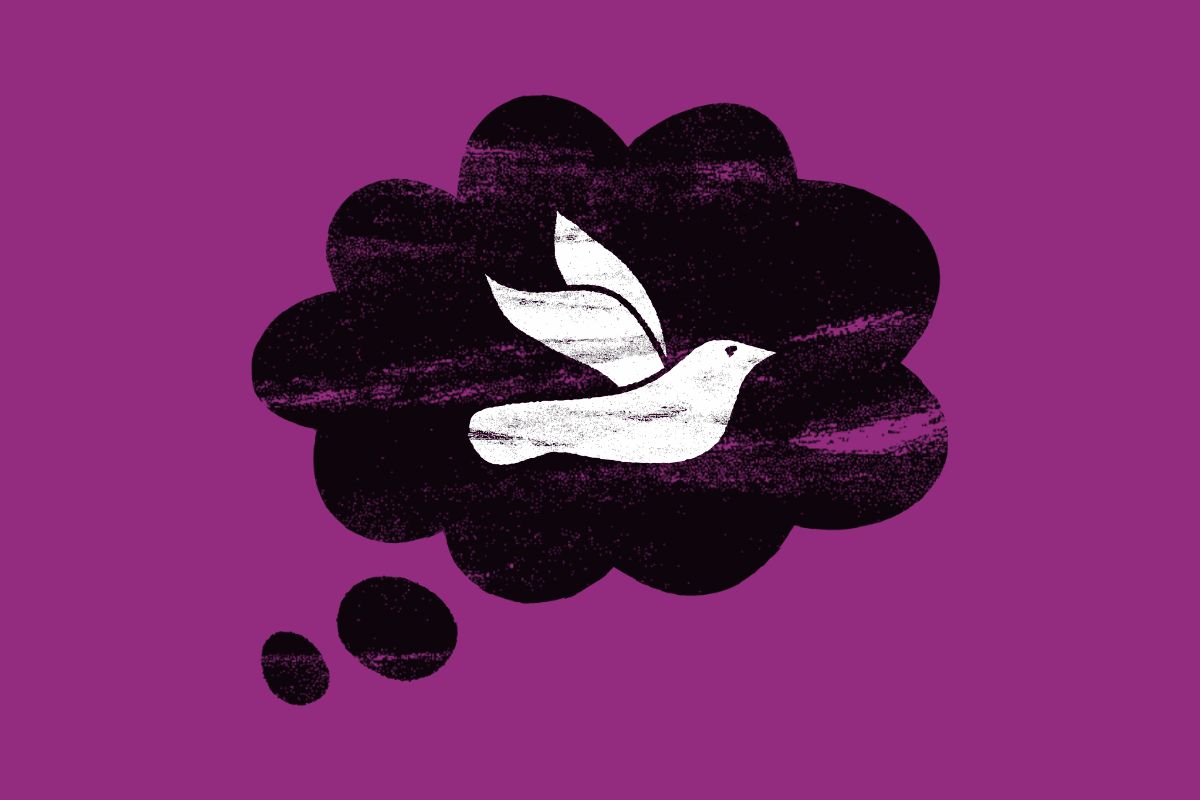
An illustration of a white dove in a black thought bubble

Illustration: TJI

Published: 11 July 2024

Last updated: 28 August 2024

This is the fourth instalment of a six-part series, Be Fruitful: Fertility Journeys in Modern Jewish Lives, which explores the complex and sometimes taboo journey to parenthood in the Jewish community.

Just because you decide to have a baby, doesn’t mean you’re going to have one or that your road to get there will travel in a straight line. Lord knows, things don’t always go according to plan. 

We have lots of ways to celebrate when they do; naming ceremonies, gender reveals, baby showers. But when it comes to baby-making, we’re not very well-equipped to deal with it, when those plans go slightly – or very much – awry. 

Ask anyone who knows me and they’ll tell you there is probably no one more stubborn in the entire world. So when I decided that I wanted to force cultural change in the early pregnancy loss and miscarriage space, the silence, the taboo, the inexplicably sub-standard care, they didn’t stand a chance. It took me around five years to get a full and complete picture of these challenges.

I was denied entry to the Orthodox mikveh to mourn a termination for medical reasons because my partner wasn’t Jewish.

My own pregnancy journey had resulted in seven angel babies and two living children. But my journey wasn’t just informed by my own lived experience. My presence in so many support groups, both receiving and offering support, meant that over the years I gained a wide insight into the common and not-so-common challenges faced by patients, their partners and their families and friends.

I had doctors telling me that if only women had a proper education, they wouldn’t even be sad when they lost a baby. I was denied entry to the Orthodox mikveh to mourn a termination for medical reasons because my partner wasn’t Jewish. I had to sit in waiting rooms to see if I was losing my baby while heavily pregnant women around me talked about baby names and showed off their ultrasounds. Friends minimised my losses or got bored of watching me grieve and just… moved on.

That only represents some of my own experiences, the tip of the iceberg I came to find.

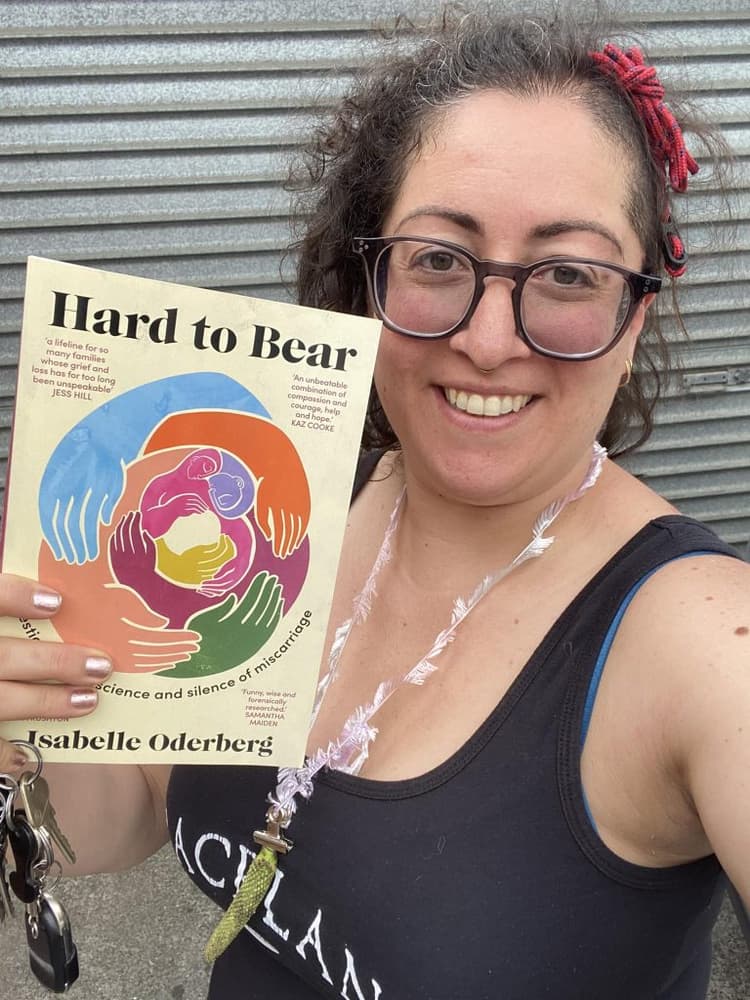
I started conducting my own investigations and wrote several articles for the likes of Guardian Australia, as I worked towards what I didn’t realise at the time would become my book, Hard to Bear: Investigating the science and silence of miscarriage.

Oderberg's book <em>Hard to Bear</em> is a groundbreaking investigation into miscarriage care, reproductive health and inequalities in our health system (Image: Facebook).
Oderberg's book Hard to Bear is a groundbreaking investigation into miscarriage care, reproductive health and inequalities in our health system (Image: Facebook).

The first publisher I approached said that she “didn’t want to read about my miscarriages and she didn’t think anyone else would either”. Except, the book wasn’t about my losses. It was a wholesale investigation into what led us to where we sit today. It was blatantly clear that she (yes, she was a woman) just wasn’t listening.

Up to 150,000 families experience miscarriage in Australia each year. That’s more than one miscarriage every five minutes. My first publishing offer was from an experienced, well-known publisher who was excited by the concept and my ideas. But she couldn’t get the idea past sales because they just “didn’t think they could get the numbers to work”. 

When I finally did get a publishing contract and wrote my book, the publicity machine threw up all sorts of new challenges. 

A well-known evening current affairs program declined to have me on the show. “No one wants to hear about this topic while they’re having dinner.”

A breakfast news show also declined to have me in as a guest. “No one wants to hear about this topic while they’re having breakfast.”

And on it went, the struggle to give this issue visibility, to circulate air around it and give it space to breathe, was all the evidence I needed that I was on the right track to cracking this persistent taboo, discomfort and silence wide open. But gee whiz, the constant rejections felt like consistent, low-grade thuds to my guts as I persevered onwards.

I’m not the first person to work on this issue or push for better care. But I am the first person to come into the Australian miscarriage sector and bring everyone together.

After the release of my book, I set up a charity that I now Chair called the Early Pregnancy Loss Coalition, representing member organisations from across the country who work on this issue: support service providers, medical professionals, nurses, midwives, ultrasonologists, psychologists and so on.

In May 2024, we saw the first real win in this new push. The Federal Government announced it had allocated budget funding dedicated to miscarriage care and research for the first time ever, to the tune of around $10 million. 

Together, we can bring change and ultimately, that’s what I aim to do.

With these week's announcement of dedicated funding for miscarriage support, research and data collection, Early Pregnancy Loss Coalition chair and co-founder Isabelle Oderberg (and author of the book Hard to Bear) spoke at a press conference held by Assistant Minister for Health Ged Kearney and Pink Elephants Support Network, about the importance of the announcement and what it means for people who experience loss. Please visit www.eplc.au to learn more about us and our work or if you need support services please visit www.miscarriageaustralia.com.au.

Posted by Early Pregnancy Loss Coalition on Friday, May 17, 2024

I’m not the first person to work on this issue or push for better care. But I am the first person to come into the Australian miscarriage sector and bring everyone together.

The whole is greater than the sum of its parts and I am showing that if we galvanise all these strong, passionate advocates who operate in this space, we can ensure that real, tangible change is just around the corner.

For more support, download the Australian Jewish Fertility Network's free Miscarriage Guide, which helps community members deal with and talk about early pregnancy loss, and learn more about the Early Pregnancy Loss Coalition.

You might also like
  • Miscarriage, menopause, gender transition: mikvah reinvented
    Roz Bellamy
  • Confronting the taboo of a child-free life
    Ruby Kraner-Tucci
  • Not my blood and bones, but my heart and soul
    Jeremie Bracka
logomark.67a07ee3
We believe in the free flow of information

Republish our articles for free, online or in print, by using our Creative Commons licence

You might also like

    Futurism
    OpinionLifestyle

    Jewish Futurism? We’ve been practising it for millennia 

    Renata Zimbarg 1
    single – lead image
    FeatureLifestyle

    On my own (terms)

    Jarod Rhine-Davis
    Keshet
    FeatureLifestyle

    ‘We won’t ever leave’: Keshet Europe’s fight for Jewish LGBT+ inclusion

    Gideon Cohen

About the author

Isabelle Oderberg

Isabelle Oderberg

Isabelle Oderberg's journalism has appeared in The Age/SMH, Guardian, ABC, Meanjin and elsewhere. She also worked as a media and communications strategist across the not-for-profit sector. She is the author of Hard to Bear: Investigating the science and silence of miscarriage (Ultimo Press), and Chair of the Early Pregnancy Loss Coalition. Learn more at eplc.au.

More from the author

OpinionAustralia

The new McCarthyism: Anti-Zionist witch hunts

OpinionAustralia

‘Australian values’ – an immigration test with no answer

OpinionArts & Culture

Randa Abdel-Fattah is a perverse poster child for free speech

OpinionArts & Culture

I would have attended Bendigo Writers Festival… and said anything I liked

Comments1

  • Avatar of Justine Saidman

    Justine Saidman12 July at 01:43 am

    Anyone experiencing miscarriage or loss can reach out to the Australian Jewish Fertility Network (AJFN) for support.