Aa
  • Read, Watch, Listen
  • TJI Series
  • Community Action
  • Events
  • Zedi
Follow us and continue the conversation
  • LinkedIn
  • Instagram
  • FaceBook
  • X
  • YouTube
Test yourself with the TJI Quiz!

Adjust size of text

Aa

Follow us and continue the conversation

  • LinkedIn
  • Instagram
  • FaceBook
  • X
  • YouTube

Your saved articles

You haven't saved any articles

What are you looking for?

Original reporting, insightful analysis and diverse views, delivered straight to your inbox

  • LinkedIn
  • Instagram
  • FaceBook
  • X
  • YouTube
Your support fuels our mission to inform, entertain and inspire.

The Jewish Independent is bound by the Standards of Practice of the Australian Press Council. If you believe the Standards may have been breached, you may approach The Jewish Independent or make a complaint to the Australian Press Council in writing at www.presscouncil.org.au. The Council may also be contacted on 1800 025 712.

  • Our Story
  • Contact us
  • Our Team
  • Support us
  • Guidelines
  • Pitch your idea
  • Republishing us
  • Community Action
  • Our Awards
  • LinkedIn
  • Instagram
  • FaceBook
  • X
  • YouTube
Aboriginal FlagTorres Strait Islanders Flag

The Jewish Independent acknowledges Aboriginal and Torres Strait Islander peoples as the Traditional Owners and Custodians of Country throughout Australia. We pay our respects to Elders past and present, and strive to honour their rich history of storytelling in our work and mission.

© The Jewish Independent 2026All Rights Reserved
Website design and development by Your Creative, MelbourneTerms & ConditionsPrivacy Policy
HomeRead, Watch, ListenArts & Culture
Israel Hamas WarInterviewArts & CultureIsrael

Compelling fly-on-the-wall portrait of a hostage family

Acclaimed documentary Holding Liat tracks the daunting journey of a hostage family and is also a microcosm of the deeply conflicted politics behind the Israel-Palestine conflict.
Deborah Cassrels
Print this
Holding Liat

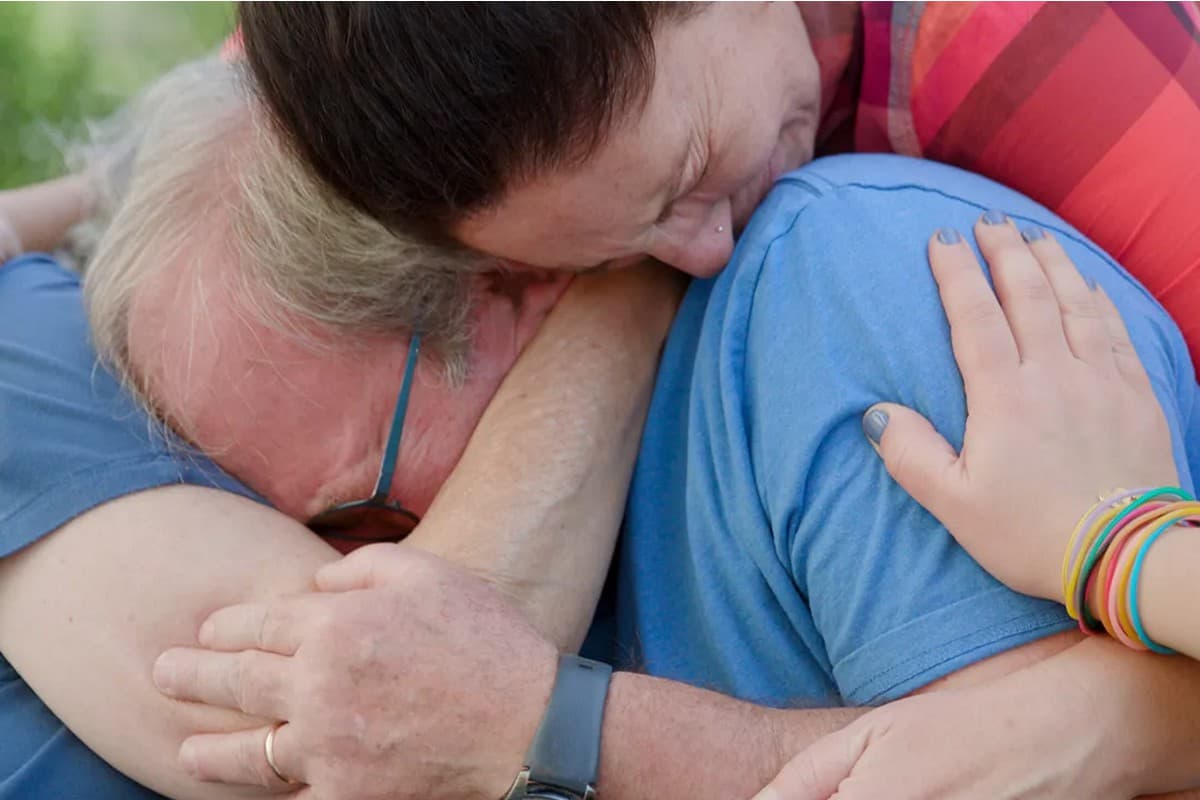
Holding Liat offers a profoundly intimate account of one family’s experience following the Hamas attack (JIFF 2025/Screenshot).

Published: 5 August 2025

Last updated: 5 August 2025

The zoomed-in image of a dishevelled, stubble-faced man sitting outside, phone to his ear, confronts cinema-goers. Yehuda Beinin, 72, an American- Israeli, has undoubtedly hardly slept in the past days since his daughter and son-in-law were disappeared from their home in Kibbutz Nir Oz in southern Israel on October 7, 2023. 

His eyes bulge when he learns from an Israeli Army Liaison officer that his daughter Liat was kidnapped by terrorists and is alive in Gaza, then dim as he’s told there is no news of her Israeli husband, Aviv Atzili.

While the award-winning US documentary, Holding Liat, tracks the daunting journey of one hostage family facing their worst nightmare, it is also a microcosm of the politics and divergent perspectives behind the Israel-Palestine conflict feeding into the hostage narrative. Its success in achieving that was recognised with the prize for Best Documentary at the Berlinale International Film Festival in February.

Liat Atzili’s experience under Hamas captivity was extraordinary. Having been abducted from her kibbutz home near the Gaza border, the 50-year-old mother of three, in a state of shock, found her captors, strangely kind and humane.

She was mostly held in an apartment in Khan Younis – not in tunnels - with another woman from Nir Oz under the watch of two religious fundamentalist Hamas guards, one of whom was a lawyer, the other a teacher. The women were fed well, they could shower, watch English TV, and even held long conversations with the guards in English, largely about politics.

The confusion of her treatment in captivity was matched by her confusion when her captors ordered her to go with them but promised not to harm her.
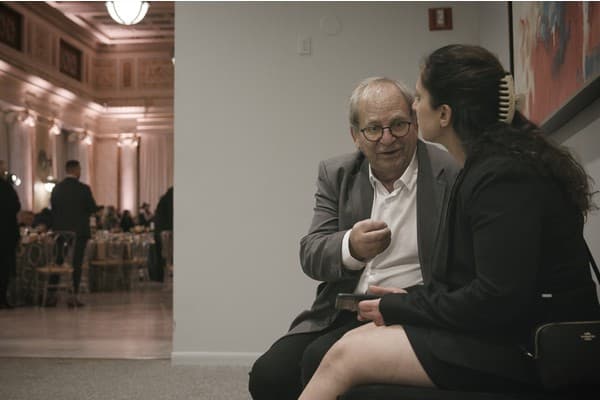
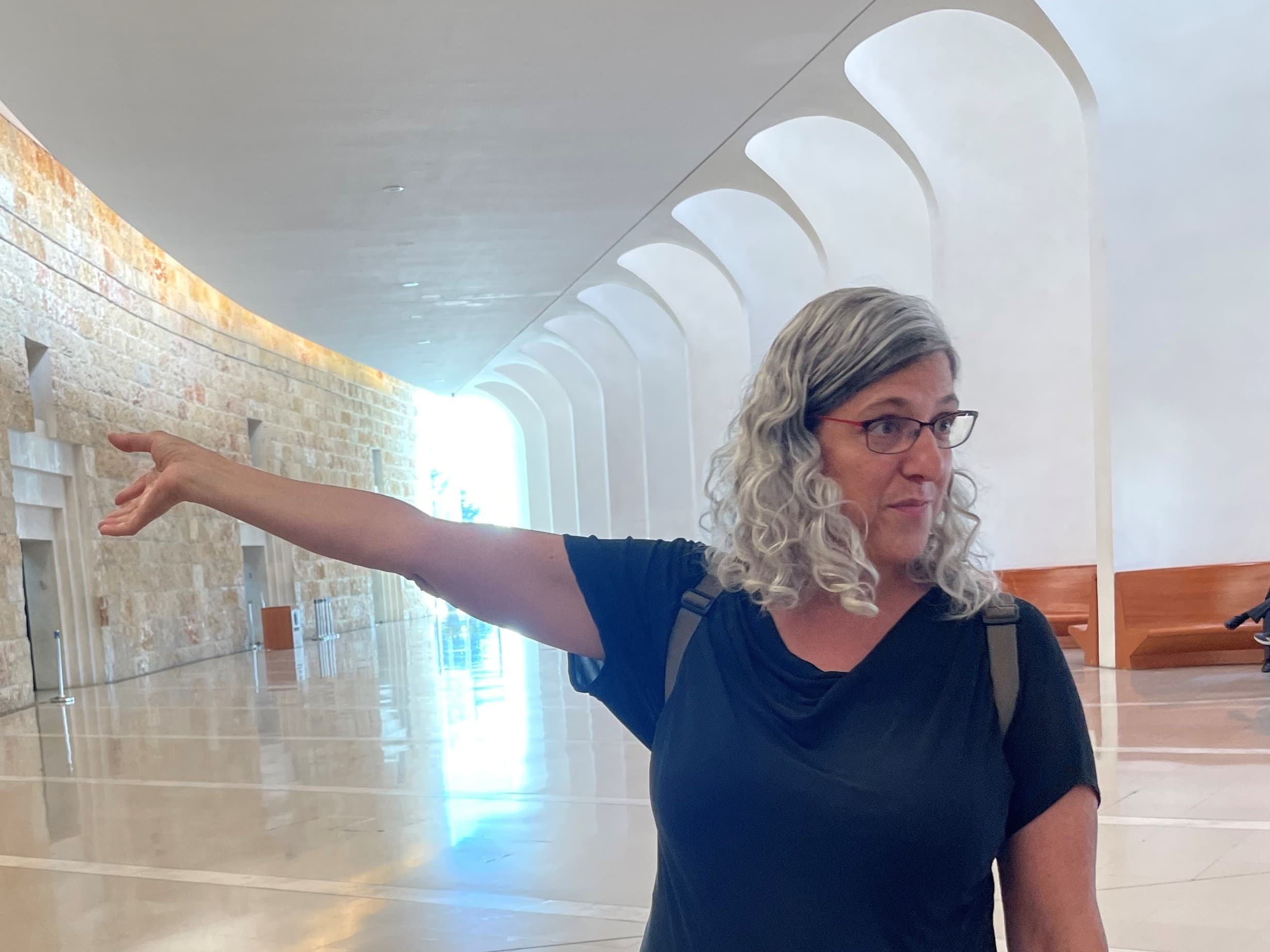
“Obviously it’s not an easy thing to go through and I know that I was incredibly lucky. They kept saying our job is to protect you and keep you safe and healthy until you’re released,’’ she says in an interview with The Atlantic in the film.

Liat knew nothing about her family and was terrified for their safety. Her daughter Aya washer only child not at Nir Oz on October 7. “I was so worried that something would happen to one of them (her two sons) and to Aviv because I wouldn’t be able to get over having to deal with losing a child without Aviv,’’ she says.

She was held for almost two months and notified 14 hours after her release on the last day of the ceasefire that Aviv, 49, had been murdered on October 7. A member of the kibbutz’s first response team, Aviv had tried to protect it after hearing gunfire. He was among 1200 Israeli civilians killed that day, unleashing Israel’s war in the Gaza Strip. His body was only returned in June. 

The film has an urgency about it, mirroring the high tension and horror the family face. In the lead-up to the first ceasefire, family members join Yehuda for high-level delegations to Washington by American-Israeli citizens to secure the hostages’ return.

The lens follows Yehuda, Liat’s sister, Tal, Liat and Aviv’s youngest son, Netta, 22, and Yehuda’s brother, Joel Beinin, a Middle East history professor at Stanford University who is so disillusioned by Israel he returned to the US years ago. The brothers had moved to Israel in the ‘70s to enjoy the socialist kibbutz dream.

Family at loggerheads

Grappling with grief and turmoil amid a divisive US landscape - pro and anti-Israel rallies, heated Orthodox and hostage group dialogues – the family is frequently at loggerheads with one another.

For Yehuda, a progressive kibbutznik who vehemently opposes the Netanyahu government’s war on Gaza but is adamant Hamas must go, the delegation is not just about winning politicians’ hearts. It is an opportunity to push for peace and reconciliation, fuelling friction within the family and other hostage families who just want their loved ones returned.

Of the 250 hostages dragged into Gaza, Liat was one of 12 US citizens helped by the former US Biden administration in her release.

Shortly after the kidnappings, Liat’s relatives, US filmmaker brothers Brandon and Lance Kramer started documenting events as they unfolded. The result is a powerful fly-on-the-wall portrait of a family rocked by the catastrophe, buffeted in their goal to free Liat and forced to confront their differences at a time of polarisation around the conflict.

Shot in real time in Israel and the US, the film initially follows Yehuda and wife Chaya to Nir Oz, which sustained the most killings, abductions and destruction by Hamas. The couple wander through Liat’s burnt-out house and desolate landscape, once a thriving garden of Eden. Grandsons, Netta, 22, and Ofir, 24, were miraculously physically unscathed in their safe room but Netta was left angry and revengeful – something Yehuda abhors.

The Jewish Independent

In Washington, the secular Yehuda clashes with Orthodox Jews and, at a Save the Hostage rally that descends into a raucous Zionist display, he leaves, disgusted.

Yehuda spoke to The Jewish Independent about his conflicted feelings. “There’s an inhuman, not moral situation that’s developed (In Gaza) and it’s not sustainable. There may be people who think it’s a tremendously antisemitic, anti-Israel film, and people have said that in Israel,’’ he says.

“But the point I make in the film is that religious fanatics are running the show in Israel and in Palestine and they’re all crazy. Bibi (Netanyahu) understands here is an opportunity to realise what is the classic dream of every right-wing politician. Never waste a crisis to advance your agenda. His agenda is preserving his government, annexing the West Bank, making his Coalition partners happy. The hostages are not on Bibi’s agenda.

“The result is all this death and destruction.’’

By the same token, he says the opportunity to leverage this tragedy has gathered momentum. “If you have a child or family member who’s been killed in the background of this hostage business, that’s worth a lot of money. Liat and her kids are millionaires as a result of what they went through – they received reparations from the Israeli government. People don’t mention it but that’s the reality,’’ he tells TJI.”

The documentary had no script.

Doco with no script

Nobody had any idea about how it was going to end, Yehuda tells TJI. But as the hostage situation dragged on, the film took on a life of its own.

Was he uncomfortable with the roving lens exposing the family at their most vulnerable?

“What makes good art is the degree to which the artist can expose their soul to the scrutiny of the client or society. I don’t have an issue with it.’’ 

However, it took some time after Liat’s release for all family members to consent.

In the end, it’s documenting history, Brandon Kramer says.  Liat, as a history teacher and educator at Jerusalem’s Yad Vashem Holocaust Museum –  work she has gladly resumed – realised its importance.  

Last year, in an essay for The New York Times, she wrote of tekumah, meaning rebirth, “after Holocaust survivors chose to rebuild a nation rather than lose itself to grief and vengeance’’.

“It also means working toward a rebirth for Gaza. I hope those responsible for launching this war are replaced with people who want a better future alongside Israel,’’ she wrote.

Now living in an apartment complex with other Nir Oz members courtesy of the Israeli government, Liat will this month (August) return to her home in Nir Oz as the government rebuilds the kibbutz.

“My thoughts about … what’s happening in Gaza are complex,’’ Liat says in the film. “People are saying we shouldn’t let humanitarian aid into Gaza. And it’s horrifying to hear.  I don’t care that it allows Hamas to keep fighting but people shouldn’t starve to death no matter who they are.  By the same token, it’s not okay to go into people’s houses and take them hostage either.’’

Yehuda heard the good news of Liat’s release in a phone call from former president Joe Biden who invited the family to the White House. They visited in July 2024.

Though Biden labelled her a survivor and the term is anathema to Liat, she admits she is indeed a victim and a survivor.

“And I think that if before October 7, peace was an option, now there’s no choice. This cannot be the way we live in the Middle East.

“I think a permanent ceasefire that would have ensured the return of the hostages, the rebuilding of Gaza, the rebuilding of the kibbutzim in Israel, and talks to reach a lasting agreement should have happened months ago.’’

SCREENING DETAILS

Holding Liat premieres in Australia at the Melbourne International Film Festival. It screens at 6.30pm on August 13 at the Kino in the city, and at 4.15pm on August 20 at Cinema Nova in Carlton.

You might also like
  • New evidence Netanyahu was warned about October 7
    Shahar Burla
  • Who is Ofer Winter and could he upset Netanyahu’s election?
    Shahar Burla
  • Diaspora leadership must be candid about its disillusion with Netanyahu
    Colin Shindler
logomark.67a07ee3
We believe in the free flow of information

Republish our articles for free, online or in print, by using our Creative Commons licence

You might also like

    Arab Israeli Palestinian election vote
    Israel Votes 2026FeatureIsrael

    Fear of Netanyahu victory may drive big surge in Palestinian voter turnout

    Ben Lynfield
    Woman with land and houses behind her
    NewsAustralia

    Australia to increase sanctions against West Bank settlements

    Deborah Stone 2
    Btselem
    NewsIsrael

    ‘Israel is systemically eliminating Palestinian collective life’:  B’Tselem

    Deborah Stone

About the author

Deborah Cassrels

Deborah Cassrels

Deborah Cassrels was The Australian's first Bali-based correspondent, and worked in Indonesia for a decade from 2009. She has written extensively on politics, terrorism, refugees, crime and social justice. She was a Walkley Award finalist in 2016 for her work on terrorism in Indonesia. Her memoir about that period, Gods and Demons, was published in 2020.

More from the author

FeatureWorld

The riches to rags story of Indonesia’s Iraqi Jews

FeatureArts & Culture

Modern revival for Portugal’s ancient Jewish community

InterviewArts & Culture

Israel-Hamas poster war tears the social fabric of New York

Comments1

  • Avatar of Yehuda Beinin

    Yehuda Beinin5 August at 12:23 pm

    Thank you!