Aa
  • Read, Watch, Listen
  • TJI Series
  • Community Action
  • Events
  • Zedi
Follow us and continue the conversation
  • LinkedIn
  • Instagram
  • FaceBook
  • X
  • YouTube
Test yourself with the TJI Quiz!

Adjust size of text

Aa

Follow us and continue the conversation

  • LinkedIn
  • Instagram
  • FaceBook
  • X
  • YouTube

Your saved articles

You haven't saved any articles

What are you looking for?

Original reporting, insightful analysis and diverse views, delivered straight to your inbox

  • LinkedIn
  • Instagram
  • FaceBook
  • X
  • YouTube
Your support fuels our mission to inform, entertain and inspire.

The Jewish Independent is bound by the Standards of Practice of the Australian Press Council. If you believe the Standards may have been breached, you may approach The Jewish Independent or make a complaint to the Australian Press Council in writing at www.presscouncil.org.au. The Council may also be contacted on 1800 025 712.

  • Our Story
  • Contact us
  • Our Team
  • Support us
  • Guidelines
  • Pitch your idea
  • Republishing us
  • Community Action
  • Our Awards
  • LinkedIn
  • Instagram
  • FaceBook
  • X
  • YouTube
Aboriginal FlagTorres Strait Islanders Flag

The Jewish Independent acknowledges Aboriginal and Torres Strait Islander peoples as the Traditional Owners and Custodians of Country throughout Australia. We pay our respects to Elders past and present, and strive to honour their rich history of storytelling in our work and mission.

© The Jewish Independent 2026All Rights Reserved
Website design and development by Your Creative, MelbourneTerms & ConditionsPrivacy Policy
HomeRead, Watch, ListenArts & Culture
Israel Hamas WarInterviewArts & Culture

Israel-Hamas poster war tears the social fabric of New York

A new documentary chronicles how the Kidnapped poster campaign turned the city into an ideological battleground after the October 7 massacre.
Deborah Cassrels
Print this
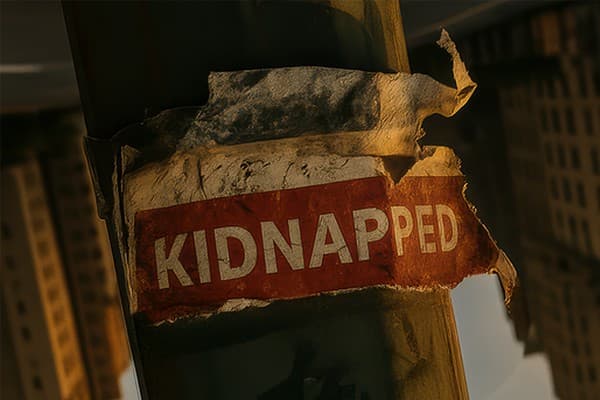
Photo from the documentary Torn

A Kidnapped poster from the documentary Torn (Image: publicity still).

Published: 17 September 2025

Last updated: 18 September 2025

A young man walks purposefully toward a bunch of "Kidnapped" hostage posters stuck to a fence and tears them down. Asked why he did so, he replies: "Get the fuck out of my face".

The tone is set for Torn, an unsettling, deeply important documentary that reflects the evolving political stance on the Israel-Gaza war through a contentious poster campaign on New York City streets.

Far from the conflict that exploded on October 7, the Kidnapped campaign achieved its objective to raise awareness of the hostages but incidentally weaponised fierce differences between New Yorkers. The city has the largest Muslim and Jewish populations in the US.

The posters became flashpoints as visceral clashes turned the city into an ideological battleground days after Hamas stormed Israel, killing 1200 Israelis and taking 251 hostage.

Torn down, defaced, burnt, spraypainted, slashed and erased, they mirror a fractured, paranoid community driven by fake news, hatred and antisemitic protests.

Raw hate

"I show the clashes on the streets of New York. Some of them are very hard to watch because you see raw hate," says the film’s award-winning American-Israeli director, Nim Shapira.

Torn, which follows events for three months after October 7, remains timely and necessary as global protests intensify amid urgent calls for a ceasefire and the hostages’ return. If the posters reflect the ire of Palestinian protesters, they continue to provide solidarity and support to those grieving the hostages.

American-Israelis Liam Zeitchik and his sister Alana – an advocate for Israeli and Palestinian coexistence – are seen in the film stunned as they watch the October 7 atrocities play out on TV. Six of their Israeli cousins were abducted. All have since been released except a husband and father, David Cunio, and his brother Ariel.
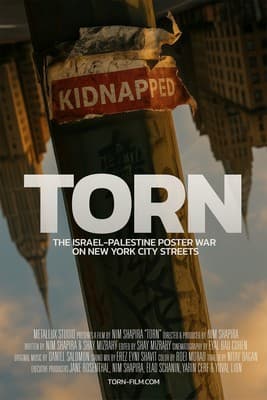
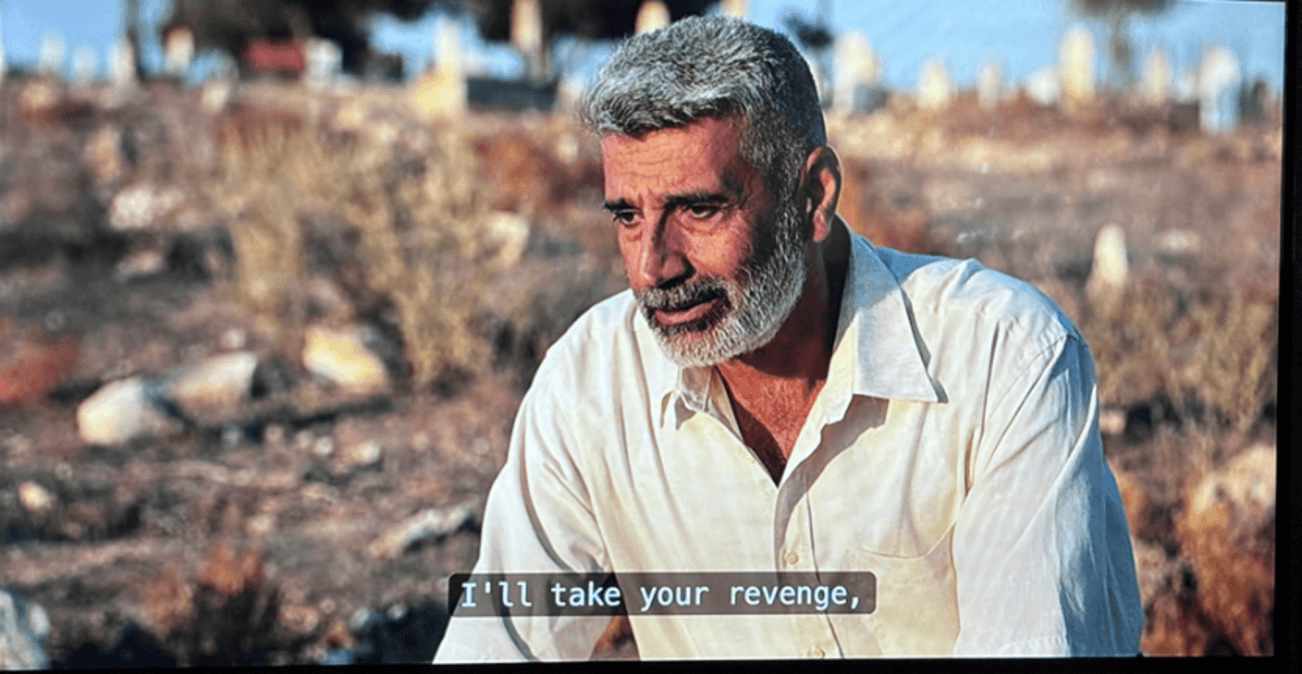
“I started to see these posters around. To see that other people cared was something that helped me get through every day since October 7. It meant the world to me," Liam says. Later he buys a security camera to see who is ripping down the posters he hangs daily outside his home.

The Jewish Independent

The film explores how the posters came to embody divisive symbols of hatred and misinformation – and the case for freedom of expression.

Bigoted slogans, doxxing (on both sides) and accusations of Israeli genocide and propaganda, ethnic cleansing and colonisation flooded the infosphere.

“These people (Jews) are being exploited to get support for a genocidal war against Palestinians," claims a female, out of view, as she rips down posters.

Another, a Keffiyeh-clad woman, says: “The whole purpose of putting those [posters up] was to agitate. It was to rile people up."

Shapira, 42, captures a layered narrative as he interweaves pro-Palestine reactions with Israeli activism and news updates panning to the destruction of Gaza.

“I show how a war that is thousands of miles away turned into a proxy war with paper and glue. People who ripped down the signs are from every background and ethnicity and age group."

Since opening last year, the independent film has screened largely at US and European film festivals, colleges, interfaith centres and Ivy League universities where antisemitism and discrimination spiked after October 7.

Shapira did not pursue government funding to avoid the perception the film may have an Israel agenda. As an American film, he wanted to keep it rooted in the New York experience of the Israel-Hamas war.

Security needed at screenings

Amid the volatile climate, security has been required at screenings, especially after an Israeli couple were shot dead outside a Jewish museum in Washington in May and a terrorist targeted a pro-Israel hostage rally in Colorado in June.

“Definitely, I am scared when screening the film," Shapira tells TJI.

Ironically, the film itself has become weaponised. While screening at The New School, Students for Justice in Palestine (SJP) posted on Instagram that the Dean had attended a pro-genocide film by an Israeli filmmaker. SJP activists have called for Zionists to be removed from universities and urged Zionist intimidation and harassment.

“It’s crazy that I made a movie about freedom of speech and I am almost afraid to show it. I have to be careful,” Shapira says. Happily, no one has yet disrupted screenings.

Shapira relied on TV interviews and livestreams for footage because no-one who tore down posters agreed to be interviewed.

“Dozens of social media videos showing individuals tearing down posters while explaining why offered raw, unfiltered insight into their motivations,“ he told TJI. “All the videos are taken from Instagram, TikTok and X. They were pretty viral and everyday more surfaced."

Among those who do speak out are hostage family members, hostage activists, a rabbi and Jewish academics, one of whom notes freedom of expression may suffer if the cost is too high, such as losing your job, or getting “cancelled”, as the film shows.

But as the Gazan death toll rises, hostility over the posters has become ever more maniacal. “The biggest question I ask is, is empathy a limited resource?" There can be empathy for the Palestinians and the Jews simultaneously, Shapira says.

Social media aggravated tensions

Torn holds a mirror to the role of social media and its impact on both sides. At a pro-Palestine rally, a sense of chaos escalates as accusations fly that Jews are on witch hunts seeking to publicly shame those destroying posters.

“Most people on social media live in echo chambers, preaching to their own choir," Shapira says.

“The algorithm feeds you content that aligns with your views, so you rarely see the other side unless it’s being mocked, attacked or vilified. There’s no fact-checking, no shared reality and… no conversation.

“Social media – on both sides – didn’t just reflect the conflict, it accelerated it. That’s why it’s such a central thread in Torn."

Indeed, the posters initially went viral due to social media. In a TV segment in Torn, a man caught ripping down posters claims: “It is pathetic propaganda... these posters that portray Israelis purely as victims. It is more about rallying the Israeli government, not about advocacy for their (hostages’) return."

Poster campaign creators

The poster campaign is the brainchild of Israeli street artists Dede Bandaid, 38, and his partner Nitzan Mintz, 34, who moved to New York for an art program. They fast-tracked the posters just after the massacre to push for the return of the hostages.

Less than 48 hours later, after reaching out to Facebook friends, they had photos of hostages on posters boldly headlined "Kidnapped".

They churned out dozens of posters, putting them up city-wide. Initially there was little interest. Deflated, the couple uploaded the posters on social media and went to bed. They woke to find they had gone viral globally.

The posters were translated into 37 languages and hung in cities worldwide. After an initial outpouring of empathy, sentiment turned. “It was one of the most widespread guerrilla public artworks in history", says Bandaid – a pseudonym for his iconic art brand.

Asked if the poster movement succeeded, the couple lament: “The goals of the campaign haven’t been reached. The hostages are still in captivity. It created a lot of awareness… but it didn’t solve our despair."

Still, Bandaid tells TJI the campaign has done a lot of good. “We don’t feel [the hostages] are forgotten. We just feel both sides don’t do enough. And we feel like too many people in the world don’t understand they are supporting Hamas, which is a terror organisation."

Director cancelled from events

Shapira says New York has changed since October 7 and the social fabric of the city has been torn. Personally, he has been cancelled from landmark events.

“I have friends who stopped talking to me – non-Jews, some colleagues. Some said the hostages were AI or actors.

“As humans, I thought all courtesies were destroyed. There’s a lot of space for Palestinian suffering and no space for Jewish suffering," Shapira continued.

The Australian premiere of Torn will screen on September 30 in Melbourne. The 75-minute documentary is hosted by Australian Zionist youth organisations in collaboration with United with Israel and Hatikvah Australia.

All proceeds will be donated to the Hostages and Missing Families Forum. Torn's award-winning director, Nim Shapira, will discuss the film from New York via Zoom following the screening. 

You might also like
  • From NY to Melbourne, local politicians are whipping up hate 
    Nomi Kaltmann
  • For years, governments knew there were Nazis living in Australia and covered it up
    Dan Goldberg
  • Controversial frontrunner makes mayoral race a test for Jewish New Yorkers 
    Dan Coleman
logomark.67a07ee3
We believe in the free flow of information

Republish our articles for free, online or in print, by using our Creative Commons licence

You might also like

    Jewish word map
    FeatureArts & Culture

    Was the barmi a shemozzle? How Australians use Jewish words 

    Caroline Hendy & Emma Breslow 1
    Wake main 2nd
    FeatureArts & Culture

    New ‘spoken word’ festival in Sydney offers stories directly from creators

    Miriam Hechtman
    Generation Change: Rachel Moshel
    Generation ChangeInterviewArts & Culture

    Rachel Moshel: Creating a space for Jewish art and joy

    Gideon Cohen

About the author

Deborah Cassrels

Deborah Cassrels

Deborah Cassrels was The Australian's first Bali-based correspondent, and worked in Indonesia for a decade from 2009. She has written extensively on politics, terrorism, refugees, crime and social justice. She was a Walkley Award finalist in 2016 for her work on terrorism in Indonesia. Her memoir about that period, Gods and Demons, was published in 2020.

More from the author

FeatureWorld

The riches to rags story of Indonesia’s Iraqi Jews

FeatureArts & Culture

Modern revival for Portugal’s ancient Jewish community

InterviewArts & Culture

Compelling fly-on-the-wall portrait of a hostage family

Comments

No comments on this article yet. Be the first to add your thoughts.