Aa
  • Read, Watch, Listen
  • TJI Series
  • Community Action
  • Events
  • Zedi
Follow us and continue the conversation
  • LinkedIn
  • Instagram
  • FaceBook
  • X
  • YouTube
Test yourself with the TJI Quiz!

Adjust size of text

Aa

Follow us and continue the conversation

  • LinkedIn
  • Instagram
  • FaceBook
  • X
  • YouTube

Your saved articles

You haven't saved any articles

What are you looking for?

Original reporting, insightful analysis and diverse views, delivered straight to your inbox

  • LinkedIn
  • Instagram
  • FaceBook
  • X
  • YouTube
Your support fuels our mission to inform, entertain and inspire.

The Jewish Independent is bound by the Standards of Practice of the Australian Press Council. If you believe the Standards may have been breached, you may approach The Jewish Independent or make a complaint to the Australian Press Council in writing at www.presscouncil.org.au. The Council may also be contacted on 1800 025 712.

  • Our Story
  • Contact us
  • Our Team
  • Support us
  • Guidelines
  • Pitch your idea
  • Republishing us
  • Community Action
  • Our Awards
  • LinkedIn
  • Instagram
  • FaceBook
  • X
  • YouTube
Aboriginal FlagTorres Strait Islanders Flag

The Jewish Independent acknowledges Aboriginal and Torres Strait Islander peoples as the Traditional Owners and Custodians of Country throughout Australia. We pay our respects to Elders past and present, and strive to honour their rich history of storytelling in our work and mission.

© The Jewish Independent 2026All Rights Reserved
Website design and development by Your Creative, MelbourneTerms & ConditionsPrivacy Policy
HomeRead, Watch, Listen
Feature

DATELINE LOD: ‘I believed in the idea of coexistence, but not anymore’

Eetta Prince-Gibson
Print this

Published: 25 May 2021

Last updated: 4 March 2024

EETTA PRINCE-GIBSON visits the epicentre of Jewish-Arab violence and finds agreement on just one thing: there is no more common ground

AS HAMAS AND OTHER ISLAMIC GROUPS in Gaza fired thousands of missiles at Israel, and as Israeli planes intensively bombed the Gaza Strip during the most recent 11-day campaign, another front of violence and destruction opened throughout Israel, mainly in mixed cities, where Jews and Arabs have lived in close proximity in a tense, but mostly non-violent, form of co-existence for decades.

The worst of the violence was in Lod, a city of some 76,000 in central Israel, just 18 kilometres from Tel Aviv and 15 km from Israel's main international airport. For four days, gangs of mostly-young Arab men, many carrying knives and some apparently carrying live ammunition, threw stones and Molotov cocktails; gangs of Jewish men, some reportedly also armed, took to the streets to repulse them.

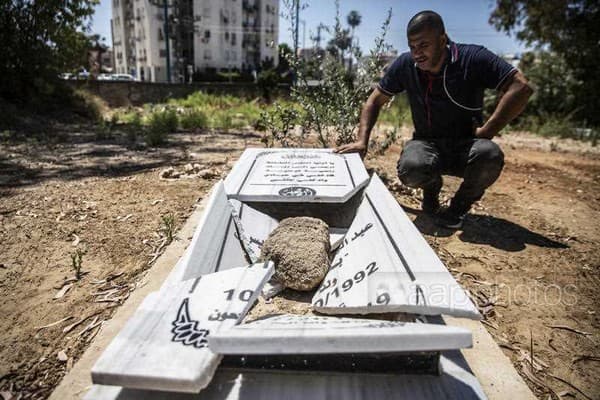
Two people were killed here, a 31-year-old Arab man shot by armed Jewish civilians, and a 56-year-old Jewish man, killed by an Arab mob. Synagogues and Jewish schools were torched, a Muslim cemetery and mosque were desecrated, cars and apartments and public areas were burned.

(In a separate incident, also in Lod, a 52-year-old Bedouin man and his 16-year-old daughter were killed when rockets fired from Gaza hit their car.)

In 1948, during Israel's war of independence, which Arabs refer to as Naqba, or the catastrophe, Israeli forces captured the city. Two hundred and fifty men, women and children were killed inside a mosque, and almost the entire rest of the population was forcibly expelled.

Today, the city is an impoverished backwater, approximately 80 percent Jewish and 20 percent Arab, suffering from neglect, crime, political corruption and municipal mismanagement. Most of the housing is made up of drab, crumbling apartment blocks.

Poor Jewish immigrants from Ethiopia and Eastern Europe have bought homes here, while most of the indigenous Arabs who can leave, do. Bedouins from the Negev have come in, and the state has also resettled here West Bank Palestinians who collaborated with Israeli security services, creating volatile intra- and inter-communal tensions.
When I visited the city late last week, the state of emergency and curfew had been lifted, but the strong smell of the smoke was still heavy in the unseasonably hot air. Few people were out on the streets, which were patrolled by police in full riot gear.

"In those days of terror, Jewish families were huddled at home, terrified of going out on the street," says Gal Ben-Shalom, a 25-year-old primary school teacher. "Our homes were set on fire, our synagogue and schools were burned. It was a pogrom."

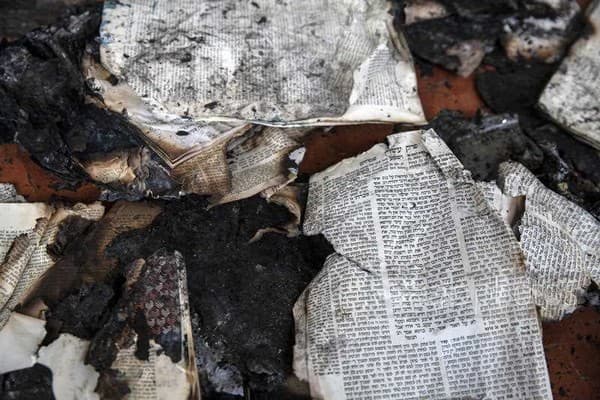
Burned Talmud books in the synagogue of the Maoz Military Preparation Program after it was damaged by fire during clashes in Lod, May 14 (AP/Heidi Levine)

Ben-Shalom has been appointed by the Garin Hatorani ("Torah-observant collective") to take me around the neighbourhood and present their perspective. He does so fluently and clearly, and it is obvious he has spoken to the media before.

The Garin Hatorani is a cohesive group of some 70 national-religious, Jewish families, mostly in their 20s and 30s, who have been moving into Lod over the past ten years. Representatives of the group maintain that they have come to Lod to live in a like-minded community in affordable housing in Israel's centre, and that their social and educational initiatives, such as improving the local community centre, will make the city better for everyone. 

Arab residents insist that the Garin Hatorani, like similar groups in cities with large non-Jewish populations throughout Israel, are ideologically motivated to "Judaize" the city and force out the local Arabs.

If a group of Arab families wants to move into a city, does that mean they are trying to 'Arabize' the city?

The mayor of Lod, Yair Ravivo, a longtime Netanyahu supporter, is their fan, and, according to the Times of Israel, in the last three years, the Garin Hatorani in Lod has received some NIS 6 million ($A2.4m) in benefits from the municipal budget.

Much of their activity is centred in the Ramat Eshkol district of Lod, which is also where most of the violence took place. In stark contrast to the empty streets almost everywhere else, Ramat Eshkol is full of activity. Israeli flags flutter from balconies and cars, and signs from religious Jewish communities from all over Israel are hanging everywhere, praising the group's members for their courage and steadfastness.

Ben-Shalom walks into a large, walled and gated compound, where the community's kindergartens and primary school are located, along with a pre-army work-study academy.  

During the riot, two classrooms were completely gutted and the central hall of the academy was vandalized and torched. Dozens of volunteers have been bussed in to Lod to help with the cleanup; by their dress, all appear to be religious, and many, according to the logos on their T-shirts and hats, come from settlements in the West Bank.  

They decline to say who has paid for the buses; Ben-Shalom says the Garin Hatorani is putting them up. Young men are replacing burned plasterboards, repairing and painting, young girls are handing out refreshments as mothers and fathers pick up their children from kindergarten. Scorched sheaves of holy texts have been carefully collected on a table; most will be buried, in accordance with Jewish law.

"We called the police to protect us, but the police didn't come for hours," Ben Shalom says. "We had to patrol by ourselves, to defend ourselves and our families against the riots".

Was Ben-Shalom armed? I ask. "Not exactly," he replies evasively, then continues: "I want to make it clear that our patrols are completely defensive. The police did not protect us, even though we were not causing any trouble. If not for the right-wing politicians, who believe in us and support us, the police would never have done their job and there would have been many more injuries."

We walk through the small, dingy neighbourhood, with its drab low-rise apartment buildings and garbage-strewn grounds. 

Ben-Shalom greets some teenage volunteers carrying tools. One of them is wearing a baseball cap, and Ben-Shalom tells him to put his kippah on. "We have scouts on lookout on the rooftops," he explains. "If they don't see you wearing a kippah, they won't know who you are."

We have scouts on lookout on the rooftops; If they don't see you wearing a kippah, they won't know who you are

In an apartment a few metres away, the smell of the smoke combines with the rancid smell of sewage. The apartment was completely destroyed by a Molotov cocktail. The owners were not home at the time, and nothing can be salvaged. A group of young girls, volunteers from nearby Jewish schools, are cleaning up, but Ben-Shalom says the Garin Hatorani will find another home for the family and leave the apartment almost as it is now, as a museum "to commemorate the events of this week."

Ben-Shalom angrily rejects the accusations made by Arab residents that the members of the Garin Hatorani hassle the neighbours and intend to drive the local residents out. "If a group of Arab families wants to move into a city, does that mean they are trying to 'Arabize' the city? Don't we Jews have the right to live anywhere in the Land of Israel?

"The Arabs here are directed by Hamas. They side with the Palestinians against the State of Israel. Until last week, I believed we could live in peace. But a line has been crossed, and I don't know what the future will be like.  I believed in the idea of coexistence, but not anymore.  Everything came crashing down."

A resident of Lod looks at one of the several vandalised graves in a Muslim cemetery, May 14 (AP/Heidi Levine)

Two Arab women, both in hijabs, are sitting outside on plastic chairs on the scrubby grounds.  They smile tentatively and tell me their apartment is stifling, so they are sitting on the "lawn."

The older woman, who looks to be in her fifties, is the mother of the younger, who seems in her late twenties. In halting Hebrew, they are happy to chat with me. But they do not want to be identified. "We are afraid of everyone – the Jews who will attack us if they know us, the Arabs who will attack us for talking to a Jewish journalist," says they older woman.

“Of course I condemn the violence,” she continues. “But most of the Arab rioters were young men, who are angry at everything – because they are poor, because they have no chance of a real education or job, because they have no hope. And they are angry at the Garin Hatorani, because they have come here to take away the little that they have."

She talks about the crime in the Arab communities in Israel, which has spiralled out of control over the past few years, culminating in a five per cent jump in the murder rate within only four years.  According to Amnon Be'eri-Sulitzeanu, co-executive director of the Abraham Initiatives, a Jewish-Arab NGO promoting integration and equality, the surge in violence is the result of "systematic, ongoing discrimination and neglect by all of Israel's governments".

The older woman says "most of the rioters are criminals from organised crime families, and we have been begging the police, the mayor, and the government to deal with it.  But as long as the violence was mostly Arabs killing Arabs, no one in Israel cared.  Now, because Jews have been killed and Jewish property has been vandalised, the police are out in force.

We are afraid of the Jews who will attack us if they know us, the Arabs who will attack us for talking to a Jewish journalist

"The majority of Arab people in Lod are not criminals, are not rioting, and don't approve of violence," says the younger woman. But we are tired of the discrimination. Israel treats us as second-class citizens – and even made it official, by passing a law [Nation-State Law] that defines Israel as the nation-state of the Jewish people. So what is left for us?

"We are citizens of Israel, but we are also Palestinians and Muslims. Jewish people like to point at mixed cities like Lod and say there is coexistence here. Hah! All that coexistence means is we aren't supposed to cause trouble and we should accept our status as second-class citizens and pretend we are not part of the Palestinian people.

“But something has changed now. I hope there won't be any more violence, but we have turned on each other, and now we can't go back to the previous situation."

Luna Isawi (supplied)

Suheir Isawi, 42, and her daughter, Luna, 17, live in Ramleh, a somewhat more upmarket mixed city next to Lod, with a similar-sized population. Suheir works as an administrator at Merhavim [an Israeli non-profit promoting diversity and inclusion] in Lod, and Luna attends a regional high school for gifted children there, where she majors in physics and Arabic.

Their duplex home is large and well-furnished, and their garden filled with bougainvillea bushes and flowers. They are both dressed fashionably in jeans and T-shirts and speak Hebrew naturally and effortlessly.

Suheir: "there wasn't much as much violence here in Ramleh, but it's still the same - we are discriminated against and we are denied our identity. My ancestors are from here; most of my family was expelled from here in the Naqba and fled to Gaza. When Israel bombs Gaza, it's my family that is dying.

"I am an Israeli citizen, but I am never comfortable here. If I say that I care about Gaza, I am told I am disloyal. Why? I don't support Hamas; I don't support terrorism.  If I say I am a proud Muslim, Jews look at me as if I am a terrorist.

I am an Israeli citizen but If I say that I care about Gaza, I am told I am disloyal. If I say I am a proud Muslim, Jews look at me as if I am a terrorist.

“The only place that I ever really feel comfortable is at Merhavim, because I can be my whole self – a Palestinian, a Muslim, and an Israeli citizen. People may not agree with me politically, but they accept who I am. Most Jews don't want me to be myself."

Luna's school has been closed since the escalation in Gaza and is scheduled to reopen soon. "On social media, I've been attacked by my classmates, who tell me to go to Gaza or things like that," she says. "If I identify with my family in Gaza, I am making a human statement, not a political statement. But Jews don't want to accept me with everything that I am and to recognize that we are the indigenous people here.

"I am a bit afraid to go back to school, but I will go back with pride, because I know that I care about all people, Jewish and Arab. But I am worried, too. The bubble of the so-called coexistence has been popped. We must find a new way to live; a way that treats everyone equally and sees all of our humanity."

READ MORE
Lod mayor threatens to report Arab councillor to Shin Bet security service
(Times of Israel)
Fida Shehade claims municipality neglecting safety of Arab residents; Mayor Yair Revivo: ‘Stop inciting. We have had enough already’; city files police complaint against her

Photo: A man stands by his burning car during clashes with Israeli Arabs and police in the city of Lod, May 11 (AP/Heidi Levine)

You might also like
  • Security fears and incitement drive young voters toward far-right
    Ben Lynfield
  • Arab women topple politician accused of sexual harassment in landmark case
    Ben Lynfield
  • ‘Israel is systemically eliminating Palestinian collective life’:  Israeli human rights report
    Deborah Stone
logomark.67a07ee3
We believe in the free flow of information

Republish our articles for free, online or in print, by using our Creative Commons licence

You might also like

    Jewish-diversity copy
    Feature

    The three questions that will define the Jewish future

    Shahar Burla 1
    Copy of Politica Podcast Social Tiles (600 x 400 px)
    Israel Iran WarPodcastIsrael

    Politica – Israeli Politics Explained

    The Jewish Independent 1
    Web Banner – Andrew Casey Internship

    Andrew Casey Memorial Internship Program

    Paul Amato

About the author

Eetta Prince-Gibson

Eetta Prince-Gibson, who lives in Jerusalem, was previously Editor-in-Chief of The Jerusalem Report, is the Israel Editor for Moment Magazine and a regular contributor to Haaretz, The Forward, PRI, and other Israeli and international publications.

More from the author

AnalysisIsrael

Segalovitz decision to join Arab party is a paradigm change for Israel

AnalysisIsrael

Netanyahu pre-election juggling act

AnalysisIsrael

Women disadvantaged by new powers for Israel’s religious courts

AnalysisArts & Culture

The Sea: deserving award-winning film or one-sided disgrace?