Published: 15 May 2024
Last updated: 13 May 2024
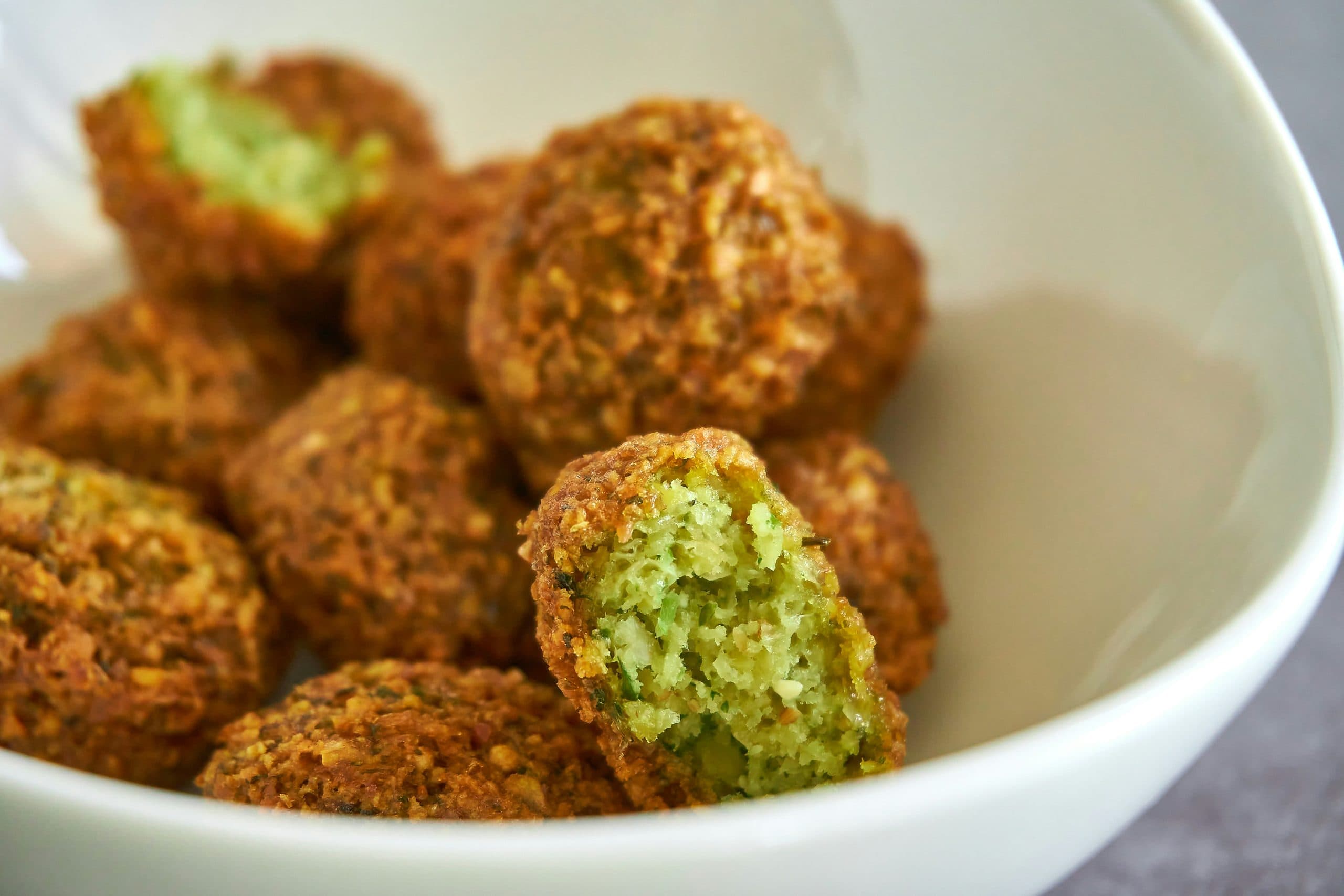
It is 1972, Dizengoff Square, Tel Aviv. I bite into the soft pita, crunch through the salad, find the super-hot burn-your-tongue crunchy edged fluffy-inside falafel balls. Lots of sauce running down my arm. I was eight and that was my first falafel pita.
Almost 20 years later I returned to Israel on my honeymoon, and I will never forget my husband’s uncle taking us to his favourite “of course it is the best” falafel stand. How I loved it. I took notice of the red cabbage, the pickles, the charif (hot sauce), and I understood for the first time that there needed to be a bite of a falafel ball in every mouthful.
For those who don’t know (although I can’t imagine anyone not knowing), a falafel pita (or wrap) is a globally revered Middle Eastern street food consisting of flatbread stuffed with falafel, salad, pickles and sauce.
The “falafel” part is a deep-fried ball or patty made of ground chickpeas and/or broad (fava) beans mixed with onions, garlic, spices – mostly ground coriander and cumin – and fresh herbs, usually in the form of parsley and coriander.
Could the controversy have anything to do with the fact that it is Israel that considers falafel a 'national dish'?
I always thought falafel was an Israeli dish, probably because my first discovery was in Israel. I realised years later that it was in fact a point of much debate. Or, rather, a huge controversy. I need to ask the obvious: is there any other food in the world that is quite as controversial, and could it have anything to do with the fact that it is Israel that considers it a “national dish”?
Anyone claiming that hummus is part of Israeli food culture garners the same pushback. Yet something like the hamburger, with its unconfirmed origin and subsequent dispersion across the world, has not become part of any food war.