Aa
  • Read, Watch, Listen
  • TJI Series
  • Community Action
  • Events
  • Zedi
Follow us and continue the conversation
  • LinkedIn
  • Instagram
  • FaceBook
  • X
  • YouTube
Test yourself with the TJI Quiz!

Adjust size of text

Aa

Follow us and continue the conversation

  • LinkedIn
  • Instagram
  • FaceBook
  • X
  • YouTube

Your saved articles

You haven't saved any articles

What are you looking for?

Original reporting, insightful analysis and diverse views, delivered straight to your inbox

  • LinkedIn
  • Instagram
  • FaceBook
  • X
  • YouTube
Your support fuels our mission to inform, entertain and inspire.

The Jewish Independent is bound by the Standards of Practice of the Australian Press Council. If you believe the Standards may have been breached, you may approach The Jewish Independent or make a complaint to the Australian Press Council in writing at www.presscouncil.org.au. The Council may also be contacted on 1800 025 712.

  • Our Story
  • Contact us
  • Our Team
  • Support us
  • Guidelines
  • Pitch your idea
  • Republishing us
  • Community Action
  • Our Awards
  • LinkedIn
  • Instagram
  • FaceBook
  • X
  • YouTube
Aboriginal FlagTorres Strait Islanders Flag

The Jewish Independent acknowledges Aboriginal and Torres Strait Islander peoples as the Traditional Owners and Custodians of Country throughout Australia. We pay our respects to Elders past and present, and strive to honour their rich history of storytelling in our work and mission.

© The Jewish Independent 2026All Rights Reserved
Website design and development by Your Creative, MelbourneTerms & ConditionsPrivacy Policy
HomeRead, Watch, ListenIsrael
FeatureIsrael

Why Israel’s proposed judicial override is so dangerous

Jeremie Bracka
Print this

Published: 7 February 2023

Last updated: 5 March 2024

JEREMIE BRACKA explains why the Knesset’s plan to grant itself absolute power over the judiciary would unleash a constitutional assault and ‘democratic death by a thousand cuts’.

In 2010, I had the enviable privilege of clerking at the Israeli Supreme Court. As an international law shlepper, I bore witness to navigation of the most politically contentious and sensitive issues facing a nation.

Since the 1990s, the court has earned a reputation for preserving the rule of law, even amid terrorism. In the words of former president of the court, Aharon Barak: “This is the fate of democracy, as not all means are acceptable to it ... Sometimes, a democracy must fight with one hand tied behind its back. Nonetheless, it has the upper hand.’”

So concluded his landmark ruling on torture in 1994. The case ceremoniously outlawed routine, pre-authorised use of torture methods against suspected terrorists. Such judgments and others, instil a deep respect for Israel’s judiciary. Its ability to restrain government and define the lawful boundaries of Western civilisation is commendable.

Democratic doorstop

So, too, is the volume of cases that reach Jerusalem. Unlike formidable barriers that exist in appealing to other benches, Israel’s Supreme Court can hear legal matters from the start when it sits as the High Court of Justice. To this end, Israeli judges are called on, often at a moment’s notice, to review public decision-making, Knesset legislation and even the conduct of Israel’s Defense Forces (IDF) in real time.

Thus, in May 2010, when the Mavi Marmara Flotilla docked in Gaza, I was up all night preparing a brief to the judges before they heard petitions against the Israeli navy’s raid that killed 10 activists. This is unique to Israel and reflects the role of the court in democratic governance. The Supreme Court is also the very institution lauded by the nation’s advocates in the international legal arena. As far as democratic stock goes, Israel’s court is its most valued asset.  

The override clause would radically tip the balance of power in a fragile and inadequate political system.
Constitutional assault

And yet today, far-reaching reforms threaten to eviscerate the judiciary. The proposed override clause and other measures to change judicial appointments, as well as to ignore legal ministerial advice, are perilous. This is primarily because unlike other democracies, Israel lacks an entrenched constitution with robust rights protections.

Israelis cannot take comfort in the US First Amendment, Canadian Bill of Rights or “it’s just the vibe” of Australia’s founding fathers. Rather, they must rely on a set of Basic Laws to regulate the division of state powers and fundamental rights. Specifically, the Basic Law: Human Dignity and Liberty  explicitly requires the Knesset to respect the rights to life, liberty, bodily integrity, dignity, equality, privacy, and property.

Since 1995, the Supreme Court has been authorised to exercise judicial review over Knesset legislation to protect Basic Laws and even declare a law invalid when it severely breaches human rights without a proper purpose. Constitutionally sound laws must be proportionate. The override clause would give the Knesset the power to veto the nation’s Basic Laws and Supreme Court rulings.

By doing so, it would severely diminish judicial review. The override clause would enable the Knesset to infringe on constitutional rights without any need to meet the proportionality requirements. In effect, this would allow the political majority to do as it wishes. There is no country in the world except Canada (which is a federated nation, with a comprehensive bill of rights and formal constitution) where a parliamentary majority can trump the constitution.

Moreover, in Israel (unlike other countries, where an onerous process like a referendum is required to amend the constitution), it is all too simple to rewrite the Basic Laws: most can be modified by a simple majority vote in the Knesset. This means that Israel’s constitutional foundations are already weak. Giving the parliamentary majority the power to override Basic Laws constitutes a full-frontal attack on the rule of law.

Absolute power corrupts

The override clause would radically tip the balance of power in a fragile and inadequate political system. In Israel, no real separation of power exists between the Knesset and the Executive. Israel’s coalition-based parliamentary system blurs the lines between these two branches of government.
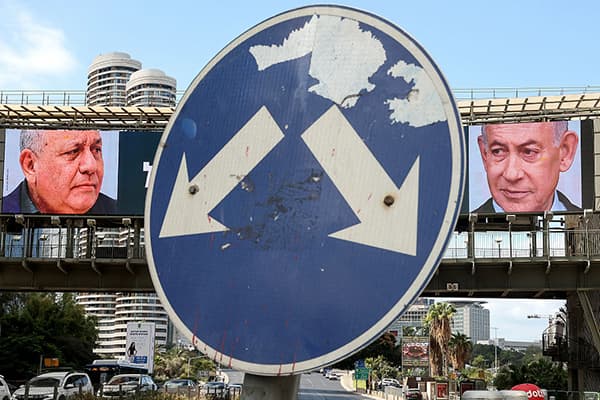
This means there is virtually no meaningful parliamentary oversight. Unlike checks and balances that exist in other systems, such as a senate in Australia, the Executive veto power of the US president, or European Court of Human Rights, Israel’s Supreme Court is its sole balancing mechanism. It is the only restraint on harmful and illiberal legislation passed by a political majority. Just ask women, the LGBTQI+ community and asylum-seeker advocates.

Given the vulnerability of Israeli minorities, and the ongoing occupation of millions of Palestinians without any civil or political rights, the judiciary is the only institution defending individual liberties.  In effect, the Court is the last guard standing to prevent the lunatics from taking over the asylum.

Expedient rights removal

The override clause would reduce the political capital required to railroad human rights. At present, if the Knesset wishes to abolish or modify some human right, it must do so explicitly, by amending the Basic Laws, and then opening itself up to public scrutiny. The Knesset is cautious about doing this. Proof of this is that since 1992, the Knesset has not made any specific amendments to the Basic Law: Human Dignity and Liberty and consistently adheres to Supreme Court rulings.

By contrast, under the proposed reforms, the Knesset could simply pass a law with an override clause under the radar. For example, the right-wing religious coalition might add an override clause to the Compulsory Service Law, entrenching an exemption for the ultra-Orthodox from army service.

This would effectively render the matter beyond judicial review. Future coalition agreements might even include a provision requiring parties to apply an override clause to rulings on specific issues like Jewish settlements and/or religion and state. It is a far more politically expedient way to trounce human rights.

Over-reach myth

The apparent rationale proposed to justify this reform is “judicial over-reach” and political partisanship. No doubt, Israel’s judicial branch is a potent force, but its composition hardly reflects a liberal or left-wing bias. As the cases demonstrate, more than 90% of High Court decisions relating to the West Bank or Palestinian petitioners go in favour of the defence establishment.

In practice, judicial review remains limited and assailable. For example, despite rulings against house demolitions in isolated instances, or affirming the ban on torture, the Court rejects almost all petitions on such matters. The judiciary does not challenge the normative legal framework itself, never ruling on the legality of the occupation nor the incursions into Gaza.

In recent years, the Court has become even more deferential. In May 2020, the Court ruled that no legal obstacle existed to prevent indicted prime minister Netanyahu from forming government. At best, the High Court remains a watchdog, and at worst, just shuffles deck chairs on titanic injustices.

Pulverising the court would mark an irreversible decent into illiberalism. The cautionary tales of Hungary and Poland are cases in point.

International Criminal Court

If the reforms are implemented, they would fundamentally impair the integrity of the Israeli legal system. This would make Israel even more vulnerable on the international stage.  For the past decade, the International Criminal Court (ICC) has been weighing jurisdictional questions over war crimes and other serious allegations in Israel/Palestine.

On March 3, 2021, the Chief Prosecutor formally opened an investigation into the region. At least in theory, Israeli soldiers and military leaders are now accountable to the Hague for past conduct. At the same time, no legal action is expected anytime soon. One of the reasons is the strength of the Israeli judicial system.

Virtually every submission made by Israel on why the ICC has no jurisdiction relies on the principle of complementarity. The idea is that international criminal law should only intervene when states are unable and/or unwilling to examine their own unlawful conduct.

Israel consistently argues that its robust legal system and independent legal advisors (attached to every ministry and army unit) ensure that it conforms to the Geneva Conventions. Losing this legal trump card would considerably weaken the Jewish state’s hand in international law. In the words of Alan Dershowitz (a staunch opponent of the changes), it would pierce Israel’s “legal iron dome”. 

Death by a thousand cuts

Turning court rulings into “mere recommendations” would further undermine Israel’s law enforcement system. In the past decade, there have been frequent attacks on the rule of law, legal institutions, and free press by successive Netanyahu administrations. Critically, Jewish nationalist discourse has also been emboldened at the expense of human rights and democratic norms.

The fact that an indicted prime minister commands popular support and has been re-elected twice is itself unprecedented. What we are seeing in Israel is an incremental use of power and aggregated constitutional efforts to dismantle the democratic order, slowly but surely.

Pulverising the court would mark an irreversible decent into illiberalism. The cautionary tales of Hungary and Poland are cases in point. A further erosion of public trust in official institutions seems inconceivable, and yet ….

Conclusion

What has been framed as necessary reforms are political self-serving attempts to turn Israel into majoritarian authoritarianism. An override clause would consolidate power in the religious Right and dismantle the country’s democratic scaffolding. The Knesset’s plan to grant itself absolute power over the judiciary endangers Israel. It would also place the Supreme Court and the Knesset on a constitutional collision course.

In a recent case, the Supreme Court wrote: “From a legal standpoint, the epidemic leads us through a land not sown [Jeremiah 2:2], to legal and constitutional places and paths not imagined … nor even predicted by prophets of doom (April 7, 2020)” If only these remarks were confined to Covid-19. They more aptly describe Israel’s current crossroads, and the prophetic writing is on the Wailing Wall.

Image: Avi Katz

You might also like
  • ‘Israel is systemically eliminating Palestinian collective life’:  B’Tselem
    Deborah Stone
  • Tame apologises – but with little grace
    Deborah Stone
  • Confronting Richard Flanagan and the myth of the Israel lobby
    Mary Garden
logomark.67a07ee3
We believe in the free flow of information

Republish our articles for free, online or in print, by using our Creative Commons licence

You might also like

    Segalovitz Abbas
    Israel Votes 2026AnalysisIsrael

    Segalovitz decision to join Arab party is a paradigm change for Israel

    Eetta Prince-Gibson
    altalena
    Israel Votes 2026OpinionIsrael

    The Altalena should be a warning, not a political weapon

    Shahar Burla 1
    haredi street guitar
    Photo EssayArts & Culture

    Jerusalemites through the lens

    Sharon Gabay

About the author

Jeremie Bracka

Jeremie Bracka

Dr Jeremie M Bracka is an Australian-Israeli human rights lawyer, Jewish comedian and academic at RMIT University (Melbourne). He lectures in constitutional law, human rights law, international law and transitional justice.

More from the author

Australia

Court decision fails to understand when ‘Fuk Israel’ becomes antisemitic

AnalysisAustralia

Tribunal draws a line on anti-Zionist hate speech

ReflectionLifestyle

From Caulfield to Colombia, we went to collect the baby

AnalysisAustralia

Beyond lone wolves: collective antisemitism enabled the Bondi massacre