Aa
  • Read, Watch, Listen
  • TJI Series
  • Community Action
  • Events
  • Zedi
Follow us and continue the conversation
  • LinkedIn
  • Instagram
  • FaceBook
  • X
  • YouTube
Test yourself with the TJI Quiz!

Adjust size of text

Aa

Follow us and continue the conversation

  • LinkedIn
  • Instagram
  • FaceBook
  • X
  • YouTube

Your saved articles

You haven't saved any articles

What are you looking for?

Original reporting, insightful analysis and diverse views, delivered straight to your inbox

  • LinkedIn
  • Instagram
  • FaceBook
  • X
  • YouTube
Your support fuels our mission to inform, entertain and inspire.

The Jewish Independent is bound by the Standards of Practice of the Australian Press Council. If you believe the Standards may have been breached, you may approach The Jewish Independent or make a complaint to the Australian Press Council in writing at www.presscouncil.org.au. The Council may also be contacted on 1800 025 712.

  • Our Story
  • Contact us
  • Our Team
  • Support us
  • Guidelines
  • Pitch your idea
  • Republishing us
  • Community Action
  • Our Awards
  • LinkedIn
  • Instagram
  • FaceBook
  • X
  • YouTube
Aboriginal FlagTorres Strait Islanders Flag

The Jewish Independent acknowledges Aboriginal and Torres Strait Islander peoples as the Traditional Owners and Custodians of Country throughout Australia. We pay our respects to Elders past and present, and strive to honour their rich history of storytelling in our work and mission.

© The Jewish Independent 2026All Rights Reserved
Website design and development by Your Creative, MelbourneTerms & ConditionsPrivacy Policy
HomeRead, Watch, ListenIsrael
Israel

‘Football can unite everyone, even if there is conflict in the world’

Anna Game-Lopata
Print this

Published: 1 September 2023

Last updated: 5 March 2024

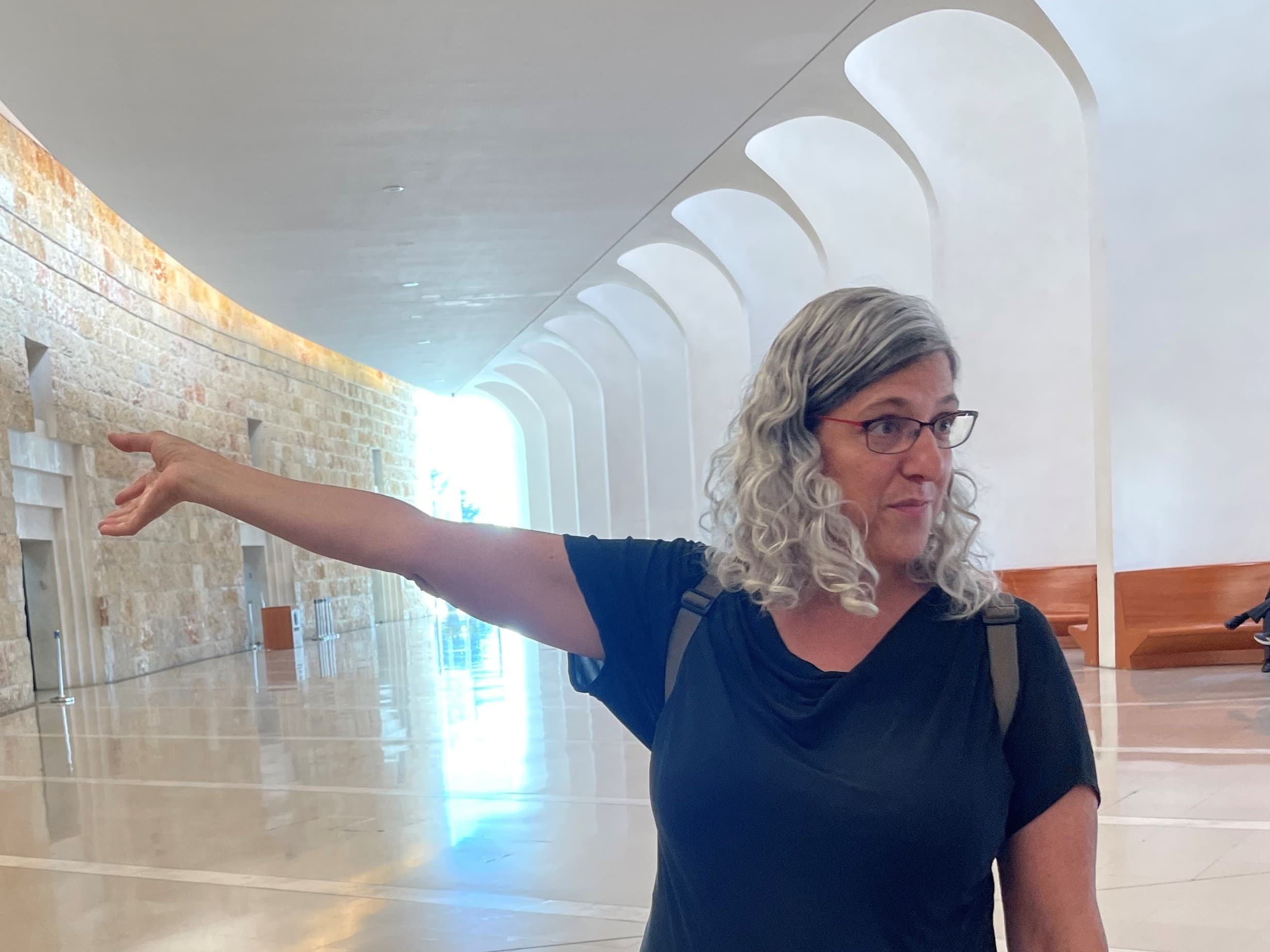
Israeli peace activists HADAS PRAWER and DEEMA EL-RAHM saw their message in action when they watched Australians’ shared support of the Matildas. 

While conflict between Israelis and Palestinians plays out on the streets, football matches are calming tensions between them every day, according to two young women who are driving sport for peace.

Peres Peace Centre for Innovation athletes Hadas Prawer and Deema El-Rahm shared their insights during a recent visit to Australia as delegates to the 2023 Football For Good Youth Festival, which ran as part of the FIFA Women’s Football World Cup.

Prawer, 26, is the project manager and El-Rahm, 21, the coach of the Sport in the Service of Peace program, run by the centre in Jerusalem. Prior to her role as project manager, Prawer played professionally and coached for the program for several years.

Set up in 2002, the program brings Israeli, Palestinian, Jewish and Arab children and youth together to play sport, primarily football, basketball, wheelchair basketball, cricket, table tennis and Australian football.

It employs sports-based peace education methodologies to facilitate cross-cultural exchange, constructive dialogue and inter-language learning.

“Football is very popular in both communities,” Prawer says. “Our School Programs, which take place several times a year, involve having a positive experience playing football with the whole class. We give them points for fair play and good behaviour. It’s not super-competitive.”

Rather than pitting Jews against Arabs, the mixed teams are assigned a World Cup identity such as Argentina. 

The program also includes a three-hour activity to promote social interaction, getting to know each other, and learning the other’s language.

"When you play sport with people, you just see them as people. I never distinguished between Jewish people and Arabs."

Deema El-Rahm
“That way they all get to see that the other is not as scary as they might have thought,” Prawer says. “Getting used to hearing and learning about each other, and playing football together, makes a huge difference. It challenges the negative context they may be exposed to elsewhere.”

The program is also run for local football teams. “We train young coaches and leaders, often college students, and we have discussions with them about identity and their feelings about the conflict,” Prawer explains.

Funded by Australia’s Zionist Federation and the United Israel Appeal, Prawer and El-Rahm’s first experience of Australia was the tribal buzz and thrill for the Matildas. It’s something they’ll never forget.

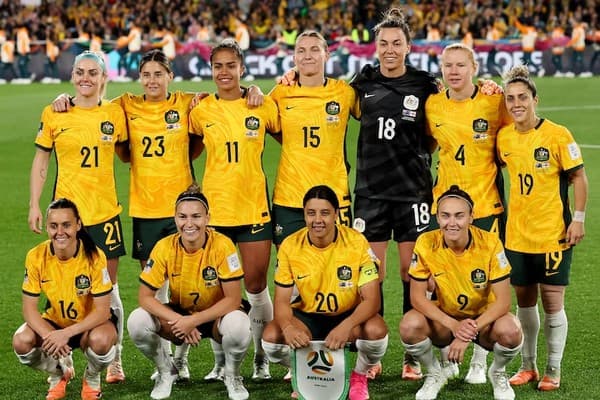
“In Australia, everyone is cheering for the Matildas,” Prawer says. “They’re Muslim, Jewish, every other ethnicity. They come together for the game, and it's been incredible to watch. I think this is our message. Football can unite everyone, even if there is conflict in the world."

She adds that they were both in the stadium for the Matildas vs England game. “It was mind-blowing - 75,000 people at a woman's game! For us, 500 would be like, woah! Overwhelming.”

Both Prawer, a Jew, and El-Rahm, a Muslim, have always loved playing football.

From an early age, they developed the resilience required to overcome the barriers to competing at a professional level.

“In Israel, girls don’t really play football,” says Prawer, who is from Jerusalem and now lives in Tel Aviv. “I didn't have a team when I was a kid, so I just played for fun. Eventually, I took up basketball instead, and it wasn’t until my junior year of high school at a college in the US that I started playing professional football.”

"In Australia, everyone is cheering for the Matildas. They’re Muslim, Jewish, every other ethnicity. They come together for the game, and it's been incredible to watch."

Hadas Prawer

El-Rahm, from the northern Israeli town of Shefa-Amr, started playing football at the age of 10. She was the only girl playing football at her school.

“At first my family and my sport teacher were the only people that supported me,” she recalls. “But when I started playing for my local club, the people that were against me changed their minds.”

She now plays professional football for the Maccabi Hadera football club and coaches a team of young girls from her town. 

Prawer and El-Rahm met playing football against each other in high school.

“The Women's League is not that big, so you can’t help knowing everyone, especially if at some point you’re on the national team or training staff,” Prawer says. “We’ve known each other for years, but we really became close while working together at the Peres Centre.”

While neither of them felt like they were brought up with the age-old hatreds, Prawer and El-Rahm concede the Israeli-Palestinian conflict is one of world’s most complex. Despite that, they assert that sport is the universal language that can bring people together, especially when they are young.

The Jewish Independent

"I think when you play sport with people, you just see them as people,” El-Rahm asserts. “That is the way is has always been for me. I never distinguished between Jewish people and Arabs.”

Among 70 delegates from 40 different countries to the Football for Good Youth Festival, Prawer and El-Rahm were introduced to cultures and strategies they’d never encountered before.

The weeklong festival incorporated a mini–World Cup tournament for children and a variety of workshops, from coaching strategies to leadership skills, and how to start projects for social change.

“The festival was all about using football as a tool for change and empowering women,” Prawer says. “Even though it’s not our main agenda, pushing equity and getting girls into football is really close to our hearts.”

In the future, El-Rahm, who is studying business management, wants to work in IT, building fitness apps accessible to girls that help them train. Prawer hopes to undertake further studies in social psychology and continue her involvement in educational activism through sport. They both believe football will always be a part of their lives, even after their playing days are over.

“It’s been an incredible experience meeting people and the community in Sydney and Melbourne, and going to schools to talk about our project,” Prawer says.

“We just want to get the program as much positive exposure as we can, because the Israeli education system is completely segregated. I don't know what will happen in the future, but we’re trying to bring hope that change can be made step by step, one kid at a time. That’s how we’ll make a difference to the current reality on the ground.”

Photo: Deema El-Rahm, left, and Hadas Prawer

You might also like
  • Sanctioning settlements is a defence of Israel, not an attack
    Elisheva Madar
  • Sanctions must influence, not just perform disapproval
    Adam Slonim
  • Mind the mentality: not every rejection is antisemitism
    Nomi Kaltmann
logomark.67a07ee3
We believe in the free flow of information

Republish our articles for free, online or in print, by using our Creative Commons licence

You might also like

    Woman with land and houses behind her
    NewsAustralia

    Australia to increase sanctions against West Bank settlements

    Deborah Stone 2
    Rozana Beit Oula
    PeacebuildingOpinionIsrael

    Peacebuilding through the eyes of a sceptic

    Ron Finkel
    Arab Israeli Palestinian election vote
    Israel Votes 2026FeatureIsrael

    Fear of Netanyahu victory may drive big surge in Palestinian voter turnout

    Ben Lynfield

About the author

Anna Game-Lopata

Anna Game-Lopata

Anna Game-Lopata is an experienced media professional with over 20 years of experience across radio, print and digital industry publications.

More from the author

Australia

Revamped Melbourne Holocaust Museum honours survivors’ vision

Australia

Last voices of the Holocaust: ‘I felt heard’

World

Pittsburgh synagogue shooter sentenced to death