Aa
  • Read, Watch, Listen
  • TJI Series
  • Community Action
  • Events
  • Zedi
Follow us and continue the conversation
  • LinkedIn
  • Instagram
  • FaceBook
  • X
  • YouTube
Test yourself with the TJI Quiz!

Adjust size of text

Aa

Follow us and continue the conversation

  • LinkedIn
  • Instagram
  • FaceBook
  • X
  • YouTube

Your saved articles

You haven't saved any articles

What are you looking for?

Original reporting, insightful analysis and diverse views, delivered straight to your inbox

  • LinkedIn
  • Instagram
  • FaceBook
  • X
  • YouTube
Your support fuels our mission to inform, entertain and inspire.

The Jewish Independent is bound by the Standards of Practice of the Australian Press Council. If you believe the Standards may have been breached, you may approach The Jewish Independent or make a complaint to the Australian Press Council in writing at www.presscouncil.org.au. The Council may also be contacted on 1800 025 712.

  • Our Story
  • Contact us
  • Our Team
  • Support us
  • Guidelines
  • Pitch your idea
  • Republishing us
  • Community Action
  • Our Awards
  • LinkedIn
  • Instagram
  • FaceBook
  • X
  • YouTube
Aboriginal FlagTorres Strait Islanders Flag

The Jewish Independent acknowledges Aboriginal and Torres Strait Islander peoples as the Traditional Owners and Custodians of Country throughout Australia. We pay our respects to Elders past and present, and strive to honour their rich history of storytelling in our work and mission.

© The Jewish Independent 2026All Rights Reserved
Website design and development by Your Creative, MelbourneTerms & ConditionsPrivacy Policy
HomeRead, Watch, ListenArts & Culture
ReviewArts & CultureIsrael

From margins to mainstream: Global Jewry speaks out in new October 7 anthology

A new anthology about October 7 does something rare – it connects the trauma in Israel with its reverberations in the most far-flung Jewish communities.
Hilary Ash
Print this
Jewish Reflections from Around the Globe

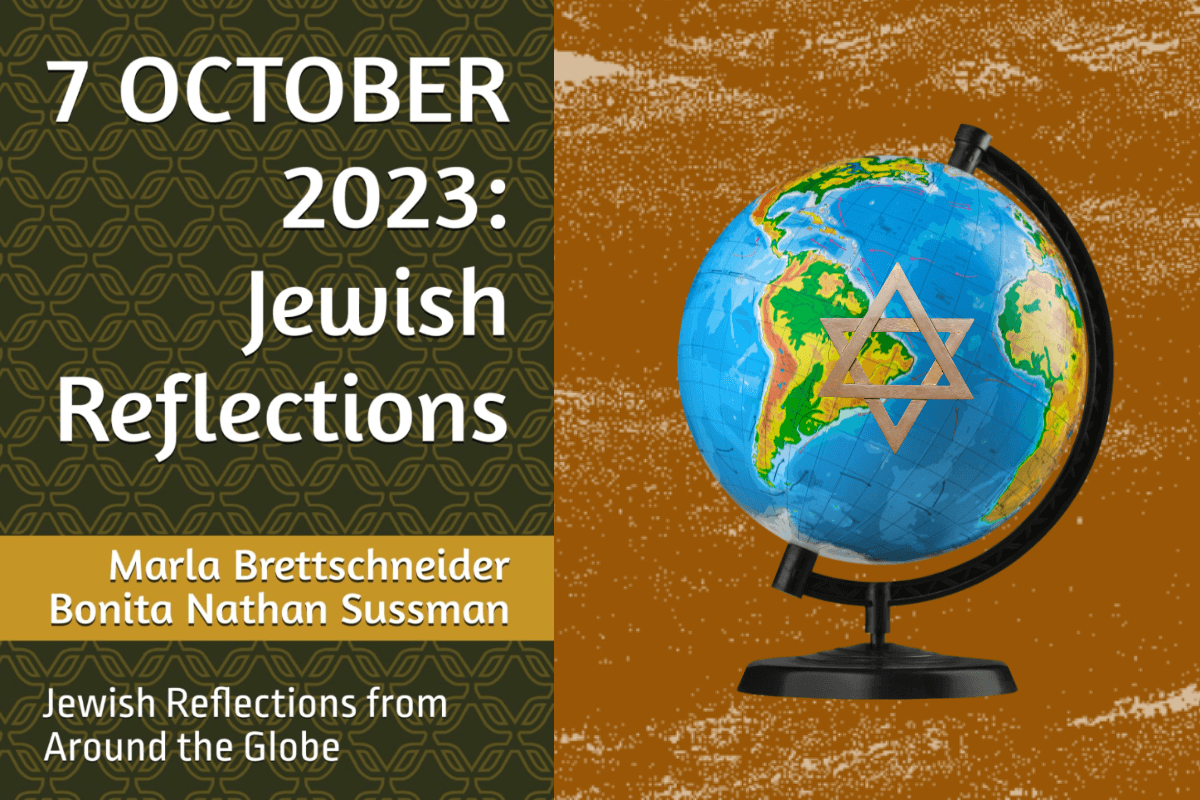
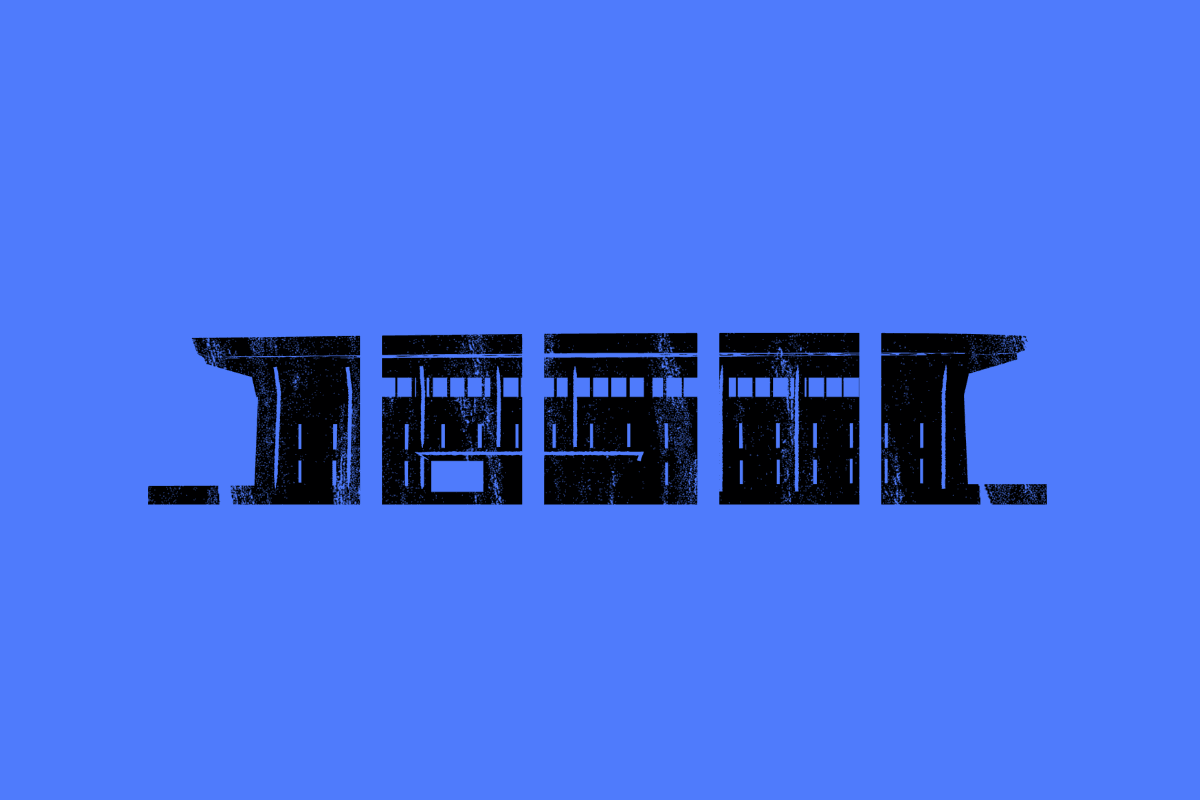
7 October 2023 Book I: Jewish Reflections from Around the Globe offers a glimpse into some of the many perspectives on the horrors of Hamas’ October 7 massacre in Israel and the events that followed (Image: TJI).

Published: 9 July 2025

Last updated: 3 November 2025

The anthology 7 October 2023: Book I is not an easy read. Nor should it be.

It is a complex, emotionally charged, and at times harrowing collection of 43 contributions by Jewish and some non-Jewish writers from around the world, all confronting a central question: What does it mean to speak or remain silent as a Jew, or about Jews, in the wake of trauma?

The 7 October 2023 massacre, and its aftermath, has fractured discourse in Jewish communities globally; this book serves as both a raw wound and a bridge between experiences, geographies, and ideological perspectives.
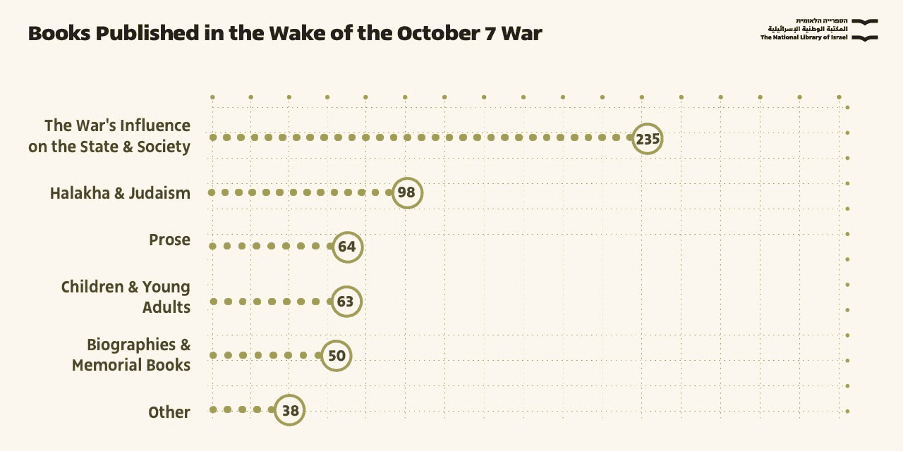
Source: National Library of Israel

The editors Marla Brettschneider and Bonita Nathan Sussman work with the Kulanu network, connecting diverse Jewish-affiliated communities, many of them isolated or marginalised in Africa, Asia, and the diaspora more broadly.

These voices, often silenced or unheard, have space here to articulate trauma, memory, loyalty, fear, and resilience. The result is an anthology that is both geographically global and deeply personal.

Several essays stand out not only for their content but also for their context. Accounts from Ethiopian Jews fleeing to refugee camps in Sudan, where they face rape, hunger, and marginalisation, offer a piercing insight into the compounded suffering of minority Jews stranded within larger humanitarian crises.
A 92-year-old Iraqi-born man recalls the Farhud pogrom of 1941, drawing parallels to modern threats. Pakistani B’nei Efraim Jews anonymously share their heartbreak over October 7, their isolation deepened by living in a society where Hamas propaganda dominates the media.

These voices bring a layer of emotional urgency and immediacy that is largely absent from Western discourse.

Diaspora Jews are now being forced to declare a position in a crisis that is not geographically theirs, but emotionally inescapable.

At the same time, the book also mirrors the fracture lines in Jewish thought itself. It documents, sometimes painfully, the divisions within the Jewish world between Israelis and American Jews, religious and secular voices, Zionist and anti-Zionist perspectives. The complexity of Jewish peoplehood is revealed, not as a single narrative but a mosaic of contradictions and overlapping truths.

One especially poignant reflection from the mother of Malki Roth tells of losing her son-in-law following October 7 and painful reactions, or lack thereof, of former friends. Another contributor, Rabbi Gerald Sussman, voices the despair of many diaspora Jews, describing Israel as the hoped-for place of refuge, now transformed into a site of horror.

These personal reckonings expose the psychological rupture within global Jewry, where 'before and after' no longer describes only the physical attack, but also the subsequent emotional and ideological aftershock.

Media commentary and political dithering has lifted antisemitism to mainstream. Viva Hammer’s personal essay about unfettered antisemitism at Sydney University is an example of this toxic recipe: Has the war caused division? Or has the epic flood of commentary enjoyed opaque funding? 

While David Suissa’s essay, quoting Yossi Klein Halevi, powerfully frames antisemitism as an adaptable, shape-shifting hate that absorbs the most reviled traits of the age and projects them onto Jews. Whether as Christ-killers in Christian Europe, capitalists under Communism, or colonialists in modern leftist rhetoric, Jews have repeatedly been scapegoated by the cultures they inhabit. 

Antisemitism, disguised in one costume or another, is the lazy bigot’s scapegoat. The suggestion here isn’t simply that antisemitism has returned, but that it has been rebranded, camouflaged in the contemporary language of human rights, anti-racism, and anti-colonialism.

At its most poignant, the book draws attention to communities that do not enjoy a luxury of division.

Some essays criticise what they see as a parochial American view of Israel’s challenges. Writers note the alienation that arises when American Jews project their domestic political ideologies onto Israel. A sharp essay captures this sentiment through the concept of Shomrei N’gi’ah, loosely translated here as “hands off”: not your body, not your country, not your decision.

The rift between identification with Israel and attempts to reshape it from afar reflects a deeper discomfort: diaspora Jews are now being forced to declare a position in a crisis that is not geographically theirs, but emotionally inescapable.

At its most poignant, the book draws attention to communities that do not enjoy a luxury of division. In the West, Jews may argue politics and identity; in Muslim-majority nations, to identify with Israel is to risk violence, ostracism, and death.

One essay from the Danites in Ivory Coast recounts a private ceremony expressing solidarity with Israel that was hamstrung by harassment and exorbitant “security” fees. In this way, 7 October 2023 does something rare: it connects the trauma in Israel with its reverberations in the most far-flung Jewish communities.

Not every contribution is equally compelling. Some read more like polemics, others as journal entries. A few writers struggle to transcend ideological rigidity. Still, this unevenness expresses the book's broader truth: Jewish identity is not a monolith. For every writer drawing comfort from Israeli resilience, another finds it alienating. For every call to Jewish unity, another voices discomfort with Zionism.

Reading 7 October 2023 is emotionally exhausting. It demands that the reader navigate grief, rage, ideological confrontation, and deep sorrow. But in that exhaustion lies its strength. In between stories of horror and resolve, the book reveals the raw nerve of Jewish life in a time of global disarray.

In the end, the anthology isn’t just about October 7. It’s about everything that day symbolises: the eruption of history into the present; the precarity of minority identity; the danger of misunderstood loyalty; and the difficulty, and urgency, of speaking out.

The real gift of the book is that it allows the most marginalised Jews to speak alongside the most visible. In a moment when it feels like so much is being said about Jews, this book insists on the importance of Jews speaking for themselves, no matter how fractured, contradictory, or painful those voices may be.

7 October 2023 Book I: Jewish Reflections from Around the Globe, edited by Marla Brettschneider and Bonita Nathan Sussman, is available now.

Hilary is a graduate of the joint Jewish Orthodox Feminist Alliance Australia (JOFA) and The Jewish Independent (TJI) Opinion-Editorial Writing Course.

You might also like
  • When the state faltered, civil society and Diaspora Jewry stepped up
    Shahar Burla
  • How Netanyahu can stay in power without winning
    Shahar Burla
  • I have lost faith in our multicultural institutions 
    Nomi Kaltmann
logomark.67a07ee3
We believe in the free flow of information

Republish our articles for free, online or in print, by using our Creative Commons licence

You might also like

    Rozana Beit Oula
    PeacebuildingOpinionIsrael

    Peacebuilding through the eyes of a sceptic

    Ron Finkel
    Eden Bahar
    InterviewArts & Culture

    ‘L’chaim for the next 1,500’: Israeli drummer celebrates Cirque Du Soleil milestone

    Gideon Cohen
    Segalovitz Abbas
    Israel Votes 2026AnalysisIsrael

    Segalovitz decision to join Arab party is a paradigm change for Israel

    Eetta Prince-Gibson

Comments

No comments on this article yet. Be the first to add your thoughts.

About the author

Hilary Ash

Hilary Ash

Hilary Ash is a social worker and occasional book reviewer.