Aa
  • Read, Watch, Listen
  • TJI Series
  • Community Action
  • Events
  • Zedi
Follow us and continue the conversation
  • LinkedIn
  • Instagram
  • FaceBook
  • X
  • YouTube
Test yourself with the TJI Quiz!

Adjust size of text

Aa

Follow us and continue the conversation

  • LinkedIn
  • Instagram
  • FaceBook
  • X
  • YouTube

Your saved articles

You haven't saved any articles

What are you looking for?

Original reporting, insightful analysis and diverse views, delivered straight to your inbox

  • LinkedIn
  • Instagram
  • FaceBook
  • X
  • YouTube
Your support fuels our mission to inform, entertain and inspire.

The Jewish Independent is bound by the Standards of Practice of the Australian Press Council. If you believe the Standards may have been breached, you may approach The Jewish Independent or make a complaint to the Australian Press Council in writing at www.presscouncil.org.au. The Council may also be contacted on 1800 025 712.

  • Our Story
  • Contact us
  • Our Team
  • Support us
  • Guidelines
  • Pitch your idea
  • Republishing us
  • Community Action
  • Our Awards
  • LinkedIn
  • Instagram
  • FaceBook
  • X
  • YouTube
Aboriginal FlagTorres Strait Islanders Flag

The Jewish Independent acknowledges Aboriginal and Torres Strait Islander peoples as the Traditional Owners and Custodians of Country throughout Australia. We pay our respects to Elders past and present, and strive to honour their rich history of storytelling in our work and mission.

© The Jewish Independent 2026All Rights Reserved
Website design and development by Your Creative, MelbourneTerms & ConditionsPrivacy Policy
HomeRead, Watch, ListenArts & Culture
FeatureArts & Culture

Novel takes readers to a place the author never wanted to revisit

Drawing on her 30 years living in the Soviet Union, Julia Levitina’s debut novel explores totalitarianism, free will and collective silence.
Ruby Kraner-Tucci
Print this
Julia Levitina holding her book

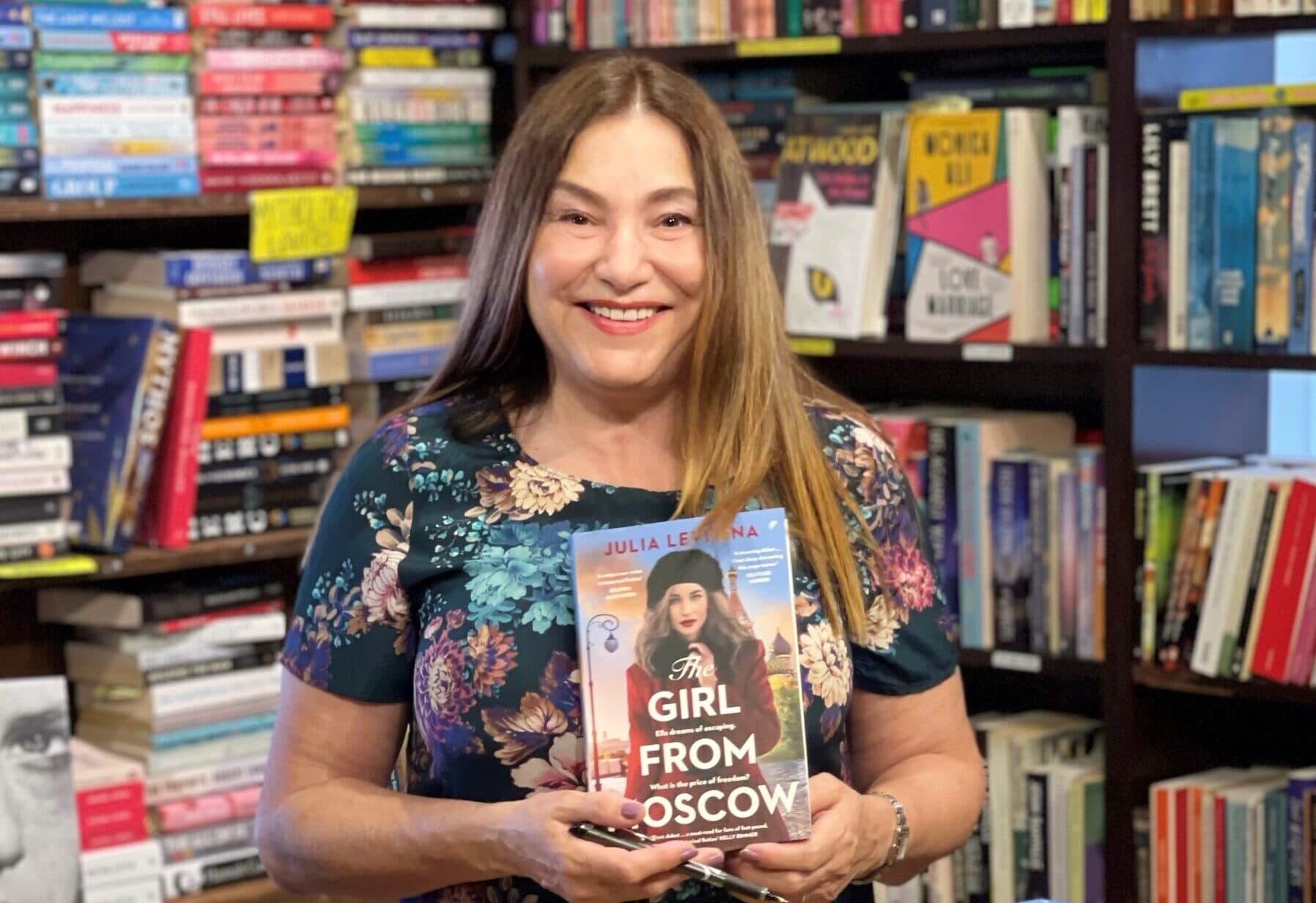
Julia Levitina’s debut novel The Girl From Moscow is set in Soviet Russia (Image supplied).

Published: 9 April 2024

Last updated: 5 April 2024

When Julia Levitina escaped the totalitarianism of her Russian hometown, she told herself she would never return.

“As a teenager, I used to go to Moscow's international airport and dream of escape, listening to the departure destinations and thinking that Vienna, New York City or Paris were as close as Mars,” the Sydney-based Jewish author told The Jewish Independent.

Levitina spent 30 years in the USSR before she fled to Australia in 1991, with her young children in tow and just $200 in her pocket.

Since then, Levitina has broken her promise only once – when she took her daughter to Saint Petersburg and Moscow for her sixteenth birthday.

“Going down memory lane... There was a lot of hardship and a struggle to get out. Sometimes it is easier to forget.”

Levitina’s intimate experiences of being “locked behind the Iron Curtain” form the basis of her debut novel, The Girl From Moscow, which is set in Soviet Russia at the height of the Cold War.

“One of the reasons why I wrote The Girl From Moscow was that I wanted to tell the truth about the evil empire of the Soviet Union, which the world thought had disappeared.”

Julia Levitina

The protagonist, 21-year-old aspiring actor Ella Ashkenazi dreams of playing Natasha Rostova in War and Peace at the Moscow Theatre Academy, but when she attracts the glare of the KGB, she is labelled a traitor and soon yearns to escape the oppressive Soviet regime.
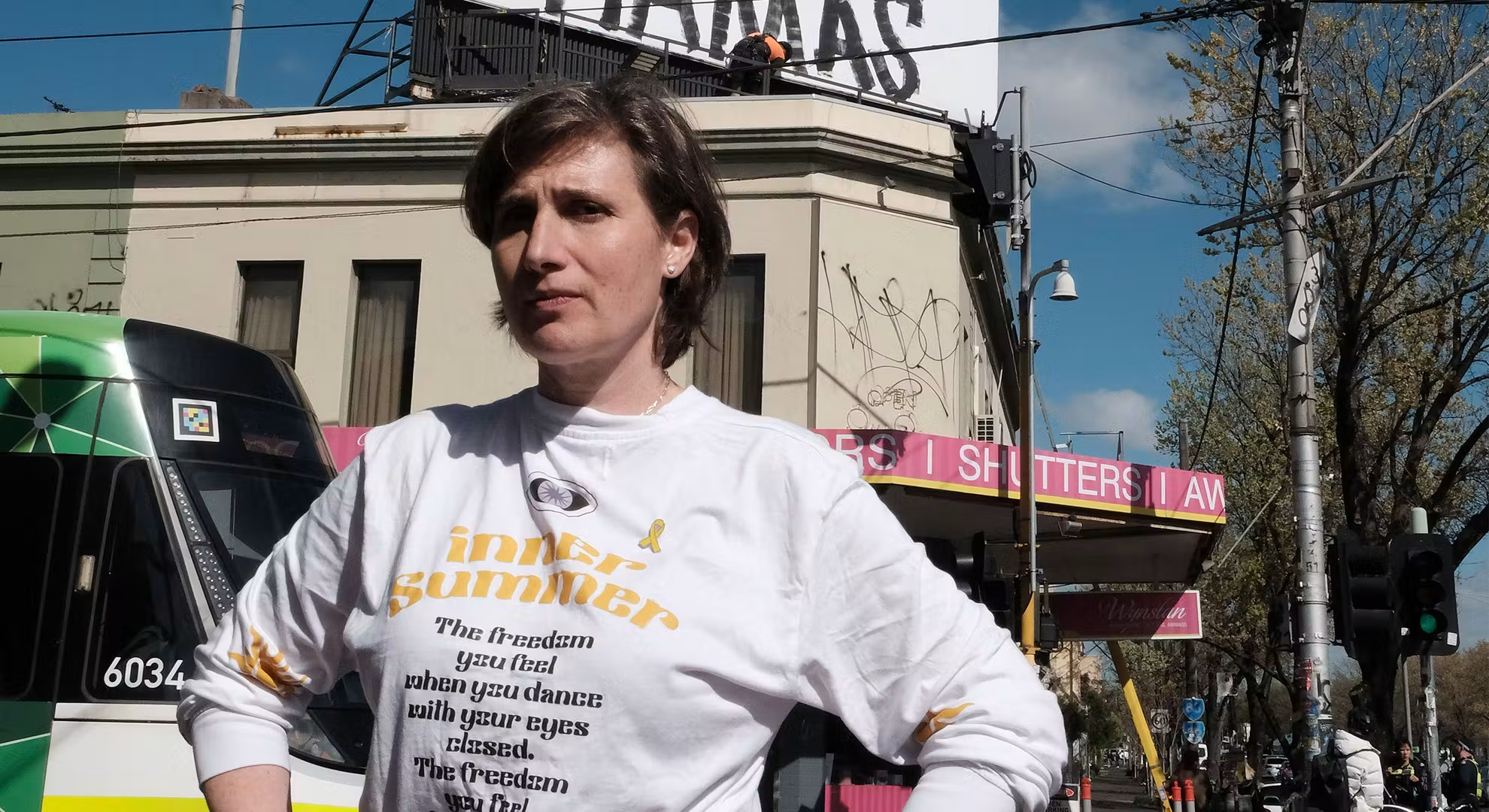
“I am drawn to strong stories, interesting and truthful characters and different experiences. As a child in the former Soviet Union, books were an escape and they opened the world to me,” Levitina added.

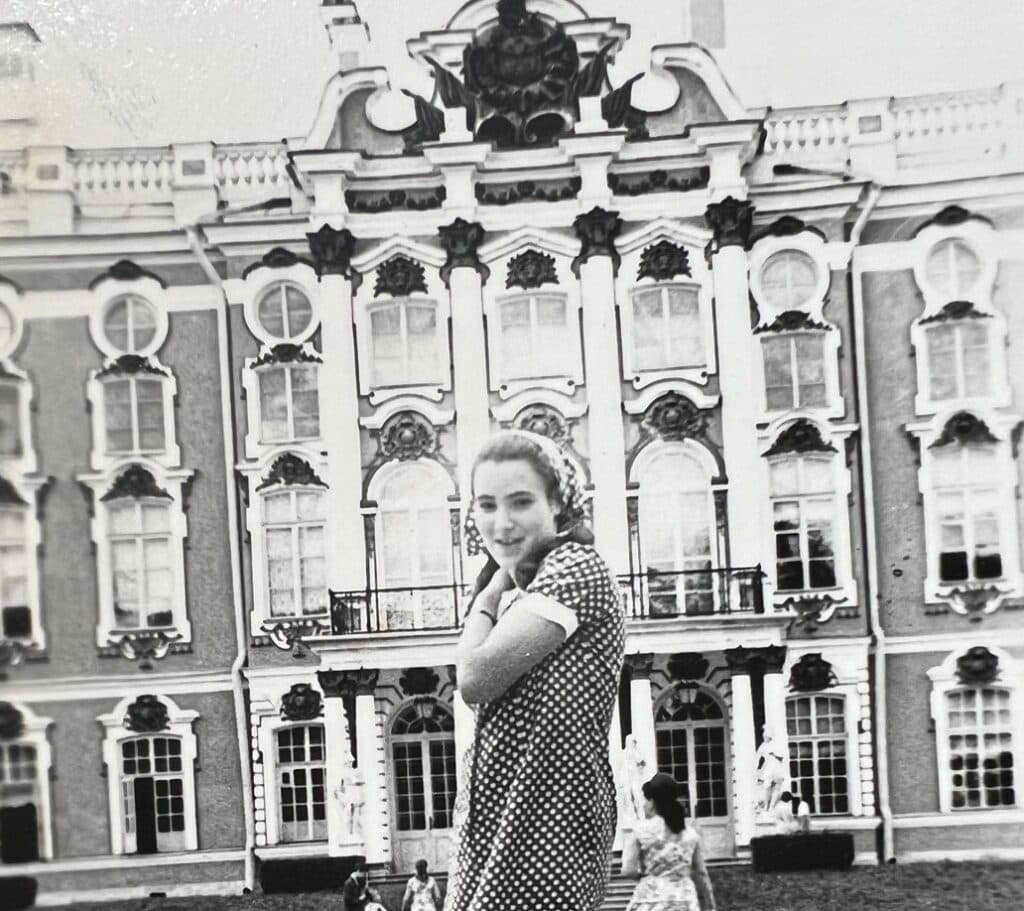
Julia Levitina spent 30 years living in Russia until she escaped to Australia in 1991 (Image supplied).

But while there are clear comparisons to her own life, Levitina is quick to label the work as historical fiction.

“The streets, the boulevards, the squares and the sites are all real. Ella Ashkenazi’s milieu is also informed by my time designing sets and costumes for multiple theatre productions across the Soviet Union.

“While I am a girl from Moscow, I am not the girl from Moscow, but my time there made the research part easier.”

The research Levitina references was an extensive process. The book itself is 10 years in the making – during which she raised a family, worked full-time and furthered her theatre background by completing a Master of Design at UTS – and dives deep into the political and social structures of the former Soviet Union, including the criminal system, emigration laws, dissident struggle and persecution of refuseniks.

Her family’s experience during the Holocaust in Ukraine also provided an “added layer of insight and understanding” of a totalitarian regime.

But ultimately, Levitina didn’t need to look too far in the past to grasp Russia’s brutality. While she says releasing her novel during the Russian-Ukraine war is “a coincidence”, the timing acts as an important reminder of the country’s strong agenda.

“One of the reasons why I wrote The Girl From Moscow was that I wanted to tell the truth about the evil empire of the Soviet Union, which the world thought had disappeared,” Levitina said.

“It is disturbing to see that Russia under Vladimir Putin has resurrected Stalin’s regime and is threatening world democracy. The suspicious death of Alexei Navalny shows how Putin can act with impunity and without any regard for human suffering.”

Despite Russian being Levitina’s first language, she chose to write the book in English, “an achievement in itself” which paid off, with The Girl From Moscow being shortlisted for the Australian Society of Authors Commercial Fiction Prize for unpublished manuscripts.

The novel’s success has reinforced its central message for Levitina – to own your life and make of it whatever you desire.

“Do you live the life you are given or the life you dream of? Is freedom something that comes from within or something you fight for?

“Never give up and don’t take no for an answer,” Levitina concludes.

Levitina is now working towards her next novel, a family saga set in Moscow and Broken Hill in 1928 and a prequel of sorts to The Girl From Moscow.

You might also like
  • New wave of Russian-speaking migrants may be key to Israel’s future
    Ittay Flescher
  • UK Jews talk of leaving for Israel but few actually do
    Colin Shindler
  • Books: Noble orphan, a hotel nightmare and Miriam’s wisdom
    Aviva Lowy
logomark.67a07ee3
We believe in the free flow of information

Republish our articles for free, online or in print, by using our Creative Commons licence

You might also like

    Copy of Website books template (2)
    FeatureArts & Culture

    The winning Jewish books by Australians in the past year

    Gideon Cohen
    Pearly Spurtle
    FeatureArts & Culture

    Israeli ingredients a recipe for ‘Pearly Spurtle’

    Gideon Cohen
    haredi street guitar
    Photo EssayArts & Culture

    Jerusalemites through the lens

    Sharon Gabay

About the author

Ruby Kraner-Tucci

Ruby Kraner-Tucci

Assistant Editor

Ruby Kraner-Tucci is a journalist and TJI's assistant editor. Her writing has appeared in The Age, Australian Jewish News, Time Out and Broadsheet, among others. Ruby was awarded Multicultural NSW’s Best Report in Multicultural Media 2025 and has been named a Top 36 Under 36 Jewish Changemaker by B'nai B'rith.

More from the author

FeatureAustralia

‘True essence of being an ally’: The non-Jews choosing to work in the Jewish community

InterviewAustralia

Elliot Szafran: food that feels like a hug from Zaide

NewsAustralia

Antisemitic incidents down from peak but still triple pre-Gaza war

FeatureArts & Culture

Bringing Terezin music to life 

Comments

No comments on this article yet. Be the first to add your thoughts.