Aa
  • Read, Watch, Listen
  • TJI Series
  • Community Action
  • Events
  • Zedi
Follow us and continue the conversation
  • LinkedIn
  • Instagram
  • FaceBook
  • X
  • YouTube
Test yourself with the TJI Quiz!

Adjust size of text

Aa

Follow us and continue the conversation

  • LinkedIn
  • Instagram
  • FaceBook
  • X
  • YouTube

Your saved articles

You haven't saved any articles

What are you looking for?

Original reporting, insightful analysis and diverse views, delivered straight to your inbox

  • LinkedIn
  • Instagram
  • FaceBook
  • X
  • YouTube
Your support fuels our mission to inform, entertain and inspire.

The Jewish Independent is bound by the Standards of Practice of the Australian Press Council. If you believe the Standards may have been breached, you may approach The Jewish Independent or make a complaint to the Australian Press Council in writing at www.presscouncil.org.au. The Council may also be contacted on 1800 025 712.

  • Our Story
  • Contact us
  • Our Team
  • Support us
  • Guidelines
  • Pitch your idea
  • Republishing us
  • Community Action
  • Our Awards
  • LinkedIn
  • Instagram
  • FaceBook
  • X
  • YouTube
Aboriginal FlagTorres Strait Islanders Flag

The Jewish Independent acknowledges Aboriginal and Torres Strait Islander peoples as the Traditional Owners and Custodians of Country throughout Australia. We pay our respects to Elders past and present, and strive to honour their rich history of storytelling in our work and mission.

© The Jewish Independent 2026All Rights Reserved
Website design and development by Your Creative, MelbourneTerms & ConditionsPrivacy Policy
HomeRead, Watch, ListenLifestyle
AnalysisLifestyle

How many genders in Judaism? It’s complicated

Some claim seven genders in the Talmud; some insist Judaism only recognises two. The rabbis struggled with gender like European explorers faced with a platypus.
Raphael Morris
Print this
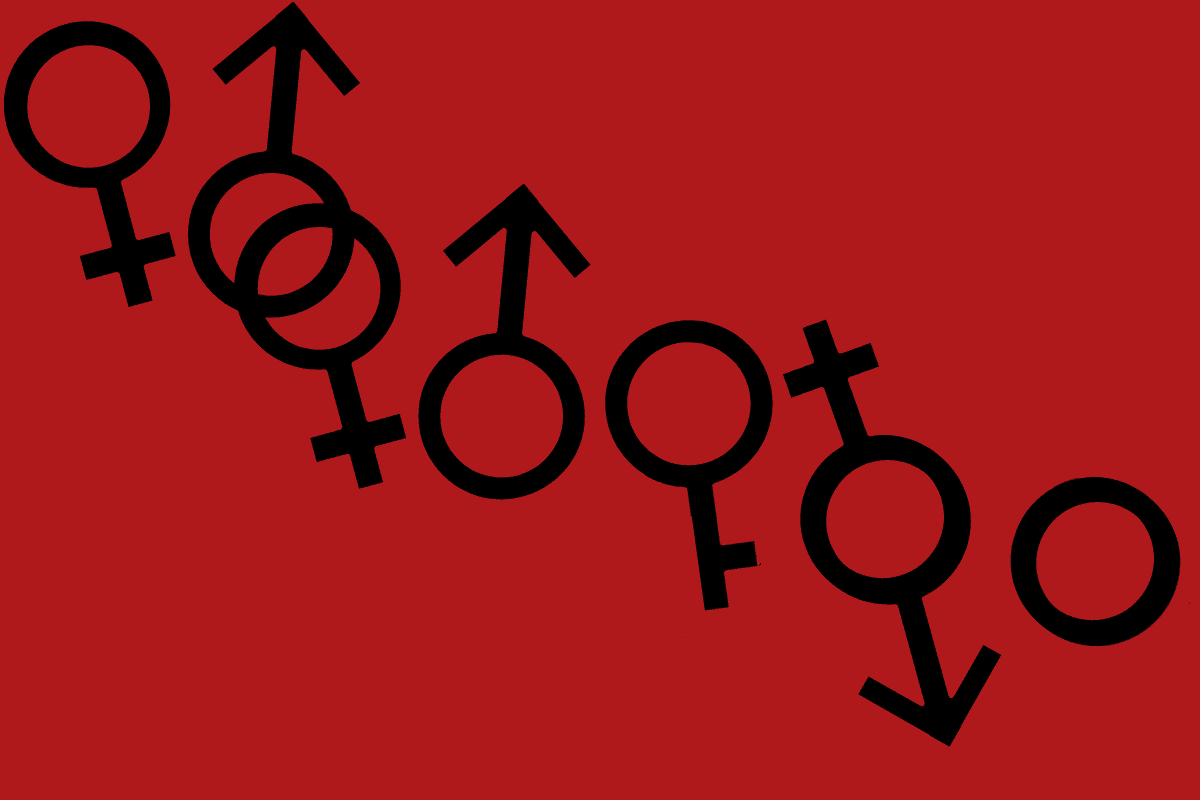
gender signs

Published: 1 April 2025

Last updated: 2 April 2025

The claim that non-binary genders do not exist has become politically fashionable.

The day after he was inaugurated as US President Donald Trump removed legal protections and federal funding for transgender individuals in an executive order that also attempted to officially enshrine binary frameworks of sex and gender. In Australia, Clive Palmer’s Trumpet of the Patriots is running the same line with political advertisements claiming “there are only two genders”. 

There are myriad reasons to condemn this worldview from how, in excluding and marginalising trans people, it actively endangers their lives, to the problem that technically, it risks defining everyone as female. 

One indication of the limited thinking underlying the denial of trans experience, is that imposing binary frameworks of gender violently erases the rich diversity of gender concepts in traditional cultures, such as Two-Spirit people from American Indigenous nations.

A specifically Jewish variety of this last objection has received recent attention in online debates. Advocates of trans rights claim that Jewish civilisation has long recognised more than two genders, pointing to as many as seven alleged genders found in classical rabbinic literature like the Talmud. Opponents have harshly criticised the claim as a distortion of Jewish law.

Non-binary Rabbi Elliot Kukla wrote in a  New York Times guest essay that “people who are more than binary have always been recognised by my religion”. Heritage Foundation research fellow Jason Bedrick tweeted in response “Judaism recognises two genders. Period.”

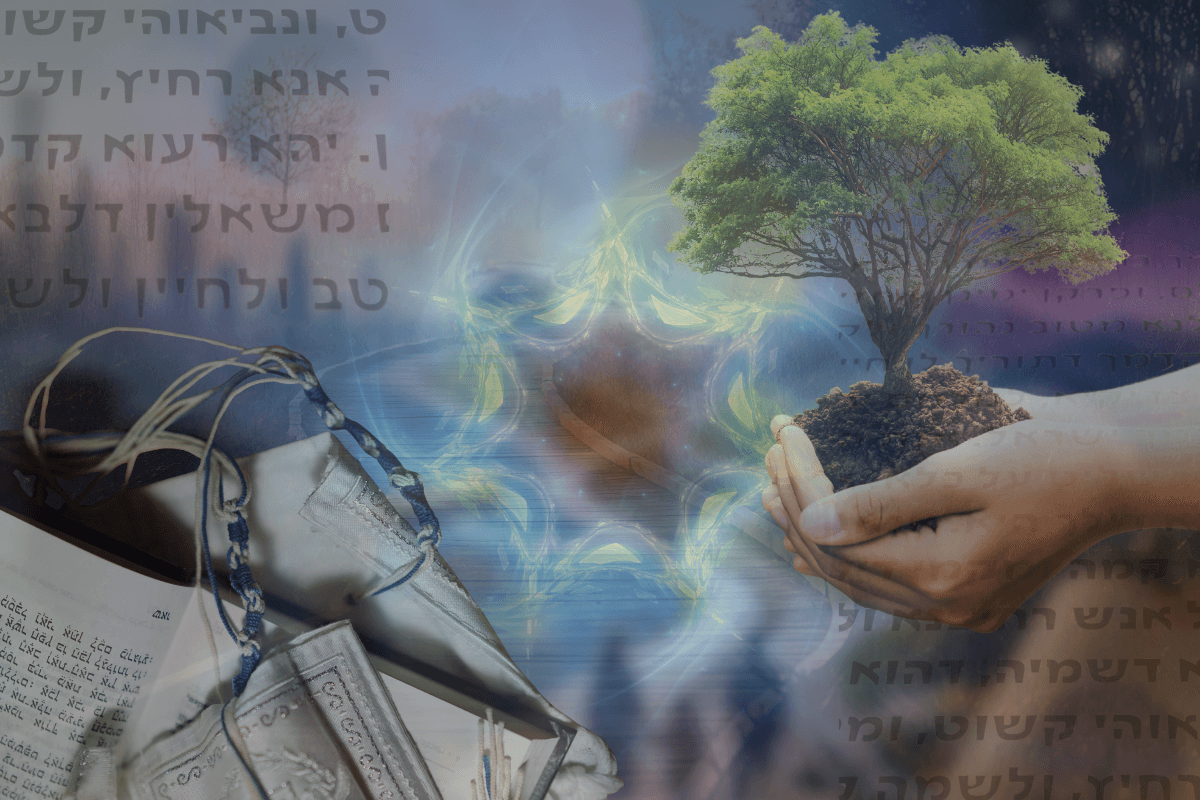
The rabbis approach these sex/gender categories like European zoologists attempting to categorise Australian fauna

So what are these ancient rabbinic categories at the heart of the controversy? And are they actually genders? As usual with Talmud, it’s complicated.

The categories found in rabbinic literature include:

  • Zachar - male
  • Nekevah - female
  • Androgynos - born with both a penis and a vagina
  • Tumtum - unknown sex
  • Aylonit - assigned female at birth but does not develop secondary female sexual characteristics during puberty
  • Saris hamah - assigned male at birth but does not develop secondary male sexual characteristics during puberty
  • Saris adam - assigned male at birth but does not develop secondary male sexual characteristics due to castration

Are these gender categories? Not really, or at least not in the sense we use ‘gender’ today, to denote a socially constructed identity or complex of social roles distinct from biology. These categories are clearly concerned with matters of biology and anatomy. In many ways, these categories take us closer to “intersex” than to “transgender” or “non-binary”.

Are they sex categories then? That is, do they denote certain kinds of bodies, independent of norms about permissible behaviour? Also not really. Even as the rabbis anchor them firmly in certain anatomical traits, these categories are inextricably connected to behaviour. For example, an androgynos is like a man in that he cuts his hair and marries a woman, but she is like a woman in that she is ineligible to provide certain forms of testimony (Tosefta Bikkurim 2:2-4). The link between behaviour and categorisation is pervasive in halacha (Jewish law), from dietary laws to priesthood to sex/gender.

As my teacher Rabbi Dr Sarra Lev has pointed out, both “sex” and “gender” are anachronistic terms in the context of classical rabbinic literature. The rabbis’ discussions presuppose that anatomical kind and permissible behaviour are necessarily linked.

To further complicate matters, the rabbis often do have an underlying binary view around sex/gender. Much of the time discussions of sex/gender categories occur in the context of trying to fit variant bodies into halachic binaries. To that end, the saris adam is essentially a ‘defective’ male, and the saris hamma and aylonit are analysed as an infertile (but not ‘defective’) male and female respectively. Even the tumtum is believed to ultimately have a binary sex/gender, though since it cannot be known, the tumtum is often treated analogously to the androgynos.

Classical rabbinic literature at the very least recognises that the contours of sex and gender are far more complicated than just “two sexes, period”

At this point, the rabbinic perspective might be starting to sound concerningly similar to the anti-trans ideology: no clear distinction between sex and gender, an underlying male/female binary, and frequent efforts to filter ‘problem cases’ through that binary.

Not so fast.

To use a distinctly Australian analogy, the rabbis approach these sex/gender categories like European zoologists attempting to categorise Australian fauna. They bring a lot of assumptions and frameworks with them. Sometimes they impose them upon others in unjust or destructive ways. At times their existing categories can expand to include what they encounter as a variant form, as with the kangaroo or the saris hamma. Other times, the anomalies present a greater challenge to their categories, as with the platypus or the androgynos.

Sometimes the zoologists and the rabbis are interested in understanding the bodies they are discussing. Other times these bodies are discussed as a means to understand the conceptual categories for which they serve as boundary cases.

We should not lionise the ancient rabbis nor can we honestly project contemporary frameworks of sex and gender onto them. But classical rabbinic literature at the very least recognises that the contours of sex and gender are far more complicated than just “two sexes, period”.

How many genders are there in the Talmud? Enough to cause problems for Trump and the Trumpeters.

You might also like
  • Court decision fails to understand when ‘Fuk Israel’ becomes antisemitic
    Jeremie Bracka
  • The Altalena should be a warning, not a political weapon
    Shahar Burla
  • Turkey emerges as military threat to Israel
    Dror Doron
logomark.67a07ee3
We believe in the free flow of information

Republish our articles for free, online or in print, by using our Creative Commons licence

You might also like

    Finding ouor why
    PodcastLifestyle

    Finding Our Why

    The Jewish Independent
    single – lead image
    FeatureLifestyle

    On my own (terms)

    Jarod Rhine-Davis
    welcome mat
    ReflectionAustralia

    In celebration of Jews by choice

    Benjamin Elton 2

About the author

Raphael Morris

Raphael Morris

Raphael Morris (they/he) is a rabbinical student and Justice, Equity, Diversity & Inclusion intern at the Reconstructionist Rabbinical College. He was previously an educator in philosophy, mathematics and computer science at university level.

More from the author

OpinionLifestyle

This Chanukah, we need solidarity not unity

OpinionAustralia

To my pro-Israel friends, to my pro-Palestinian friends

Comments1

  • Avatar of Ron Hoenig

    Ron Hoenig1 April at 07:26 am

    Fascinating article that raises the issue of epistemological relativity. How dare we impose ahistorical categories and pretend that it has ‘always been thus’, Seriously wondering whether the Trump edict will affect the continuation of the program you are involved in?