Aa
  • Read, Watch, Listen
  • TJI Series
  • Community Action
  • Events
  • Zedi
Follow us and continue the conversation
  • LinkedIn
  • Instagram
  • FaceBook
  • X
  • YouTube
Test yourself with the TJI Quiz!

Adjust size of text

Aa

Follow us and continue the conversation

  • LinkedIn
  • Instagram
  • FaceBook
  • X
  • YouTube

Your saved articles

You haven't saved any articles

What are you looking for?

Original reporting, insightful analysis and diverse views, delivered straight to your inbox

  • LinkedIn
  • Instagram
  • FaceBook
  • X
  • YouTube
Your support fuels our mission to inform, entertain and inspire.

The Jewish Independent is bound by the Standards of Practice of the Australian Press Council. If you believe the Standards may have been breached, you may approach The Jewish Independent or make a complaint to the Australian Press Council in writing at www.presscouncil.org.au. The Council may also be contacted on 1800 025 712.

  • Our Story
  • Contact us
  • Our Team
  • Support us
  • Guidelines
  • Pitch your idea
  • Republishing us
  • Community Action
  • Our Awards
  • LinkedIn
  • Instagram
  • FaceBook
  • X
  • YouTube
Aboriginal FlagTorres Strait Islanders Flag

The Jewish Independent acknowledges Aboriginal and Torres Strait Islander peoples as the Traditional Owners and Custodians of Country throughout Australia. We pay our respects to Elders past and present, and strive to honour their rich history of storytelling in our work and mission.

© The Jewish Independent 2026All Rights Reserved
Website design and development by Your Creative, MelbourneTerms & ConditionsPrivacy Policy
HomeRead, Watch, ListenIsrael
FeatureIsrael

‘I could breathe’: The young people choosing to call Israel home post Oct 7

One third of the 32,000 people who made aliyah last year were aged between 18 and 35. Why are so many young people choosing to start a brand new life in Israel? A life where conflict, protest and unrest are a mainstay?
Hannah Moshinsky
Print this
Gabriel, second from RHS, at Shuva Achim, August 2024. (Image: supplied)

Gabriel, second from RHS, at Shuva Achim, August 2024 (Image: supplied).

Published: 14 July 2025

Last updated: 14 July 2025

The ongoing Gaza conflict, 12-day Iran war and tense political landscape doesn’t appear to be stopping the youngest members of the Jewish diaspora from making aliyah.

In fact, 2024 was Australia's highest aliyah rate in the past five years – 184 Australians chose to go from down under to up over (aliyah literally translates to rise up). They join the over 32,000 new olim last year, a third of which are aged between 18 and 35.

Avichai Kahana, Director General of the Ministry of Aliyah and Integration, which oversees funding and outreach for aliyah, told The Jewish Independent that he was impressed with the migration figures.

“Usually in a war people are escaping…[the 2024 numbers] are amazing and we’re doing our best,” Kahana said.

So why are so many young people choosing to uproot their local – and comparatively safe – foundations to start a brand new life in Israel? A life where conflict, protest and unrest are a mainstay? We speak with three young olim to find out.

“To be part of Israel today is to be part of a new storyline”

Gabriel, 29, “never planned” on making aliyah. Originally from Perth, Gabriel studied psychology and found himself living a “normal life”. That was, until October 7 – when he started feeling “very powerless and unsettled in Australia”. 

Gabriel didn’t attend a Jewish day school and had a loose connection to Judaism and the Jewish community. When October 7 happened, he was shocked at the lack of global support for Israel. He “had life long friends who immediately came out as very anti-Israel”, and consequently stopped “meeting new friends or going to social things”.
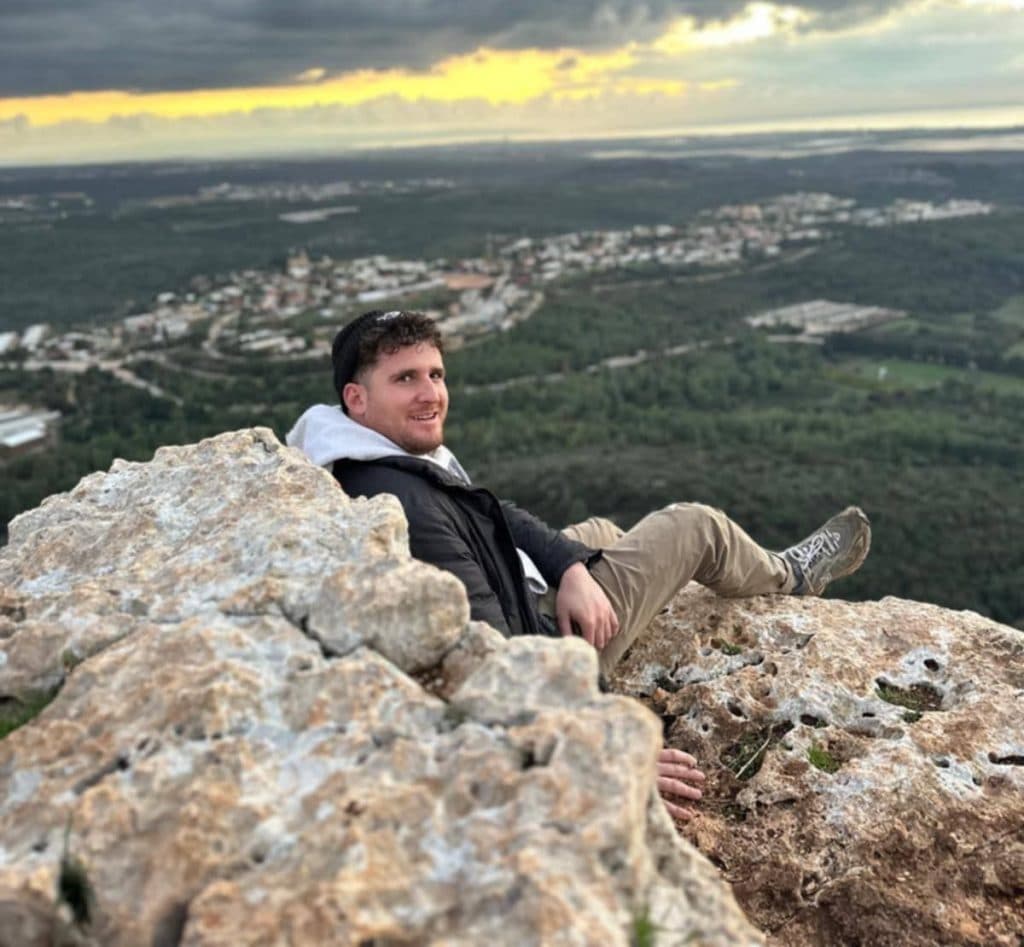
Gabriel, 29, originally from Perth (Image: supplied).

In August last year, Gabriel decided to travel to Israel to volunteer with Shuva Achim, a network of volunteers near the Gaza border that gives free meals, toiletries and support to soldiers between missions. 

“Their sacrifice and stories really inspired me to question what contribution I can make.” On Gabriel’s flight back to Australia he started asking himself, “why not make aliyah? What is actually stopping me?”. 

By the end of November 2024, just two months after returning from volunteering, Gabriel made aliyah to Jerusalem. 

Today, with two weeks left of his intensive ulpan (Hebrew school) classes, he says he very much sees a future for himself in the country. “[I am] happy and where I should be,” Gabriel reflected. “At this point in my life people are settling down… it is quite a big deal to start again. But it’s all very exciting. To be part of Israel today is to be part of a new storyline.”

“[My children] only have a future here”

Sophie* is a 36-year-old mother and make-up artist originally from Sydney. After initially making aliyah back in 2013, Sophie, her Israeli-born husband and their two children have since had multiple back and forths between the two countries.

Living in Israel when October 7 happened prompted Sophie and her family to take one of the immediate repatriation flights to Australia: “[My husband and I] freaked out, with two small children we were in fight or flight, and we chose flight”. 

“Moving [to Israel] comes with the struggles but also the charm”

Sophie*

Upon arriving in northern Sydney, Sophie initially experienced “amazing” support, but quickly felt the effect of rising antisemitism in her area. The stark cost of Jewish education meant her son attended public school, where Sophie felt he wasn’t well protected. “If you can’t afford to send [your children] to a private Jewish school from year-K, what does that mean?,” she said.

After a year in Sydney, Sophie felt she “couldn’t breathe”, but the guilt of being able to choose to leave Israel amidst a war also weighed heavily. Ultimately, the firebombing of the Adass Israel Synagogue became the “final straw”, and her family officially moved back to Israel at the start of this year. 

“Moving [to Israel] comes with the struggles but also the charm,” said Sophie, adding that despite the war, she believes her children “only have a future here”. 

“[I] didn’t want to keep living in the United States”

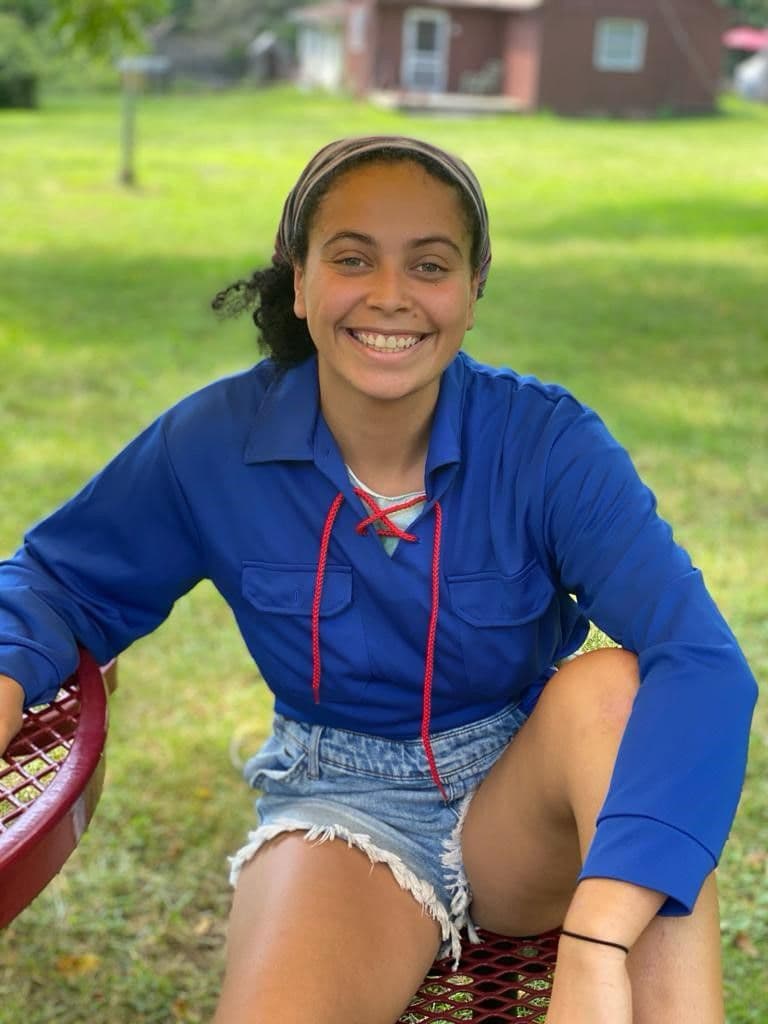
26-year-old Zandra Campbell, who is originally from New Jersey, “had lots of options in front of [her] before aliyah was solidified as a choice”. 

Completing her undergraduate degree in English literature at Princeton University, Zandra “would have probably gone to law school, got a masters in Education, or even a PhD in English literature”. But with a rising feeling of alienation within her community amongst the political left and increasing domestic socio-economic tensions, Zandra “knew in her heart” that she “didn’t want to keep living in the United States”.

Zandra Campbell, 26, originally from New Jersey (Image: supplied). 

Zandra initially considered moving to Jamaica to explore her roots: “It wasn’t until after October 7 that it became obvious to me that I would make aliyah”. 

Through her role on the leadership of Habonim Dror North America, Zandra was flown to Israel for a seminar in March 2024. One year later, she made aliyah to Petah Tikva.

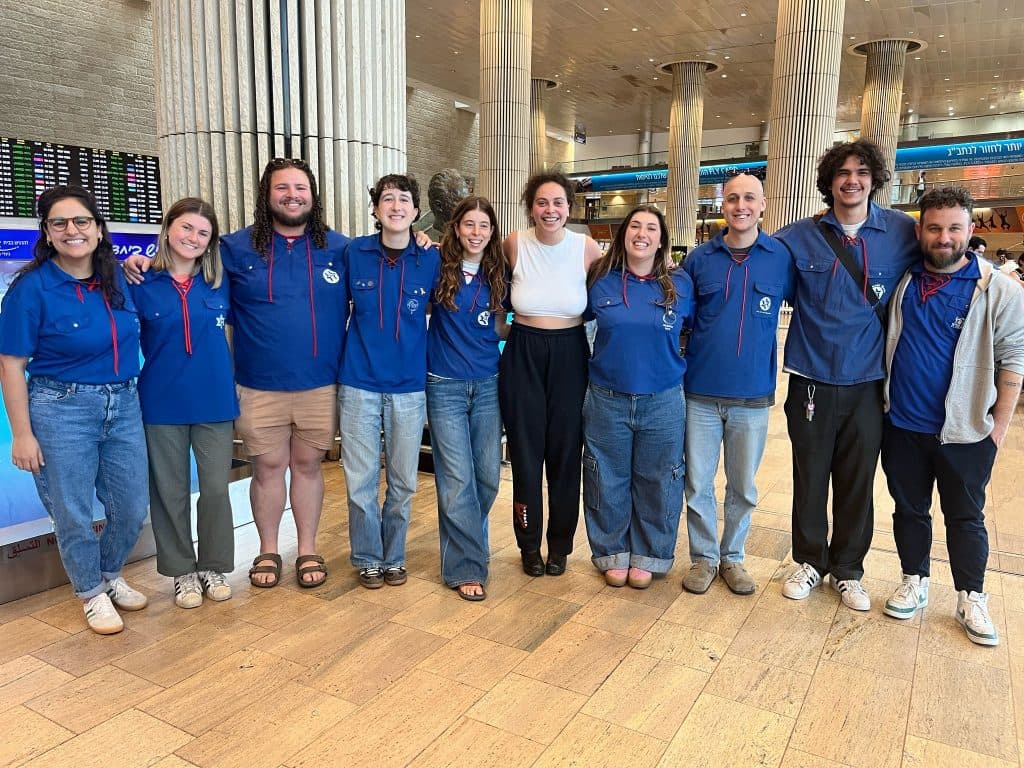
Zandra, in white top, joining fellow Habonim Dror alumni at Ben-Gurion Airport in March, 2025 (Image: supplied).

“I felt like I could breathe, life is happening here. No one is worrying about who is evil and who isn’t, and whose story we are telling, people are just being themselves,” she recalled.

For Zandra, aliyah is intertwined with her passion for social justice, education and the need to “carry on the work” of peace activists killed on October 7 in the hope  their “murder wasn’t in vain”.

“[Aliyah] figures are a badge of shame”

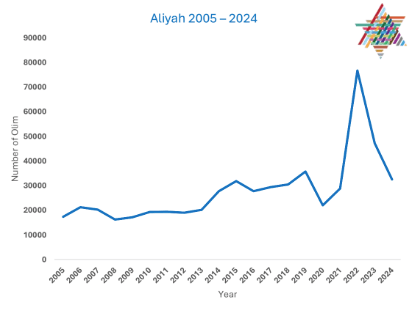
While the 2024 aliyah figures are considerable, they represent a 42% decrease compared to the last five years.

It’s an outcome taken seriously by Israel, with MK Oded Forer, Committee Chair of Immigration, Absorption and Diaspora Affairs, calling the figures “a badge of shame".

Aliyah rates since 2004 (Image: Ministry of Aliyah and Integration).

Forer blames budget diversions from Former Soviet Union countries to Western countries like France and America, which have resulted in the overall global “potential of aliyah to Israel… not being realised". Last year, 22,000 of the 32,000 olim were from the FSU (Former Soviet Union).

Kahana clarifies that the Ministry doesn’t “differentiate" between olim, but adds that they “encourage aliyah from the countries we need to make an effort… if we’ve just had a big wave from FSU… so now we need to invest in other countries.”

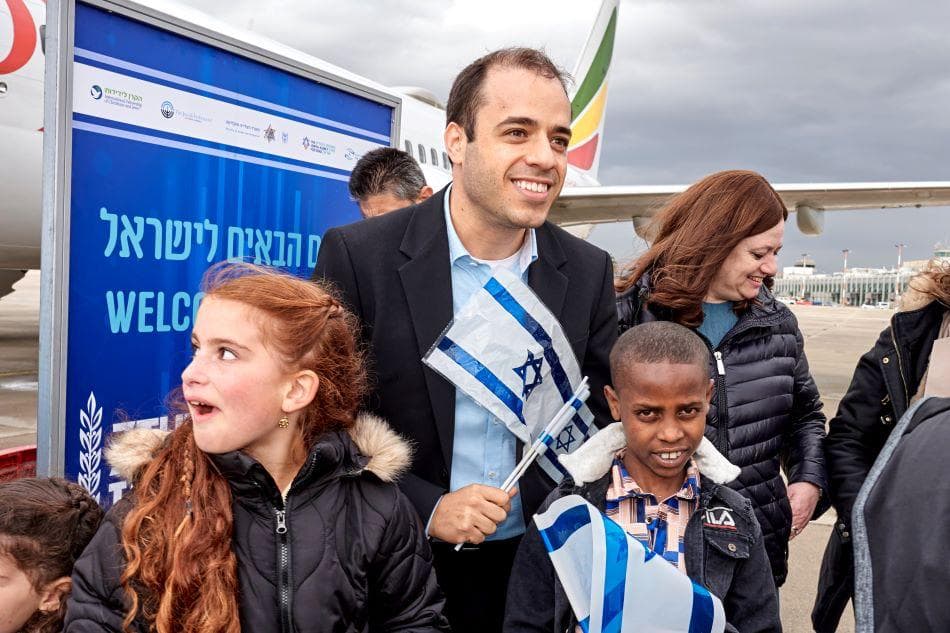
Avichai Kahana (centre), the Director General of the Ministry of Aliyah and Integration (Image: Michael Dimenstein)

As a result, a number of investments have been made by the Israeli government to improve aliyah rates from OECD countries. This includes a new professional licensing law that makes licence conversion easier; Olim Together, an aliyah file management project that aims to improve bureaucracy; and academic programs that allow the first year of a bachelor degree to be in either French, English or Russian.  

Looking to the future, Kahana believes these initiatives alongside rising antisemitism in the West will manifest in greater rates of aliyah from France, Britain, North America and “we hope even from Australia”. 

“We need the olim. We want to build [Israel] after the war... so we are waiting for them and we will do our best to integrate them here in Israel,” Kahana concluded.

*Name changed to respect privacy wishes.

You might also like
  • The Altalena should be a warning, not a political weapon
    Shahar Burla
  • Turkey emerges as military threat to Israel
    Dror Doron
  • Because of my Zionist values, I’m joining an Arab party
    Yoav Segalovitz
logomark.67a07ee3
We believe in the free flow of information

Republish our articles for free, online or in print, by using our Creative Commons licence

You might also like

    settler outpost west bank
    NewsIsrael

    Israel is cementing its control over the West Bank and East Jerusalem while the world is distracted

    Martin Kear
    Segalovitz Abbas
    Israel Votes 2026AnalysisIsrael

    Segalovitz decision to join Arab party is a paradigm change for Israel

    Eetta Prince-Gibson
    Protest
    AnalysisIsrael

    Western ‘Palestinianism’ colonises everything – and hurts Palestinians

    Andres Spokoiny 5

About the author

Hannah Moshinsky

Hannah Moshinsky

author

Hannah Moshinsky completed a Bachelor of Arts in History and Politics at the University of Melbourne and was involved in various Melbourne-based community organisations, including Kehilat Kolenu and Habonim Dror. Hannah made aliyah at the start of 2024 and is currently the madricha (youth leader) of Habonim Dror Shnat.

More from the author

FeatureIsrael

Meet some young Aussies weathering war during their gap year

AnalysisIsrael

One in three Israelis does not have shelter from missiles

FeatureIsrael

When the party moves to the bomb shelter

OpinionAustralia

A Palestinian Solidarity Sukkot needs to invite Israelis

Comments

No comments on this article yet. Be the first to add your thoughts.