Aa
  • Read, Watch, Listen
  • TJI Series
  • Community Action
  • Events
  • Zedi
Follow us and continue the conversation
  • LinkedIn
  • Instagram
  • FaceBook
  • X
  • YouTube
Test yourself with the TJI Quiz!

Adjust size of text

Aa

Follow us and continue the conversation

  • LinkedIn
  • Instagram
  • FaceBook
  • X
  • YouTube

Your saved articles

You haven't saved any articles

What are you looking for?

Original reporting, insightful analysis and diverse views, delivered straight to your inbox

  • LinkedIn
  • Instagram
  • FaceBook
  • X
  • YouTube
Your support fuels our mission to inform, entertain and inspire.

The Jewish Independent is bound by the Standards of Practice of the Australian Press Council. If you believe the Standards may have been breached, you may approach The Jewish Independent or make a complaint to the Australian Press Council in writing at www.presscouncil.org.au. The Council may also be contacted on 1800 025 712.

  • Our Story
  • Contact us
  • Our Team
  • Support us
  • Guidelines
  • Pitch your idea
  • Republishing us
  • Community Action
  • Our Awards
  • LinkedIn
  • Instagram
  • FaceBook
  • X
  • YouTube
Aboriginal FlagTorres Strait Islanders Flag

The Jewish Independent acknowledges Aboriginal and Torres Strait Islander peoples as the Traditional Owners and Custodians of Country throughout Australia. We pay our respects to Elders past and present, and strive to honour their rich history of storytelling in our work and mission.

© The Jewish Independent 2026All Rights Reserved
Website design and development by Your Creative, MelbourneTerms & ConditionsPrivacy Policy
HomeRead, Watch, ListenAustralia
ReflectionAustraliaLifestyle

I was called both a shiksa and a raving Zionist

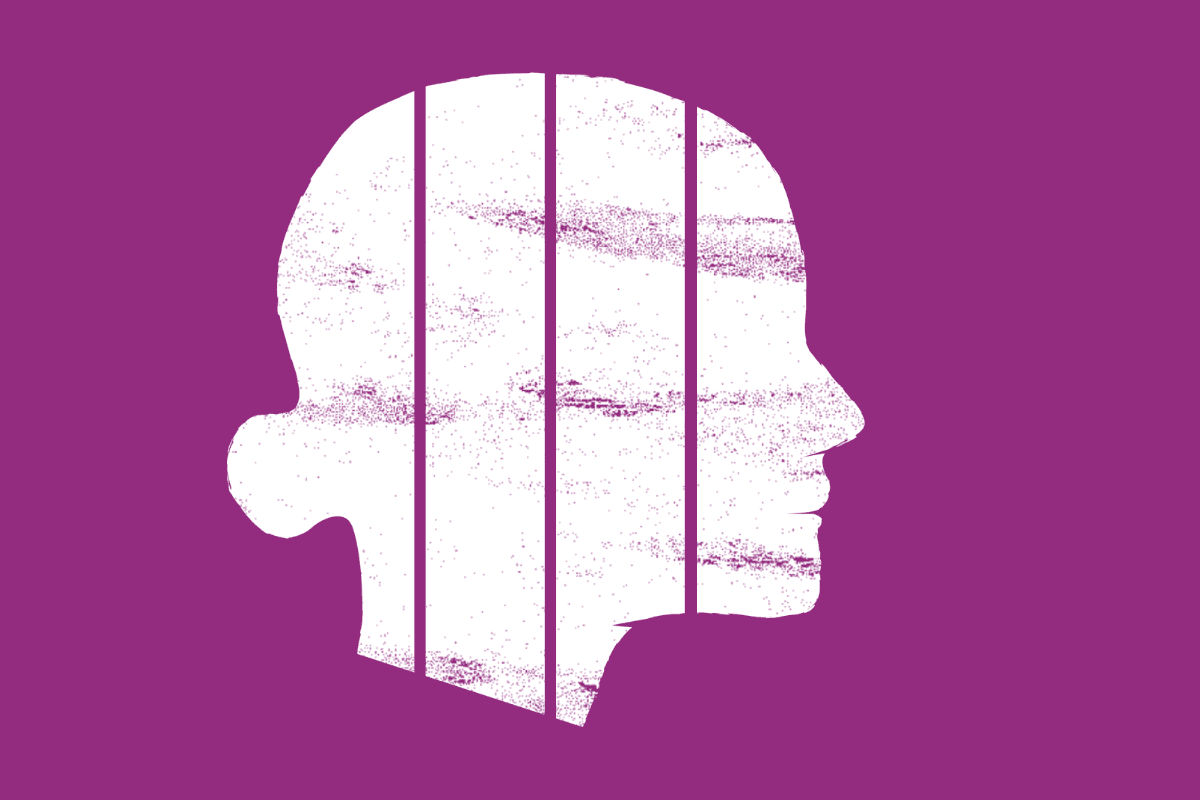
As someone in a very public Jewish community role at a heartbreaking time, I've been forced to embrace the complexity of my Jewish-Japanese-American-Australian identity.
Noe Harsel
Print this
divided woman

Illustration: TJI

Published: 15 October 2024

Last updated: 14 October 2024

Growing up in the US, I was told the man who lived in the house behind my family was a veteran. I am not sure if this was to make me feel reassured, or to say something about the US military, or to add some context about his belief system.

This man was somehow obsessed with my family. Not so much the whole family perhaps, but my parents. My dad, because he was Jewish and my mom, because she was Asian.

Neither of these things were good things to him, it turned out. His porch faced our backyard, looking into our kitchen, where we sat for meals or to do homework. I would look out over the kitchen table, across our back deck, over the backyard play equipment, and over the rise to his deck, where he would be sitting. Watching. Just watching, if we were lucky.

Sitting, watching, with a shotgun in hand, if we were less lucky.

To him, I learned, Jews were no good because they owned the world, and Japs were no good because they were taking everything away. Both were not part of the American way of life. That was why he was watching us. We were not part of the American way of life.

My parents found this whole situation understandably unacceptable. They told us to stay away from that house, closed the curtains and asked me to keep quiet in the backyard. But to pre-teen me, this was also unacceptable. I was born there. I went to school, had friends, and played sports (albeit badly). We lit fireworks in the street on the fourth of July. I was embedded in the American way of life.

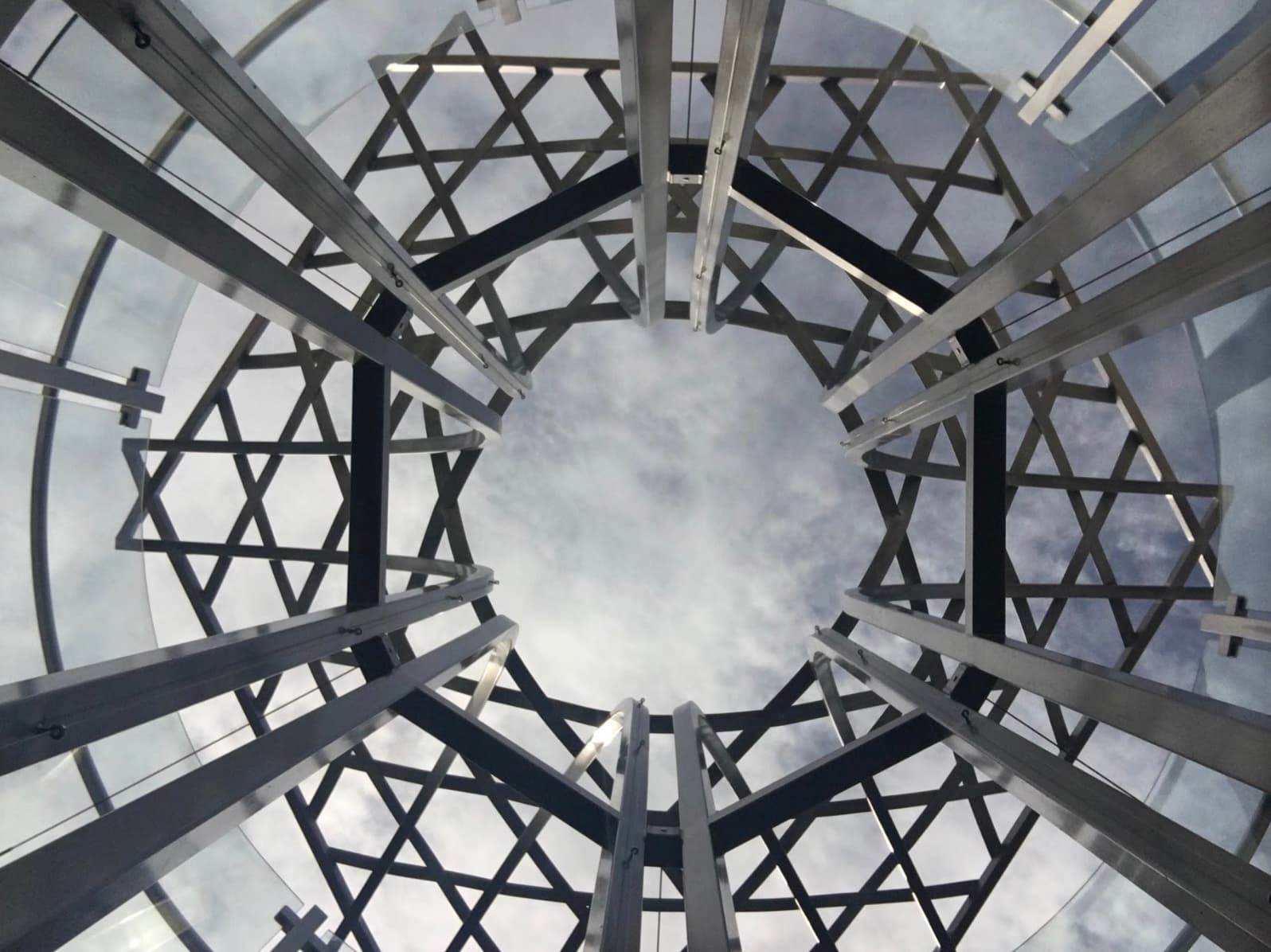
I thought I could show him that I could be Jewish, Japanese and American too. Taking my friend Rachel with me (because she was two years older than me), I feigned courage and found the way around to the neighbour’s house. Rachel, sensibly, was uncertain that this whole adventure was a good idea.
‘What are you going to say?’

‘I don’t really know, but I think I can ask him to stop staring at us.’

Looking back on this escapade now, I am ever grateful that it was the staring neighbour’s mother who answered our knock. There was no hiding the surprise on her face as she closed the door behind her, keeping us on the street.

She may honestly have had no idea who I was. It would be nice to remember her as sad when told that I was the daughter of the Jew and the Jap from over the back fence, that her son watched us regularly while we ate breakfast, or did homework, or hung out in the backyard. However, I think the reality is more that she just wanted us gone. I know my voice shook as I asked her if he could stop watching us.

She took in all of the four feet of me and then cast those eyes top to toe over Rachel.

‘You really Jewish?’ She pointed at me.

I nodded. Rachel took my hand.

‘You don’t look it.’ She leaned her head in a little more toward me, before turning away to walk back to her house. ‘Not much Asian either,’ we heard her say, ‘Maybe you folks could move.’

I really wanted to ask why he didn’t like Jews or Asians. I wanted to know which he didn’t like more. I wanted to know why he didn’t like me. What had I done to them and how could I make it better?

I was told by my fellow Jews, how lucky I am that this must not affect me so much – you know, not being really all that Jewish

Many years of well-intentioned therapy, and a move across the world, have done little to shift the feeling that there must be something wrong with me. Somehow, I would never fit in. There would never be a place where I would be one of you: the whole you, of single origin, without the other, understanding intuitively what the privilege of belonging feels like.

As an Asian Jewish woman who has spent a lifetime struggling with the complexities of leaning into the intricacies of this intersectionality, a post-October 7 world has forced a focus on self and identity in ways that have been unforeseen.

I was called a shiksa, at the same time I was told I was a raving Zionist. I watched the lack of sympathy for Jewish lives lost. I experienced the meteoric rise of antisemitic sentiment, some of it from people I have admired for years, friends I have known for decades and who have come to our simchas.

I argued pointlessly about the definitions of Zionism and holding multiple truths, and lost contact with some friends and family. I stood down from a board because of the organisation’s inability to handle its issues around racism. I saw my boys suffer at school and I witnessed how incredibly hard it is to do nothing in the face of so much. I went to events and was told by my fellow Jews, how lucky I am that this must not affect me so much – you know, not being really all that Jewish, and all.

I know in my heart that all of this was said to me without any nastiness intended. I didn’t bother to explain that I went to an American Conservative Synagogue with my Dad, that my family raised me with multiple cultural traditions, or that I reconverted when I came to Australia because of the hurt from constant questions about my Jewishness here.

I stand back, and feel proud, (in no particular order), as a Jewish, Japanese, American, Australian woman, and it doesn’t matter if you see all of this in my face or not

In the first few weeks after October 7, when my boys and I walked around the streets of our local area, people sometimes stopped me in the street to hug me and cry. It puzzled my sons that strangers felt so connected.

As someone who found herself in a very public Jewish community role at a very impactful and heartbreaking time for the Jewish community, the questions thrown at me about my own identity suddenly forced me to find a way to embrace the complexity of it – in the face of binary arguments that lacked any interest in history, intricacies or nuance.

I sat in the carpark at work, hours before anyone else arrived, where the dim streaks of a sun struggled to find me, and cried. I cried of course, for this world we suddenly found ourselves in, where friends I thought I had, were telling me how I was misunderstanding antisemitism, where an entire city that I loved was walking blindly past swastikas and antisemitic propaganda. I also cried for my team, a diverse group of Jewish and non-Jewish committed, talented staff and volunteers, who were thrown into a sudden abyss of online hate and existential questions.

I tried to understand the why, the how and the who, from my own family history of pogroms, Holocaust, migration and displacement. Desperately, I devoured my previous studies in racism, cultural studies and Australian identity, thinking that this would give me the secret code to understanding why so many people were suddenly so blindly full of hate.

Over the past year, I have been privileged to be involved in and host a number of gatherings of grief and healing. In these moments, I stand back, and feel proud, (in no particular order), as a Jewish, Japanese, American, Australian woman, and it doesn’t matter if you see all of this in my face or not.

So, when my son asked me the other day, “Mum, are we Jewish?”, it took me a moment to understand why he, a bar mitzvahed boy, would be asking me this.

Knowing that the question has come up for him, as it had for me, many times, from curious friends, innocent bystanders, or nosy congregants, I took a beat. It took me right back to my neighbour over the back fence and his mother. It didn’t matter that I didn’t look the part, to them, I was the part. It also didn’t matter that to some, no matter what, I would never be the part: the question is always, do I see myself as the part?

“Yes,” I said to him with a surety I hadn’t felt since I couldn’t remember when, “we are.”

You might also like
  • The riches to rags story of Indonesia’s Iraqi Jews
    Deborah Cassrels
  • I have lost faith in our multicultural institutions 
    Nomi Kaltmann
  • When belonging becomes conditional
    Allen Zeesman
logomark.67a07ee3
We believe in the free flow of information

Republish our articles for free, online or in print, by using our Creative Commons licence

You might also like

    neo-nazis white supremacists corowaTEST
    Royal CommissionOpinionAustralia

    Antisemitism, homophobia and a radical response to both

    Dennis Altman
    Tame
    Australia

    Tame apologises – but with little grace

    Deborah Stone 1
    Apple & rotten core Rosh hashanah
    EditorialAustralia

    Facing a new year with the knowledge life can be better

    The Jewish Independent

About the author

Noe Harsel

Noe Harsel

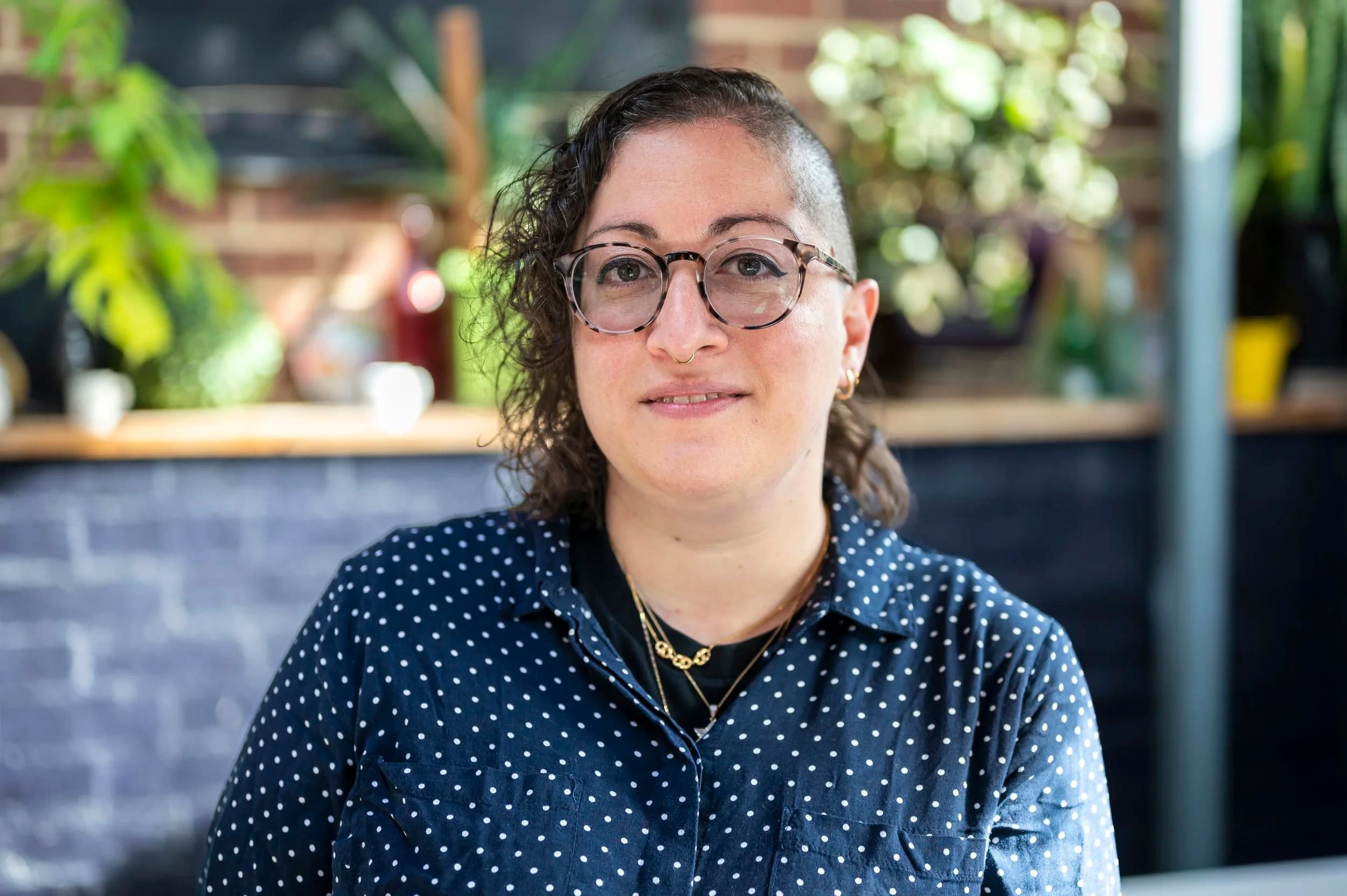
Noè Harsel is a writer, podcaster, arts producer and cultural leader with extensive experience across the creative sectors. She is currently Senior Policy Advisor / Senior Lecturer (Practice) at the Australian Centre for Jewish Civilisation, Monash University, and was formerly Museum Director & CEO of the Jewish Museum of Australia. A former Chair of Writers Victoria, Noè has held leadership and advisory roles across arts, government and social justice organisations.

More from the author

ReflectionAustralia

Still not sure what it means to be ‘Jewish enough’

ReflectionAustralia

Miznon, the night after: joy, support and good Israeli food

Comments

No comments on this article yet. Be the first to add your thoughts.