Published: 16 July 2024
Last updated: 16 July 2024
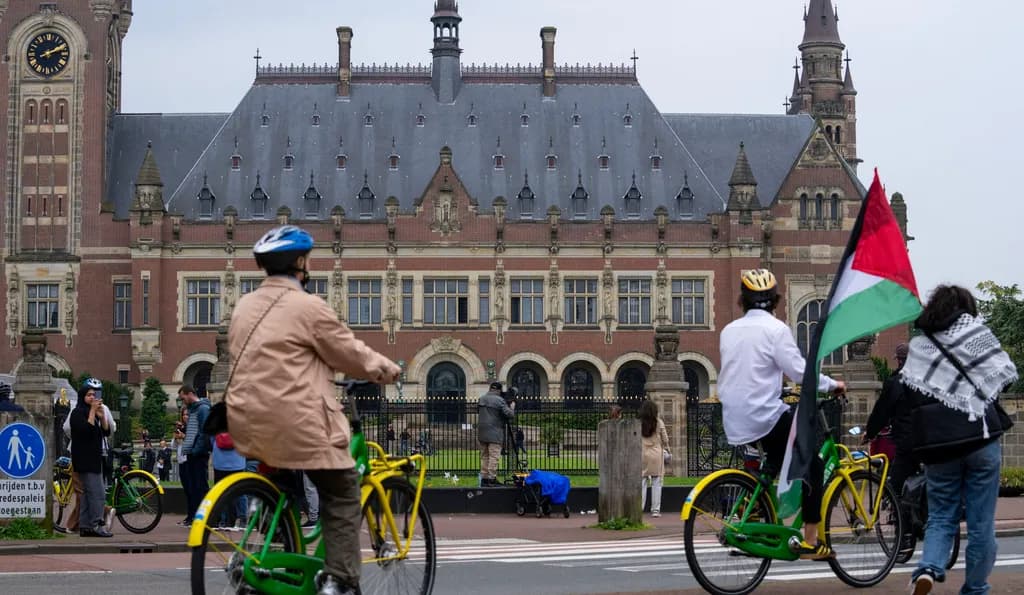
The International Court of Justice in The Hague will publish an advisory opinion late this Friday (Australian time) regarding the legality of the occupation and whether Israeli control of the West Bank and East Jerusalem constitutes permanent annexation.
There is no mechanism for advisory opinions to be enforced, but they carry significant moral and diplomatic impact and could strength the boycott, divestment and sanctions movement by providing legal justification for taking action against Israel.
In the past week, the United States and the European Union have both imposed additional sanctions on far-right leaders, extremist settler groups and outposts.
The ICJ held several days of hearings on the subject in February, a little over a year after the UN General Assembly requested the advisory opinion.
The General Assembly voted in December 2022 to ask the world court for a detailed opinion on the legal implications of the Israeli occupation. The vote came after the Palestinian Authority asked to examine whether the occupation could be defined as temporary. If the opinion to be issued Friday finds that the occupation is illegal, the court could rule that Israel must end it unconditionally and that third parties cannot help Israel maintain it.
The ICJ, which deals with disputes between countries, is also considering South Africa's suit against the war in Gaza.
The status of the West Bank is also being tested by a bill in the Knesset which would give the Israel Antiquities Authority control over archaeological sites in the West Bank.
“Since there is an archaeological site in nearly every Palestinian village in the West Bank, this could have major implications on their lives and on the possibilities for local development,” wrote Haaretz’s Nir Hasson.


Comments1
Wesley Parish16 July at 07:32 am
The law on military occupation comes from the Fourth Geneva Convention, which Israel, like Australia and New Zealand, is party to. Which amongst other things, dictates that the Occupying Power – Israel in this case – has no right to transfer the resident population out of the territory, nor to transfer its own population into the territory. This was made part of the treaty, article 49, based on the plans and actions of the Third Reich in transferring the Jewish population out of occupied Europe and into the death camps. It seems to me that denying the ICJ any right to rule on the Occupation, is spitting on the memory of those 6 000 000 Jews, defiling their memory worse than any overt antisemite could do.