Aa
  • Read, Watch, Listen
  • TJI Series
  • Community Action
  • Events
  • Zedi
Follow us and continue the conversation
  • LinkedIn
  • Instagram
  • FaceBook
  • X
  • YouTube
Test yourself with the TJI Quiz!

Adjust size of text

Aa

Follow us and continue the conversation

  • LinkedIn
  • Instagram
  • FaceBook
  • X
  • YouTube

Your saved articles

You haven't saved any articles

What are you looking for?

Original reporting, insightful analysis and diverse views, delivered straight to your inbox

  • LinkedIn
  • Instagram
  • FaceBook
  • X
  • YouTube
Your support fuels our mission to inform, entertain and inspire.

The Jewish Independent is bound by the Standards of Practice of the Australian Press Council. If you believe the Standards may have been breached, you may approach The Jewish Independent or make a complaint to the Australian Press Council in writing at www.presscouncil.org.au. The Council may also be contacted on 1800 025 712.

  • Our Story
  • Contact us
  • Our Team
  • Support us
  • Guidelines
  • Pitch your idea
  • Republishing us
  • Community Action
  • Our Awards
  • LinkedIn
  • Instagram
  • FaceBook
  • X
  • YouTube
Aboriginal FlagTorres Strait Islanders Flag

The Jewish Independent acknowledges Aboriginal and Torres Strait Islander peoples as the Traditional Owners and Custodians of Country throughout Australia. We pay our respects to Elders past and present, and strive to honour their rich history of storytelling in our work and mission.

© The Jewish Independent 2026All Rights Reserved
Website design and development by Your Creative, MelbourneTerms & ConditionsPrivacy Policy
HomeRead, Watch, ListenIsrael
FeatureIsrael

Inside a Palestinian Refugee Camp, a fourth generation is raised expecting to ‘go home’

Deborah Stone
Print this

Published: 10 February 2023

Last updated: 5 March 2024

DEBORAH STONE visits the Aida Refugee Camp and discovers a lifestyle built around belief in return to pre-Israel Palestine.

Above the entrance to Aida Refugee Camp is a sculpture of a huge metal key, the symbol of return for the 5500 Palestinians who live in the camp.

It is the key, far more than the living conditions, that make this a refugee camp. Many residents have inherited the keys their grandparents took when they left their homes as Israel was established in 1948. The keys speak to an enduring belief which powers the politics of the camp: Israel is temporary, Palestinians will return to the places where they once carried the keys.

In many ways Aida is a suburb of Bethlehem, a poor, crowded suburb with narrow random alleys and a preponderance of political street art.

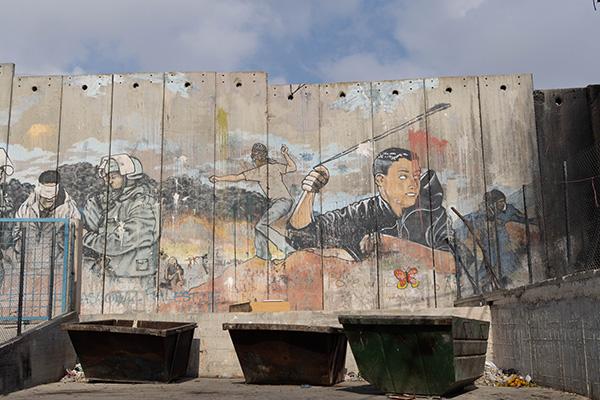
Cramped concrete houses occupy most of the 0.71 square kilometres area, which butts up against the separation wall, liberally decorated with images of Israeli soldiers, stone-throwing youths, and the Al-Aqsa Mosque.

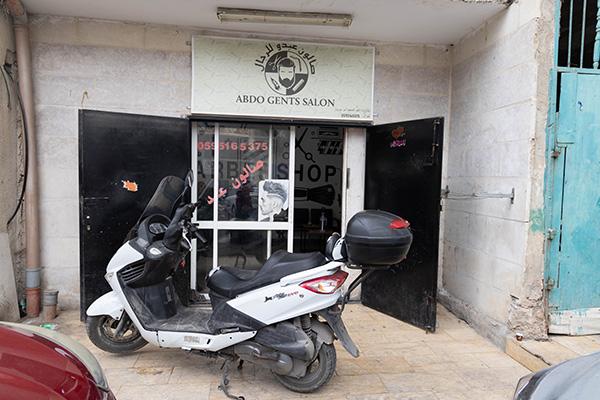
But there are also many signs of sustained and strangely normalised lives: a shiny new primary school, a health clinic, an active youth centre, a children’s playground, soccer field and garden, hair salons for women and men, and a handful of grocery and takeaway shops.
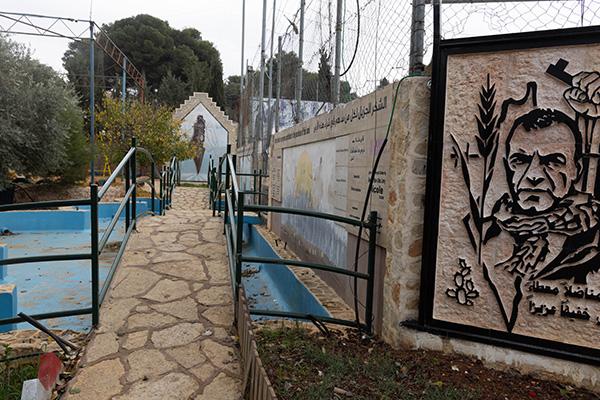
Entrance to the children's playground

Politics is loud here but the sense of violence is muted, evidenced only in the bullet- proof glass windows of the school and the crafts made of tear gas casings among the olive wood carvings at the “Key of Return Shop”.

Mustafa Alaraj was born in the camp. His grandfather came from the village of Al-Walaja, much of which is now the Jewish West Bank settlement Har Gilo.

In many ways the family lives a normal life. Alaraj works as a tour guide, his wife is studying nursing at university, their two-year-old daughter creates ordinary toddler chaos.
Alaraj has travelled extensively, on a Palestinian passport, but the family is officially stateless.

The camp is severely overcrowded and cannot expand because the surrounding area is controlled by Israel. Infrastructure is poor and residents are entirely dependent on the United Nations Relief and Works Agency (UNWRA), which runs all the facilities in the camp.

I ask Alaraj why the camp has not been absorbed into Bethlehem, which would make it part of Area A and under the Palestinian Authority - still under Israeli occupation but with a greater degree of autonomy and civil status.

“We don’t want to,” he answers. “If we agree to being under the Palestinian Authority, we are not refugees anymore. We want to go back to where our families came from.”

The separation wall, plastered with political art, which forms the camp border

He sees no end to life in the camp until refugees can return to land that he calls Palestine.

“We want to be part of UNWRA because it is the only witness to our history. If we become a neighbourhood of Bethlehem, there will be no solution for the refugees to return to their land.”

Like many Palestinians, Alaraj rejects the two-state solution because it will not return Palestinians the parts of the land their grandparents left.

An East Jerusalem Palestinian, Anas Mashni, expresses this to me most clearly when he says, “I will never call any part of that country Israel. Tel Aviv is as much Palestine as Ramallah.”

The narrative of return is literally written into the walls of the refugee camp. At the children’s playground, funded by European charities, there is an undulating bridge edged by paddling pools, dry because it is winter when I visit. The path leads to a map of ”Palestine”, from the Negev to the Golan Heights, the Jordan River to the Mediterranean Sea. A wall relief pictures a Palestinian hero grasping the ubiquitous key.

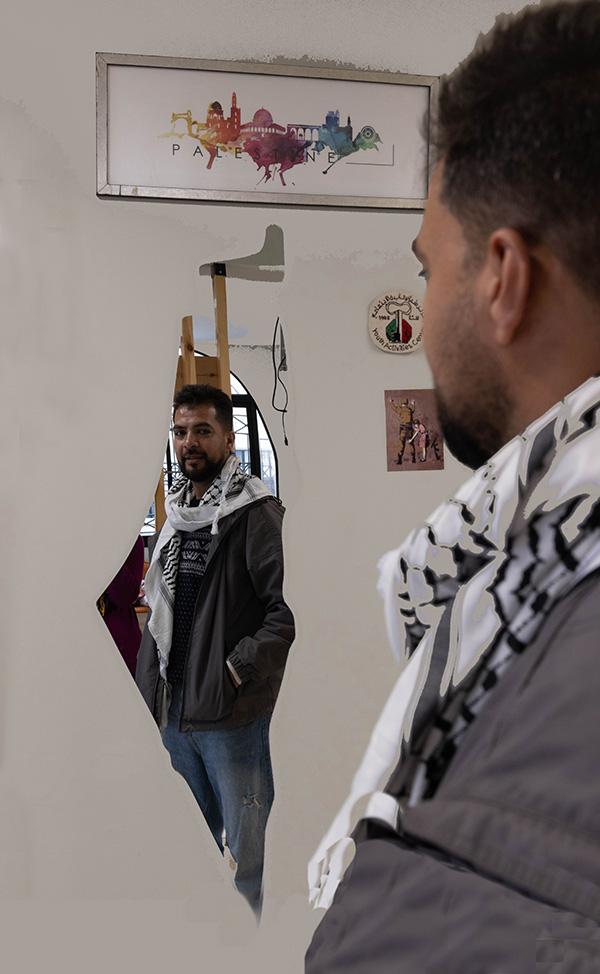
Street art on almost every wall depicts keys, maps, and martyrs. There is an image of journalist Shireen Abu Akleh, the Palestinian journalist killed in Jenin last year; a map in the colours of the Palestinian flag surrounded by the names of Palestinian villages; a roaring tiger with the legend “Here only tiger can survive”.  Even the mirror in the youth centre is in the shape of the map.

Mustafa Alaraj in the 'Palestine' shaped mirror at the youth centre

At the centre, children sign up for soccer games or take music lessons. They also absorb the narrative of expulsion and return, which is plastered across the arch-shaped windows and detailed in a small museum inside.

Saed Alaray, 25, is an online Arabic teacher who volunteers at the youth centre. His grandfather died last year, aged 97, and he has inherited the key to his family’s house in Jerusalem. He carries an image of it in his grandfather’s hand on his phone.

“He died dreaming to go back and he said the key should be transported for every generation.”

Alaray has never been to Jerusalem but says his grandfather’s house is occupied by Jewish settlers.

A hair salon inside the camp

“There’s some strange person from a strange country who came to my house and is living my life and here we are being marginalised and abandoned.

“They are trying to uproot us, to make us think about immigration but we won’t go. My existence is my resistance.”

Alaray, like most young Palestinians, has no time for the Palestinian Authority, which he regards as a puppet of the Israelis. He thinks its continued push for a two-state solution sells out Palestinians.

So, what does he think is the solution?

“The occupation will fall. We have been conquered by different civilisations. Some lasted more than 200 years. The Jews will go, and we will have Palestine back.”

Meanwhile more children are born into the overcrowded camp, their lives supported by UNWRA and unlikely to change.

The week I visited, Mustafa Alaraj has just learned his wife is expecting their second child. The unborn child is already a fourth generation refugee.

Top photo: The entrance to the Aida Refugee Camp (All photos: Deborah Stone)

You might also like
  • My vision for Palestinian cancer patients
    David Adler
  • A Gazan doctor’s journey of hope
    Deea Okasha
  • Planned non-Zionist Jewish school part of a growing US trend
    Shira Li Bartov
logomark.67a07ee3
We believe in the free flow of information

Republish our articles for free, online or in print, by using our Creative Commons licence

You might also like

    ISRAEL-TEL AVIV-PARLIAMENT ELECTION-EXIT POLLS
    Israel Votes 2026ExplainerIsrael

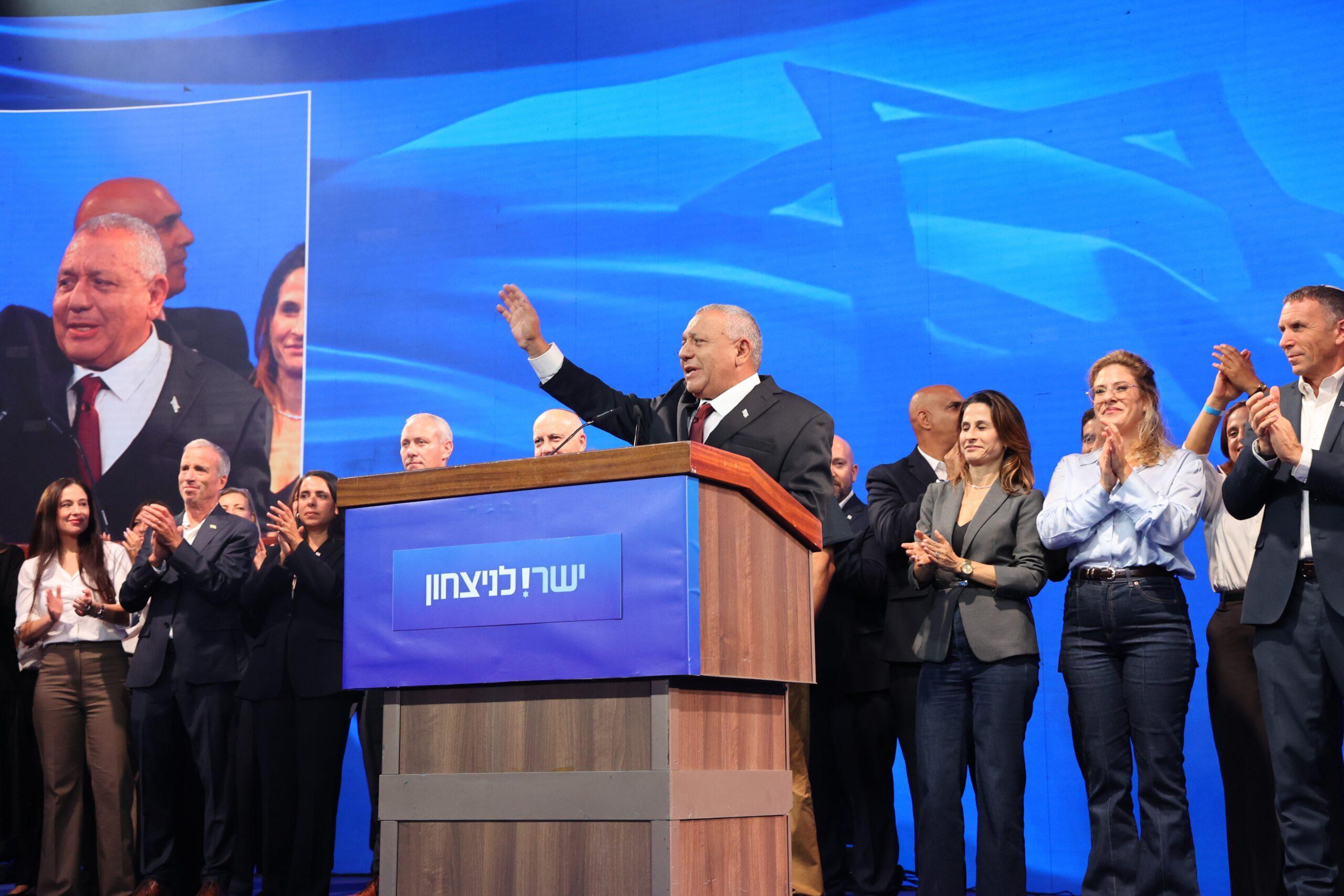
    Eisenkot’s conditions for forming Israel’s next government

    Ruth Eglash 1
    Haredi United Torah Judaism
    Israel Votes 2026AnalysisIsrael

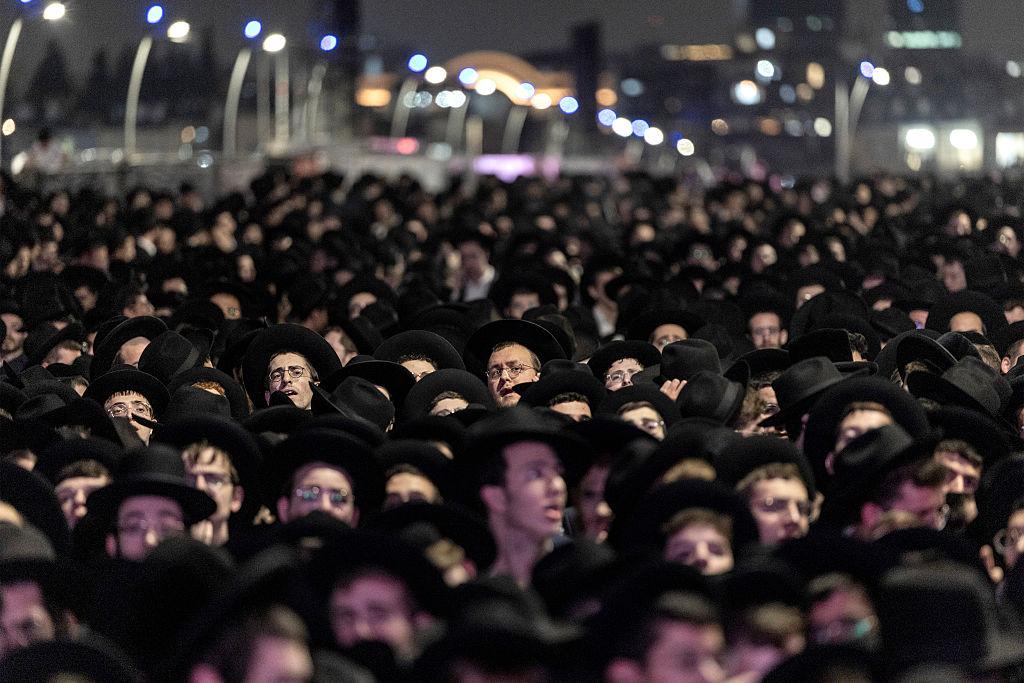
    Haredi party may change sides, enabling Eisenkot to form new government

    Shahar Burla
    Hebron IDF destruction
    AnalysisIsrael

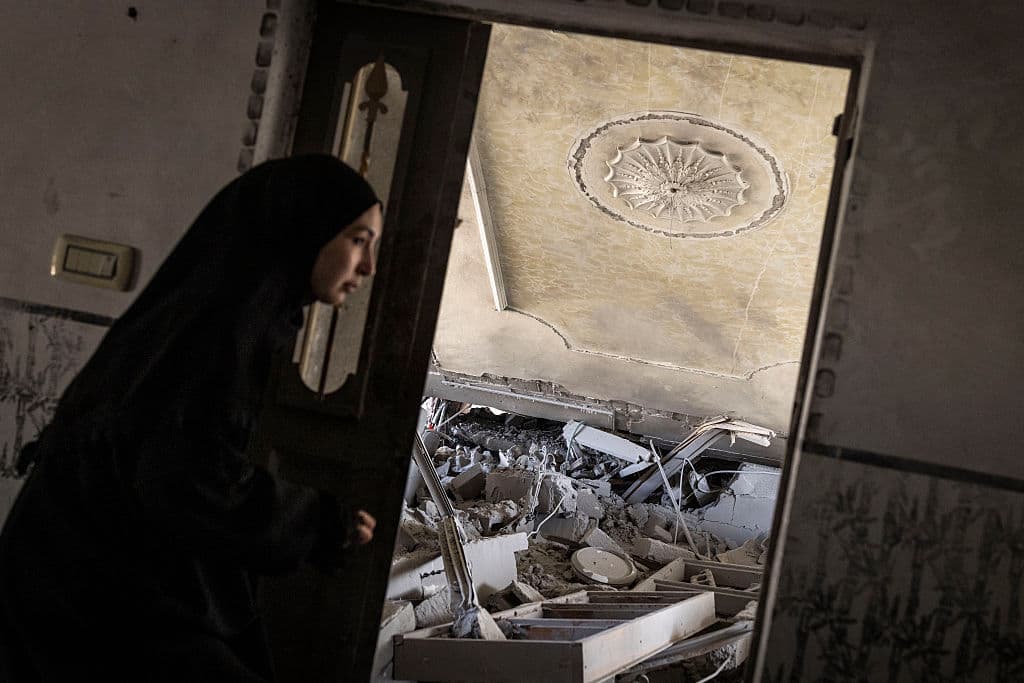
    Widespread destruction as IDF carries out large-scale operation in Hebron

    Ben Lynfield

About the author

Deborah Stone

Deborah Stone

Deborah Stone is Editor-in-Chief of TJI. She has more than 30 years experience as a journalist and editor, including as a reporter and feature writer on The Age and The Sunday Age, as Editor of the Australian Jewish News and as Editor of ArtsHub.

More from the author

ExplainerIsrael

Your Israel election cheat sheet

NewsAustralia

Alleged Helen Haines attacker wrote anti-Israel, pro-Iran posts

NewsWorld

Traditional antisemitic myths dominate online antisemitism: new study

NewsAustralia

Sydney Uni commissions independent review after ‘Globalise the Intifada’ campaign