Published: 11 October 2022
Last updated: 5 March 2024
IsraAid CEO Yotam Polizer, in Australia for a brief speaking visit, tells ELHANAN MILLER how his organisation harnesses Israeli expertise to help countries in need.
Israel has been criticised for its slow diplomatic response to the crisis in Ukraine, but the country’s largest international aid organisation was among the first to send help to refugees affected by war.
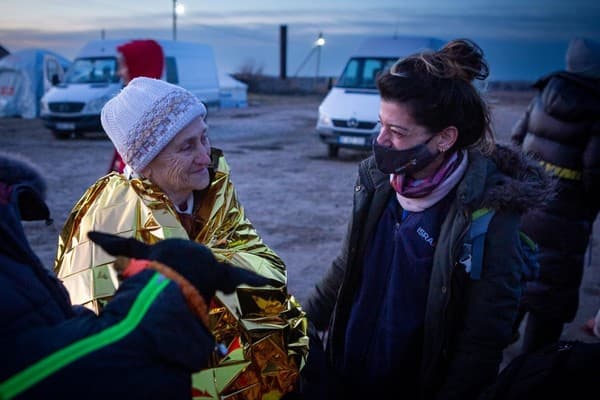
Two days after Russian forces invaded Ukraine on February 24, IsraAid, headquartered in Tel Aviv, had begun setting up “safe spaces” for Ukrainian mothers and children fleeing across the border to neighboring Moldova.
“We chose Moldova because it’s the poorest country in Europe,” Yotam Polizer, Global CEO of IsraAid, told The Jewish Independent in an interview ahead of a brief Australian speaking tour this week. “We handed out emergency equipment and hundreds of thousands of blankets and warm clothing items. We were the first international aid organisation in Moldova.”
Founded in 2001 as a coalition of Israeli aid organisations, IsraAid is now an independent NGO with 250 employees in 14 countries.
A few weeks after the invasion, and with 12 “safe spaces” up and running, IsraAid extended its activities to neighbouring Romania. Following the Russian withdrawal from Kyiv in the first week of April, IsraAid set up a logistics hub near the Romania-Ukraine border, which it used to truck more than 300 tonnes of equipment to 22 municipalities inside Ukraine, including the Russian-occupied city of Kherson.
The equipment, valued at $US30 million, was donated by groups as diverse as the Mormon church, the French government, UN agencies and private philanthropists.
IsraAid currently boasts a staff of nearly 30 inside Ukraine, many belonging to the local Jewish community, or Israelis who speak the local language.
The organisation prides itself in harnessing Israeli expertise to help the Ukrainian people. From the beginning of its involvement in the war, it provided psychological assistance to women and children based on models developed in Israel to assist children suffering from post-trauma in Sderot and Kiryat Shmona.