Aa
  • Read, Watch, Listen
  • TJI Series
  • Community Action
  • Events
  • Zedi
Follow us and continue the conversation
  • LinkedIn
  • Instagram
  • FaceBook
  • X
  • YouTube
Test yourself with the TJI Quiz!

Adjust size of text

Aa

Follow us and continue the conversation

  • LinkedIn
  • Instagram
  • FaceBook
  • X
  • YouTube

Your saved articles

You haven't saved any articles

What are you looking for?

Original reporting, insightful analysis and diverse views, delivered straight to your inbox

  • LinkedIn
  • Instagram
  • FaceBook
  • X
  • YouTube
Your support fuels our mission to inform, entertain and inspire.

The Jewish Independent is bound by the Standards of Practice of the Australian Press Council. If you believe the Standards may have been breached, you may approach The Jewish Independent or make a complaint to the Australian Press Council in writing at www.presscouncil.org.au. The Council may also be contacted on 1800 025 712.

  • Our Story
  • Contact us
  • Our Team
  • Support us
  • Guidelines
  • Pitch your idea
  • Republishing us
  • Community Action
  • Our Awards
  • LinkedIn
  • Instagram
  • FaceBook
  • X
  • YouTube
Aboriginal FlagTorres Strait Islanders Flag

The Jewish Independent acknowledges Aboriginal and Torres Strait Islander peoples as the Traditional Owners and Custodians of Country throughout Australia. We pay our respects to Elders past and present, and strive to honour their rich history of storytelling in our work and mission.

© The Jewish Independent 2026All Rights Reserved
Website design and development by Your Creative, MelbourneTerms & ConditionsPrivacy Policy
HomeRead, Watch, ListenWorld
FeatureWorld

IsraAID comes to the Pacific for solutions to climate change

Tamar Kosky Lazarus
Print this

Published: 27 June 2023

Last updated: 5 March 2024

Israel is bringing its disaster experience to the Pacific, where the rise in extreme weather events is already hurting small island nations, writes TAMAR KOSKY LAZARUS.

The Pacific is on the front lines of climate change. The impending threat of climate change is rapidly reshaping all our lives but small island nations in are already facing the harsh effects: extreme weather events, rising sea levels, and coastal erosion.

These small nations are among those who have contributed the least to causing the impending catastrophe, but they are already facing the challenges and working to build resilience to prepare for future disasters.

Israel’s leading humanitarian organisation, IsraAID, has more than two decades of experience working in disaster relief and sustainable development, We’ve seen how climate change is making emergencies more and more common and how the number of people affected is growing. 

That is why we’ve been looking more and more at the Pacific region, to understand the full scope of climate change and develop long-term solutions.

IsraAID began working in Vanuatu after Cyclone Pam in 2015. The Category 5 storm displaced a quarter of the country’s population. Strong winds destroyed homes, flooding made entire communities inaccessible, and damage to infrastructure made basic needs like clean water and food less available.

Our mission began as a standard emergency response, helping the community rebuild, but developed into a long-term mission developing sustainable long-term solutions in the face of repeating disasters.

 So we were still there when another Category 5 storm, Cyclone Harold, struck in 2020. And we were still there when twin cyclones hit the country in March this year. With climate events becoming more and more frequent, often the recovery from the last crisis isn’t complete by the time the next one strikes. 
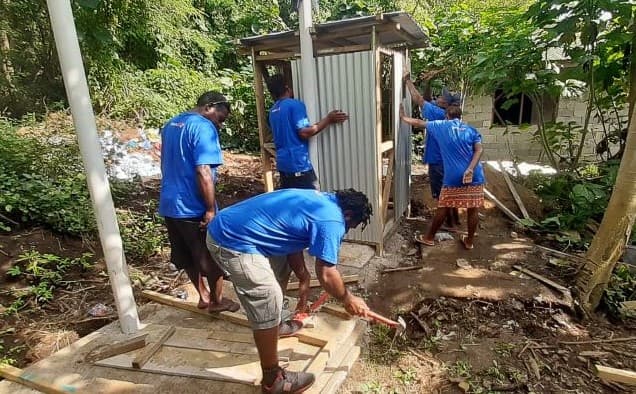
IsraAid team builds a school bathroom in Vanuatu (IsraAid)

In Vanuatu, we have learned that responding to climate disasters means strengthening communities. It’s not enough to respond to immediate needs when a disaster strikes – repairing houses, providing safe drinking water and psychological support – and then leave. We need to work long-term to support communities so that they will be better prepared for future disasters. 

Climate events drive us to address underlying vulnerabilities in communities. It is often the most vulnerable that are the hardest hit by emergencies, even when they are the least culpable in causing it: indigenous communities living in remote locations, people with disabilities, women and girls. Emergencies often lay bare the root causes of such vulnerability and create opportunities to address them. 

For example, women and girls face a higher risk of violence and sexual exploitation during an extreme weather event, especially if they are forced out of their homes into temporary shelters. The economic pressures that come with displacement and loss of livelihood can lead to rising tension at home and spikes in domestic violence. Providing resources to combat gender-based violence, helping survivors access the services they need, and creating women-and-girl-friendly spaces are acts of climate resilience. They’re an essential part of making sure that communities are better prepared for disasters, even if on the surface, they seem to have little do with extreme weather events.

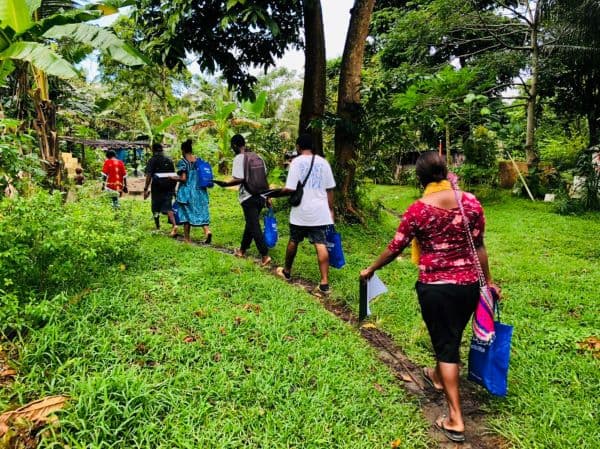
Remote communities are the least likely to receive aid from government officials or large NGOs. IsraAID was one of the only aid organisations to reach the remote island of Ambae after the twin cyclones in March, two hours in a boat on choppy seas from the nearest population centre.

A team arrives in a remote area of Vanuatu (IsraAid)

In Vanuatu, we work hand in hand with communities, learning from them about their needs, and letting them drive our response. Then we can take that information and translate it into nationwide policy. We’re working with the ministries of Health and Water Resources to build better access to water, sanitation facilities, and bathrooms across the country because we learned that having good facilities and strong guidelines already in place is one of the best protections for when disaster strikes. We’re training community leaders in mental health and psychosocial support because having strong networks present in the community means that they’re already prepared when the next crisis occurs.

Climate change isn’t going to disappear, and the needs are growing more urgent every day. At IsraAID, we see this daily. Whether it’s refugee and host communities in Kenya that are enduring the worst drought in 40 years; the tiny island community of Dominica that’s incredibly prone to hurricanes, volcanic eruptions, and landslides; or people who have been internally displaced in war-torn Ukraine and are facing increasingly harsh winters – climate change is an important factor.

As we expand our presence in the Pacific region it becomes clear that addressing the effects of climate change is part of every aspect of our work. And the way to do that is and always will be through empowering communities. Climate change doesn’t discriminate, it will affect us all. The only way forward in the age of climate change is to make sure that every community has the resources and knowledge it needs to be prepared in the face of emergencies. 

Climate change affects us all. It is no longer an impending threat, but a visceral reality. The communities on the front lines who are facing these challenges head-on can sometimes feel remote and distant as they get neglected in our rapidly advancing news cycles. And yet, it is these communities that hold the key to building resilience in the face of climate change – for all of us.

IsraAID is about to establish an office in Australia. To learn more, visit www.israaid.org.

Top photo: A human chain brings supplies from a boat to storage in Vanuatu (IsraAid)

You might also like
  • The leadership a wounded society needs
    Esther Takac
  • Fauda and the illusion of vengeance
    Ittay Flescher
  • Israel election explainer: the main parties
    Shahar Burla
logomark.67a07ee3
We believe in the free flow of information

Republish our articles for free, online or in print, by using our Creative Commons licence

You might also like

    bialik Jewish schools shabbat
    OpinionAustralia

    Jewish schools are the marinade that infuses continuity

    Jeremy Stowe-Lindner
    Shocked New Yorker Watches the World Trade Center on September 11, 2001
    ReflectionWorld

    A new generation reckons with 9/11

    Gideon Cohen
    Rozana Beit Oula
    PeacebuildingOpinionIsrael

    Peacebuilding through the eyes of a sceptic

    Ron Finkel

About the author

Tamar Kosky Lazarus

Tamar Kosky Lazarus

Tamar Kosky Lazarus is the Chief Development and Communications Officer at IsraAID, Israel’s leading humanitarian aid organisation.

More from the author

FeatureWorld

Breaking ground on a borehole in Kenya, IsraAID helps communities suffering from climate crisis