Aa
  • Read, Watch, Listen
  • TJI Series
  • Community Action
  • Events
  • Zedi
Follow us and continue the conversation
  • LinkedIn
  • Instagram
  • FaceBook
  • X
  • YouTube
Test yourself with the TJI Quiz!

Adjust size of text

Aa

Follow us and continue the conversation

  • LinkedIn
  • Instagram
  • FaceBook
  • X
  • YouTube

Your saved articles

You haven't saved any articles

What are you looking for?

Original reporting, insightful analysis and diverse views, delivered straight to your inbox

  • LinkedIn
  • Instagram
  • FaceBook
  • X
  • YouTube
Your support fuels our mission to inform, entertain and inspire.

The Jewish Independent is bound by the Standards of Practice of the Australian Press Council. If you believe the Standards may have been breached, you may approach The Jewish Independent or make a complaint to the Australian Press Council in writing at www.presscouncil.org.au. The Council may also be contacted on 1800 025 712.

  • Our Story
  • Contact us
  • Our Team
  • Support us
  • Guidelines
  • Pitch your idea
  • Republishing us
  • Community Action
  • Our Awards
  • LinkedIn
  • Instagram
  • FaceBook
  • X
  • YouTube
Aboriginal FlagTorres Strait Islanders Flag

The Jewish Independent acknowledges Aboriginal and Torres Strait Islander peoples as the Traditional Owners and Custodians of Country throughout Australia. We pay our respects to Elders past and present, and strive to honour their rich history of storytelling in our work and mission.

© The Jewish Independent 2026All Rights Reserved
Website design and development by Your Creative, MelbourneTerms & ConditionsPrivacy Policy
HomeRead, Watch, ListenIsrael
Israel Votes 2026OpinionIsrael

The memory of the hostages should guide Israel’s choices for the future

As Israel approaches a pivotal election, the memory of the hostages who died in Gaza serves as a call to restore compassion and democratic values
Nirit Eylon
Print this
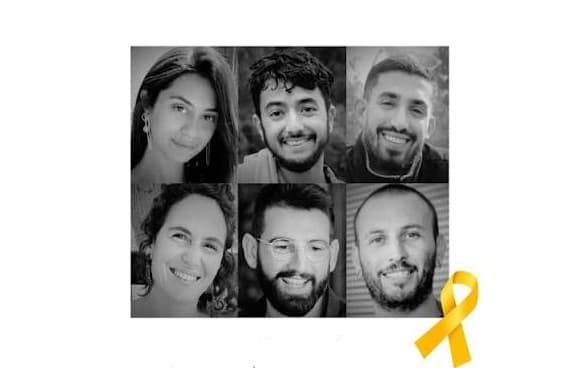
beautiful six hostages

The six hostages whose bodies were found in Gaza two years ago this week (World Jewish Council)

Published: 19 August 2026

Last updated: 19 August 2026

This week, according to the Hebrew calendar, marks two years since the murder of the “Beautiful Six”: the hostages Carmel Gat, Hersh Goldberg-Polin, Eden Yerushalmi, Almog Sarusi, Alexander Lobanov and Ori Danino.

I remember where I was when I learned they were gone. A rumour had begun circulating through the hostage families' forum that six bodies had been found just before I arrived at our weekly United With Israel rally in Melbourne that morning. We didn't know who. Nothing had been officially confirmed, so I could not say anything. But it was there, buzzing beneath everything.

By the time the rally ended, it was officially confirmed. Carmel was dead. Hersh was dead. Alongside Eden, Almog, Alex and Ori. I felt as though someone had punched me so hard that I could not breathe.

Two years have passed according to our calendar. But some moments get stuck with you forever.

We failed them. We allowed the hostages to become a debatable issue

I had come to know some of the hostage families through the long months of campaigning for their loved ones. Like so many people around the world, I had followed Rachel Goldberg-Polin and Jon Polin as they fought relentlessly for Hersh, not only for their son, but for every hostage.

This week, at Hersh's memorial, Rachel spoke words that are difficult to hear without breaking down. She described everything they had done to bring him home: running, begging, praying, screaming, fighting, falling, getting back up, trying again and again. And then came the words that are almost impossible to absorb:
“Oh dear God, we failed. But we tried.” They tried because Hersh kept himself alive long enough for them to try.

“You were and are our why.” She thanked her precious boy, her “shining star”, and ended with the last words Hersh had ever written to his family, turning them back towards him: “I love you. And I'm sorry.”

I keep coming back to those words. Because Rachel and Jon did not fail Hersh. The families did not fail their loved ones. The thousands of people in Israel and around the world who marched, protested, travelled, spoke, begged and refused to let the hostages disappear from public consciousness did not fail them. But somewhere along the way, we failed them. We allowed the hostages to become a debatable issue.

People who had been dragged from their homes, from a music festival, from their lives, somehow became associated with one political camp or another. Their return became something to debate and something to weigh against territory, military objectives and political survival. I could not understand it then, and I still cannot understand it now.

How can someone's life be worth less than a piece of land? Hersh survived for 328 days. Carmel survived. Eden survived. Almog survived. Alex survived. Ori survived. They stayed alive. And we did not bring them home.

Hamas kidnapped them. Hamas held them in horrific conditions. Hamas murdered them. There can be no ambiguity about that responsibility. But if we truly want to honour the Beautiful Six, we must also have the courage to look inward and ask the difficult questions. How did saving our hostages become political? How did compassion become associated with a political camp? How did the most basic Jewish and human responsibility, pidyon shvuyim, the redemption of captives, become something over which Israelis fought one another? The tear running through Israeli society has not healed. It is getting wider.

And now, with an election approaching, the air feels almost unbearably thick. Every argument about security, democracy, settlements, religion and the future of Israel seems to contain another question underneath it: what kind of country are we becoming?

The challenge for a society is whether we can recognise that humanity in someone else's child too

Look at what is happening right now in Qusra, a Palestinian village south of Nablus. For days, Palestinian families have been trapped in their homes while Israeli settlers have surrounded them. Water and electricity have been cut. An illegal outpost was erected beside the homes. The army has intervened, but the families remain caught in a situation that should be unimaginable. This is not the Israel I want to defend. And saying that does not make me less Zionist. For me, it is precisely because I am a Zionist that I cannot be silent. Zionism cannot simply mean having a Jewish state. It must also force us to ask what kind of Jewish state we are building. A Jewish state in which a Palestinian family can be terrorised in its home while extremists attempt to take its land is not strengthened by our silence. A state in which extremists believe they can act above the law is not made safer by looking away.

We should be capable of holding more than one truth at once. Hamas committed the atrocities of October 7. Hersh, Carmel, Eden, Almog, Alex and Ori were hostages, and Hamas murdered them. And Palestinian civilians have the right to live safely in their homes without being terrorised by Israeli extremists. There is no contradiction between those statements. There should never have been one.

Perhaps that is what I keep returning to when I think about the Beautiful Six. Hersh's family fought for him because his life was infinitely precious. Every parent understands that instinctively about their own child. The challenge for a society is whether we can recognise that humanity in someone else's child too.

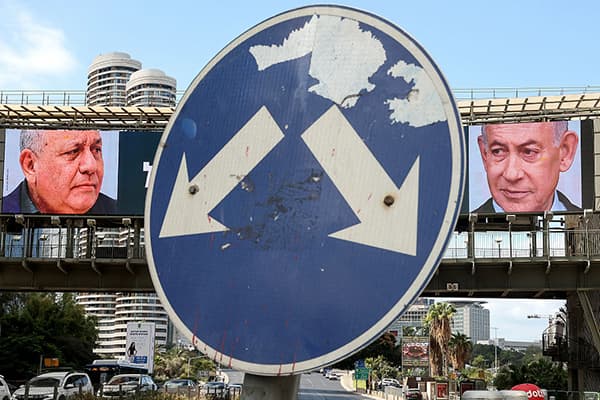
Israel is approaching an election that I believe will be one of the most consequential in its history. This election cannot only be about replacing politicians. It has to be about restoring sanity. Restoring the understanding that human life matters. That democracy matters. That the rule of law matters. That Jewish values cannot be reduced to sovereignty over territory. That disagreement does not make someone an enemy. That compassion is not weakness. And that the future of Israel cannot belong to those who shout the loudest, threaten the most or push us further apart.

Two years ago, we fought to bring the Beautiful Six home. They were our why then. They must remain our why now. We owe it to Hersh, Carmel, Eden, Almog, Alex and Ori.

We owe it to the families who fought for them. And we owe it to the generations who will inherit the Israel we leave behind. It is time for the turning point we hoped would come two years ago.

It is time to bring sanity back.

You might also like
  • Tame apologises – but with little grace
    Deborah Stone
  • Confronting Richard Flanagan and the myth of the Israel lobby
    Mary Garden
  • UK’s dramatic policy change on Israel-Palestine
    Colin Shindler
logomark.67a07ee3
We believe in the free flow of information

Republish our articles for free, online or in print, by using our Creative Commons licence

You might also like

    Erdogan Turkey
    AnalysisIsrael

    Turkey emerges as military threat to Israel

    Dror Doron
    Woman with land and houses behind her
    NewsAustralia

    Australia to increase sanctions against West Bank settlements

    Deborah Stone 2
    Netanyahu
    Israel Hamas WarFeatureIsrael

    New evidence Netanyahu was warned about October 7

    Shahar Burla 2

About the author

Nirit Eylon

Nirit Eylon

Nirit Eylon is the President of Hatikvah Australia, through which she represents Australia at the World Zionist Congress as part of the progressive Zionist bloc. She previously led United With Israel Australia NZ, the Australian chapter of the Hostage Families Forum.

Comments

No comments on this article yet. Be the first to add your thoughts.