Published: 7 June 2022
Last updated: 4 March 2024
Ahead of a visit to Australia, leading Haaretz journalists talk to ITTAY FLESCHER about freedom, limitations and controversy in Israel’s media
The killing of Al Jazeera journalist Shireen Abu Akleh in Jenin sent shockwaves around the world and has boosted a case at the International Criminal Court on the treatment of journalists in Israel.
But leading Israeli journalists doubt it will significantly change the way Israeli and Palestinian journalists are treated.
Referring to a CNN Investigation which determined Abu Akleh was killed by deliberate Israeli gunfire, Haaretz journalist Judy Maltz said: “It had a fair bit of attention on Twitter for about four hours, and then 19 kids were massacred in Texas, and now no one is talking about her anymore.”
“A healthy democracy should always question authority”
Maltz, a 30-year veteran of the paper who covers the Jewish world, and Haaretz’s Deputy Editor-in-Chief, Noa Landau, will this month visit Australia for the New Israel Fund.
They talked to The Jewish Independent about the state of media in Israel, the limitations of journalism and their interest in Australia.
Both consider that Israel has a free media, although the existence of a military censor with the authority to review, edit and even suppress various stories was a concern.
“A healthy democracy should always question authority,” Maltz said.
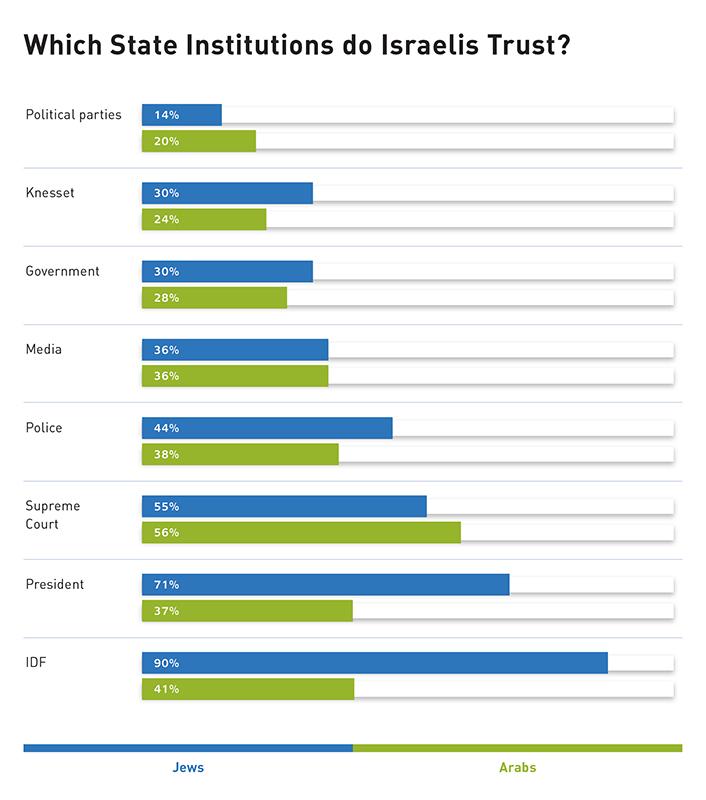
Most Jewish Israelis trust the military spokesperson as a credible news source more than they trust the media. An Israel Democracy Institute survey found that 90 per cent of Jewish Israelis trust the institution of the IDF. This was well above other sources of power such as the President (71 per cent) and the Supreme Court (55 per cent). Meanwhile, less than half of Jewish Israelis trust the police (44 per cent) and the media (36 per cent). At the bottom of the list was the government and Knesset (30 per cent each) and political parties (14 per cent).