Published: 2 July 2017
Last updated: 5 March 2024
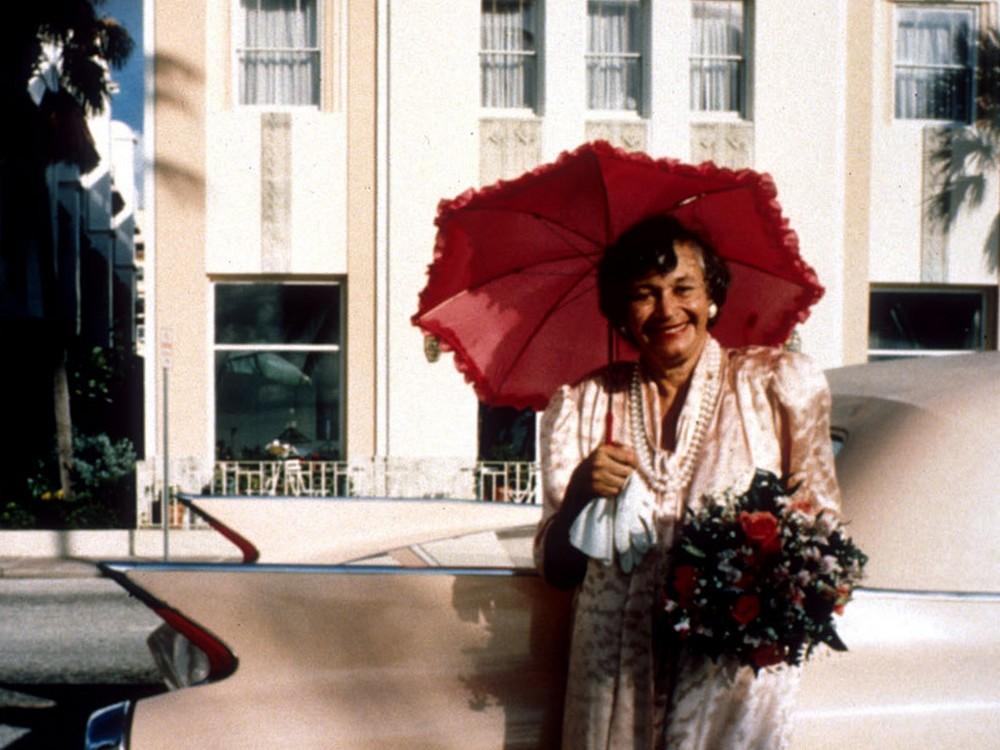
When Barbara Baer Capitman, a former art history student and market researcher, moved to Miami in 1973, she was keen to soak up the city’s renowned architectural grandeur. The South Beach waterfront was home to the world’s largest concentration of Art Deco buildings, and as Barbara later put it: “My whole life had been Art Deco. I was born at the beginning of the period and grew up during the height of it. It's a thing of fate.’’
Barbara soon discovered that left to its own devices, “fate” was a wrecking ball on the waterfront.
In its heyday after World War II, the beachfront was feted by Hollywood and royalty. Hotels such as the Breakwater, Raleigh, Edison, Victor and the Tides offered an elegance to rival the iconic Radio City Music Hall and Chrysler building in New York. Several of Esther Williams’ extravagant swimming pool sequences were filmed at The Raleigh hotel, and in the 1960s Jackie Gleason brought his weekly TV variety series to Miami.
In the 1970s, before the influx of Cubans after the revolution, this part of Miami was largely Jewish. While most of the retired Jewish residents lived their final years quietly in warmth and sunshine, ambitious developers could see the commercial potential of redeveloping the beachfront. But the old hotels (which often had only 40 rooms) were too small and they wanted to replace them with Vegas-sized towers that could pull in serious numbers of tourists.
Barbara was horrified at the city’s neglect of the South Beach architectural heritage —- and she was just the type to do something about it. The only child of German Jews (her father imported jumpers and her mother was an artist and sculptor), she was born in Chicago, studied art history at university but worked as a political organiser before meeting her husband William at a May Day party sponsored by the Young Communist League in New York. She worked in market research during the 1950s and 60s.
The family had moved to Florida when William secured an academic teaching job.
“All the things are here to create one of the most distinctive urban environments in America,” Barbara said of her beloved South Beach. “This could be a vibrant community where all kinds of people – elderly retirees, young artists, people from the North, people from Latin America – come together to create an exciting, harmonious community.”
[gallery columns="2" size="large" ids="11706,11629"]
Barbara applied her formidable advocacy skills and feisty, outspoken personality to save the beachfront. In 1976 she helped to found the Miami Design Preservation League, which in three years later won Federal historic designation for the South Beach district of Miami Beach. One condition imposed was that if any floors were added to the hotels on Ocean Drive, they must be designed so they cannot be seen from across the street.
“She would push and agitate and cause trouble until people wouldn't speak to her,” the chairman of the Art Deco Weekend Festival said after her death in 1990, aged 69. “She was interested in results, not social sensitivities.”
Barbara found a willing partner for her cause in Leonard Horowitz, a young furniture designer from New York who created window displays for Bloomingdale’s and studied architecture. When Horowitz was 29, his dad cut him off financially after finding out Leonard was gay, so he left for South Beach, to live with his mother.
He met and befriended Barbara, 30 years his senior, their shared love of Art Deco bridging the age gap. Although Horowitz helped her found the Miami Design Preservation League, his contribution went beyond playing second fiddle.
Wanting to save the beachfront from gaudy excess and to highlight its elegant design features, Horowitz created a pastel colour palette to be used for painting the buildings. "He looked at the sun and the sky and the seas and the beach and pulled out these colours and put them together on this palette," Lynn Bernstein, a friend of Horowitz’s, told WRLN in Miami.
Horowitz presented his palette to the director of community development and asked if they could try out the colours on Friedman’s Bakery, white at the time, on the corner of 7th and Washington Avenue. Although the initial reactions weren't too positive, Horowitz won over the community, building by building.
When in 1982, Friedman’s Bakery was featured on the cover of Progressive Architecture magazine, it lit a pastel flare for the rest of America. South Beach became a backdrop for photo shoots and TV shows like Miami Vice. Three years later the Breakwater hotel was chosen by photographer Bruce Weber for an iconic commercial for Calvin Klein’s perfume Obsession, and Horowitz’s colour palette went international.
Four years later, in 1989, Horowitz died from AIDS, aged 43.
[gallery columns="1" size="large" ids="11696"]
A few years earlier, in 1986, New York property developer Tony Goldman bought 18 rundown properties in New York’s South of Houston neighbourhood, and turned it into what we now call SoHo, the trendy residential loft district. Goldman saw the commercial and community potential in the grimy cast-iron façades, and came to a similar view about Miami Beach when he visited the city in 1985, shortly after Barbara and Horowitz had secured its heritage.
Goldman began buying one Art Deco property a month for 18 months along Ocean Drive, the iconic street right on the South Beach waterfront. “I go into an area five to seven years before it happens,” Goldman said in 1986, the Miami Herald reported.
“Miami Beach is undervalued. I was looking for an alternative to New York. The buying there is too tough,” Goldman said. “As soon as I turned the corner at Fifth Street and Ocean Drive, that was it. I surrendered.”
As Miami Mayor Matti Bower noted in Goldman’s obituary in 2012: “[He] came here during the time when Miami Beach was really down and out, and he put his money into this community. He bought Barbara Capitman’s vision, had the vision to invest here, made Ocean Drive what it is today. He believed there was money in preservation and he made it happen here.”
[gallery columns="2" size="large" ids="11641,11707"]
Goldman also famously redeveloped Miami’s gritty Wynwood warehouse district, creating a new version of Soho, complete with graffiti park. But it was on South Beach that his imprint lives longest. “He walked [Ocean Drive] and then led us in walking that street and turning around, not just seeing the ocean, but seeing the buildings once again,” David Wallack, owner of the landmark Mango’s Tropical Cafe, at 900 Ocean Drive, told the Miami Herald.
From that came “colour and music, entertainment, food and all the wonderful things that we enjoy as our prosperity,” Wallack said. “That is what Tony brought: Prosperity.”
Wallack’s wife Janet put it more succinctly: “Tony kept saying to me: ‘I want to be remembered as a mensch’.”
Barbara Capitman, Leonard Horowitz and Tony Goldman have forged a powerful legacy. They not only breathed fresh life into Miami’s South Beach; they personified the uniquely Jewish blend of social activism and commerce with a conscience that continues to enrich America.
This The Jewish Independent article may be republished with this acknowledgement: ‘Reprinted with permission from www.thejewishindependent.com.au’