
Aa
  • Read, Watch, Listen
  • TJI Series
  • Community Action
  • Events
  • Zedi
Follow us and continue the conversation
  • LinkedIn
  • Instagram
  • FaceBook
  • X
  • YouTube
Test yourself with the TJI Quiz!

Adjust size of text

Aa

Follow us and continue the conversation

  • LinkedIn
  • Instagram
  • FaceBook
  • X
  • YouTube

Your saved articles

You haven't saved any articles

What are you looking for?

Original reporting, insightful analysis and diverse views, delivered straight to your inbox

  • LinkedIn
  • Instagram
  • FaceBook
  • X
  • YouTube
Your support fuels our mission to inform, entertain and inspire.

The Jewish Independent is bound by the Standards of Practice of the Australian Press Council. If you believe the Standards may have been breached, you may approach The Jewish Independent or make a complaint to the Australian Press Council in writing at www.presscouncil.org.au. The Council may also be contacted on 1800 025 712.

  • Our Story
  • Contact us
  • Our Team
  • Support us
  • Guidelines
  • Pitch your idea
  • Republishing us
  • Community Action
  • Our Awards
  • LinkedIn
  • Instagram
  • FaceBook
  • X
  • YouTube
Aboriginal FlagTorres Strait Islanders Flag

The Jewish Independent acknowledges Aboriginal and Torres Strait Islander peoples as the Traditional Owners and Custodians of Country throughout Australia. We pay our respects to Elders past and present, and strive to honour their rich history of storytelling in our work and mission.

© The Jewish Independent 2026All Rights Reserved
Website design and development by Your Creative, MelbourneTerms & ConditionsPrivacy Policy
HomeRead, Watch, ListenAustralia
Generation ChangeInterviewAustralia

Joseph Friedman: a pioneer for prisoners

Friedman, 28, has founded a national prison newspaper, providing a platform for those formerly and currently incarcerated to share their experiences doing time.
Ruby Kraner-Tucci
Print this
Joseph Friedman

Joseph Friedman founded About Time, Australia’s first national prison newspaper (Image: TJI).

Published: 27 June 2024

Last updated: 15 September 2025

You’re a lawyer – and a writer. How do you manage both of these roles?

I studied law at Monash University, and I practised at Allens for 18 months in commercial litigation, restructuring and insolvency. Before that, I did an 18-month associateship at the Supreme Court of Victoria.

There are a lot of lawyers in my family. That’s probably what first got me interested, and I found myself reading a lot about miscarriages of justice and criminal justice reform. That's what got me hooked. It just felt like a natural thing to do.

I find writing very exciting. If I pitch a story, and a publisher says yes, I get a little thrill – more of a thrill in fact than my legal work.

I probably overcommit myself but if I have an idea, if I've got something to say that hasn't been said, I’ll pitch it. I’ll often get rejected, but if I get a yes then that gives me a deadline. Then I just do whatever I need to, whether that means getting up earlier or staying up later – but I’m more of a morning person – or if I have a quiet day at work, I’ll write at work.

What topics do you commonly write about?

I write a lot about criminal justice and the law. That’s where I have knowledge that's different from the average person. Anyone can have an idea, but if you want to get published, you have to show them why you're the person to provide that voice. A key focus area for me is miscarriages of justice, and the mistreatment of vulnerable people associated with the system.
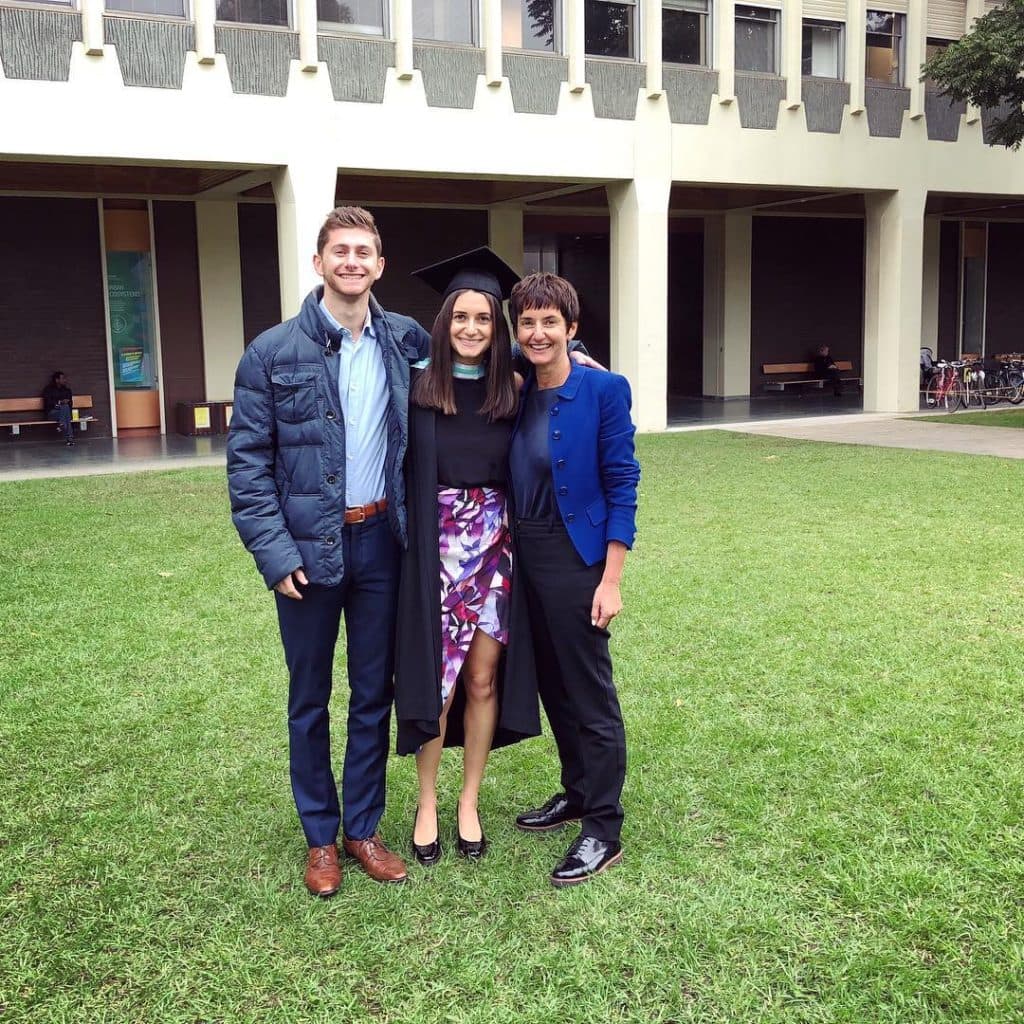
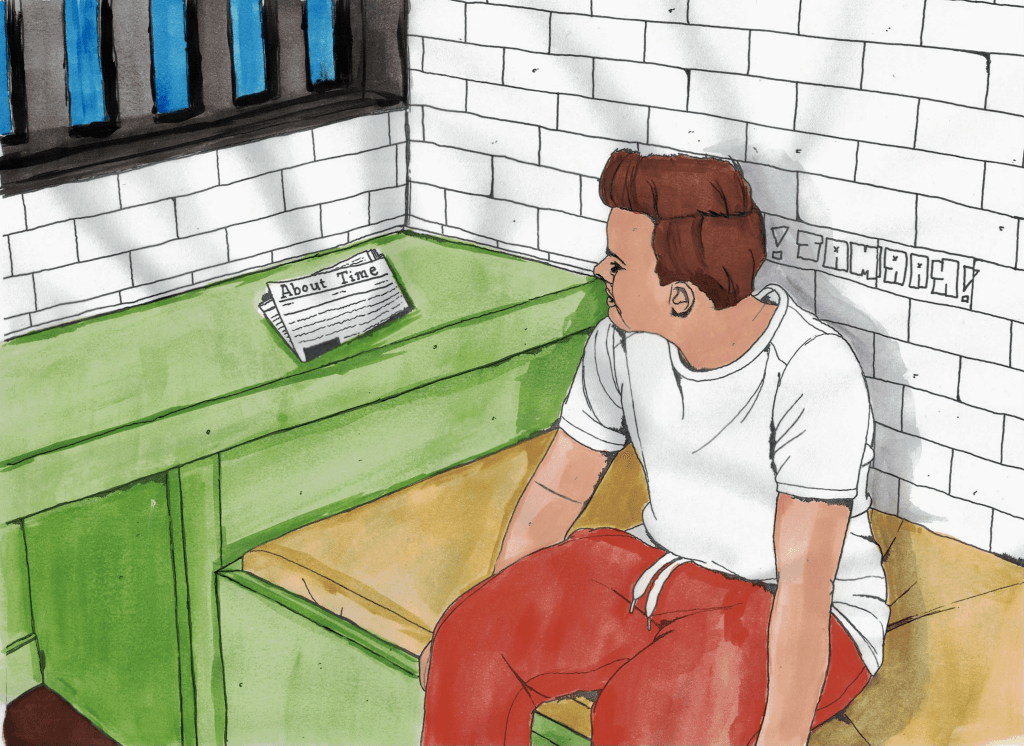
Lawyer Friedman (pictured with his family) has written for a range of publications including Law Society Journal, Justinian, Gazette of Law & Journalism, The Age, Sydney Morning Herald, The Saturday Paper and Wild Magazine (Image: supplied).

Being at Allens as a junior employee, in a behemoth of a firm that has a traditional environment, I sometimes felt things could have been done differently. I definitely like to write about issues in the workplace. I'm very interested in the right to disconnect from work after hours, as an example. 

I’m also a sucker for US politics, and all things elections. I’m working on a podcast for the Law Society Journal NSW about the US election, which I’ll be covering from various swing states in October and November, which should be awesome.

You recently founded About Time, Australia’s first national prison newspaper, featuring writing from people who are either currently or formerly incarcerated. It's set to launch in July. What was the inspiration behind this endeavour?

I was looking for a project beyond what I was doing at work. I felt like there was something more I could be doing.

"[About Time] is a marriage of my two interests: criminal justice and journalism. But more importantly, it is something that is obviously highly valued in the UK and doesn't exist here."

Joseph Friedman

I was listening to a podcast by Tortoise Media, a slow news organisation in the United Kingdom. The podcast was about a particular law, the crime of joint enterprise, which is essentially murder by association.

It used to be the case in the UK that if you were committing a robbery with other people, and in the course of that robbery, one of the robbers killed one of the residents of the home they were robbing and that person was charged with murder, then you, the other thief, who had nothing to do with the killing, could also be charged with murder by association.

The Supreme Court in the UK eventually overturned the way this law was interpreted to make it less punitive. This podcast was about a particular person who had been convicted and sentenced under the doctrine of joint enterprise and was later acquitted based on this new interpretation of the law – which he said he had read and learned about in Inside Time.

I googled Inside Time and found out that it’s a prison newspaper that's been around in the UK since 1990. It’s huge – they print one copy for every cell, so every two incarcerated people in the UK. Today, it’s a 60-plus page newspaper with a weekly online edition and a monthly print edition.

It's mostly written by people in prison themselves, and it includes letters from people talking about their experiences, but also art and poetry, legal information and cutting-edge news stories about the criminal justice system.

I thought it was incredible and realised that we didn't have anything like it in Australia. First of all, it is a marriage of my two interests: criminal justice and journalism. But more importantly, it is something that is obviously highly valued in the UK and doesn't exist here.

How did you take About Time from an idea to an actual newspaper, especially within a difficult climate for community media?

Over the course of what's now been about two and a half years, I reached out to different people who work for prison legal services and have experienced life in custody, and did focus groups with formerly incarcerated people.

I realised that this [offering] would be highly valued, it would be possible, but it would require a lot of money and the approval of various corrections departments around the country – some of which are restrictive of information out in the public – so it was ambitious.

Launching in July, About Time is Australia's first national prison newspaper (Image: supplied).

Where we are now is that we've got a not-for-profit company; we've got directors around the country; we’ve done initial fundraising with various philanthropic organisations; we’ve got a decent amount of advertising revenue; we’ve got approval from corrections departments in Victoria, NSW, ACT and Tasmania, with other states pending; we've got a draft paper; and we have a website. It's all coming together.

We’re calling it About Time for two reasons: it’s ‘about time’ that we have this publication and offering for the community, and the publication itself is about individuals’ time in prison.

How is Australia perceived in the area of criminal justice when compared to other countries?

Somewhere like America obviously has a terrible reputation for locking people up for much longer than anywhere else; for having really poor legal representation for vulnerable people, which results in lots of wrongful convictions; and for being tough on crime, having a war on drugs, and so on.

But one thing they do have is a huge counter push, a vast network of groups and organisations and money to find injustices and undo them, and to help people in prison. They have newsletters galore, prison libraries, book projects, websites that publish letters and pen pals.

In the UK, they have a hugely successful paper, they have a 24/7 in-prison radio service, and the national prison service has a terrific relationship with Inside Time.

It's very different in Australia. We have little of that – there’s much less attention paid to experiences inside the prison system. Some of the reasons for that are good: we have a somewhat well-funded legal aid system, good representation for people who can’t afford paid representation, and we have fewer wrongful convictions.

"Prison is such a closed off environment, those inside really have access to little. The idea of this paper is to provide a window into the concealed world of incarceration, and also to provide a voice to the incarcerated."

Joseph Friedman

There’s not a huge light shone upon these issues. It's not sexy. We don’t have freedom of speech protections like they do in the US, and to some extent in the UK. It’s much more difficult.

That's what’s important about this project, About Time, which hopefully will not just be a paper but will spawn more activism and carry out actions that people in prison find really valuable.

Where do you fit in at About Time?

I’ll be playing the founder slash managing director role. I’m working with one other person to put it all together, and for the moment, we are the editors, but the aim is to eventually be overseers.

I want to build a board of people who have direct experience with the system, from executives of corrections to people in prison and senior members of the Aboriginal community and so forth. We’ll employ people to review content, decide what makes it into the paper, and put it all together.

Right now, it’s super hands on, the team is very small. But hopefully, in time, it becomes more about overseeing and letting people with more direct experience take over.

What can readers expect from an edition of About Time?

In all states and territories other than NSW, [prisoners] do not have access to anything electronic other than TV. So About Time will be in-print, hopefully running at one copy per person in prison, free of charge. There'll also be a website with an online edition, which will be freely accessible for anybody who's interested.

We’ll do a subscription service for people who want to get a physical edition outside of the prison system. We’re starting with a monthly edition. Even that's quite a significant undertaking, but we’ll see how we go.

You mentioned letters as a form of content. Will people within the prison system be able to contribute to the paper?

That's the aim. Our ambition is for the core section of the paper to be called Letters. We’ll have a PO box and people who read the paper can send a letter in. Then we’ll publish all of the letters on the website and choose a handful of the most inspiring and interesting for the physical edition each month.

Prison is such a closed off environment, those inside really have access to little. The idea of this paper is to provide a window into the concealed world of incarceration, and also to provide a voice to the incarcerated.

Have you had any support from the Jewish community to get About Time off the ground?

It's a tricky time to ask for or receive Jewish funding. We’ve received mentoring and backing from some high-profile Jewish people who are familiar with the media landscape. It’s a slow game and requesting money is difficult. I guess the one benefit we have is that we’re a registered not-for-profit, which does make it easier.

"There’s a big emphasis in the Melbourne Jewish community of helping not just Jewish organisations, but other vulnerable groups, and using your privilege – whether it’s financial, intellectual or temporal – and passing that forward. I hope I’m doing that with About Time."

Joseph Friedman

When I spoke to the publisher of Inside Time, the very first thing he said was not to rely on donations. They are commercially viable through advertising, particularly from law firms and legal services. That will, down the track, be our aim as well.

How does your Jewish identity influence your work and outlook on life?

It’s hard to quantify the influence of my Jewish identity. Yes, I went to school at King David and Bialik, I did IBC for 10 months and grew up in Caulfield North, but it presents more as a subconscious or intangible quality for me.

I don’t necessarily think about what Judaism tells me to do, but obviously, Judaism has a huge emphasis on tzedakah, on helping out others. Many people around me, especially in my family, are very generous with their time in terms of how they seek to help people, and that does come out for me.

There’s a big emphasis in the Melbourne Jewish community of helping not just Jewish organisations, but other vulnerable groups, and using your privilege – whether it’s financial, intellectual or temporal – and passing that forward. I hope I’m doing that with About Time.

You might also like
  • Abuse of Palestinian detainees a ‘systemic issue’, say Israeli doctors
    Ben Lynfield
  • Australian Jewish groups criticise Israel’s new death penalty law
    Michael Visontay
  • David Zwier: delivering comfort with a conscience
    Ruby Kraner-Tucci
logomark.67a07ee3
We believe in the free flow of information

Republish our articles for free, online or in print, by using our Creative Commons licence

You might also like

    Woman with land and houses behind her
    NewsAustralia

    Australia to increase sanctions against West Bank settlements

    Deborah Stone 2
    Apple & rotten core Rosh hashanah
    EditorialAustralia

    Facing a new year with the knowledge life can be better

    The Jewish Independent
    funding handouts
    NewsAustralia

    Who will get the money from the Cranbourne windfall?

    Gideon Cohen

Comments

No comments on this article yet. Be the first to add your thoughts.

About the author

Ruby Kraner-Tucci

Ruby Kraner-Tucci

Assistant Editor

Ruby Kraner-Tucci is a journalist and TJI's assistant editor. Her writing has appeared in The Age, Australian Jewish News, Time Out and Broadsheet, among others. Ruby was awarded Multicultural NSW’s Best Report in Multicultural Media 2025 and has been named a Top 36 Under 36 Jewish Changemaker by B'nai B'rith.

More from the author

FeatureAustralia

‘True essence of being an ally’: The non-Jews choosing to work in the Jewish community

InterviewAustralia

Elliot Szafran: food that feels like a hug from Zaide

NewsAustralia

Antisemitic incidents down from peak but still triple pre-Gaza war

FeatureArts & Culture

Bringing Terezin music to life