Published: 1 February 2018
Last updated: 4 March 2024
AFTER LIVING IN MELBOURNE almost my entire life, this week I chose to make the subject of Amichai’s famous poem my home. The city is indeed filled with prayers and dreams, whose realisation and failures motivate the language, words and deeds of the people who call this place home. Almost every person I met here asks me why on earth I would move to such a challenging place with my family from the “land of milk and honey,” also known as Australia.
It’s not a question for which I have a simple answer. In response, I often refer to the dilemma I faced around the circumcision of my son, an act I allowed with a heavy heart, despite so much logical information against performing this painful procedure at such a young age. So too with Jerusalem, a city that brings so much joy and pain to billions of people the world over, I am drawn to here, despite being able to explain why.
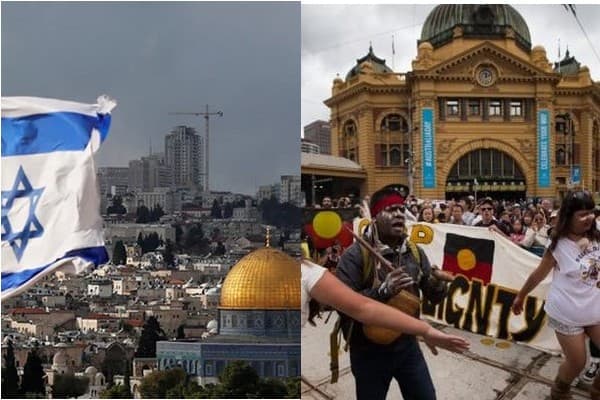
My first Friday here was January 26, 2018. A date that marked 230 years since Captain Arthur Phillip decided on Sydney Cove as the site to begin the penal colony of New South Wales without the permission of the Eora nation on whose beach he had landed.
It is also the 80th anniversary of a historic civil rights protest that challenged the freshly federated Commonwealth’s claim to being a “civilised, progressive, kindly and humane nation”. January 26, 1938 was declared a Day of Mourning by Yorta Yorta elders Jack Patten, William Cooper, Margaret Tucker and Doug Nicholls.
In the months before I left Australia, it was impossible to ignore the public debate over how to mark this date. On the one hand, there was former PM Tony Abbott, who supported maintaining the current date for celebration because “What happened on the 26th of January, 1788, was on balance, for everyone, Aboriginal people included, a good thing. It brought Western civilisation to this country. It brought Australia into the modern world.”
[gallery columns="1" size="large" ids="16761"]
On the other hand, Victorian Greens MP Lidia Thorpe suggested flags be flown at half-mast on Australian Day in remembrance of atrocities committed against Indigenous people. Ms Thorpe – the first Indigenous woman to be elected to the Victorian Parliament – said she found the January 26 celebrations to be "disrespectful" to her people.
“We can’t celebrate a day that marks a day of invasion, a day of mourning. This country needs to own the truth of what’s happened to its first people. We need to own that we were invaded and atrocities occurred.”
At the same time here, in response to the Trump administration’s declaration of Jerusalem as the capital of Israel, Palestinian Authority President Mahmoud Abbas declared in a scathing speech that “Israel is a colonialist project that has nothing to do with Jews.”
Israeli PM Benjamin Netanyahu responded: “He exposed what we have been saying all the time, that the root of the conflict is the basic refusal to recognise a Jewish state, in any borders. Without a change in the stance that Abbas expressed, there will not be peace.”
I hope that someday we (Israelis and Palestinians) may be able to understand that the truth that we hold dear, which is a different truth from the other’s truth, also has some validity.
On the one hand, some may point to the similarities of these two historical debates as two identical studies on the impact of colonialism. Others would argue that the situation in Israel , is very different to the case of Australia. There was a conflict between Jews and Arabs in 1948, who both claim to be indigenous to this land, with archaeological and historic claims each stretching back hundreds, if not thousands of yearsIt would be ridiculous to claim any British ancestral connection to the land at any point in history before 1788.
As it stands, my old country is tearing itself apart over the national day regarding how the colonists can reconcile with the indigenous population, whilst my new country is mired in a bloody conflict that at its core lies the question of which is the true indigenous nation and which is the true foreign occupier.
Between these narratives, truths and fictions, I take heart from Professor Joshua Shanes who says: “all nationalisms are modern constructions, but the building blocks are often quite real.”
The building blocks of both Australian and Israeli nationalism are real to the millions of people that both call these places home. Each country draws from the true and imagined deeds of their forefathers and mothers in outlining a vision for their future, especially in the case of Zionism, where the Declaration of Independence so clearly sets a mandate for a humanistic and liberal version of Jewish nationalism.
As I become more involved in the hopes, dreams, disappointments and challenges of my new home in Jerusalem, I hope that someday we (Israelis and Palestinians) may be able to understand that the truth that we hold dear, which is a different truth from the other’s truth, also has some validity. As peace activist Gershon Baskin states: “once we get beyond the need to reconcile the past, we must once again focus our energies on reaching agreements regarding our future – and that is essentially much more important for us all.”
From my first week here, I feel the best chance we have for peace, is one where less of these nationalist hopes and dreams are realised, in favour of shared solution where not everyone gets what they want, but enough people have what they need.
This is the first of a monthly column Ittay will be writing exclusively for The Jewish Independent