Aa
  • Read, Watch, Listen
  • TJI Series
  • Community Action
  • Events
  • Zedi
Follow us and continue the conversation
  • LinkedIn
  • Instagram
  • FaceBook
  • X
  • YouTube
Test yourself with the TJI Quiz!

Adjust size of text

Aa

Follow us and continue the conversation

  • LinkedIn
  • Instagram
  • FaceBook
  • X
  • YouTube

Your saved articles

You haven't saved any articles

What are you looking for?

Original reporting, insightful analysis and diverse views, delivered straight to your inbox

  • LinkedIn
  • Instagram
  • FaceBook
  • X
  • YouTube
Your support fuels our mission to inform, entertain and inspire.

The Jewish Independent is bound by the Standards of Practice of the Australian Press Council. If you believe the Standards may have been breached, you may approach The Jewish Independent or make a complaint to the Australian Press Council in writing at www.presscouncil.org.au. The Council may also be contacted on 1800 025 712.

  • Our Story
  • Contact us
  • Our Team
  • Support us
  • Guidelines
  • Pitch your idea
  • Republishing us
  • Community Action
  • Our Awards
  • LinkedIn
  • Instagram
  • FaceBook
  • X
  • YouTube
Aboriginal FlagTorres Strait Islanders Flag

The Jewish Independent acknowledges Aboriginal and Torres Strait Islander peoples as the Traditional Owners and Custodians of Country throughout Australia. We pay our respects to Elders past and present, and strive to honour their rich history of storytelling in our work and mission.

© The Jewish Independent 2026All Rights Reserved
Website design and development by Your Creative, MelbourneTerms & ConditionsPrivacy Policy
HomeRead, Watch, ListenIsrael
PeacebuildingAnalysisIsraelWorld

How a new International Peace Fund could make a tangible difference

Australia, the UK and Canada have established an initiative to fund grassroots peacebuilding that could prove a strategic watershed for Israel-Palestine
Ittay Flescher
Print this
seedsof peace

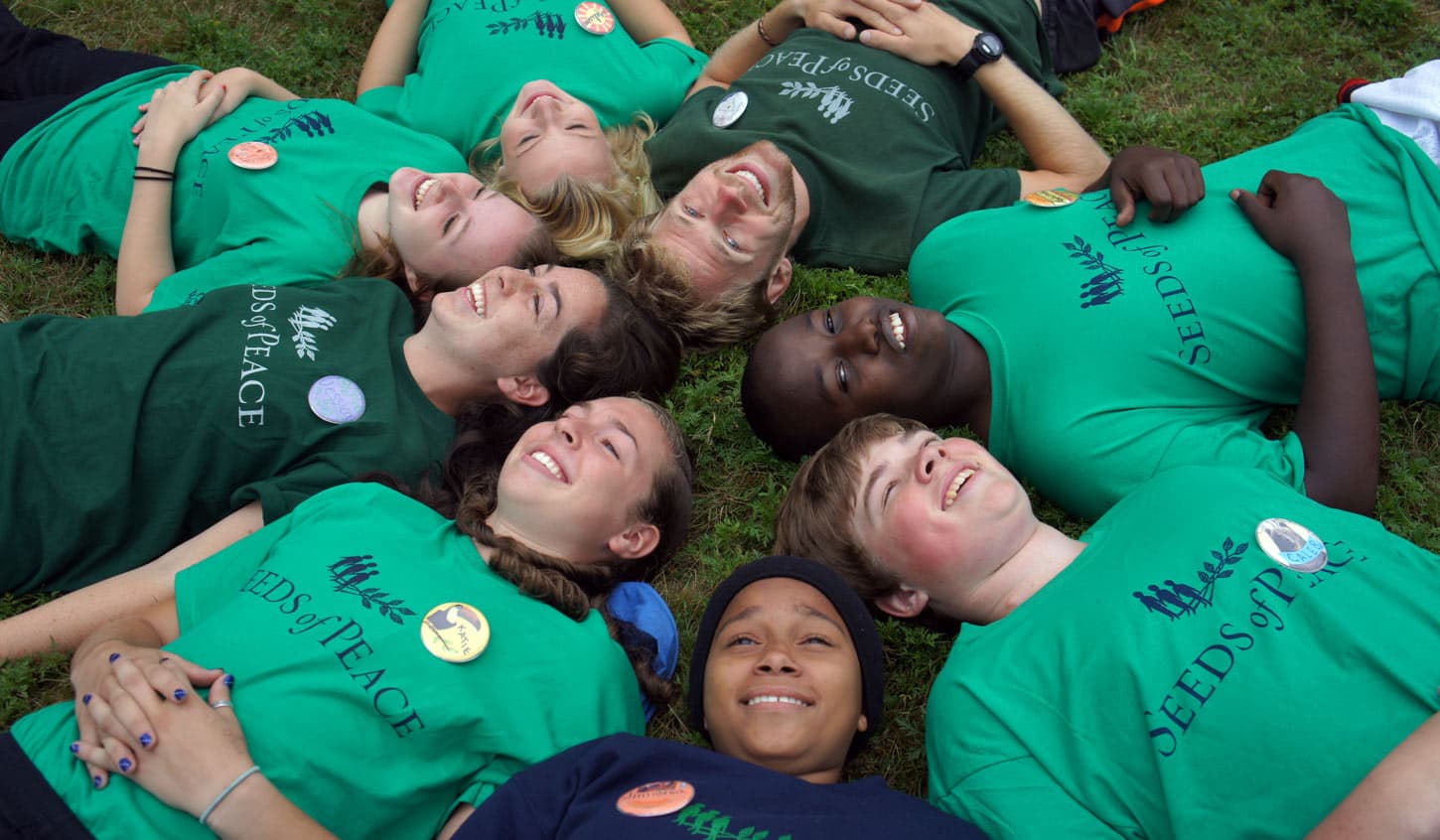
Young people participating in a Seeds of Peace camp (Seeds of Peace)

Published: 15 June 2026

Last updated: 17 June 2026

Sometimes, good things happen. At a time when so many international actors are devoting energy to actions that polarise rather than unite, Australia, the United Kingdom, and Canada have announced the establishment of a new International Peace Fund for Israelis and Palestinians, representing a rare moment of coordinated, forward-looking diplomacy.

The Peace Fund will invest in programmes that advance a two-state solution, help reduce division, strengthen civil society, and support dialogue and cooperation within and between Israeli and Palestinian communities, building the foundations for peace.

In practice, that means grassroots peacebuilding and civil society organisations like Seeds of Peace, where I work, will have access to increased funds to grow our reach and increase the number of Israelis and Palestinians working towards transforming the conflict.

The initial commitment, with each nation contributing seed funding is modest: just £1 million (approximately A$1.9 million) over three years. Furthermore, the initiative arrives when immediate prospects for a negotiated two-state solution appear exceedingly unlikely. It's understandable that it may be met with scepticism after years of failed negotiations and entrenched violence, which has only worsened in recent years.

Yet evaluating this fund solely through its financial scale misinterprets its strategic purpose. The initiative is not a peace treaty, nor an immediate remedy for war, occupation, terrorism, or systemic violence. Instead, it represents a shift towards long-term conflict transformation, recognising that political frameworks are unsustainable without a corresponding social infrastructure to support them.
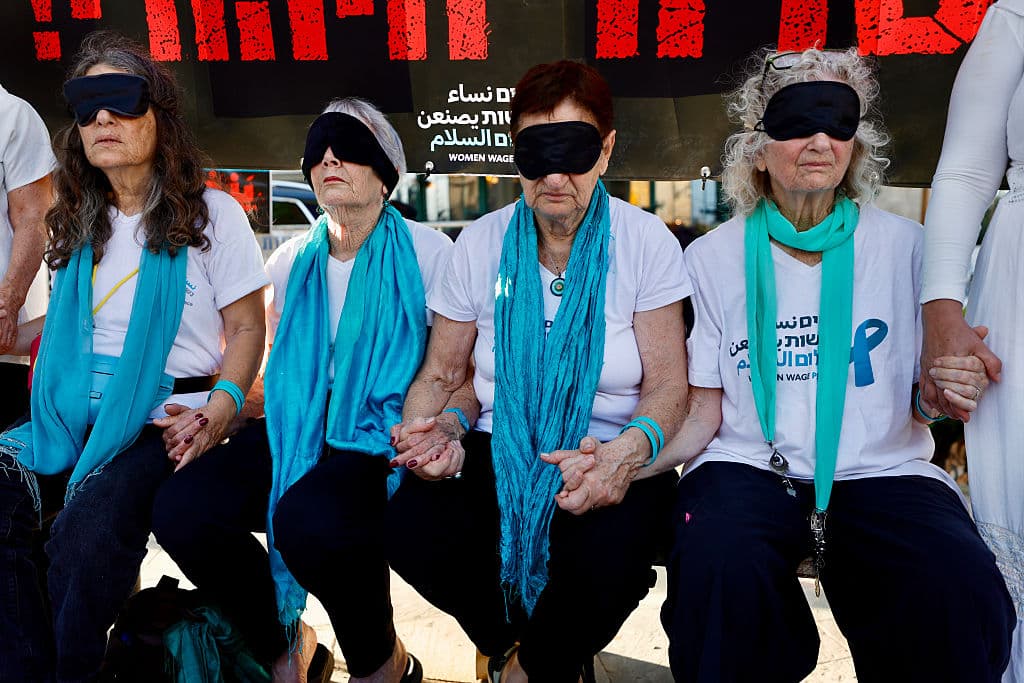
There are more than 200 grassroots civil society groups already doing this work. The Parents Circle-Families Forum, brings together hundreds of bereaved Israeli and Palestinian families to channel their shared grief into dialogue, rather than revenge through an annual joint memorial service. Women Wage Peace empowers thousands of women across political, religious, and geographic divides to advocate for political solutions and demand a seat at the negotiating table. The Jerusalem Youth Chorus brings East and West Jerusalem teenagers together to sing, co-create, and confront the realities of their lives through raw, honest conversation.

A strategic watershed

The establishment of this fund represents a strategic watershed for attempts to bring peace in Israel-Palestine.

For the past three decades, foreign intervention has heavily favoured top-down diplomacy, focusing primarily on high-level negotiations, security arrangements, and economic packages. The historical neglect of civic society has repeatedly left political agreements vulnerable to collapse when popular support erodes.

By targeting trusted civil society organisations (CSOs) in both Israel and Palestine, the fund aims to strengthen moderate actors and marginalise extremists.

The structure draws inspiration from the International Fund for Ireland, a multi-donor pool established in 1986 that played a critical role in laying the social and economic groundwork for the Good Friday Agreement. Australia was a partner in that Irish fund, making this new endeavour a continuation of a familiar diplomatic strategy.

Avi Meyerstein, co-founder and president of the Alliance for Middle East Peace (ALLMEP), emphasises that peacebuilding organisations already exist: the fund will not need to build them from scratch. "Civil society didn't wait around," Meyerstein told The Jewish Independent. "Smart and determined social change leaders have been launching and growing hundreds of projects on a community level for three decades. These projects have learned how to work through wars and engage people from every corner of society."

But funding could make a huge difference. Meyerstein argues that chronic underinvestment in these civic frameworks has historically ceded ground to radical actors who exploit the absence of a viable alternative to the status quo.

The new fund is designed to provide these existing community projects with the resources necessary to scale operations, focusing heavily on key demographics like women and youth to create the social conditions required to make political agreements viable. In Meyerstein’s view, diplomacy without a supporting civic society is ultimately insufficient; sustainable resolution requires both working in tandem.

As the Education Director at Seeds of Peace Jerusalem, I look at this announcement through a very specific lens. I see the heavy toll that the current reality takes on our youth, and how easily cynicism can take root when the horizon looks entirely dark. But I also see what happens when you actually invest in the alternative.

In our programs, when Israeli and Palestinian teenagers are brought together in a structured, safe space, the change is immediate and profound. You watch the layers of defence drop away; you see the exact moment a young person stops viewing the other side as a monolithic threat and begins to see them as human beings with names, families, and shared fears.

In October/November this year, there will be elections in Israel, Palestine and the United States. While a change in leadership at all three elections would be welcome by many peace builders, a shared future is not built by waiting for perfect political alignment.  It is built by keeping people connected in the darkest of times, so that when the political doors finally open, there is actually a society ready to walk through them.

RELATED STORY

Israeli, Palestinian civil society groups meet in France as two-state hopes dim (Reuters)

Israeli and Palestinian civil society groups delivered an appeal in France ‌on Friday to urge the international community not to abandon a two-state solution, as Paris seeks to keep the issue alive amid the Middle East war. The meeting brought together foreign ministers and senior officials from dozens of countries alongside civil society groups. 

You might also like
  • Peacebuilding through the eyes of a sceptic
    Ron Finkel
  • The Altalena should be a warning, not a political weapon
    Shahar Burla
  • Turkey emerges as military threat to Israel
    Dror Doron
logomark.67a07ee3
We believe in the free flow of information

Republish our articles for free, online or in print, by using our Creative Commons licence

You might also like

    Ofer_Winter_2026
    Israel Votes 2026AnalysisIsrael

    Who is Ofer Winter and could he upset Netanyahu’s election?

    Shahar Burla
    ISRAEL-TRANSPORT-AVIATION-STRIKE
    Israel Votes 2026AnalysisIsrael

    Bennett’s balancing act: can he win over the right without losing the centre?

    Shahar Burla 1
    Yoav Segalovitz Mansour Abbas
    Israel Votes 2026OpinionIsrael

    Because of my Zionist values, I’m joining an Arab party

    Yoav Segalovitz 1

Comments1

  • Avatar of Mark Ian

    Mark Ian15 June at 09:03 pm

    We ought seek peace with any humane Palestinians who want to live in peace with their Jewish Neighbours and strengthen the humane in Israel .
    But defence and deterrence for the vast minority in the area the Jewish People and Human Democrats has to be preserved and strengthened ..
    We have to remember what happened to Czechoslovakia The Netherlands Belgium and France and Poland in WW2 .

About the author

Ittay Flescher

Ittay Flescher

Ittay Flescher is the Jerusalem Correspondent for The Jewish Independent. For over twenty years, he has worked as an educator, journalist, and peacebuilder in Melbourne and Jerusalem. His book, The Holy and the Broken: A Cry for Israeli-Palestinian Peace from a Land that Must Be Shared, was longlisted for the 2025 Walkley Book Awards.

More from the author

AnalysisIsrael

What ‘Zionism’ means in Israel:  it’s not what you think

AnalysisIsrael

From haven to hotbed: how Israel’s perception of Australia has changed

FeatureIsrael

New wave of Russian-speaking migrants may be key to Israel’s future