Published: 5 February 2026
Last updated: 17 February 2026
Before October 7, I never planned to share my thoughts about Israel in public. I’d avoided the conversation for nearly a decade.
I grew up attending a modern orthodox Jewish school and travelled to Israel several times during my teens. I have many friends and family there, but after school I’d taken a break from visiting.
My high school experience as a Jewish, gay teen in the 2010s was difficult, compounded by my dad’s cancer diagnosis and his tragic death the morning after my graduation. It was a dark, alienating time, set against the backdrop of Australia’s ugly debate over same sex marriage. By the time I finished high school in 2014, I was ready for a fresh start.
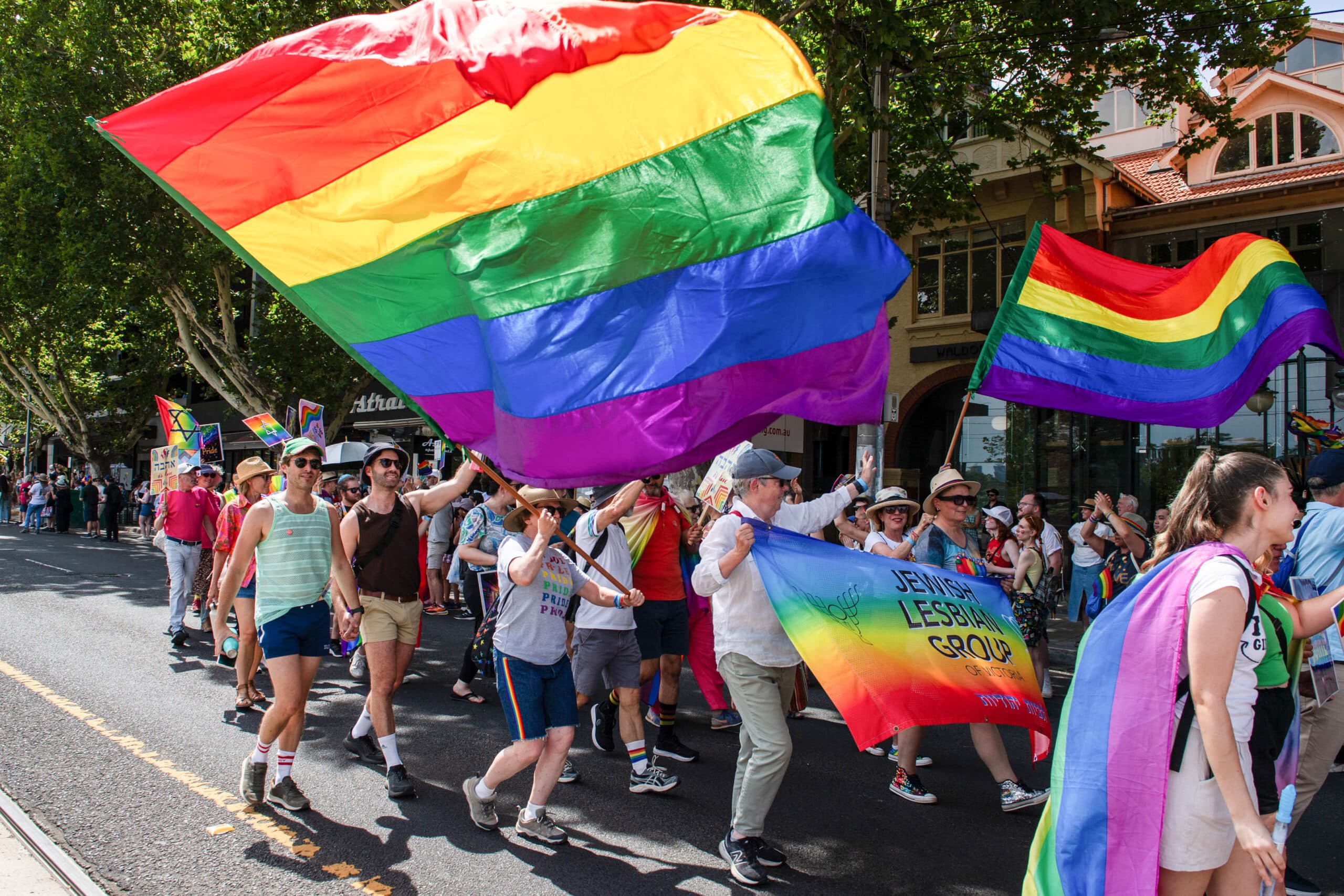
I skipped the traditional Jewish gap year in Israel and went straight to university, where I quickly made many queer, non-Jewish friends. I spent my twenties enjoying every gay club, queer event, and pride party in Melbourne. At the time, it felt liberating.
During this time, I grew increasingly distant from my Jewish identity. As for Israel, it seemed like a place that I’d visited enough – somewhere too politically messy to return to anytime soon. In the years leading up to October 7, I often saw anti-Israel content on social media shared by Melbourne’s queer community. I tried my best to ignore it.
Naively, I told myself that their rhetoric accusing Israel of being a ‘settler-colonial state’, was hyperbolic. “They just oppose Israel’s current, right-wing government,” I thought. “Surely, they don’t actually want to see Israel dismantled, ‘from the river to the sea’.”
For years, I kept quiet on the subject. I felt accepted, and assimilated, in what I thought was my second community. I turned out to be very wrong.