Aa
  • Read, Watch, Listen
  • TJI Series
  • Community Action
  • Events
  • Zedi
Follow us and continue the conversation
  • LinkedIn
  • Instagram
  • FaceBook
  • X
  • YouTube
Test yourself with the TJI Quiz!

Adjust size of text

Aa

Follow us and continue the conversation

  • LinkedIn
  • Instagram
  • FaceBook
  • X
  • YouTube

Your saved articles

You haven't saved any articles

What are you looking for?

Original reporting, insightful analysis and diverse views, delivered straight to your inbox

  • LinkedIn
  • Instagram
  • FaceBook
  • X
  • YouTube
Your support fuels our mission to inform, entertain and inspire.

The Jewish Independent is bound by the Standards of Practice of the Australian Press Council. If you believe the Standards may have been breached, you may approach The Jewish Independent or make a complaint to the Australian Press Council in writing at www.presscouncil.org.au. The Council may also be contacted on 1800 025 712.

  • Our Story
  • Contact us
  • Our Team
  • Support us
  • Guidelines
  • Pitch your idea
  • Republishing us
  • Community Action
  • Our Awards
  • LinkedIn
  • Instagram
  • FaceBook
  • X
  • YouTube
Aboriginal FlagTorres Strait Islanders Flag

The Jewish Independent acknowledges Aboriginal and Torres Strait Islander peoples as the Traditional Owners and Custodians of Country throughout Australia. We pay our respects to Elders past and present, and strive to honour their rich history of storytelling in our work and mission.

© The Jewish Independent 2026All Rights Reserved
Website design and development by Your Creative, MelbourneTerms & ConditionsPrivacy Policy
HomeRead, Watch, ListenArts & Culture
InterviewArts & CultureWorld

An Instagram page where every day is Mizrahi Heritage Month

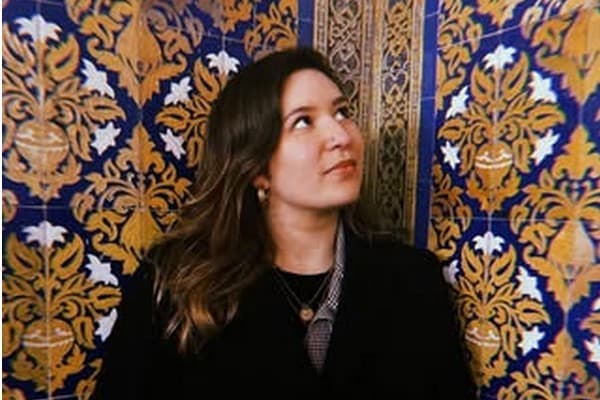
Ciara Shalome has created a vast living archive of Mizrahi Jewry with a special focus on stories of co-existence to bridge the gap between Arabs and Jews.
Elana Benjamin
Print this
Ciara Shalome

Ciara Shalome (Instagram)

Published: 3 November 2025

Last updated: 4 November 2025

Ciara Shalome has been filming Jews from all over the Mizrahi Jewish world and uploading their stories to Instagram since 2022. She’s interviewed people from countries including Afghanistan, Algeria, Bahrain, Egypt, India, Iran, Iraq, Lebanon, Libya, Sudan, Syria, Tunisia, Turkey and Yemen.

In sharing their stories on her Instagram page, The Mizrahi Story, the 27-year-old Londoner has created an unmatched living archive of Mizrahi Jewry.

Shalome tells The Jewish Independent her favourite clips are the ones which capture coexistence between Jews and Arabs. She gives the example of Sammy Benisty, whose Moroccan Jewish family adopted an abandoned Muslim boy named Salah, and insisted on raising Salah as a Muslim. They sent Salah to the local Muslim Arab school, Sammy’s father took Salah to the nearest mosque and asked the Imam to teach him so Salah wouldn’t lose his identity, and he arranged Salah’s marriage to a Muslim bride.

Another of Shalome’s favourites is her post about Nessim Dawood, an Iraqi Jew responsible for the most famous translation of the Quran into English.

She loves these types of clips most because “they really inspire the idea of hope”. Indeed, Shalome is drawn to telling positive stories. “We shouldn't just be telling stories about death, because then it just defines the Jewish people as this group who've only ever suffered,” she says.

The Mizrahi Story certainly doesn’t shy away from stories of suffering. For example, a recent post is about Yemen’s Orphans Decree of 1922, which mandated the forced conversion of Yemeni Jewish orphans to Islam. And Shalome is clear that at times, life was very difficult for Jewish people across the Middle East and North Africa.

But “there were these pockets of peace”, she says. And much of her page focuses on stories of how individual Mizrahi Jews lived during these peaceful times; on their customs, language, prayers, food, music and clothing.

Shalome admits to feeling an “almost alarming sense of responsibility” to capture these testimonies before they’re lost. “I think to myself, what happens if this person is no longer with us or gets dementia? There has to be evidence that these people existed. They lived amazing, vibrant lives and their stories deserve to be told,” she says. The Mizrahi Story has certainly struck a chord: at last count it had almost 100,000 followers.

Shalome has always been very interested in Jewish history and in her heritage – her father’s family are a mix of Baghdadi Jews from Bombay (now Mumbai) and Aden (now part of Yemen) who moved to the UK in the 1960s – but she never had an outlet to express it. That changed in 2021, when Shalome was working for a social media agency and “was perpetually on TikTok”.

She’d often see Jewish-related videos reaching a wide audience, which she found “mildly irritating because there was no Sephardi or Mizrahi content.” It was one particular TikTok about Jewish food which spurred Shalome into action. “There were about 15 gefilte fishes and 12 schmaltz herrings, and the video had gone viral,” says Shalome. “And I thought, okay, but I’ve never eaten any of those foods. What about the t’beet and jachnun and all the stuff I recognise?”

Shalome posted a comment on the video saying she’d love it if there was more Mizrahi representation, and it got a few likes. And she thought to herself, “I know how to make videos, I’m okay at editing them, maybe I should just do it.” So she started filming herself on TikTok. One of her first videos was about a Muslim-Jewish business partnership that brought Coca-Cola to Iraq, which “did really well”.

Soon after, a Jewish friend suggested that Shalome interview the friend’s mother, who’d fled Iraq in 1971 and still spoke Iraqi Judeo-Arabic. Shalome agreed. The mother told the story, in English, of how her Muslim neighbour in Baghdad had saved her father and uncle during the Farhud of 1941. She then repeated the story in Arabic and Shalome posted the Arabic version with no subtitles. The TikTok got two million views in Iraq. “And I thought omigod, this is it, this is what I need to do,” says Shalome.

The huge response made Shalome realise she could use her videos as a tool to reach people in the Arab world who’d only ever heard stories from their grandparents about Jewish people who’d once lived among them, and bring those Jews to life.

After that, she began cold-calling other Iraqi Jews who her friend’s mother connected her with, asking if she could come to their homes and film them. Shalome later moved from Tik Tok (“because it’s an antisemitic mess”) to Instagram.

Why, I ask Shalome, does she think her page has garnered such a large following? “I think it's multifaceted,” she says. “It's very intimate, you have somebody's grandma speaking directly to you, holding a coffee cup or an object they want to show. And you see pictures of them as kids so it feels very close.”

Shalome also points to the variety of content. “For example, you’ll have a young, second-generation person talking about the interpretive dance they do that reminds them of their Syrian grandmother. And then you'll have somebody who actually left Syria in 1992 who has a very strong accent, making a traditional Jewish cookie.”

Shalome’s page is also apolitical, and she never posts flags or slogans. “So I think it makes people feel quite safe to be on the page and engage with it, that it’s just people’s stories and doesn’t have a political agenda.”

The uniqueness of Shalome’s page is clearly influenced by her background and upbringing. She’s often asked why her page doesn’t dwell on suffering. “I think something that’s shaped me is the fact that the Baghdadi Jews of India didn’t experience antisemitism,” she says, believing positivity is her natural bias because that’s all her family ever experienced. (Her family may have suffered from antisemitism in Iraq, she admits, but that was long enough ago that she doesn’t know about it.)

Shalome’s early life also seems key to her worldview. Her family was irreligious and she attended mixed schools in the middle of London. “All my best friends were from Somalia, Kenya, China, Korea and India, and I grew up around Muslims, Hindus and Christians. Besides my own family, I didn’t really know any Jews until I was a teenager.”

She grew up with the idea of “diversity being incredible” and loved being among people celebrating holidays such as Eid and Diwali. “I was only ever surrounded by love from different ethnic minorities and different religions. So I’ve always had a strong sense that we’re better together.”

It’s unsurprising, then, that her current goal is for her page to bridge gaps between Arabs and Jews, and to expose Mizrahi Jews and Arabs to one another. “I really believe that Mizrahi Jews are the puzzle piece to solving a lot of problems between Jews and Arabs,” she says.

“People find others more relatable when they have similar language, culture, music, customs and food. So when we're talking about trying to find peace or trying to find common ground, I’ve noticed that Mizrahi Jews are closer to Arab culture.”

And while Shalome never saw Ashkenazi Jews as her target audience, she’s very proud of her success in reaching them and receives many messages from Ashkenazim who are “learning about us” from her page.

But for all her success, funding The Mizrahi Story is an ongoing challenge. Aside from a “buy me a coffee” link she’s set up, she has no funding and doesn’t get paid for her interviews. “I don't know how much longer I can invest so much time and energy, so much research and effort and money into this page without [financial] support,” she says, sighing.

Yet there’s still so much more she wants to do. Shalome has interviewed most of London’s Mizrahi community, and has conducted interviews in Israel and New York, but wants to travel further. For example, she’s only interviewed two Australians – one who’s relocated to London, and an ex-Londoner during his visit home. Yet there are plenty of Mizrahi Jews in Australia whose stories have never been captured and as she says, time is running out.

Shalome is also grappling with the crucial issue of preserving her footage. After she spoke at last year’s Limmud Festival in Birmingham, an audience member asked her what she’d do if Instagram got deleted tomorrow. Having never considered it before, Shalome “freaked out.” Now she’s desperate to get her footage into a book format or documentary film, or an archive like the Spielberg Jewish Film Archive.

In the meantime, does Shalome have anything special planned on her page for Mizrahi Heritage Month, which is celebrated worldwide each November to honour and promote the heritage, history and rights of Sephardi and Mizrahi Jews?

She laughs. “Every day is Mizrahi Heritage Month on The Mizrahi Story.”

You might also like
  • A love letter to the lost language of a Mizrahi childhood
    Elana Benjamin
  • Sephardi-Mizrahi history, right between the ears
    Elana Benjamin
  • Why we need Mizrahi heritage month
    Elana Benjamin
logomark.67a07ee3
We believe in the free flow of information

Republish our articles for free, online or in print, by using our Creative Commons licence

You might also like

    Ms. Foundation Women of Vision Awards: Celebrating Generations of Progress & Power
    ReflectionWorld

    My memory of Gloria Steinem

    Michael Visontay
    Eden Bahar
    InterviewArts & Culture

    ‘L’chaim for the next 1,500’: Israeli drummer celebrates Cirque Du Soleil milestone

    Gideon Cohen
    Pro-Palestine Rally Outside Foreign Commonwealth Development Office
    AnalysisWorld

    UK’s dramatic policy change on Israel-Palestine

    Colin Shindler 3

About the author

Elana Benjamin

Elana Benjamin

Elana Benjamin is a Sydney-based writer whose articles have been published widely, including in Good Weekend, Sunday Life and the Sydney Morning Herald. Elana is also the author of ‘Indian-Jewish Food: Recipes and Stories from the Backstreets of Bondi’, which is out now.

More from the author

ReflectionArts & Culture

At last, a writers festival invites Ruptured authors to speak

FeatureAustralia

In western Sydney, a thriving Jewish community looks to the future

ReflectionLifestyle

How do introverts fit into Jewish life?

InterviewArts & Culture

Why the Jewish way of reading is perfect for getting children to read

Comments2

  • Avatar of sandra hotz

    sandra hotz6 November at 09:42 am

    I found this article quite fascinating and informative.
    Thank you,Elana for enriching us all and introducing us to this wonderful project.
    May these stories be collected in Australia as well.
    Such richness

  • Avatar of Lyn Julius

    Lyn Julius3 November at 06:51 am

    Ciara will be presenting her work at HARIF’s annual commemoration of the exodus of MENA Jews on 20 November at JW3 in London. Also online: https://www.harif.org/event/an-evening-to-mark-the-departure-and-expulsion-of-jews-from-arab-countries-and-iran-2/