Aa
  • Read, Watch, Listen
  • TJI Series
  • Community Action
  • Events
  • Zedi
Follow us and continue the conversation
  • LinkedIn
  • Instagram
  • FaceBook
  • X
  • YouTube
Test yourself with the TJI Quiz!

Adjust size of text

Aa

Follow us and continue the conversation

  • LinkedIn
  • Instagram
  • FaceBook
  • X
  • YouTube

Your saved articles

You haven't saved any articles

What are you looking for?

Original reporting, insightful analysis and diverse views, delivered straight to your inbox

  • LinkedIn
  • Instagram
  • FaceBook
  • X
  • YouTube
Your support fuels our mission to inform, entertain and inspire.

The Jewish Independent is bound by the Standards of Practice of the Australian Press Council. If you believe the Standards may have been breached, you may approach The Jewish Independent or make a complaint to the Australian Press Council in writing at www.presscouncil.org.au. The Council may also be contacted on 1800 025 712.

  • Our Story
  • Contact us
  • Our Team
  • Support us
  • Guidelines
  • Pitch your idea
  • Republishing us
  • Community Action
  • Our Awards
  • LinkedIn
  • Instagram
  • FaceBook
  • X
  • YouTube
Aboriginal FlagTorres Strait Islanders Flag

The Jewish Independent acknowledges Aboriginal and Torres Strait Islander peoples as the Traditional Owners and Custodians of Country throughout Australia. We pay our respects to Elders past and present, and strive to honour their rich history of storytelling in our work and mission.

© The Jewish Independent 2026All Rights Reserved
Website design and development by Your Creative, MelbourneTerms & ConditionsPrivacy Policy
HomeRead, Watch, ListenWorld
ReflectionWorld

My renewed hope for a changing South Africa

I left my South African hometown more optimistic about its future than in a long time. While its Jewish community is small, it is surprisingly optimistic, increasingly religious and extremely dedicated to improving their beloved country.
Ralph Genende
Print this
Hands holding a heart shape with a south african flag

“While I have Aussified, I still feel like I am caught between continents” (Image: TJI)

Published: 1 July 2025

Last updated: 1 July 2025

There’s nothing quite like coming back to your hometown. The place that shaped your childhood, wove its way through your adolescence, and guided you into adulthood.

I have now lived more of my life outside Southern Africa than in it. While I have Aussified (and hopefully not ossified), I still feel like I am caught between continents. 

My wife and I left a South Africa torn by racism and riven by the injustices of apartheid. Poverty and suffering were endemic. 

Yet this was the country that gave my parents refuge from the horrendous hostility and devastation of the Holocaust. This was the land that allowed the Litvaks, Lithuanian Jews, to recreate the tight-knit communities they had left behind. In time, they not only celebrated it with their cuisine and Yiddish culture, but also by renewing its proud and demanding intellectual tradition at the southern tip of Africa. It was here that I learned the Torah from singular scholars, some from the old country itself. 

On my most recent visit this year, nothing was quite the same. I had changed, Australia had changed, South Africa had changed.

I have returned many times over the years to visit my family and speak to local Jewish congregations. Most often, I was seen as the 'visitor' from thriving and creative Australia, sharing stories of our proud achievements in this accepting and lucky land.

Australia was seen as a place of refuge for many Shoah survivors and a proud example of multicultural achievement and multi-faith harmony: a peaceful and accepting nation in contrast to the volatile and violent reality of post-apartheid South Africa. 
 
On my most recent visit this year, nothing was quite the same. I had changed, Australia had changed, South Africa had changed. The world shifted on October 7, 2023. There was a tectonic transformation in Jewish consciousness and the very identity of so many of us suddenly felt alien. What we had assumed about our lives and the future no longer held. We were, in the Talmudic phrase, in an upside-down world.
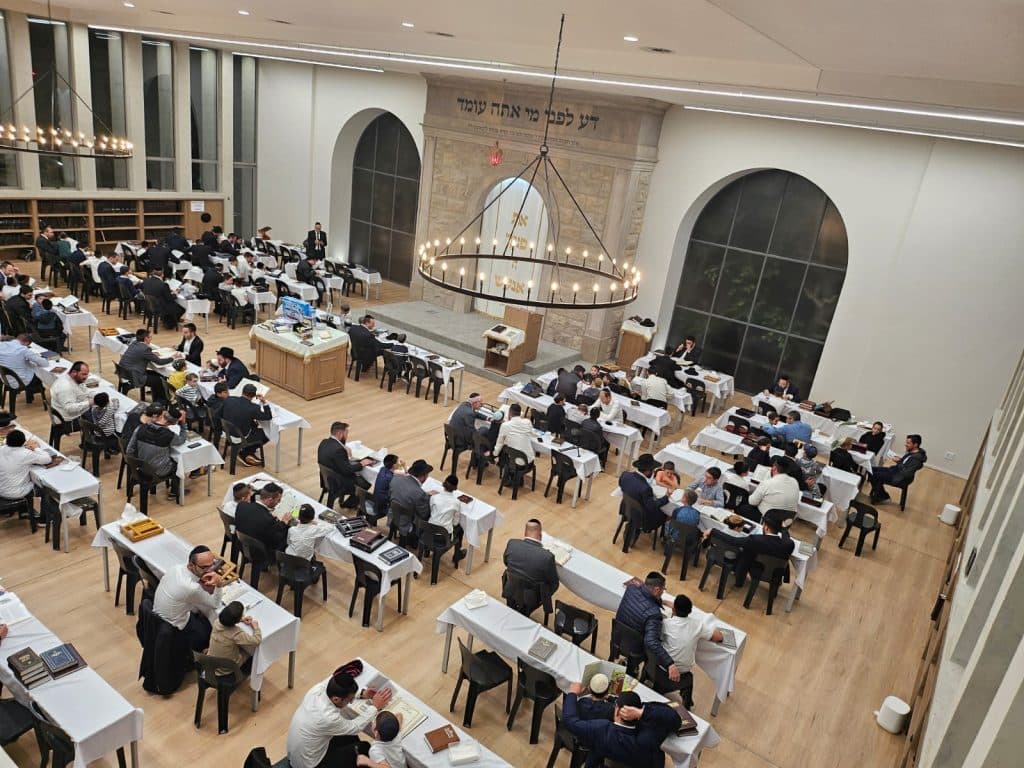
"The synagogues I attended were well supported" (Image: supplied).

The South African Jewish community wanted only to hear about antisemitism in our land down under. They were incredulous about our near-top ranking in the planetary anti-Jewish Olympiad. For some, there was a barely concealed schadenfreude, for others a genuine fear for their families who had migrated to Australia, who had had left their homes to escape danger and were now meeting it in their place of refuge.

For many, it was just confirmation that hostility towards Jews and Israel was as universal as the wild grass, as deeply rooted as the African baobab tree, and as widely spread as its extensive and strong root system.

Despite the dangers and the awareness that beyond the high walls there is gross hunger and heartache, there remains a belief in the future of South Africa and in the vitality of this now small Jewish community. 

By contrast, for the first time in many years, there was a spirit of optimism in the South African Jewish community. In the Jewish area of Johannesburg, still protected by its own armed security services, there was a vibrancy and confidence.

The stupendously high walls, electrified fences and plans for even more secure access zones into the gated communities still exist. There are desperate beggars on so many street corners and obvious debilitating poverty, staggering unemployment and crime in this country of deep political corruption and incompetence. My niece’s friend had her phone brazenly snatched outside Kosher World; my brother-in-law recounts people held up while waiting at traffic lights.

But despite the dangers and the awareness that beyond the high walls there is gross hunger and heartache, there remains a belief in the future of South Africa and in the vitality of this now small Jewish community. 

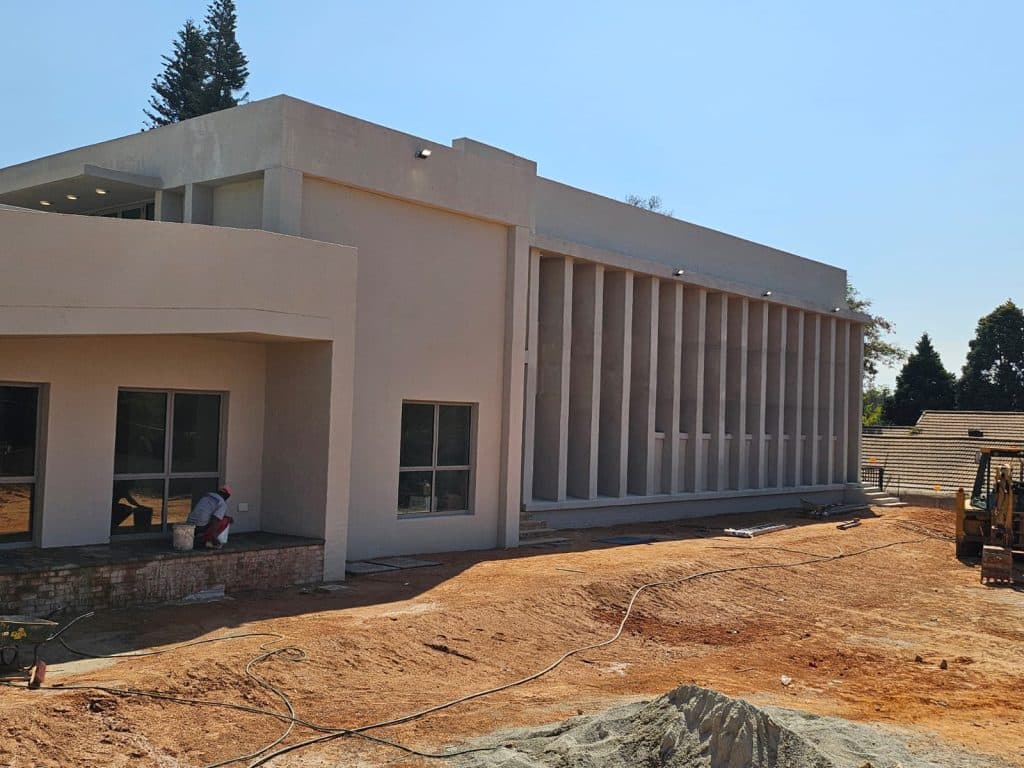
There are highly successful and determined Jewish businesspeople contributing not only to the economy but also to the social welfare of the country. There are Jewish educators and artists, social activists, doctors and lawyers. There are growing religious communities with new beautiful shuls, batei midash (study halls) and shtibels (small prayer centres) popping up alongside a rich variety of kosher restaurants and delis with countless products bearing the kosher certification of the Johannesburg Beth Din. On Shabbat, I witnessed hundreds of young frum families making their way to shul and the synagogues I attended were well supported. 

A new shul being built in the heart of Joburg's Jewish shtetl (Image: supplied).

Some of these people are making an important contribution to the new South Africa. Ruhama Welcher, a doctoral candidate at the University College of London living in Johannesburg, is as frum as she is brilliant. She has spent long hours in schools in places such as Soweto, examining the impact of factors that impact on learning.   

She tells me of one outlier school where all the students achieved university entrance, despite many coming from highly dysfunction families, including child-headed households and extreme poverty. Some students arrived at the school in grade eight unable to write their own names. The school itself lacked basic facilities – temporary classrooms with poor lighting and at least 45 students per class. 

These students succeeded through the passionate and idealistic principal and teachers who had them study long hours and camp at the school on weekends. They called it prison for a year and opportunity for a lifetime. 

It occurred to me that this was a vignette of South Africa today: a place of extremes where deprivation and despair sit alongside great strength and remarkable resilience.

Recent South African governments have been strongly anti-Israel and led a genocide case against Israel at the International Court of Justice. But in the Jewish community, there is now a sense of having come through the worse and a hope that the new coalition government and a chastened ANC will, in time, temper its vile anti-Israel rhetoric and egregious actions against Israel.

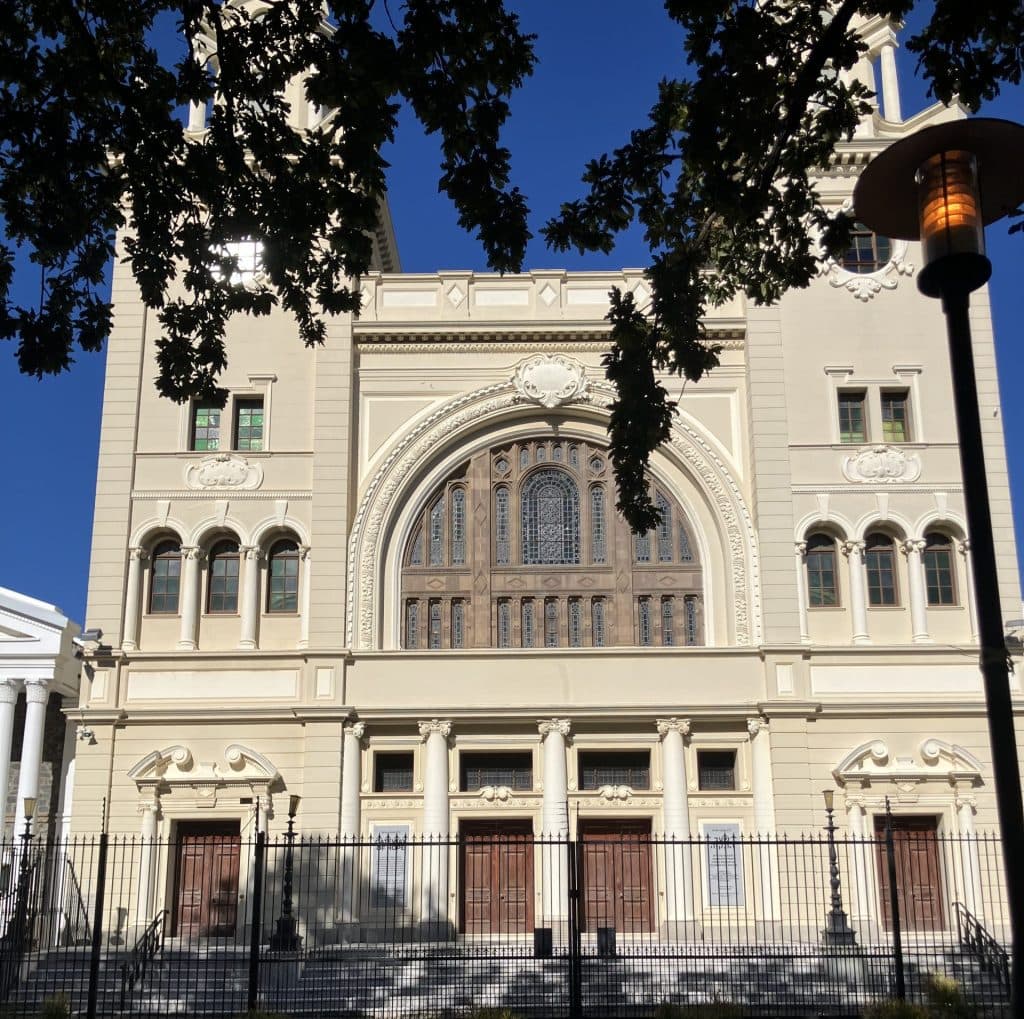
The Gardens Shul in Cape Town (Image: supplied).

There have been cases of antisemitism, including a recent hate speech case against a Cape Town comedian for his “depraved videos and utterances” against Jews, and the same vulgar and vituperative antisemitism from the right and the left.  

But South Africa’s universities didn’t have campus occupations and they don’t have weekly anti -Zionist protests.  

There is also a strong belief that most ordinary citizens of South Africa are not intrinsically antisemitic, and that their Christian beliefs make them more sympathetic to Israel than their failing ANC leadership. In fact, one of the largest African churches in South Africa is called the Zionist Christian Church (ZCC), its HQ is called Zion City and it is located in Moriah in the Limpopo Province!

I left South Africa more optimistic about its future than in a long time.

There are still power cuts and potholes but while the lights in the Johannesburg streets go out with uncomfortable regularity, you can’t put out the light in everyone’s eyes. This beloved country is not just a place to cry or sigh for. It’s also a place to fly to  and barrack for.

You might also like
  • Gaza women get reusable menstrual pads via Israeli humanitarian aid
    Shahar Burla
  • ME Peace conference blacklisted: a dark day for South African democracy
    Ivor Chipkin
  • Explainer: the genocide charge against Israel
    Jeremie Bracka
logomark.67a07ee3
We believe in the free flow of information

Republish our articles for free, online or in print, by using our Creative Commons licence

You might also like

    bialik Jewish schools shabbat
    OpinionAustralia

    Jewish schools are the marinade that infuses continuity

    Jeremy Stowe-Lindner
    Ms. Foundation Women of Vision Awards: Celebrating Generations of Progress & Power
    ReflectionWorld

    My memory of Gloria Steinem

    Michael Visontay
    Shocked New Yorker Watches the World Trade Center on September 11, 2001
    ReflectionWorld

    A new generation reckons with 9/11

    Gideon Cohen

About the author

Ralph Genende

Ralph Genende

Rabbi Ralph Genende is the Interfaith and Community Liaison at the Australia Israel and Jewish Affairs Council. He is also Senior Rabbi to the Australian Defence Force and Rabbi of Kehilat Kesher Community.

More from the author

ReflectionWorld

A celebration of chutzpah, from Moses to modern times

AnalysisAustralia

Interfaith relations after Bondi 

DebateAustralia

Stopping the sacrifice of children on a new altar 

OpinionLifestyle

Forgiving our parents: a Yom Kippur challenge

Comments

No comments on this article yet. Be the first to add your thoughts.