Aa
  • Read, Watch, Listen
  • TJI Series
  • Community Action
  • Events
  • Zedi
Follow us and continue the conversation
  • LinkedIn
  • Instagram
  • FaceBook
  • X
  • YouTube
Test yourself with the TJI Quiz!

Adjust size of text

Aa

Follow us and continue the conversation

  • LinkedIn
  • Instagram
  • FaceBook
  • X
  • YouTube

Your saved articles

You haven't saved any articles

What are you looking for?

Original reporting, insightful analysis and diverse views, delivered straight to your inbox

  • LinkedIn
  • Instagram
  • FaceBook
  • X
  • YouTube
Your support fuels our mission to inform, entertain and inspire.

The Jewish Independent is bound by the Standards of Practice of the Australian Press Council. If you believe the Standards may have been breached, you may approach The Jewish Independent or make a complaint to the Australian Press Council in writing at www.presscouncil.org.au. The Council may also be contacted on 1800 025 712.

  • Our Story
  • Contact us
  • Our Team
  • Support us
  • Guidelines
  • Pitch your idea
  • Republishing us
  • Community Action
  • Our Awards
  • LinkedIn
  • Instagram
  • FaceBook
  • X
  • YouTube
Aboriginal FlagTorres Strait Islanders Flag

The Jewish Independent acknowledges Aboriginal and Torres Strait Islander peoples as the Traditional Owners and Custodians of Country throughout Australia. We pay our respects to Elders past and present, and strive to honour their rich history of storytelling in our work and mission.

© The Jewish Independent 2026All Rights Reserved
Website design and development by Your Creative, MelbourneTerms & ConditionsPrivacy Policy
HomeRead, Watch, ListenIsrael
Israel Hamas WarFeatureIsrael

Gaza women get reusable menstrual pads via Israeli humanitarian aid

NATAN Worldwide Disaster Relief has delivered 2,000 reusable menstrual hygiene kits to women and girls in the Khan Yunis area of Gaza, in coordination with Gaza Children's Village, to provide a low-cost, longer-term solution in an environment where ongoing supply cannot be guaranteed.
Shahar Burla
Print this
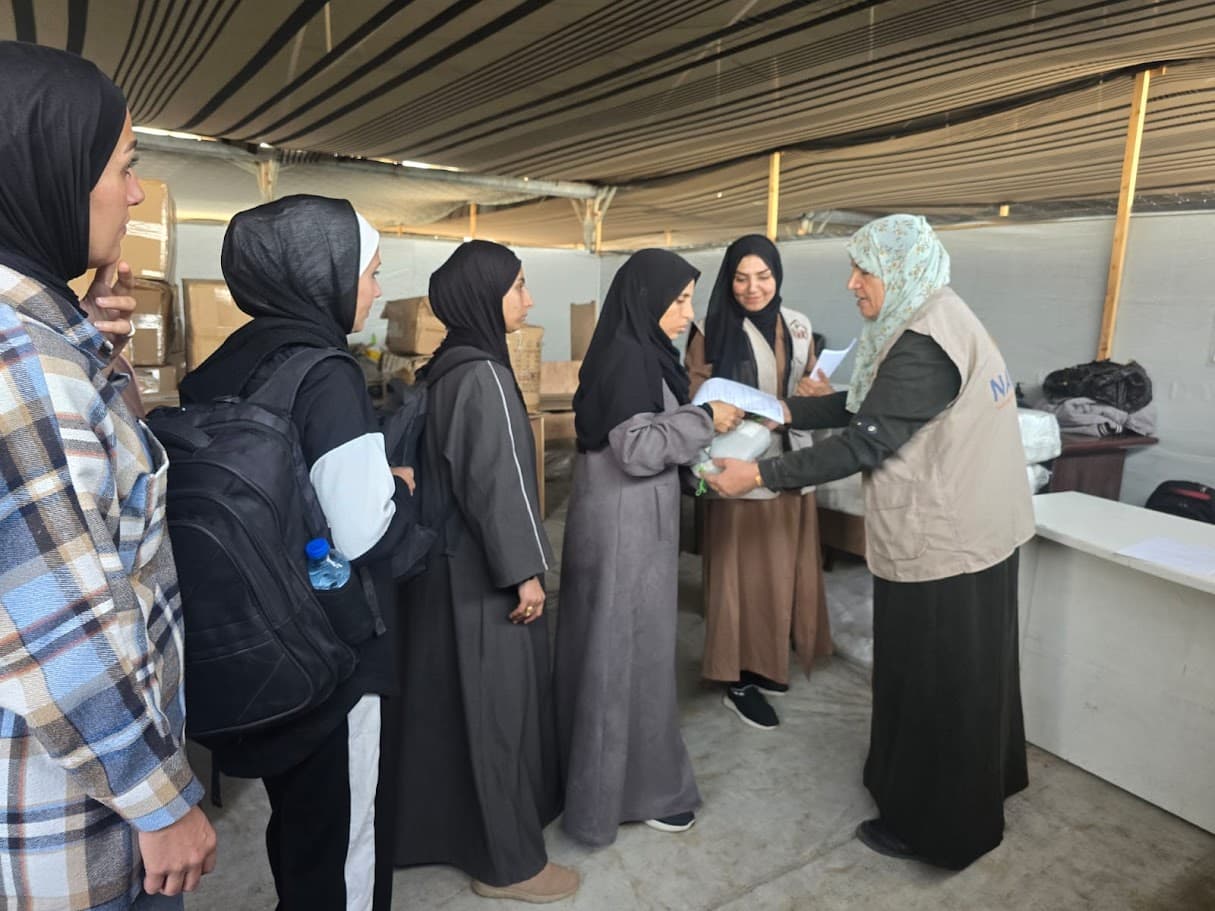
Gaza dignity kits(2)

Aid workers connected to Natan distribute ‘dignity kits’ to women in the Gaza Strip, in an undated photograph.
Credit: Natan Worldwide Disaster Relief.

Published: 8 April 2026

Last updated: 8 April 2026

A humanitarian initiative led by Israeli-based organisation NATAN Worldwide Disaster Relief is drawing attention to an often-overlooked aspect of life in Gaza’s displacement camps: menstrual hygiene.

The organisation has delivered 2,000 reusable menstrual hygiene kits to women and girls in the Khan Yunis area, in coordination with Gaza Children’s Village.

Each kit contains four washable pads designed to last approximately a year. In a setting where supply chains are unreliable and waste management systems have largely broken down, the choice of reusable products is deliberate. Disposable alternatives, where available, often accumulate in the absence of garbage disposal, creating both environmental and social pressures, and, for many women and girls, a source of embarrassment and restriction on daily movement.

The initiative emerged not from a strategic plan, but from a personal moment. Alice Miller, NATAN's CEO, described speaking with a Gazan mother whose 14-year-old daughter had just begun menstruating in a tent camp with no access to basic supplies.

“She had nothing to use… not even a piece of cloth,” Miller told The Jewish Independent, recalling how the girl remained inside the tent for three days because she had no way to manage it. For Miller, a mother of a daughter the same age, the moment was impossible to ignore. There was, she said, “no difference” between the two girls, only the circumstances into which they were born.

Acting on that realisation, NATAN developed a program to manufacture reusable pads and distribute them through trusted local partners. The model was designed with input from Gazan women themselves, focusing not only on the product but on how it could realistically be used in conditions of displacement, including access to water, privacy, and safe spaces for washing and drying.

The initial 2,000 kits were conceived as a pilot. A further 10,000 are now in production and will be distributed in April, with another 10,000 planned for distribution in June, subject to funding. At approximately US$18 per kit, the program aims to provide a relatively low-cost, longer-term solution in an environment where ongoing supply cannot be guaranteed.

Adapting aid for a complex Gaza reality

The project reflects a broader evolution in NATAN’s operational model. Traditionally focused on deploying medical teams to disaster zones, from earthquakes to floods, the organisation has increasingly adapted its approach to operate in complex, politically sensitive environments such as Gaza.

Early in the war, the organisation concluded that the humanitarian situation in Gaza was severe. “We respond to disasters around the world,” Miller said. “We understand that one of the biggest humanitarian disasters on Earth today is Gaza.” It took time to determine how to assist without placing staff at risk, but the organisation ultimately identified local partners to enable its work. “We need to help others as much as we can for only one reason: because we can, and because they need help,” she said.

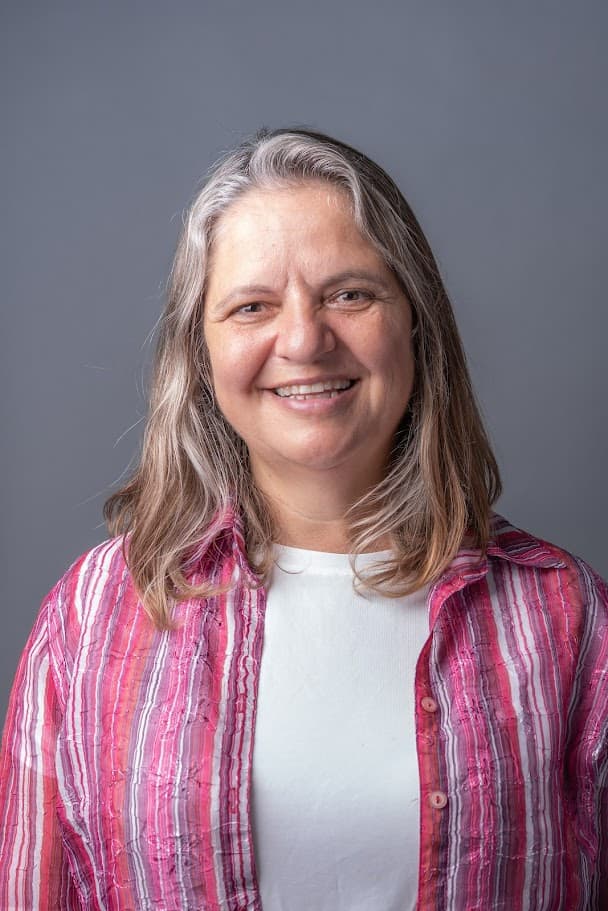
Alice Miller. Credit: NATAN Worldwide Disaster Relief.

Alongside the menstrual hygiene initiative, NATAN is also involved in medical support programs through Gaza Children’s Village. These include basic health assessments for children in displacement camps, measuring indicators such as arm circumference to assess malnutrition, and providing remote medical support through a network of Arabic-speaking physicians. The organisation is also exploring additional interventions, including the distribution of multivitamins to improve children’s immune systems and developmental outcomes, a relatively low-cost intervention Miller has described as a potential “game changer” in fragile environments.

Working in Gaza presents significant challenges. For Israeli organisations in particular, identifying trusted local partners is critical. NATAN’s collaboration with Gaza Children’s Village, whose staff have been vetted through Israeli authorities, reflects both operational necessity and the sensitivities involved in cross-border humanitarian work.

At the same time, the initiative highlights the fragility of aid delivery into Gaza. Border access remains unpredictable, and humanitarian actors must constantly adapt to shifting political and security conditions. The use of reusable kits is partly a response to this volatility, offering a solution that does not rely on continuous resupply.

Early feedback from recipients has been positive. Women have reported that the pads are comfortable, effective, and manageable under current conditions. Access to water and soap, while limited, has generally been sufficient for cleaning, and families facing ongoing shortages have shown a clear preference for reusable products.

Still, the question of scale remains open. While the program has the potential to reach tens of thousands of women, its expansion depends heavily on funding, access, and the broader trajectory of the conflict.

Alice Miller: from landmark court case to Gaza aid

Miller, who holds a degree in Aerospace Engineering, is best known in Israel for a landmark legal case that reshaped the role of women in the Israeli military. After being rejected from the Israeli Air Force’s pilot training course solely on the basis of gender, she petitioned the High Court of Justice in the 1990s  and won.

<strong>Air Force Captain Alice Miller, 1995. Credit: IDF Spokesperson’s Unit.</strong><br>
Air Force Captain Alice Miller, 1995. Credit: IDF Spokesperson’s Unit.

“The court case I led and won created a major shift in Israeli society,” she said. “It wasn’t only about pilots… today, for example, my daughter is a fighter in the IDF.” Women now make up around 50% of Israel’s anti-missile forces and serve across a wide range of combat roles, including in the navy and infantry. For Miller, the impact of the ruling extended far beyond the military itself.

“You can’t create change in the army without creating change across Israeli society,” she said. “This would not have happened without the Supreme Court… I truly hope this does not change in Israel, because I believe it is one of the country’s greatest strengths.”

Her comments come amid ongoing debate in Israel over proposed judicial reforms, which critics argue could weaken the independence of the courts. For Miller, whose own case relied on a strong and independent judiciary, the issue is not abstract but deeply personal.

Her activism is also shaped by her family’s migration from apartheid-era South Africa. Miller moved to Israel at the age of six, after her father, a political anti-apartheid activist, became disillusioned with the hostility and divisions he encountered while campaigning.

That early experience, she suggests, continues to inform her perspective on social change and coexistence. Her personal life reflects a similarly layered identity: she describes a family that spans religious and cultural backgrounds, including Jewish and Christian heritage, and a marriage to a Hindu partner.

Having returned to South Africa many times over the years, Miller says she has witnessed firsthand the country’s transformation and believes there are lessons to be drawn from that journey.

More broadly, she argues that Israel, and the world, is at a critical crossroads between extremism and moderation. While acknowledging rising polarisation across societies, she emphasises the importance of compromise as a foundation for stability.

Despite the current climate, she remains cautiously optimistic. In her view, growing extremism may ultimately generate a counter-pressure pushing societies back towards balance, cooperation, and coexistence.

You can support the NATAN Dignity Kit Project here.


You might also like
  • Abuse by IDF soldiers humiliates Muslim Palestinians
    Ben Lynfield
  • Zomi investigation delivers new low in Australia-Israel relations
    Michael Visontay
  • Qusra siege exposes shared agenda of IDF and settler extremists
    Ben Lynfield
logomark.67a07ee3
We believe in the free flow of information

Republish our articles for free, online or in print, by using our Creative Commons licence

You might also like

    Rozana Beit Oula
    PeacebuildingOpinionIsrael

    Peacebuilding through the eyes of a sceptic

    Ron Finkel
    Arab Israeli Palestinian election vote
    Israel Votes 2026FeatureIsrael

    Fear of Netanyahu victory may drive big surge in Palestinian voter turnout

    Ben Lynfield
    haredi street guitar
    Photo EssayArts & Culture

    Jerusalemites through the lens

    Sharon Gabay

About the author

Shahar Burla

Shahar Burla

Dr Shahar Burla is a Sydney-based researcher, lecturer and Contributing Editor of TJI. Shahar holds a Master’s degree in political science from Hebrew University and a PhD in political science from Bar-Ilan University. He is the author of Political Imagination in the Diaspora: The Construction of a Pro-Israeli Narrative (2013) and co-editor of Australia and Israel: A Diasporic, Cultural and Political Relationship (2015).

More from the author

ExplainerIsrael

Israel election explainer: the main parties

FeatureIsrael

New evidence Netanyahu was warned about October 7

OpinionIsrael

The Altalena should be a warning, not a political weapon

AnalysisIsrael

Who is Ofer Winter and could he upset Netanyahu’s election?

Comments

No comments on this article yet. Be the first to add your thoughts.