Published: 4 November 2022
Last updated: 5 March 2024
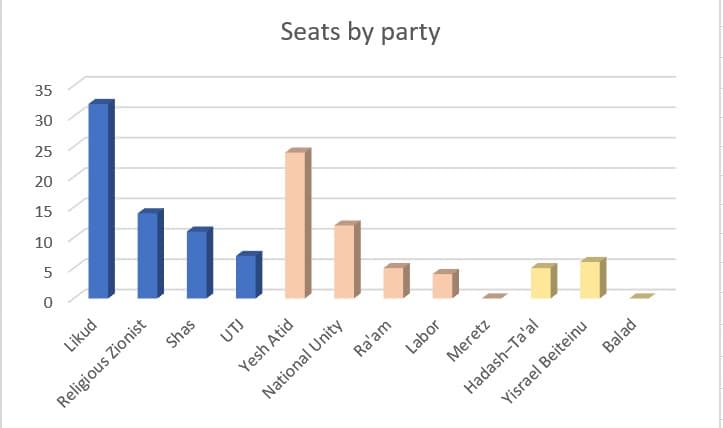
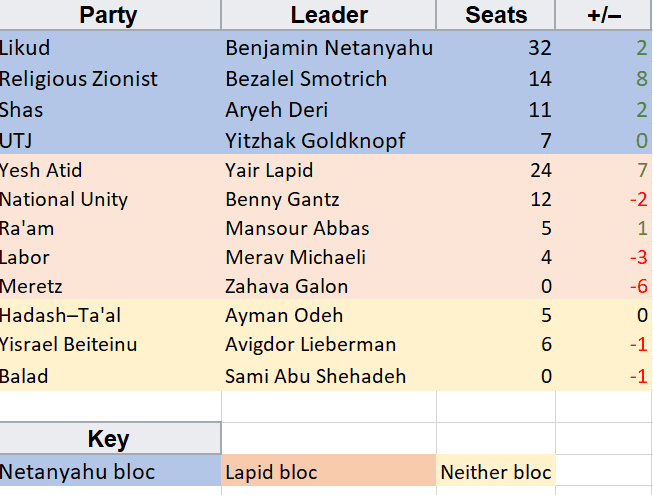
In a massive backlash, Israel’s Left has been decimated. Meretz has failed to pass the electoral threshold while extremist nationalist Religious Zionism has more than doubled its seats.
The bloc of parties loyal to Benjamin Netanyahu has 65 seats in the 120-seat Knesset, a comfortable majority.
The new governing coalition will be made up of four parties - Likud led by Netanyahu, the Religious Zionism group led by Bezalel Smotrich, Shas under Aryeh Deri, and United Torah Judaism (UTJ) under Yitzhak Goldknopf.
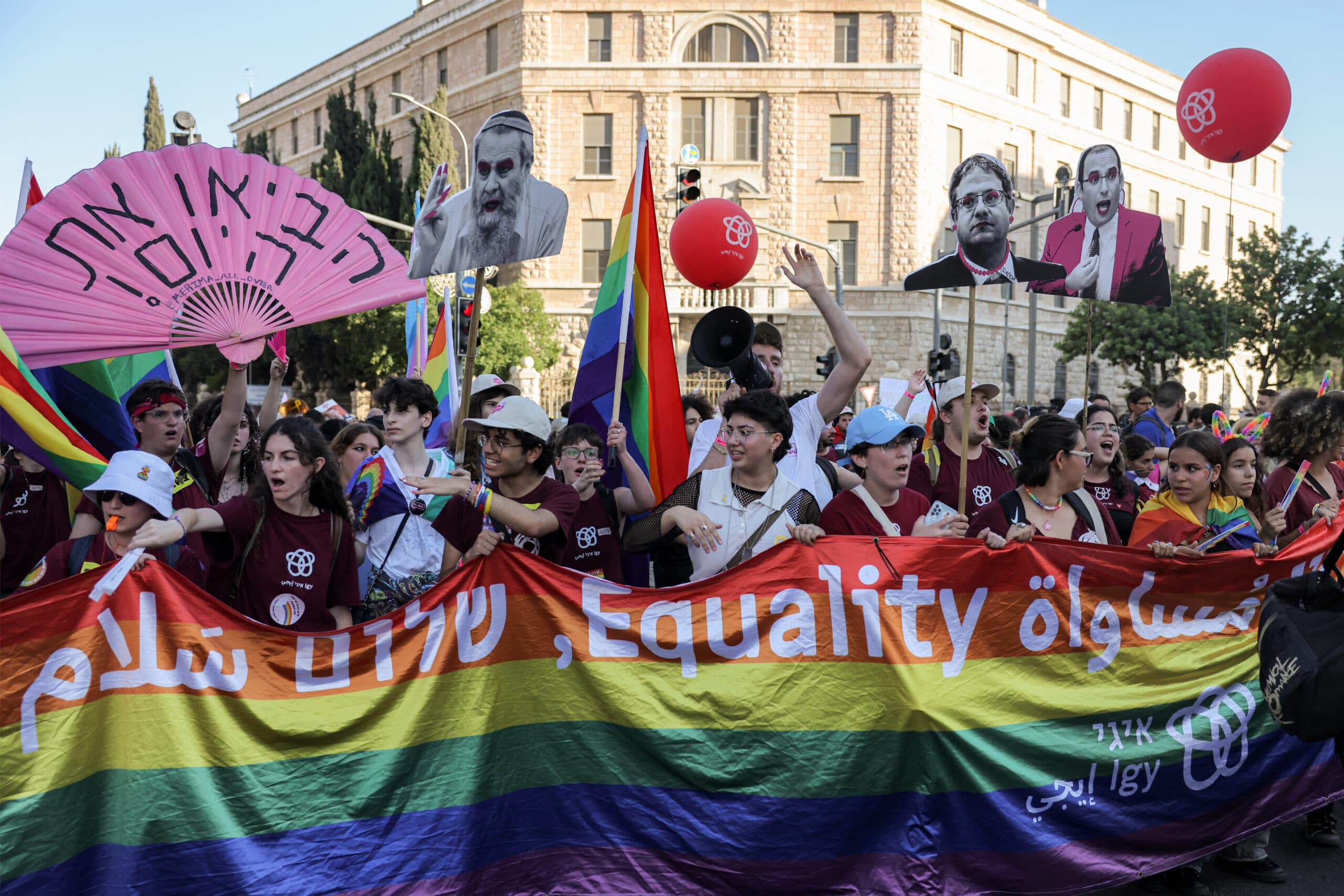
The results will give the far Right unprecedented power in Israel. In order to maintain his coalition, Netanyahu will need to negotiote with the Religious Zionists, notably Itamar Ben-Gvir, whose Otzma Yehudit (Jewish Strength) party wants to expel Arabs deemed disloyal, transfer Arab populations, and annex the West Bank without giving civil rights to Palestinians. Religious Zionism has more than doubled its representation, going from six to an expected 14 seats.
Netanyahu may now be able to escape the continuation of his trial on charges of corruption, as the far Right will support an overhaul the judicial system to control judges - including preventing the prosecution of a sitting prime minister.
The Times of Israel described the result as "the elevation of Jewish Israel above democratic Israel".
Haaretz went further, warning that "Israel is now on the verge of a right-wing, religious, authoritarian revolution, whose goal is to decimate the democratic infrastructure on which the country was built. This may be a black day in Israel’s history."
Even the right-learning Jerusalem Post editorialised against Religious Zionism ahead of the election, observing that Netanyahu's desperation to win government would create a dangerous situation for Israel, preclude co-existence for Jews and Arabs, and make members of the LGBTQ community feel persecuted.