Aa
  • Read, Watch, Listen
  • TJI Series
  • Community Action
  • Events
  • Zedi
Follow us and continue the conversation
  • LinkedIn
  • Instagram
  • FaceBook
  • X
  • YouTube
Test yourself with the TJI Quiz!

Adjust size of text

Aa

Follow us and continue the conversation

  • LinkedIn
  • Instagram
  • FaceBook
  • X
  • YouTube

Your saved articles

You haven't saved any articles

What are you looking for?

Original reporting, insightful analysis and diverse views, delivered straight to your inbox

  • LinkedIn
  • Instagram
  • FaceBook
  • X
  • YouTube
Your support fuels our mission to inform, entertain and inspire.

The Jewish Independent is bound by the Standards of Practice of the Australian Press Council. If you believe the Standards may have been breached, you may approach The Jewish Independent or make a complaint to the Australian Press Council in writing at www.presscouncil.org.au. The Council may also be contacted on 1800 025 712.

  • Our Story
  • Contact us
  • Our Team
  • Support us
  • Guidelines
  • Pitch your idea
  • Republishing us
  • Community Action
  • Our Awards
  • LinkedIn
  • Instagram
  • FaceBook
  • X
  • YouTube
Aboriginal FlagTorres Strait Islanders Flag

The Jewish Independent acknowledges Aboriginal and Torres Strait Islander peoples as the Traditional Owners and Custodians of Country throughout Australia. We pay our respects to Elders past and present, and strive to honour their rich history of storytelling in our work and mission.

© The Jewish Independent 2026All Rights Reserved
Website design and development by Your Creative, MelbourneTerms & ConditionsPrivacy Policy
HomeRead, Watch, ListenIsrael
Israel Hamas WarAnalysisIsraelWorld

Netanyahu rejects Trump’s Gaza plan, testing US influence in the region

Prime Minister Benjamin Netanyahu rejected Donald Trump's 15-point peace plan for Gaza, creating a diplomatic impasse that tests Washington's ability to enforce regional stability
Shahar Burla
Print this
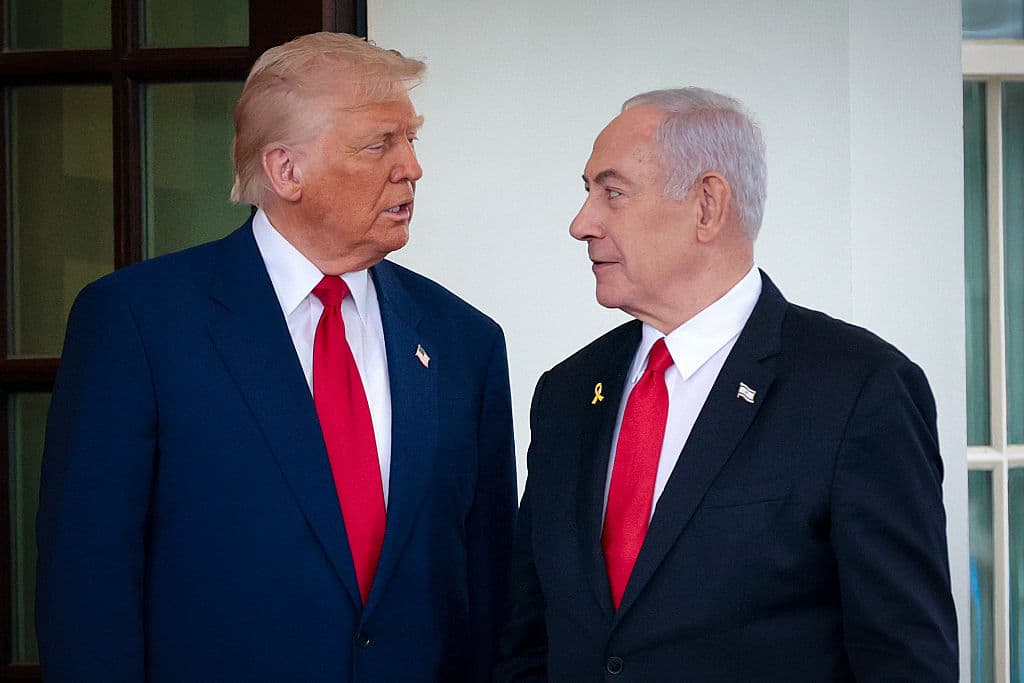
US President Donald Trump greets Israeli Prime Minister Benjamin Netanyahu

US President Donald Trump greets Israeli Prime Minister Benjamin Netanyahu as he arrives at the White House on April 07, 2025 in Washington, DC (Image: Alex Wong/Getty Images)

Published: 13 August 2026

Last updated: 13 August 2026

Israeli Prime Minister Benjamin Netanyahu’s rejection of Donald Trump’s 15-point plan for Gaza has created a rare public divide between the two leaders. More importantly, it has raised a broader question: if Trump is unwilling or unable to pressure Netanyahu, can his administration deliver the regional stability it has promised?

Netanyahu declared on Sunday that Israel would not accept the US-backed proposal, which seeks to match Hamas’s disarmament with a phased Israeli withdrawal from Gaza. “I want to be precise here: Israel rejects the 15-point document,” Netanyahu said. The Israel Defence Forces, he added, would “not withdraw at all until Hamas is genuinely disarmed”.

Netanyahu defined genuine disarmament as the removal of Hamas’s heavy and light weapons, insisting that Israel would not accept a merely symbolic process. The comments were his clearest rejection yet of the roadmap developed by Trump’s Board of Peace. Netanyahu’s office had previously expressed reservations, saying the published version did not reflect Israel’s position, but the Prime Minister had stopped short of publicly dismissing it.

Under the plan, Hamas would relinquish its weapons in return for a staged Israeli withdrawal. Authority in Gaza would eventually be transferred to an independent Palestinian National Committee, supervised by the Board of Peace, while an international stabilisation force would provide security.

The sequence is the central point of disagreement. The American proposal envisages reciprocal and verified steps, with Hamas’s disarmament and Israel’s withdrawal progressing in stages. Netanyahu is demanding that Hamas be completely disarmed before the IDF withdraws.
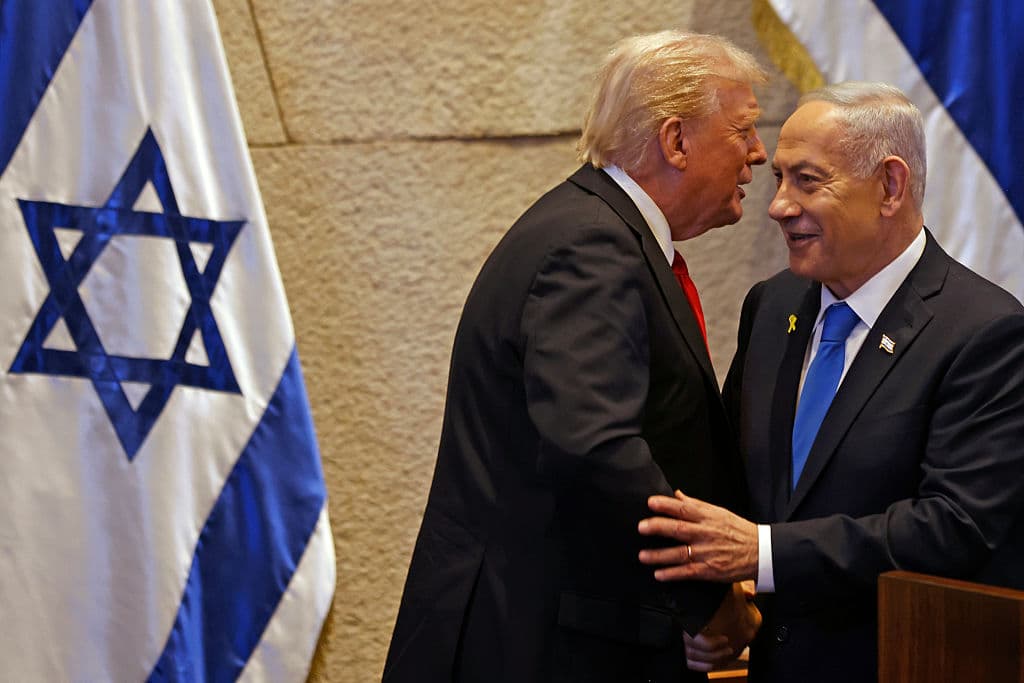
If Trump cannot persuade Israel to participate in his signature Gaza initiative, Arab and other regional governments may question whether Washington can enforce understandings elsewhere

Hamas, meanwhile, has reportedly accepted the roadmap in principle, but conditioned its disarmament on an Israeli withdrawal. This leaves both parties demanding that the other move first.

Netanyahu presented his rejection as a matter of national security and political independence. Referring to pressure over Gaza and Israel’s other regional conflicts, he said Israel knew how to stand its ground “even against our best friends when necessary”.

His language also appeared directed at an Israeli electorate preparing to vote in October. Netanyahu is under pressure from hardline members of his coalition and is attempting to reinforce his credentials as the leader best equipped to protect Israel.

Nickolay Mladenov, the Board of Peace’s high representative for Gaza, responded that the plan remained “the only way forward” capable of ensuring that the October 7 attack could not be repeated.

Only Trump can break the deadlock

The consequences extend well beyond the immediate disagreement over Gaza. Diplomats cited by Politico warned that Netanyahu’s rejection was undermining confidence in both the Board of Peace and Washington’s capacity to shape events across the Middle East.

An Arab diplomat familiar with US policy told Politico the rejection could have “significant implications for long-term regional stability and Israeli security”. According to the diplomat, Trump was the only leader with the capacity to change the situation, but doing so would require him to pressure Netanyahu to reconsider.

That is the central test now facing the US President. Trump has built the Board of Peace around his personal authority and portrayed himself as uniquely capable of securing agreements that eluded previous administrations. If he cannot persuade Israel to participate in his signature Gaza initiative, Arab and other regional governments may question whether Washington can enforce understandings elsewhere.

The implications could reach negotiations concerning Iran and the conflict between Israel and Hezbollah in Lebanon. Regional leaders will be reluctant to make difficult concessions if they doubt that the US can secure corresponding commitments from Israel.

Trump has so far avoided a direct confrontation. He said on Monday that he continued to have a “good relationship” with Netanyahu, while a US official characterised the Israeli leader’s statement as election posturing intended for a domestic audience.

There are also indications that practical cooperation continues. Israeli defence officials are reportedly examining possible withdrawal scenarios, while Board of Peace representatives say logistical preparations for an international force are proceeding.

This leaves open the possibility that Netanyahu’s public rejection is harder than Israel’s position behind closed doors. Former US ambassador to Israel Dan Shapiro described it as the familiar “Netanyahu two-step”: opposing the plan publicly while permitting parts of it to progress.

Yet this ambiguity cannot continue indefinitely. The plan’s fundamental bargain requires both Hamas’s disarmament and an Israeli withdrawal. Without agreement on their order and verification, neither is likely to occur.

Trump may therefore have to choose between preserving his relationship with Netanyahu and using the political leverage necessary to advance his plan. His response will help determine not only Gaza’s future, but whether regional governments continue to regard the US as capable of turning diplomatic promises into enforceable agreements.

You might also like
  • New evidence Netanyahu was warned about October 7
    Shahar Burla
  • The Altalena should be a warning, not a political weapon
    Shahar Burla
  • Who is Ofer Winter and could he upset Netanyahu’s election?
    Shahar Burla
logomark.67a07ee3
We believe in the free flow of information

Republish our articles for free, online or in print, by using our Creative Commons licence

You might also like

    Woman with land and houses behind her
    NewsAustralia

    Australia to increase sanctions against West Bank settlements

    Deborah Stone 2
    Apple & rotten core Rosh hashanah
    EditorialAustralia

    Facing a new year with the knowledge life can be better

    The Jewish Independent
    Pro-Palestine Rally Outside Foreign Commonwealth Development Office
    AnalysisWorld

    UK’s dramatic policy change on Israel-Palestine

    Colin Shindler 3

About the author

Shahar Burla

Shahar Burla

Dr Shahar Burla is a Sydney-based researcher, lecturer and Contributing Editor of TJI. Shahar holds a Master’s degree in political science from Hebrew University and a PhD in political science from Bar-Ilan University. He is the author of Political Imagination in the Diaspora: The Construction of a Pro-Israeli Narrative (2013) and co-editor of Australia and Israel: A Diasporic, Cultural and Political Relationship (2015).

More from the author

FeatureIsrael

New evidence Netanyahu was warned about October 7

OpinionIsrael

The Altalena should be a warning, not a political weapon

AnalysisIsrael

Who is Ofer Winter and could he upset Netanyahu’s election?

AnalysisIsrael

Bennett’s balancing act: can he win over the right without losing the centre?

Comments2

  • Avatar of Mark Ian

    Mark Ian15 August at 11:39 pm

    The Congress in the USA is very powerful.
    So powerful it stopped the USA from 1933-1941 from rescuing millions of Jewish and Anti-Nazis from Europe by offering temporary humanitarian refuge and from Rapidly Turning the USA into a Military Superpower able to Block Nazi Germany .
    So the Gaza Peace Plan is to be delayed to after the USA and Israeli elections though there can be an increase in Humanitarian Aid to the Gaza People .

  • Avatar of Henry Kaye

    Henry Kaye14 August at 01:18 pm

    I stopped reading at this point … “if Trump is unwilling or unable to pressure Netanyahu, can his administration deliver the regional stability it has promised?” Israel isn’t the only team on the field, and Trump has ZERO control over the “other side”, so … No – Trump’s administration has NEVER been able to deliver anything it has promised when it comes to Hamas’ behavior. No point in reading further.