Aa
  • Read, Watch, Listen
  • TJI Series
  • Community Action
  • Events
  • Zedi
Follow us and continue the conversation
  • LinkedIn
  • Instagram
  • FaceBook
  • X
  • YouTube
Test yourself with the TJI Quiz!

Adjust size of text

Aa

Follow us and continue the conversation

  • LinkedIn
  • Instagram
  • FaceBook
  • X
  • YouTube

Your saved articles

You haven't saved any articles

What are you looking for?

Original reporting, insightful analysis and diverse views, delivered straight to your inbox

  • LinkedIn
  • Instagram
  • FaceBook
  • X
  • YouTube
Your support fuels our mission to inform, entertain and inspire.

The Jewish Independent is bound by the Standards of Practice of the Australian Press Council. If you believe the Standards may have been breached, you may approach The Jewish Independent or make a complaint to the Australian Press Council in writing at www.presscouncil.org.au. The Council may also be contacted on 1800 025 712.

  • Our Story
  • Contact us
  • Our Team
  • Support us
  • Guidelines
  • Pitch your idea
  • Republishing us
  • Community Action
  • Our Awards
  • LinkedIn
  • Instagram
  • FaceBook
  • X
  • YouTube
Aboriginal FlagTorres Strait Islanders Flag

The Jewish Independent acknowledges Aboriginal and Torres Strait Islander peoples as the Traditional Owners and Custodians of Country throughout Australia. We pay our respects to Elders past and present, and strive to honour their rich history of storytelling in our work and mission.

© The Jewish Independent 2026All Rights Reserved
Website design and development by Your Creative, MelbourneTerms & ConditionsPrivacy Policy
HomeRead, Watch, ListenAustralia
FeatureAustraliaLifestyle

‘Parenting up’: we need a proper word to describe it

Sidra Kranz Moshinsky
Print this

Published: 18 October 2022

Last updated: 5 March 2024

SIDRA KRANZ MOSHINSKY reflects on the disorienting shift in her identity that comes from taking on greater responsibility for ageing parents.

There isn’t even a word for it. And so little focus on it compared to its opposite, although it’s just as complex, fraught and central to our inner and outer lives.

Almost every day I come across a title, a media item, a conversation among experts that has to do with parenting: different types (authoritarian, authoritative, permissive, tiger); how to parent better; why it matters; what strategies exist to navigate the complex terrain.

This material is detailed, specific to each stage - infant, toddler, young child, adolescent, tweens and teens; it may be directed to boys or girls or the non-binary, and emerges from many fields and varying levels of expertise, from personal experience and pop psychology, to high level academic discourse.

It feels a little like entering a void when we encounter the space that has no name, no verb, no change in title.

Upon the birth (or adoption) of your first child, you cross a threshold and take on a new identity and with it a title. You become a mother or father, a parent. This transition is instantaneous: one moment you are just an adult; the next you’re a parent, although as with every major stage in our lives that we experience, such as childhood and adulthood, parenthood in reality involves a long process of becoming.

Which is why it’s so perplexing and feels a little like entering a void when we encounter the space that has no name, no verb, no change in title. I’m trying to describe the passage which I’m currently navigating: the shift in role and identity that involves taking on greater responsibility and care for ageing parents.
The Jewish Independent

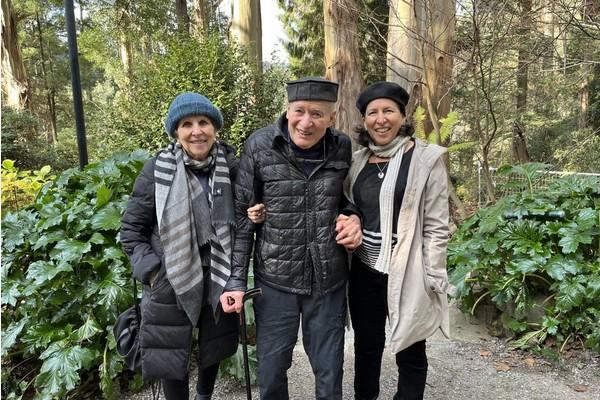
Unlike becoming a new parent, which happens suddenly, this transition occurs incrementally, day by day, week by week, month by month and year by year, until it becomes apparent that the dynamics that once governed the relationship of parent and child are completely scrambled. More and more I’m called on, for want of a better word, to “parent up” and yet, with our limited vocabulary, I’m still the child in the relationship.
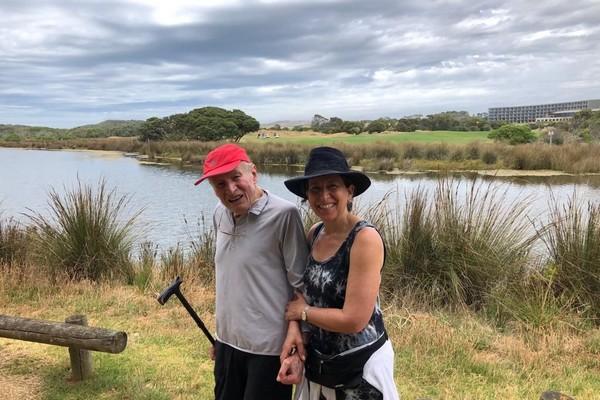
Shifting the dynamic is a sensitive task. as parents can and often do find it difficult to take direction, advice and instruction from their children, even if these children are now well into their fifties and sixties. Although other cultures may handle this transition more smoothly, it is very revealing that Western culture, with its fixation on the young and relative neglect of the elderly, has no equivalent term to “parenting” with which to describe this switch in attention and focus.

Childing? And we have nothing like the deluge of discussion and research into it that we have with parenting. I could describe myself as a “caregiver” but given that that term applies to a multitude of relationships and situations, some familial and some professional, I find it limiting in its description of the intricacies and specificities of parent and child, or child and parent.

It is difficult to witness, close up and personally, the challenges, hardships and indignities of parents growing old. Health, dexterity, independence and confidence are gradually whittled away. There’s also a strange sensation of both absence and presence, as one’s mother or father is still in one’s life but not as they were. This is true in all relationships as they take on new forms over time. Nevertheless, this feels different, maybe because it runs so much deeper.

The Jewish Independent

There’s also much beauty to this stage that has no name. As I try to soften some of its hard edges as best I can for my folks, often clumsily (I’m new to this), I discover I am enriched too. Weekly walks, talks and coffees with my dad are a highlight for both of us; day trips and the occasional nights out of town offer much-needed change; I have taken on the mantle of hosting Shabbat dinners.

I discover I am enriched too. Weekly walks, talks and coffees with my dad are a highlight for both of us; day trips and the occasional nights out of town offer much-needed change.

My memory of learning to walk and talk is lost to consciousness but I know that my parents encouraged me, attended to me, caught me when I fell, soothed me and gently put me back on my feet. It’s an honour and a privilege that not all children receive to be able to reciprocate this love and devotion, however imbalanced and certainly weighted in my favour as the recipient of a lifetime of parental care.

Even now I feel the glow of their love and the warmth of their concern. Recently, when travelling alone, my father, voice weakened as a result of Parkinson’s, would call every day to check on my wellbeing and whereabouts. Still my dad; me still his child.

Honouring of our parents is the fifth of the 10 commandments, with parents understood as the bridge between what is commanded of us spiritually on high and ethically on earth. The Hebrew term is “kavod” which denotes respect, honour and glory, and also, interestingly, weight and a form of heaviness, both figurative and actual. 

The stage at which I find myself is sometimes described as the “sandwich generation”. Although I live neither with my children, who have left home, nor my parents, I seek to be present and supportive of both the older and the younger generations. I delight in the possibilities and privileges of this multi-generational existence. At the same time, I am also looking for the words that would enable greater awareness and deeper conversations in this space.

All photos courtesy Sidra Kranz Moshinksy

You might also like
  • The publishing house that Henry built
    Michael Visontay
  • Surrogate families battle fine print under both Australian and Jewish law
    Jarod Rhine-Davis
  • The right to an ordinary Jewish life
    Jarod Rhine-Davis
logomark.67a07ee3
We believe in the free flow of information

Republish our articles for free, online or in print, by using our Creative Commons licence

You might also like

    usman khawaja sabr
    OpinionAustralia

    Memo Usman Khawaja: Jesus was Jewish

    Adam Slonim 5
    Posner main
    InterviewAustralia

    ‘For 80 years we lived in a kind of fairyland. It’s over’

    Vic Alhadeff 1
    Tech DNA
    AnalysisLifestyle

    We need to talk about cancer risk 

    David Adler

About the author

Sidra Kranz Moshinsky

Sidra Kranz Moshinsky

Sidra Kranz Moshinsky is a writer, researcher, educational leader and museum professional, serving as the Director and CEO at the Jewish Museum of Australia. She has worked across Jewish schools and cultural organisations throughout her professional life and is a founder of the Jewish Educators’ Network of Australia. Sidra is also a freelance contributor to various publications, such as The Jewish Independent, and celebrates Jewish life through many avenues, including by being a board member of Kehilat Kolenu.

More from the author

ReflectionArts & Culture

Between Melbourne, Warsaw and Tel Aviv, where was I at home this week?

OpinionLifestyle

When they ask about…the tooth fairy

FeatureWorld

This ambitious treasure trove could help us know our ancestors

AnalysisLifestyle

When they ask about…TikTok