Aa
  • Read, Watch, Listen
  • TJI Series
  • Community Action
  • Events
  • Zedi
Follow us and continue the conversation
  • LinkedIn
  • Instagram
  • FaceBook
  • X
  • YouTube
Test yourself with the TJI Quiz!

Adjust size of text

Aa

Follow us and continue the conversation

  • LinkedIn
  • Instagram
  • FaceBook
  • X
  • YouTube

Your saved articles

You haven't saved any articles

What are you looking for?

Original reporting, insightful analysis and diverse views, delivered straight to your inbox

  • LinkedIn
  • Instagram
  • FaceBook
  • X
  • YouTube
Your support fuels our mission to inform, entertain and inspire.

The Jewish Independent is bound by the Standards of Practice of the Australian Press Council. If you believe the Standards may have been breached, you may approach The Jewish Independent or make a complaint to the Australian Press Council in writing at www.presscouncil.org.au. The Council may also be contacted on 1800 025 712.

  • Our Story
  • Contact us
  • Our Team
  • Support us
  • Guidelines
  • Pitch your idea
  • Republishing us
  • Community Action
  • Our Awards
  • LinkedIn
  • Instagram
  • FaceBook
  • X
  • YouTube
Aboriginal FlagTorres Strait Islanders Flag

The Jewish Independent acknowledges Aboriginal and Torres Strait Islander peoples as the Traditional Owners and Custodians of Country throughout Australia. We pay our respects to Elders past and present, and strive to honour their rich history of storytelling in our work and mission.

© The Jewish Independent 2026All Rights Reserved
Website design and development by Your Creative, MelbourneTerms & ConditionsPrivacy Policy
HomeRead, Watch, ListenWorld
FeatureWorld

Ravaged by Covid and conflict, South Africa’s Jews unite in compassion

Gillian Klawansky
Print this

Published: 23 July 2021

Last updated: 4 March 2024

While most countries deal with Delta, South Africans have also endured social unrest. The Jewish community has rallied on both fronts, reports GILLIAN KLAWANSKY

YOU’D BE HARD-PRESSED to find a Jew in South Africa who doesn’t know another Jew who has succumbed to the illness or at least been infected by it – that is if they haven’t tested positive themselves. Since the start of the pandemic, the Jewish community has endured more than 200 Covid deaths and thousands of infections.

Many of these have occurred during the country’s third wave, which peaked at a record daily high of 26,000-plus cases. Johannesburg, where most of the country’s Jewish population of approximately 52,000 lives, has been at the centre of this latest Covid storm, driven largely by the dreaded Delta variant.

With more than 2.3 million cases in the country to date, an almost-certainly under-reported death toll of 68,192 (as of last night) and a painfully slow vaccine rollout, frustrations have run high. South Africa is the most affected country on the African continent and according to the latest available statistics, its vaccination rate has reached only 8.5 doses per 100 citizens.

In the face of this crisis, South Africa’s Chief Rabbi, Warren Goldstein, took to mainstream media to write an opinion piece berating the government for this slow rollout. Speaking of the devastation of the third wave, Goldstein suggested the President and his cabinet “atone” for their negligence and step up their vaccine efforts.

“This public health crisis could have been averted had President Cyril Ramaphosa and his government handled the vaccine rollout effectively,” he wrote in the Business Day newspaper.

This hard-hitting piece sparked mixed reactions in the Jewish community. Many were concerned about a backlash over a Jewish leader criticising an anti-Israel government, while others praised Goldstein for challenging our leaders to do better.

There is widespread anxiety over the slow pace of the rollout. Although vaccine hesitancy is a factor among the broader population, the anxiety in the Jewish community has been around not being able to access the vaccine.
Although vaccine hesitancy is a factor among the broader population, in the Jewish community anxiety has been around accessing the vaccine.

The belated opening up of vaccinations last week to those aged 35-49 showed progress. The country also seems to have passed the peak of the third wave, with significantly fewer infections recorded each day.

Despite this, the Jewish community is still reeling. Throughout the pandemic, individuals and community organisations have rallied to provide much-needed assistance to the sick, grieving, stressed and lonely.

One institution that’s stood out is Hatzolah, the non-profit emergency rescue team that services Jo’burg’s Jewish community. In addition to implementing a Covid Wellness Monitoring Program that tracks symptoms of rapid deterioration – either preventing hospitalisation or ensuring it happens quickly – it has set up a Covid crisis line.

In the third wave many people have felt “emotionally resourceless,” says Sheri Hanson, co-ordinator of Hatzolah’s mental health project. After so many waves, they battle to see past the pandemic and can be overcome by the stress of watching others become infected. That’s why having the support of the Covid Crisis line, which provides counselling and connection to community resources, has been so important.

“Our aim has been to care for and show people that we can get to the end of this in one piece,” Hanson says.

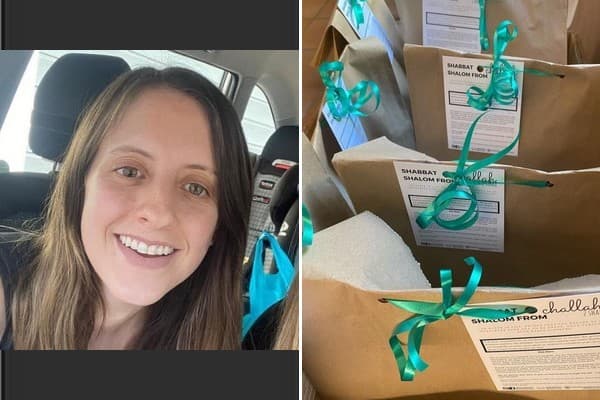
Kelita Hoffman and her Challah2Share parcels

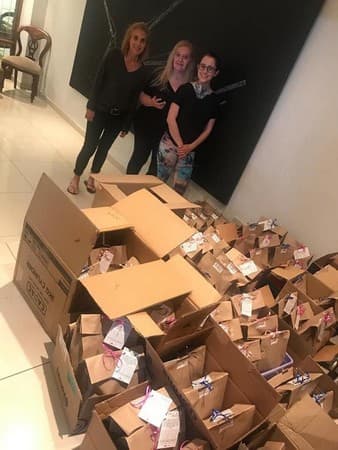
In a similar spirit of community compassion, working mother Kelita Hoffman started the Challah2Share initiative when Covid first struck the Jo’burg community. Delivering to Covid sufferers in isolation, those sitting shiva or people who are struggling emotionally or financially, Hoffman has built a network of volunteers who bake or buy and deliver 50 loaves on a weekly basis.

“This has gone up hugely in the third wave, where we’ve been delivering an extra 70 to 120 challahs each week,” she says.

Hoffman emphasises the emotional crisis facing the community. “One of the biggest parts of delivering challah is the engagement – we deliver to the lonely, the outliers and when we get to a person’s door who hasn’t seen anyone in a week, that’s meaningful. It’s positivity and we need to share that.”

Challah2share volunteers with parcels

Communities across South Africa have needed even more positivity of late. While struggling to keep afloat during the third wave, the country has been battered by widespread social unrest.

What began as a protest against former president Jacob Zuma’s imprisonment on July 7, steadily revealed itself to be something sinister – an alleged plan by former state security agents to exploit poverty and destabilise the country’s economy and democracy.

This was fuelled by opportunistic criminals and those fed up with decades of inequality and unemployment, crises which have only been exacerbated by pandemic-related economic disruption." Zuma’s home province of Kwazulu-Natal, which encompasses cities including Durban and Pietermaritzburg, bore the brunt.

Durban’s small Jewish community was in the firing line of the looting, with many suffering major financial losses.

Durban’s small Jewish community was in the firing line, with many suffering major financial losses when their businesses were looted and, in some cases, destroyed. Amid the devastation, neighbours banded together to protect residential streets and businesses and people of all cultures and creeds united on a massive clean-up drive. Food and medicine shortages remain a concern in the province.

Jo’burg’s Jewish suburbs were largely unaffected, with unrest occurring mainly in the townships of Alexandra, Vosloorus and Soweto. However, many stores and shopping centres closed as a precaution and staples like bread were temporarily scarce. After nine days, 212 deaths and the deployment of the Defence Force, by July 17, calm was restored.

But the economy, already battered by Covid lockdowns, will take longer to recover. There has been a national drive to provide support, particularly to hard-hit areas in Kwazulu-Natal. The Jewish community has stepped up to help, either through NGOs such as the Jewish Women’s Benevolent

Society, or through making donations to other non-profit organisations.

The SA Jewish Board of Deputies Kwazulu-Natal Council started an “Emergency Relief” program to assist the community with basic food and medical supplies, funded by donations.

South Africa has been challenged by Covid and the riots but there’s no denying the fighting spirit of country’s Jewish community and its wider population, which gives hope for a better tomorrow.

Photo: A young boy walks past a mural promoting vaccination in Duduza township, east of Johannesburg, June 23 (AP/Themba Hadebe)

You might also like
  • We are past the point of politics
    Jael Cohen-Rothschild
  • Gaza women get reusable menstrual pads via Israeli humanitarian aid
    Shahar Burla
  • My renewed hope for a changing South Africa
    Ralph Genende
logomark.67a07ee3
We believe in the free flow of information

Republish our articles for free, online or in print, by using our Creative Commons licence

You might also like

    FRANCE-riots
    NewsWorld

    Synagogue and Jewish-owned shops damaged in French riots

    Ilan Bloom
    Bialik shabbat
    OpinionAustralia

    Jewish schools are the marinade that infuses continuity

    Jeremy Stowe-Lindner
    Gab
    NewsWorld

    Traditional antisemitic myths dominate online antisemitism: new study

    Deborah Stone

About the author

Gillian Klawansky

Gillian Klawansky

Born in Johannesburg, Gillian Klawansky is a freelance journalist and editor. A former lifestyle features editor at Destiny Magazine, she has written for the South African Jewish Report, the Sunday Times and magazines including Marie Claire and Sawubona.

More from the author

World

Film touches nerve in revealing truth about Lithuanian Holocaust cover-up

World

The moral battleground between South Africa’s stayers and leavers

Feature

A voice for Jewish victims of sexual abuse in South Africa

‘It’s push and pull’: Why South African Jews are making aliyah in droves