Aa
  • Read, Watch, Listen
  • TJI Series
  • Community Action
  • Events
  • Zedi
Follow us and continue the conversation
  • LinkedIn
  • Instagram
  • FaceBook
  • X
  • YouTube
Test yourself with the TJI Quiz!

Adjust size of text

Aa

Follow us and continue the conversation

  • LinkedIn
  • Instagram
  • FaceBook
  • X
  • YouTube

Your saved articles

You haven't saved any articles

What are you looking for?

Original reporting, insightful analysis and diverse views, delivered straight to your inbox

  • LinkedIn
  • Instagram
  • FaceBook
  • X
  • YouTube
Your support fuels our mission to inform, entertain and inspire.

The Jewish Independent is bound by the Standards of Practice of the Australian Press Council. If you believe the Standards may have been breached, you may approach The Jewish Independent or make a complaint to the Australian Press Council in writing at www.presscouncil.org.au. The Council may also be contacted on 1800 025 712.

  • Our Story
  • Contact us
  • Our Team
  • Support us
  • Guidelines
  • Pitch your idea
  • Republishing us
  • Community Action
  • Our Awards
  • LinkedIn
  • Instagram
  • FaceBook
  • X
  • YouTube
Aboriginal FlagTorres Strait Islanders Flag

The Jewish Independent acknowledges Aboriginal and Torres Strait Islander peoples as the Traditional Owners and Custodians of Country throughout Australia. We pay our respects to Elders past and present, and strive to honour their rich history of storytelling in our work and mission.

© The Jewish Independent 2026All Rights Reserved
Website design and development by Your Creative, MelbourneTerms & ConditionsPrivacy Policy
HomeRead, Watch, ListenAustralia
FeatureAustralia

Safe online media spaces to discuss the Israel-Palestinian conflict

Noa Abrahams
Print this

Published: 14 September 2021

Last updated: 4 March 2024

Shocked by the intensity of online vitriol on both sides after the violence in May, NOA ABRAHAMS searched for forums that valued nuance and empathy. Here’s what she found

AT OUR WEEKLY Netzer leadership meeting on Zoom, our shaliach (Israel emissary) ran a discussion about sport and politics, and how we could connect Israel at the Olympics with so much of the Reform Zionist discourse we engage with in our programs. It was a reminder of how important it is to have a space for this kind of conversation.

Each of us in our own way navigates the layers of connection to Israel, for some, considered a homeland, an intrinsic part of identity - for others, a country far away that is as important as visiting other places in the world.

It became very clear during the violence in Jerusalem and Lod in May that grappling with ethics and morals, while still fundamentally believing in Israel’s right to exist, is not a standard widely shared. Having grown up in the ‘Melbourne Jewish Bubble’, this was an incredibly sobering and upsetting experience.

I was stuck between the age-old Australian Jew/Jewish Australian dilemma and felt bookmarked by this in every interaction both within and outside my community. I felt surrounded by polarised rhetoric during  those weeks around the 11-Day War, that harmed everyone, regardless of their persuasion. 

These included ~aesthetic~ Instagram “infographics” that delicately argued  “Israel never existed”, anachronistic anti-Semitic tropes, as well as posts denying Palestinian sovereignty and ignoring their humanity. It’s not new. But the format and the power of this online vitriol was unlike anything I have seen before. 

In this setting, where Zionists were “faschists” and pro-Palestinians were “self-hating”, I called my cousins in Tel Aviv to check that they were okay having spent a night in a bomb shelter. I called our shaliach to check that his family, too, was okay.

I listened to Hebrew and Arabic pop music on the train to and from uni and wondered how the people around me were processing and engaging with this issue, seeing as everyone now seemed to have an opinion.

I sat in the car with a friend and we talked about how all of our life was touched by a connection to this Jewish homeland, how we had spent our gap year trying to make sense of it and now sat tight, as people who had spent a week thinking about all this, told us we were wrong. Blocked us for suggesting nuance. Refused to hear another viewpoint.

Following this initial shock, I tried finding spaces online that were better suited to the discourse I and my peers kept looking for. While I had found some on my gap year in Israel, they carried new meaning now.

The Jewish Independent

Podcast: Identity/Crisis

From the Shalom Hartman Institute in the US, Identity/Crisis exemplifies  the discourse many of us seek. It serves as a dynamic forum for Diaspora Jews to call  out structural and moral issues in Israel and propose tangible ways to fix them. To me, this is the work of Zionism today.

For example, in Episode 58: How to Lose Without Violence, Joel Braunold and Yehuda Kurtzer delve into what peace means, and how we might go about achieving it by reframing our understanding of compromise.

Joel explains:   “Why would anyone believe in a compromise about their dream? … When the compromise is neither realistic, nor does it seem possible, why would you ever go for it? ... We need to meet people where they are today. Not where we think they were 20 years  ago.”

The inadequacy of starting with a solution, rather than a plan for how to get there, is clear. This approach is refreshing and could perhaps restructure our big-picture navigation process.

Identity/Crisis also tackles the social media dilemma  that has enveloped many of us. In Episode 60, Eitan Hursh says:  “If you want to get someone else to agree with you on something, … it’s basically empathy… [But] the main thing that happens on social media is just self-expression…  If you approach people with empathy and you dignify the fact that maybe they are trying to figure things out, you can convince them of something. If you just crawl into this silo and think only about your worst enemy, you’re just not going to get anything done.”

Good Word Project
Good Word Project

Blog: Mira Awad’s Good Word Project

A singer-songwriter, artist and activist living in Tel Aviv of Palestinian and Bulgarian heritage, Mira is famous for her 2009 Eurovision Song Contest entry with Noa (Achinoam Nini), There Must be Another Way. Her work since then is just as poignantly relevant.

Following the violence in May, Mira began a blog called the Good Word Project. She chooses a word of the day like “peace”, “family”, “hope”, and writes about what it means to her. This is accompanied with a design of the word in Hebrew, Arabic and English, which is for sale on T=shirts, mugs, shoes, bathers and other clothing. Mira writes:

“Trust - אמון Emun - ثقه Thiqa.

My good word for today is tricky, I know… "How can we trust them after all that's happened?" is a question I'm hearing a lot lately. From Jews and Arabs alike. I wish I had a simple answer to put your minds at ease, but I think you know by now that I'm not out to bullshit you, and that this is a complex conundrum we're in.”

 Trust is a fragile thing … We're gonna [sic] need to build the trust, slowly, with patience and intent.”

Mira’s work is a rejection of the hate defining this discourse, replacing it with a celebration of the power of optimism and love.

Music: Hebrew & Arabic pop

When I was growing up, “Israeli pop” referred specifically to Ashkenazi pop-rock of the 1970s. Think Yo-ya by Kaveret or Arik Einstein’s Ani v’ata. They’re still some of my favourites but studying Israeli music at Hebrew University opened up a whole world of early, and more recent Israeli music to engage with.

In recent weeks, listening to pop music in Hebrew and Arabic has been a multifaceted experience – an informal immersive language class, a recognition of shared humanity and a dance break in this exercise-limited lockdown existence.

Trying to find these spaces online is incredibly challenging in a climate where an aversion to nuance or complexity is stronger than the idea trying to be communicated. I hope these creative voices, scholars and grassroots peace builders will help strengthen my own, as yet not fully formed understanding of what is happening in and around Israel.

For the Diaspora, there is much work to do in normalising discourse over “cancellation”, and acknowledging the history, heritage and healing of all communities, individuals, and onlookers.

Main photo: Mira Awad (Good Word Project)

You might also like
  • Antisemitism, homophobia and a radical response to both
    Dennis Altman
  • Tame apologises – but with little grace
    Deborah Stone
  • Confronting Richard Flanagan and the myth of the Israel lobby
    Mary Garden
logomark.67a07ee3
We believe in the free flow of information

Republish our articles for free, online or in print, by using our Creative Commons licence

You might also like

    ANNIKA WELLS PRESSER
    Israel Hamas WarNewsAustralia

    No action to stop Hezbollah ally beaming antisemitic and anti-Israel content into Australia

    Michael Visontay
    Apple & rotten core Rosh hashanah
    EditorialAustralia

    Facing a new year with the knowledge life can be better

    The Jewish Independent
    Commissioner Virginia Bell
    Royal CommissionAnalysisAustralia

    Now is the time for the Royal Commission to deliver, not be politicised

    Dean Sherr 2

About the author

Noa Abrahams

Noa Abrahams

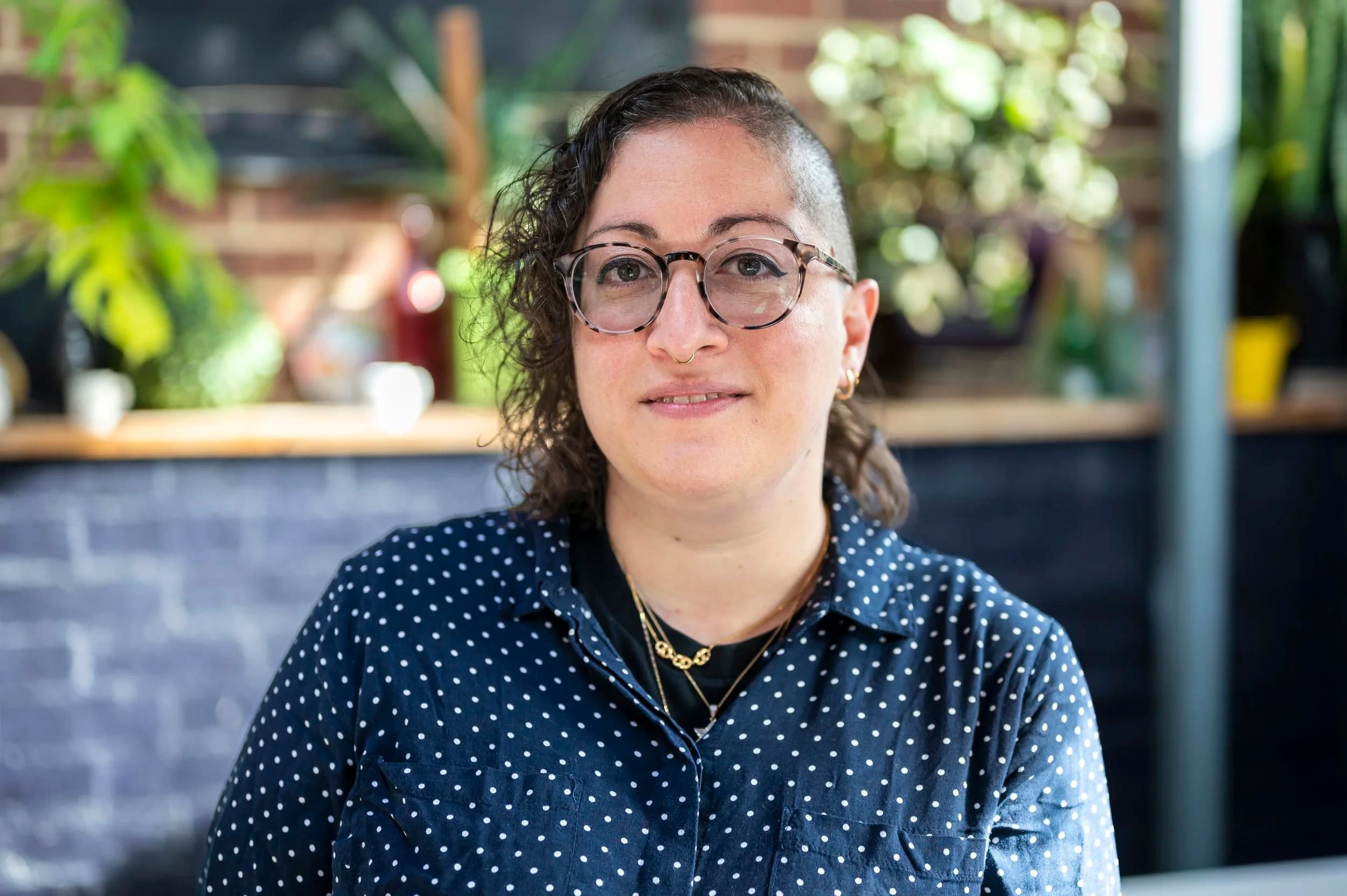
Noa is the incoming Chair of Netzer Melbourne for 2021, and went on Shnat Netzer in 2019. She is studying science, music and arts at Melbourne University, and is passionate about social justice and sharing stories.

More from the author

Australia

‘Covid illustrated how hard it is to transmit camp magic between screens’

Opinion

How culture keeps me connected when politics is dire in Israel