Published: 19 February 2026
Last updated: 19 February 2026
I was speaking about the impact of October 7 on Jewish Australians to a largely non-Jewish audience. At question time, a prominent UK-born academic in gender studies took the microphone to express her bewilderment. The gist of her long speech was that she couldn’t understand why the attack had impacted me so profoundly. When the 2005 London bombings happened, she said, sure she was affected. But her life wasn’t upended. She did not – I’m paraphrasing but this what it sounded like – carry on, like I did…
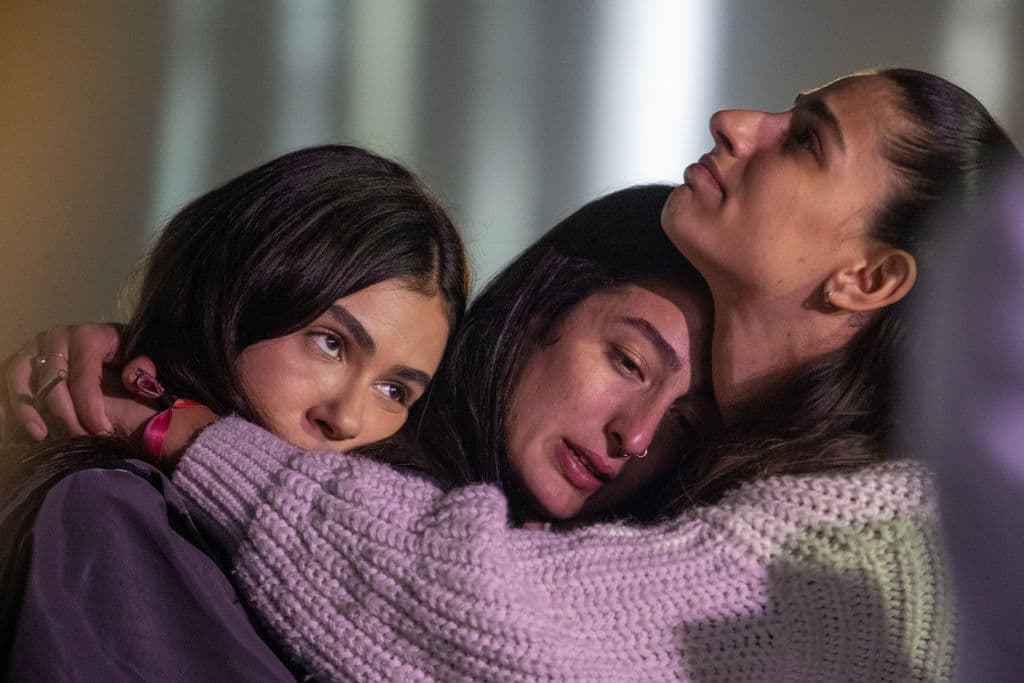
My strongest response was a sense of feeling overwhelmed. There were far too many differences between the two tragedies, and their aftermath, to account for a short Q&A slot. But what was even harder to comprehend was how a feminist, who has made an impressive career advocating for women’s safety, could overlook one of the major differences and a key point of the night’s discussion – the systematic, medieval-grade-cruel sexual violence perpetrated by Hamas?
At the end of that event, another woman approached me, privately. A Jewish woman. She was speaking quietly, almost whispering: “What you said about the impact of October 7 on your sex life… Me too. I’ve been feeling the same. But I’ve never talked about this with anyone…”
Not squeamish about eros
Eros has always been a major part of who I am, as a writer and a woman. My Hebrew fiction was singled out in Israeli media for “sexual boldness”. My first book in English, The Dangerous Bride, was a memoir of my (mis)adventures in non-monogamy. I am not shy or squeamish about sex, and I’ve always been attracted to people who take risks with their sexuality. In my Israeli youth, I was fascinated when a close friend did a stint as a call girl. In Australia, I went to visit fetish clubs.


Comments9
madeleine27 February at 10:35 am
amazing article. thank you so much for sharing
Dina23 February at 01:35 am
If I have understood correctly – or not reflexively and defensively as by some readers, this idea of “Jewish blood” is a reference to historical European antisemitism and codified forms of discrimination (see Spanish Inquisition, medieval Christian polemics, Nazi ideology) not actually part of the writer’s self-conception.
The mind boggles that Jewish women, post-October 7, are expected to temper or qualify their grief and the ripple effect of trauma – personal, national and its intersection, to satisfy or appease the politics of others . I think that was a key takeaway of Lee’s piece!
Jacqx22 February at 04:01 pm
Thank you, Lee, for writing such a poignant and personal article. If only people could respect a person’s point of view without feeling the need to post passive aggressive comments. I wonder if one of their family members went through a horrific experience whether they would be sympathetic towards the perpetrator that may have had something similar done to them and therefore feels justified in committing an offence.
The horrific brutality of 7 October should NEVER be watered down or referred to with a BUT … People who commit horrific crimes need to be held accountable regardless of which side of the fence they sit on. This piece is about the personal impact these particularly sadistic, brutal rapes that happened on 7 October had on you, and no doubt many others–myself included. Yet there are some who feel the need to call you out, and twist the knife, (ever so nicely) for sharing your personal grief and Jewish connection.
Lynette S C22 February at 09:27 am
Thank you, Lee for this beautifully written and brave reflection on the effect of the sadistic mutilation and rape of women on Oct 7 and the courage to reveal the way it affected you – given that you had attended those music festivals before as a wild, open and vulnerable teenager. You also show courage to write in the face of the reflex assertion of Israeli sexual violations. Let’s be clear – these have only been made by those with anti-Israel political agendas. For instance, strip searches for arms and grenades are recorded ‘sexual assaults’. In particular, the Sde Teeman rape accusation mentioned is currently in court and looks almost certainly to have been false. https://www.tabletmag.com/sections/israel-middle-east/articles/viral-prison-rape-never-happened
That is not to say there has not been brutality – but let’s not produce a slam-bang false equivalence, particularly as commentary after such a vulnerable piece. Give the author a moment. Please.
Anonymous21 February at 02:00 am
What troubles me most here is the invocation of “Jewish blood.” Biologically, the phrase is empty; Judaism is not a hematological category; it’s a religious, cultural and historical identity. Religiously, it is also misplaced: Jewish belonging is covenantal and legal, not a matter of blood purity, and converts are no less Jewish than anyone else. Historically, the language is even more fraught. “Jewish blood” has been the vocabulary of racialisation, persecution and pseudo-science for two centuries.
Even if intended as an expression of visceral solidarity, it slips into the symbolic register of biological destiny and collective essence, the very logic historically imposed on Jews from outside. It replaces political and historical specificity with mythical sameness.
Up to that point, the essay operates (albeit unevenly) in the realm of trauma, identification and grievance. But the blood metaphor shifts the register entirely: it collapses complex historical violence into an essentialised, quasi-biological unity — “their blood… my blood.” It is not that grief or identification are illegitimate; it is that this formulation of it swaps historical clarity for dangerous myth.
anonyma20 February at 08:58 am
Re Annonymous and Rowan:
I appreciate the tone of compassion in both your responses. I want, however, to ask something that has troubled me deeply. Why is it that when Jews speak about violence against Jews, we are so often required to first or simultaneously nominate the suffering of others in order to be heard, believed, or regarded as morally credible? I rarely see this expectation placed on other communities when they articulate their grief. When reports are written about Gaza – about starvation, lack of medical care, or sexual violence – do you ask why those reports do not also reference the torture, starvation, and abuse of Israeli hostages held in tunnels and private homes? Do you ask why they do not mention the butchering, burning, rape, dismembering of Jewish women, men, and children, and bombing of Druze children (July 2024)?
If human rights are universal, then surely they are not a numbers game. The suffering of one group does not require a ritual acknowledgement of another in order to count as real.
Annonymous19 February at 09:07 am
Thank you for your perspective and I’m sorry for the horrors you’ve vicariously experienced. There is one thing I don’t understand though – (I am Jewish too btw) – what is ‘Jewish blood’? Aren’t all humans the same and bleed the same? There is also documented sexual violence against Palestinians that has been occurring for a very long time, way before Oct 7th, sadly, as usually happens when one group is being occupied by ‘men in uniform’ (I know women serve as well in the IDF, just using that phrase for effect). Neither takes away from the other. And no-one should minimise the pain you feel for your sisters in Israel, either.
Rowan19 February at 06:46 am
Hi Lee, it is powerful to hear of the strength of your empathy for these young Israeli women, and I feel compassion that it has impacted you so deeply (and your husband!). Thank you for sharing your experiences.
I do wonder, though, whether it might have been valuable to include in your article some reference to the extreme sexual violence that has been committed by IDF soldiers over the last two years (and longer). This evil in no way negates or diminishes the evil of the Hamas attackers on that day. But I feel if you are truly empathic to sexual violence ON those that are like you, perhaps you should be curious and acknowledge when it is done BY those that are like you.
Just one graphic example, as described in a piece on the Conversation:
“One such case was a horrendous alleged gang rape case of a Palestinian male …. in 2024, by Israel Defense Force (IDF) soldiers.
The victim’s injuries included a torn rectum, broken ribs, and ruptured bowels caused by sodomy and foreign objects. The damage was so severe, he was unable to walk.”
B’Tselem published “Living Hell”detailing the nature of these Israeli “torture camps”.
Susanne Gervay19 February at 06:14 am
This is so painful. I do not understand why feminists have not condemned the horrific, unhuman rapes and violations against women, why the United Nations took so long to acknowledge the Hamas atrocities. Men were tortured too of course, but the atrocities have sent me into a dark place and I cannot forget.