Aa
  • Read, Watch, Listen
  • TJI Series
  • Community Action
  • Events
  • Zedi
Follow us and continue the conversation
  • LinkedIn
  • Instagram
  • FaceBook
  • X
  • YouTube
Test yourself with the TJI Quiz!

Adjust size of text

Aa

Follow us and continue the conversation

  • LinkedIn
  • Instagram
  • FaceBook
  • X
  • YouTube

Your saved articles

You haven't saved any articles

What are you looking for?

Original reporting, insightful analysis and diverse views, delivered straight to your inbox

  • LinkedIn
  • Instagram
  • FaceBook
  • X
  • YouTube
Your support fuels our mission to inform, entertain and inspire.

The Jewish Independent is bound by the Standards of Practice of the Australian Press Council. If you believe the Standards may have been breached, you may approach The Jewish Independent or make a complaint to the Australian Press Council in writing at www.presscouncil.org.au. The Council may also be contacted on 1800 025 712.

  • Our Story
  • Contact us
  • Our Team
  • Support us
  • Guidelines
  • Pitch your idea
  • Republishing us
  • Community Action
  • Our Awards
  • LinkedIn
  • Instagram
  • FaceBook
  • X
  • YouTube
Aboriginal FlagTorres Strait Islanders Flag

The Jewish Independent acknowledges Aboriginal and Torres Strait Islander peoples as the Traditional Owners and Custodians of Country throughout Australia. We pay our respects to Elders past and present, and strive to honour their rich history of storytelling in our work and mission.

© The Jewish Independent 2026All Rights Reserved
Website design and development by Your Creative, MelbourneTerms & ConditionsPrivacy Policy
HomeRead, Watch, ListenIsrael
PeacebuildingNewsIsrael

Solar energy power may be ‘wheeled’ across Israel from West Bank to Gaza

An innovative project to produce solar power in the West Bank and use the Israeli network to deliver it to Gaza is under discussion
Deborah Stone
Print this
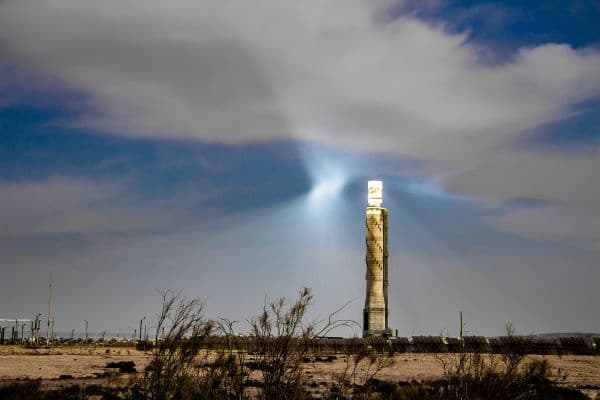
Solar power tower

A tower captrues solar energy

Published: 8 July 2022

Last updated: 9 May 2025

The project, initiated by the environmental peacebuilding organisation EcoPeace, is the first of its kind.

Palestinian investors would invest in new solar farms in Area C, the Israeli controlled area of the West Bank. The electricity will be sold to the Palestinian authority in Gaza, meeting a desperate need for increased electricity supply in the area.

Israel would facilitate the transfer of the electricity through the Israeli network and deliver it to Gaza. This process, known as “wheeling the electricity across”, would enable Palestinians in Gaza to benefit from production in the West Bank.

EcoPeace Israeli Director Gidon Bromberg said the electricity initiative offered opportunities to improve environmental problems in both Israel and Palestine and to increase the economic independence of the Palestinians.

“In principle, we have support from all sides,” he said. “This is a win-win for all sides, if it moves forward.”

Bromberg said Gaza desperately needed more electricity to power its sewerage plants.  Three existing sewerage plants do not have enough electricity and a fourth plant needs to be built.

Water quality is an enormous problem in Gaza. A World Bank report found that only 4% of groundwater met drinking water quality standards. It said 97% of Gaza residents got their water from private wells and small-scale informal desalination plants.

When the sewerage plants fail, sewage drifts up the coast, affecting Israel as well as Gaza. In the past, a desalination plant in Ashkelon has been forced to close temporarily because of pollutants flowing up the coast from Gaza.

“The precarious state of the water supply in Gaza threatens public health on both the Palestinian and Israeli side,” Bromberg said.

Ecopeace initiatives have already been dramatically successful in improving water quality in Gaza. For the first time in more than a decade, Palestinians are able to swim at the beach.

The improvement was a direct result of awareness in Israel that pollution does not stay on the Palestinian side of the border. Ecopeace was able to show that pollution from Gaza was not only shutting down the Ashkelon plant but also threatening the next plant along in Ashdod, which together provide more than 30% of Israel’s drinking water. That realisation prompted Israel to allow cement into Gaza for building the sewerage plant.

But the plants are not functioning at full capacity, because of the electricity shortage. The solar electricity project is the solution.

The project has economic as well as environmental advantages. Some of the electricity now being used to run the existing plants is diesel, which is both highly polluting and expensive, Bromberg said.

Solar energy is cheaper, making it a viable investment for private investors in the West Bank.

“This is an opportunity to promote environmental resilience in the region and to allow the Palestinians to produce renewable energy that will benefit their economy and remove their reliance on Israeli electricity,” Bromberg said.

Photo: Ashalim Power Station in the Negev, Israel (Wikipedia)

You might also like
  • Focused on the urgency of war, Israel fails on climate action
    Ben Lynfield
  • Adam Gottschalk: a campaigner for climate action
    Ruby Kraner-Tucci
  • Vale David Zyngier: warrior for public education, climate, Israel and justice
    Dan Coleman
logomark.67a07ee3
We believe in the free flow of information

Republish our articles for free, online or in print, by using our Creative Commons licence

You might also like

    Knesset divided
    Israel Votes 2026ExplainerIsrael

    Israel election explainer: the main parties

    Shahar Burla 1
    Penny Wong
    DebateAustralia

    Sanctions must influence, not just perform disapproval

    Adam Slonim
    Rozana Beit Oula
    PeacebuildingOpinionIsrael

    Peacebuilding through the eyes of a sceptic

    Ron Finkel

About the author

Deborah Stone

Deborah Stone

Deborah Stone is Editor-in-Chief of TJI. She has more than 30 years experience as a journalist and editor, including as a reporter and feature writer on The Age and The Sunday Age, as Editor of the Australian Jewish News and as Editor of ArtsHub.

More from the author

ReflectionArts & Culture

On despair: A reflection after watching ‘Cancelled’

NewsAustralia

Proposed digital care law to offer protection against online antisemitism

NewsIsrael

‘Israel is systemically eliminating Palestinian collective life’:  Israeli human rights report

Australia

Tame apologises – but with little grace