Aa
  • Read, Watch, Listen
  • TJI Series
  • Community Action
  • Events
  • Zedi
Follow us and continue the conversation
  • LinkedIn
  • Instagram
  • FaceBook
  • X
  • YouTube
Test yourself with the TJI Quiz!

Adjust size of text

Aa

Follow us and continue the conversation

  • LinkedIn
  • Instagram
  • FaceBook
  • X
  • YouTube

Your saved articles

You haven't saved any articles

What are you looking for?

Original reporting, insightful analysis and diverse views, delivered straight to your inbox

  • LinkedIn
  • Instagram
  • FaceBook
  • X
  • YouTube
Your support fuels our mission to inform, entertain and inspire.

The Jewish Independent is bound by the Standards of Practice of the Australian Press Council. If you believe the Standards may have been breached, you may approach The Jewish Independent or make a complaint to the Australian Press Council in writing at www.presscouncil.org.au. The Council may also be contacted on 1800 025 712.

  • Our Story
  • Contact us
  • Our Team
  • Support us
  • Guidelines
  • Pitch your idea
  • Republishing us
  • Community Action
  • Our Awards
  • LinkedIn
  • Instagram
  • FaceBook
  • X
  • YouTube
Aboriginal FlagTorres Strait Islanders Flag

The Jewish Independent acknowledges Aboriginal and Torres Strait Islander peoples as the Traditional Owners and Custodians of Country throughout Australia. We pay our respects to Elders past and present, and strive to honour their rich history of storytelling in our work and mission.

© The Jewish Independent 2026All Rights Reserved
Website design and development by Your Creative, MelbourneTerms & ConditionsPrivacy Policy
HomeRead, Watch, Listen
Opinion

The easiest way to understand other narratives is from your couch

Sharon Berger
Print this

Published: 5 November 2021

Last updated: 4 March 2024

SHARON BERGER: TV and film offer windows into the lives of others, including Palestinians and Iranians; they are a powerful platform for expanding our homogeneous horizons

I DIDN’T REALISE how much I missed Israel until I noticed how quickly I was devouring anything Israeli online, eagerly awaiting the next release or season. Multiple platforms now offer great Israeli content including, of course, Netflix hits such as Fauda and Shtisel.

Last year, when the third season of Fauda was released, it became the number one show on Netflix in Lebanon. Shtisel took both the Jewish and non-Jewish world by storm, humanising a community that had long been stigmatised by many secular Jews and gawked at by non-Jews.

So I was baffled by the recent brouhaha over Netflix’s decision to launch its Palestinian stories collection of 32 films centred around the Palestinian experience under occupation and in exile. The right-wing Israeli watchdog Im Tirtzu criticised the collection, alleging that a majority of films were directed by BDS supporters.

What would our reaction have been if it had been the other way? We would have been livid if Palestinians or non-Jews objected to the many Israeli shows that have shared their stories with mainstream audiences over these platforms and big screens. I would argue that the many Holocaust movies and shows available today have reached audiences who previously knew little about this traumatic period in our history.

Cinema and TV are a great way to step inside someone else’s shoes and better understand their experiences. Films like Sand Storm powerfully portray the dynamics of Bedouin communities and I found the movie In Between, about three Israeli-Palestinian women sharing a flat in Tel Aviv, to be illuminating.

Arab Labor TV series

I lived in Israel for many years but never socialised with Israeli-Arabs, who make up 20 per cent of Israel’s population. I understand many Israelis felt the same way about Sayed Kashua’s popular series Arab Labor, which used humour to accentuate the disparities between Jews and Arabs living within Israel

Movies provide windows into the lives of others, including Palestinians. It’s not just Diaspora Jews who are unlikely to know much about Palestinians living in Gaza and the West Bank, but also Israeli Jews. Or if they do, it’s through the distorted lens of their army service.

Most Palestinians don’t have personal relationships with Jewish Israelis, and only know them from checkpoints or interrogation cells.

This is true the other way, too. Most Palestinians don’t have personal relationships with Jewish Israelis, and only know them from checkpoints or interrogation cells. We may disagree with the views expressed, but do they not have a right to share their stories and experiences?

When I was at university in the 1990s, I heard the former Jordanian Crown Prince, Hassan Bin Talal, speak. I asked him why Jordan had joined Islamic nations in banning the screening of Schindler’s List on its release in 1994. What Jews saw as an important unflinching exposure of the horror of genocide, the Crown Prince saw as glorifying and exaggerating Jewish suffering and victimising the Jews, who they felt were responsible for the suffering of the Palestinians.

At the time, I was baffled that this movie could be seen as such a threat to a regime. Even as Jordan and Israel were moving closer to a peace treaty, the Jordanian government didn’t want to humanise their traditional enemy for its citizens.

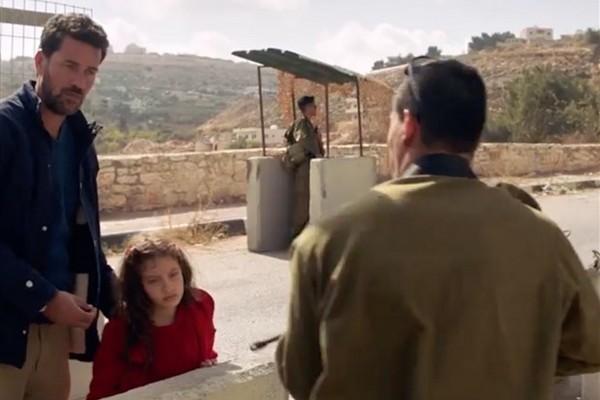
Scene from The Present

I recently watched The Present, a short Palestinian film about a father and daughter trying to buy a present. The film shines a blunt light on an issue that impacts most Palestinians living in the West Bank, whether they are lining up daily at Qalandia, the main checkpoint between the northern West Bank and Jerusalem, to work in Israel or trying to sort out permits to get access to their land. Their limits on freedom of movement affect their daily lives and build resentment towards the soldiers implementing the policies.

The camera lens can provide a way to see things from a different angle. The beautiful Lebanese film West Beirut documents the outbreak of the Lebanese civil war through the eyes of three local kids. It humanised the different warring factions but didn’t shy away from the violence and havoc that the turmoil had on people’s lives and the generations to come.

Iranian movies have long interested me as a way to see inside a fascinating society that I am increasingly unlikely to visit.

Unfortunately for my long-suffering husband, Iranian movies have long interested me as a way to see inside a fascinating society that I am increasingly unlikely to visit. What some of these films lack in cinematic or acting quality (a broad generalisation, I know), they make up for in their portrayal of a society which I am keen to understand. They definitely run to a different rhythm than Hollywood blockbusters (not a generalisation).

I recently watched a series of six short Saudi films called Six Windows into the Desert, which is interesting for what is depicted, and for what’s not portrayed. There’s some obvious political criticisms portrayed through thinly veiled personal conflicts.

Today we largely live inside bubbles, sharing social media posts with our friends who generally share our political opinions and mixing with neighbours who have a similar socio-economic status. TV and films can be a great platform to expand our homogenous horizons.

If we really want a better understanding of what’s happening in Israel, it’s important to understand some of the Palestinian narratives. For now, the easiest way to do that is from your couch.

Photo: Scene from In Between (2016)

You might also like
  • The very Jewish thinking behind ‘You Can see Everything’
    Merissa Nathan Gerson
  • From the footy field to the film festival: the AJAX story onscreen
    Gideon Cohen
  • On despair: A reflection after watching ‘Cancelled’
    Deborah Stone
logomark.67a07ee3
We believe in the free flow of information

Republish our articles for free, online or in print, by using our Creative Commons licence

You might also like

    Jewish-diversity copy
    Feature

    The three questions that will define the Jewish future

    Shahar Burla 1
    Funeral for top military commander of Hamas’ armed wing in Gaza
    Israel Hamas WarAnalysisIsrael

    Gaza ceasefire falters as Israel and Hamas prepare for next war

    Shahar Burla 1
    Feature

    Israel bows to pressure by restoring water flow, ICC investigates both sides

    TJI Wrap

About the author

Sharon Berger

Sharon Berger

Sharon Berger is the Events & Partnerships Manager at TJI. Sharon is a former journalist for The Jerusalem Post, Reuters, the Economist Intelligence Unit and the Australian Jewish News.

More from the author

ReflectionAustralia

No, I am not okay

NewsAustralia

TJI launches media internship in memory of Andrew Casey

NewsArts & Culture

Writer awards celebrate talent in face of discrimination

InterviewIsrael

Yair Golan on Netanyahu, Israel’s ‘tribalism’ and believing in a two-state solution