Published: 14 October 2022
Last updated: 5 March 2024
SHARON OFFENBERGER: For Israelis the once-Arab village is now an idyllic beach for making family memories.
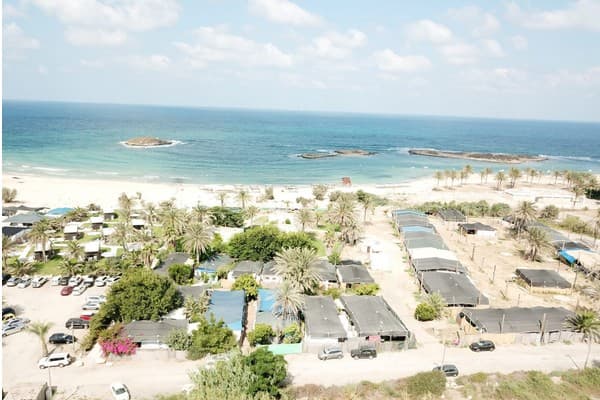
Tantura is a hard name to place. Too exotic for Hebrew or Arabic, too oriental for French or English. When friends invited us to join their annual Succot holiday at Tantura, I was immediately entranced by the untouched and almost unpopulated coastline that looked more like the Maldives than “somewhere between Caesarea and Haifa”. The sensual name fits the scenery.
A wide-open stretch of sand and the clearest water I’d ever seen. No urbanity interrupting the view, and no one was playing Matkot – the paddle ball game that features on so many Israeli beaches which is either a hoot if you’re playing or a headache if you’re trying to relax. Tantura beach was serene.
We stayed in basic holiday huts surrounded by very un-Israeli lush green lawns but as we walked through the carpark, I noticed a line of caravans at a time when caravans weren’t featured in Israel the way they are in regional Australia.
Tantura is now called Hof Dor (Dor Beach) or Dor-Tantura. An Arab fishing village up until 1948, it is now a pricey holiday village, situated in a nature reserve that stretches northward to Habonim, and the subject of a frightening documentary by the same name. Tantura, directed by Alon Schwarz – who will speak at a Q&A after a screening of the film in Sydney this Sunday - has generated intense debate over its interrogation of an alleged massacre of Palestinians during the 1948 war.
A couple of kibbutzim have now staked their claim in the area, and if you aren’t from there, you’ll simply pass by a small sign on the main highway that you’d never think leads to heaven.
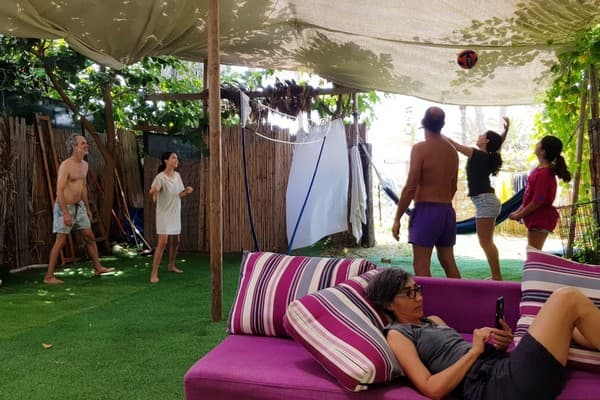
The holiday village is leased out and privately managed. On one end there are Maharishi-inspired concrete igloo huts and at the other end, the basic holiday cabins described above.