Published: 20 May 2024
Last updated: 6 September 2024
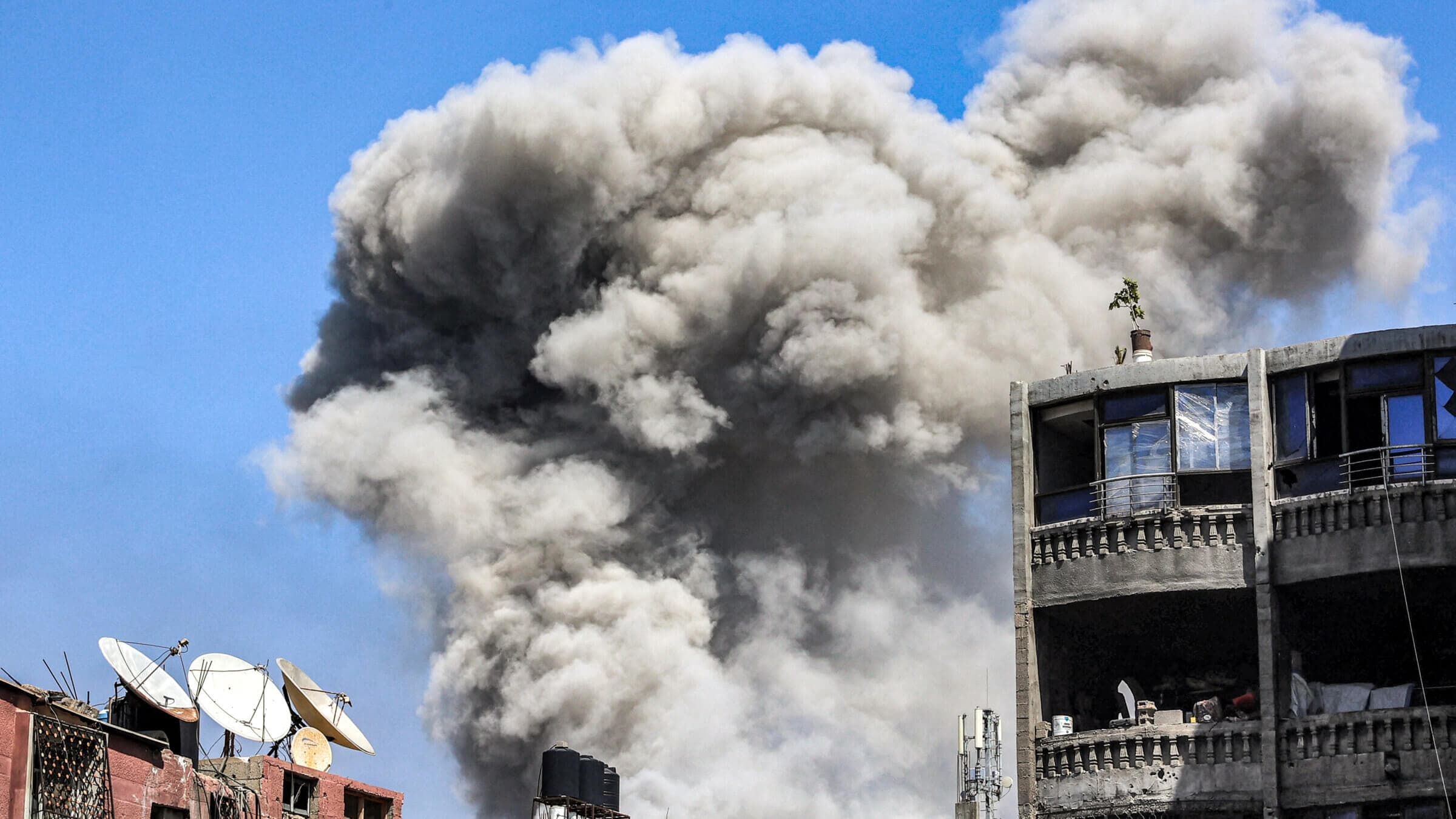
Smoke rises from an Israeli bombardment in Jabalia in the northern Gaza Strip on May 14, 2024. (Photo by Getty Images).
Published: 20 May 2024
Last updated: 6 September 2024
This story was originally published in the Forward. Click here to get the Forward's free email newsletters delivered to your inbox.
As the Gaza war drags into its eighth bloody month, opinions have hardened as to what it’s all about. And most of them are wrong.
On the pro-Israel side, the war is a necessary response to Oct. 7. Hamas must be wiped out for Israel to have security, and the job is still not done. The civilian casualties and dislocations are tragic, but also unavoidable given that Hamas has embedded itself in population centers. And Israel has done all it can to minimize them.
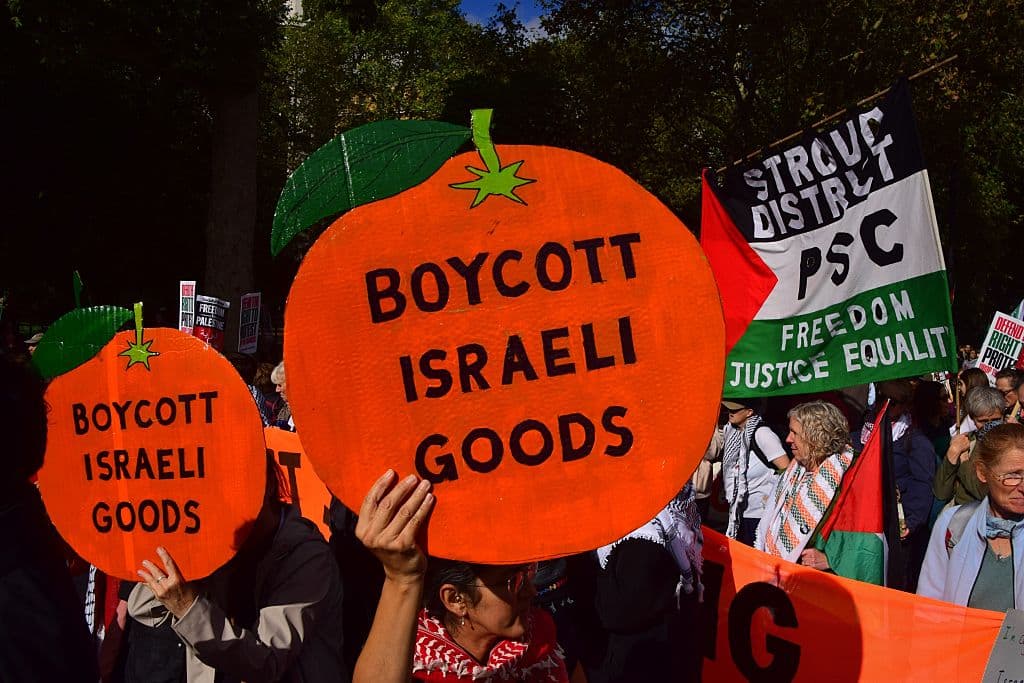
On the pro-Palestine side, the war is genocide. Israel has carpet-bombed and invaded this small territory, causing widespread death and devastation. This cannot be explained by some strategic goal, but is the logical extension of 80 years of Zionist oppression of Palestinians.
Neither narrative describes reality.
Left side first. No matter how many times the word "genocide" is chanted at a protest, no matter how much it is taken as a given by progressives, the Gaza war is not a genocide. As I discussed back in October — when the term was already appearing in protests — genocide does not mean "an intensely horrible event in which one group kills many people in another group." It means, under international law, lethal actions taken with "intent to destroy, in whole or in part, a national, ethnic, racial or religious group."
This definition was created in the wake of the Holocaust, in which Nazi Germany clearly stated this intent and carried it out with ruthless efficiency. Since then, three genocides have led to actual court trials: Rwanda in 1994, Bosnia in 1995 (particularly the Srebrenica massacre), and Cambodia in 1975-79. Others have been recognized but not prosecuted, including Myanmar’s murder and expulsion of over 700,000 Rohingya Muslims (half the population), China’s murder and displacement of nearly 1 million Tibetans (17% of the population) in the 1950s and 1960s, and the atrocities in Darfur in 2003-05 which killed 400,000 civilians and displaced nearly 3 million (nearly half the region’s population). Still others remain controversial, such as the Armenian genocide of 1915.
In all of these cases, there was not merely horrible carnage (as there has been in Gaza); there was also a clear intent to destroy the targeted group, and policies that carried it out. Significant portions of each population were either murdered or permanently expelled.
This is not present in Gaza. The deaths of 35,000 people (or 25,000, excluding Hamas fighters) is an appalling tragedy, but that number reflects only 1.5% of the total population and is commensurate with civilian death rates in other conflicts. Israel has frequently warned populations to get out of the way of pending attacks, and (inadequately) allowed humanitarian relief to be distributed. And while some extremist members of the Israeli government have indeed made genocidal statements, official government policy shows no "intent to destroy, in whole or in part, a national, ethnic, racial or religious group." On the contrary, plans have already begun for the rebuilding of Gaza (bitterly opposed by Israel’s genocidal far right) after the war is finally over.
It is entirely understandable that the horrors in Gaza have ignited protests around the world, and as the recent International Court of Justice opinion rightly noted, there may be evidence of genocidal intent that has not yet been uncovered. But the horrors themselves do not constitute genocide.
Israel’s official explanation of the war is also at odds with the facts on the ground in Gaza.
After seven months, the goal of eradicating Hamas hardly seems a sufficient explanation of the level of warfare we have seen. Of course, we do not have access to the Israeli intelligence behind every strike, and Israel’s defenders continue to insist that each action has been strategically necessary.
But is that really tenable? Over 65,000 tons of explosives, at least half of which (according to US assessments) were contained in "dumb bombs," unguided and imprecise? Entire neighborhoods leveled? 31,000 discrete targets in four months of war? Delays in the delivery of humanitarian aid, to the point where there is a serious threat of famine?
Even if eradicating Hamas is an articulable goal — and even if it should be prioritized above the return of hostages, for which millions of Israelis have protested — the massive scope of the war belies that it is the only, or even the primary, one.
But if the war isn’t genocide and isn’t solely about eradicating Hamas, what is it? The answer dates back 100 years — and in part to Benjamin Netanyahu’s father, Benzion.
In the early days of the state, there were two main schools of Zionist thought. Mainstream, labor Zionism held that coexistence and compromise with Arabs was possible. Jews and Arabs would divide the land, international support would lead to the flourishing of both populations, and the groups would find some way to reconcile their competing land claims, ideologies and cultures.
Revisionist Zionism, openly influenced by European nationalism, said this was a naïve delusion. The Arabs will never accept us, revisionists said, and we must take the land by force. In a 1998 interview with the New Yorker, Benzion Netanyahu said that the Arabs "would end Jewish existence in the country if they had the chance to do it. Only the fear of retaliation keeps them back."
This is the justification of the Gaza War.
For a century, revisionist Zionists have argued that the only way to achieve peace is to dominate Israel’s enemies, to crush them militarily until they are finally forced to accept the reality of the Jewish state. Compromise is impossible and concessions are signs of weakness; in Israel’s "tough neighborhood," Israel must be tougher than its enemies if it is to survive.
This ideology has ruled over Israel for most of the last thirty years, and is now quite common; you can hear it in taxicabs and around Seder tables, in rabbinic homilies and political speeches. Its tenor varies. Some on the Right, perhaps animated by messianism or racism or even hyper-masculinity, seem to relish this role of dominator. Others ruefully accept it, since, they say, there is simply no alternative — indeed, this has been the mood of many Israelis in the last several months. But either way, says this ideology, dominance is what Israel must exercise, and show.
This is what explains Israel’s "shock and awe" tactics. The scenes of carnage are intentional. They are meant to teach the world a lesson: Attack us, and you will pay dearly.
But revisionism is wrong strategically (as well as morally), since it fails to account for the rest of the world.
In a basically bipolar conflict, revisionist deterrence has a brutal logic to it. But this is not a bipolar conflict. Israel depends on international support, especially American support. The Arab world, itself divided along Sunni/Shiite lines and other cleavages, exists in a shifting international context with China, Russia, and other strategic players. The United Nations, loathed by Israeli leaders, still plays a critical role in mediating among these different influences.
And while "shock and awe" may deter some of Israel’s enemies, it has now alienated most of Israel’s friends.
Obviously, revisionist Zionist ideology is not the only motive behind the war. Netanyahu’s political survival depends on placating his coalition members, and the brutality serves that goal. Hamas’ rejection of several Israeli peace offers suggests that they think they can get a better deal, thus prolonging the conflict — and of course, Hamas started this round of violence in the first place. Israel, meanwhile, has had great success in wiping out much of Hamas, having killed between 10,000 and 15,000 Hamas fighters. As is always the case in Israel/Palestine, there is no single, simple explanation.
But just as the war isn’t genocide, neither is it a purely military campaign. The brutality is part of the point; Israel is teaching its enemies a lesson. Unfortunately for the Jewish state, it has taught its friends one as well.
Rabbi Jay Michaelson is a contributing columnist for the Forward and for Rolling Stone. He is the author of 10 books, and won the 2023 New York Society for Professional Journalists award for opinion writing. The views and opinions expressed in this article are the author’s own and do not necessarily reflect those of the Forward. Discover more perspectives in Opinion. To contact Opinion authors, email opinion@forward.com. This article was originally published on the Forward.
![[[:fr:Fez (coiffure)|Fez]] rouge à gland noir, en feutre.](/_next/image/?url=https%3A%2F%2Fjewishindependent.yourcreativeagency.com.au%2Fwp-content%2Fuploads%2F2026%2F10%2Ffez-cap-eisenkot-netanyahu.jpg&w=3840&q=75)
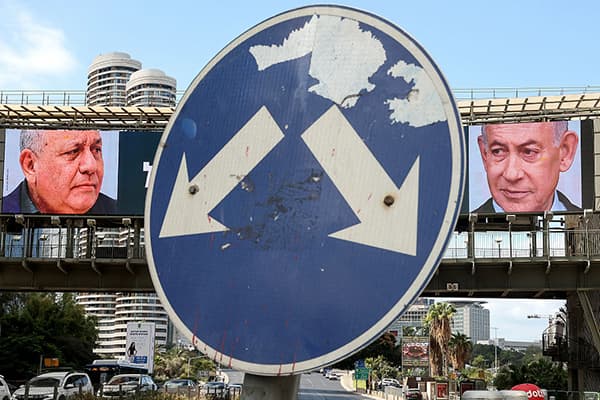

author
Rabbi Jay Michaelson is a freelance writer. He is the author of 10 books, and won the 2023 New York Society for Professional Journalists award for opinion writing.
More from the author