Published: 13 February 2025
Last updated: 13 February 2025
‘Don’t forget the pomegranate!’ my mother, Sarah, called after my father, Malcolm, who had been tasked with collecting fruit for Rosh Hashanah, the Jewish New Year.
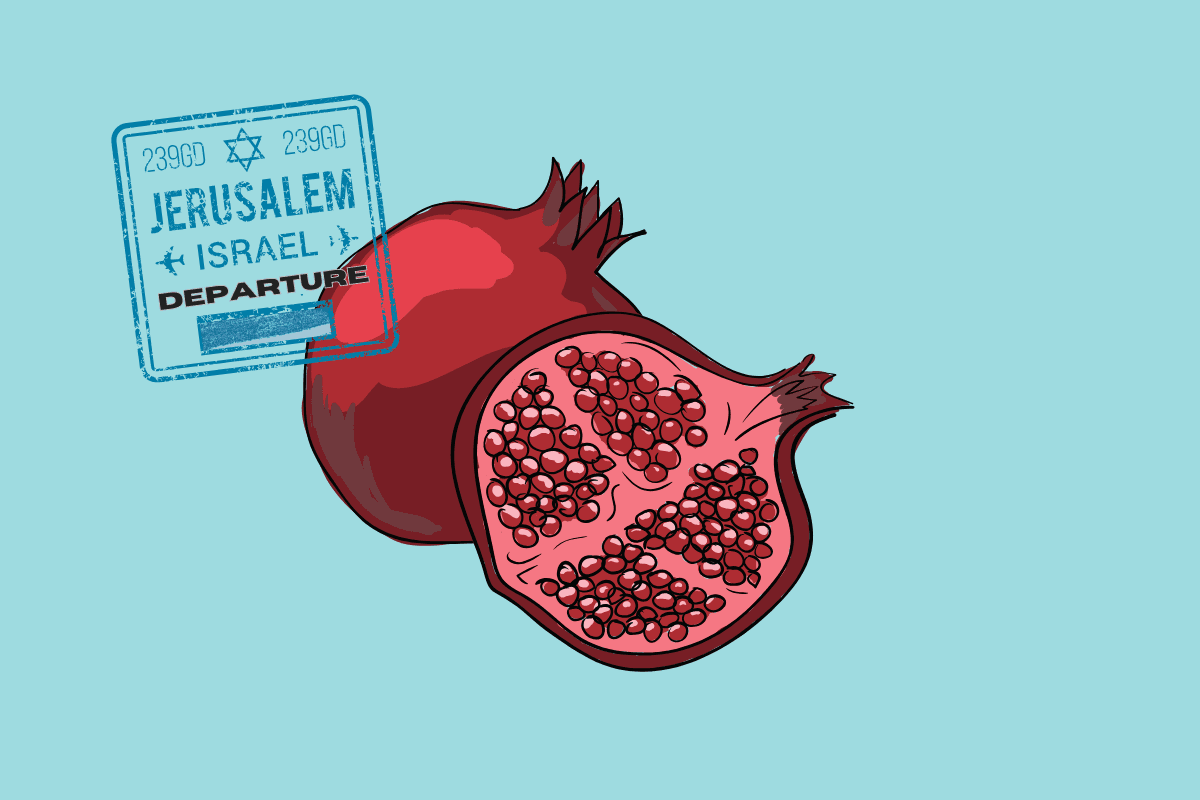
As we often did, we were hosting friends for a celebratory meal at our home, and the pomegranate held particular significance. Along with wheat, barley, grapes, figs, olives, and dates, it makes up the Shivat Haminim – the seven species of fruit mentioned in the Torah as native to Israel. Historically, bringing these to the Temple in Jerusalem was considered a great mitzvah – a commandment in Jewish law, often understood as a good deed.
Speaking to Jews around the world, I have found that many of us ate pomegranates at Rosh Hashanah. This fruit was always significant to me on a personal level. It was a poignant indicator of my difference from those around me.
Although I attended Calderwood Lodge Jewish Primary School (the only Jewish school in Scotland), I went to a non-Jewish secondary school. In the UK, without a separation of church and state, our state schools were often Christian. My peers attended school assemblies in a church, and Christianity formed the foundation of the school’s culture.
Being Jewish, I always felt different from those around me. I knew that we observed different holidays, ate different food, and even spoke a different language – Hebrew – in synagogue and in various classes I took. Few of them routinely ate – or would have attached any significance to – pomegranates.
All of this is to say, I understood that although I was born in Scotland, that wasn’t where I was rooted. The pomegranate, very much not native to Scotland, helped me understand where I could truly call home. To this day, after living in Scotland, Hong Kong and London, the place where I feel I most belong is Israel.
I understood – even when I didn’t have the language to articulate it – that my family and my people are indigenous to Israel.
While notions like indigeneity aren’t inherently Jewish concepts, they can describe our story just as they describe that of others.