Aa
  • Read, Watch, Listen
  • TJI Series
  • Community Action
  • Events
  • Zedi
Follow us and continue the conversation
  • LinkedIn
  • Instagram
  • FaceBook
  • X
  • YouTube
Test yourself with the TJI Quiz!

Adjust size of text

Aa

Follow us and continue the conversation

  • LinkedIn
  • Instagram
  • FaceBook
  • X
  • YouTube

Your saved articles

You haven't saved any articles

What are you looking for?

Original reporting, insightful analysis and diverse views, delivered straight to your inbox

  • LinkedIn
  • Instagram
  • FaceBook
  • X
  • YouTube
Your support fuels our mission to inform, entertain and inspire.

The Jewish Independent is bound by the Standards of Practice of the Australian Press Council. If you believe the Standards may have been breached, you may approach The Jewish Independent or make a complaint to the Australian Press Council in writing at www.presscouncil.org.au. The Council may also be contacted on 1800 025 712.

  • Our Story
  • Contact us
  • Our Team
  • Support us
  • Guidelines
  • Pitch your idea
  • Republishing us
  • Community Action
  • Our Awards
  • LinkedIn
  • Instagram
  • FaceBook
  • X
  • YouTube
Aboriginal FlagTorres Strait Islanders Flag

The Jewish Independent acknowledges Aboriginal and Torres Strait Islander peoples as the Traditional Owners and Custodians of Country throughout Australia. We pay our respects to Elders past and present, and strive to honour their rich history of storytelling in our work and mission.

© The Jewish Independent 2026All Rights Reserved
Website design and development by Your Creative, MelbourneTerms & ConditionsPrivacy Policy
HomeRead, Watch, ListenIsrael
OpinionIsraelWorld

We need to stop thinking of Judaism as a religion

The idea of Judaism as a world religion is a relatively late and externally imposed concept that misunderstands the Jewish relationship between land, culture and God.
Ben Freeman
Print this
world religions without judaism

Published: 19 February 2025

Last updated: 20 February 2025

To fully embrace Jewish indigeneity and reject the non-Jewish world’s attempt to impose its thinking upon us, the Jewish people must re-examine how we define our Jewish identity. There is no aspect of this process more vital than the notion of Judaism as a religion.

This perspective is so deeply embedded in our collective psyche that it seems almost like a natural truth. Overcoming it will be extraordinarily difficult and will require significant effort on both individual and collective levels. However, despite being so embedded, this concept is actually a relatively modern phenomenon.

The Jewish people were always self-described as an Am (people). There is no word for religion in the Tanakh. And while the modern Hebrew word for religion is Dat, historically, it first appeared in Megillat Esther (the Scroll of Esther), where it was first used to reference law.

The redefinition of Judaism began in earnest between the 16th and 18th centuries when Judaism started being referred to specifically as the Jewish religion, in response to the Christian discourses that dominated at the time. Prior to the Reformation, ‘religion’ was used only in reference to Christianity, but after this point it came to be used in a broader sense, meaning a set of theological beliefs; in other words, what we define today as a ‘religion’. Crucially, this definition was applied to Jews by Christian scholars.

The process accelerated in the 19th century, following the Haskalah (Jewish Enlightenment), when new definitions of Judaism were created in order to assimilate Jews and Jewishness into Europe. By this process, Jews were ‘remade’ in the likeness of the new post-Enlightenment world.

We should investigate our identity through our own lens, not through the lens of Christianity, which is the conceptual framework many of us have for religion.

The notion of Jews as simply a religious group, like Christians or Muslims, is not an accurate representation of our identity. This was not a case of cultural evolution but rather an attempt to remake Jews in the likeness of the Christian majority.

For Jews, even those of us who do not believe in God, He cannot be separated from our daily lives or actions. Some Jews infuse their Jewish actions with God; others do not. Nonetheless, the actions undertaken by both are the same. When I say Kaddish for my late father, Malcolm, on his Yahrzeit every year, for instance, I light the Yahrzeit candle and recite the mourner’s prayer, which is solely focused on exalting God’s name. But when I say Kaddish, I am not thinking of God; I am thinking of my father and our connection with the Jews who have commemorated their dead in this way for thousands of years.

Given its definition as ‘the service and worship of God or the supernatural’, it is possible to argue that the Jewish belief in, and worship of, Hashem constitutes a religion. However, we should investigate our identity through our own lens, not through the lens of Christianity, which is the conceptual framework many of us have for religion. Even if Jews do have a religion, ‘Judaism’ would still be the incorrect term to describe it; rather, it should be understood as our indigenous culture.
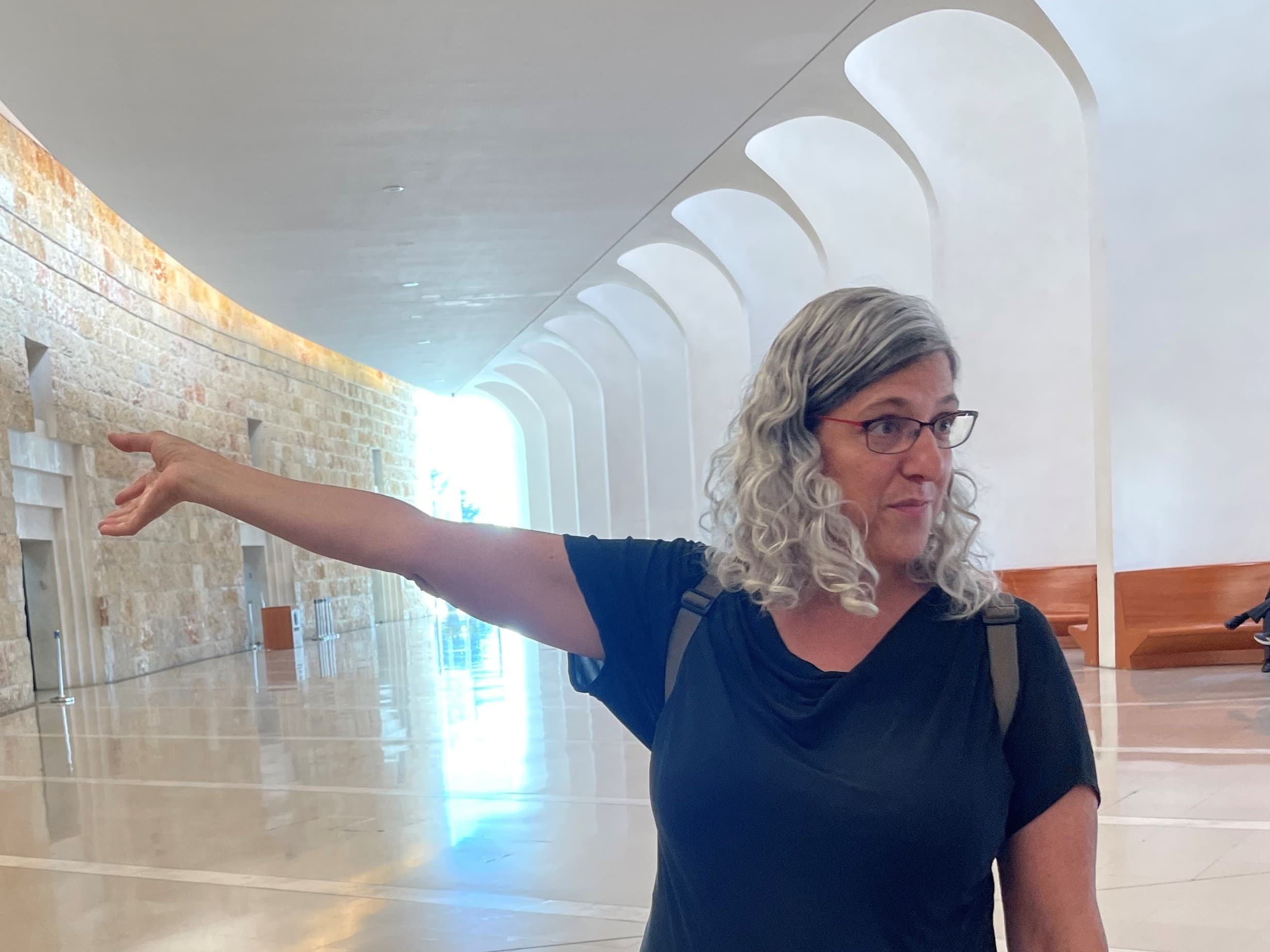
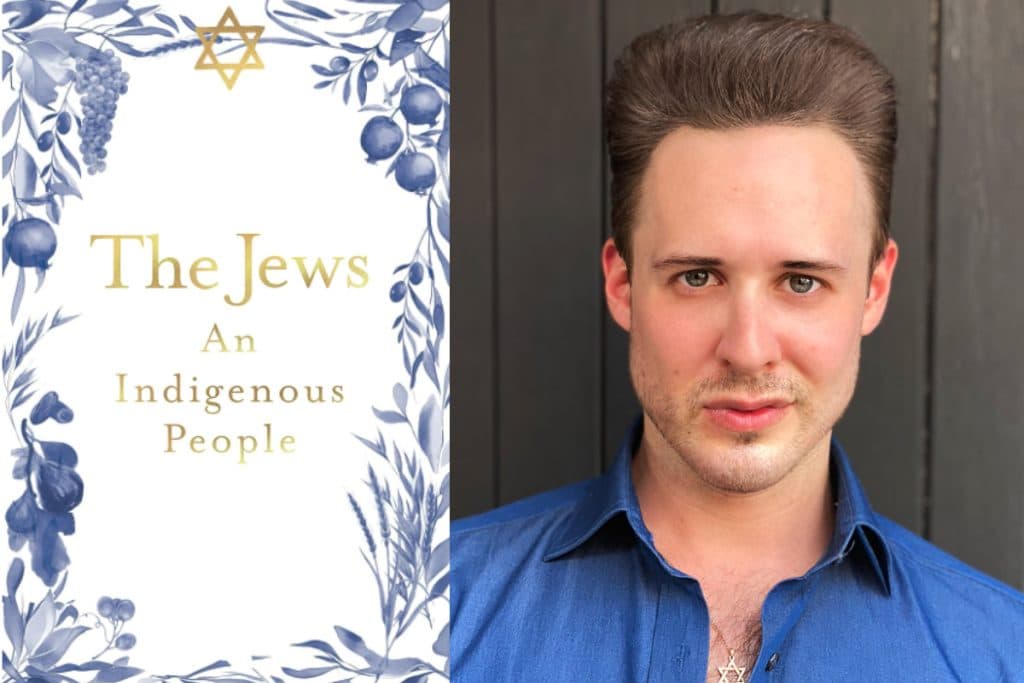
Ben Freeman with the cover of his book, The Jews: An Indigenous People (Supplied).

But what about the issue of faith within Judaism? The Jewish concept of faith, Emuna, is rooted in a dynamic relationship with God, emphasising trust, loyalty and a profound personal connection with the divine, hence the Jewish propensity to wrestle with God. It’s less about adhering to doctrines or creeds and more about engaging in a lived relationship with God, thriving on ongoing dialogue and encounters where the individual actively participates in their covenant with the divine. In contrast, Pistis (Christian faith) tends to focus more on believing in specific truths or doctrines.

This discussion highlights the challenges we face when investigating or understanding Jewishness through translations and a non-Jewish lens. It clearly demonstrates that to explore our own civilisation, we must do so in the language in which it was written – Hebrew.

We must perceive Judaism through a Jewish lens. If we don’t, we end up using English words to define our concepts and then applying a Christian context to understand them.

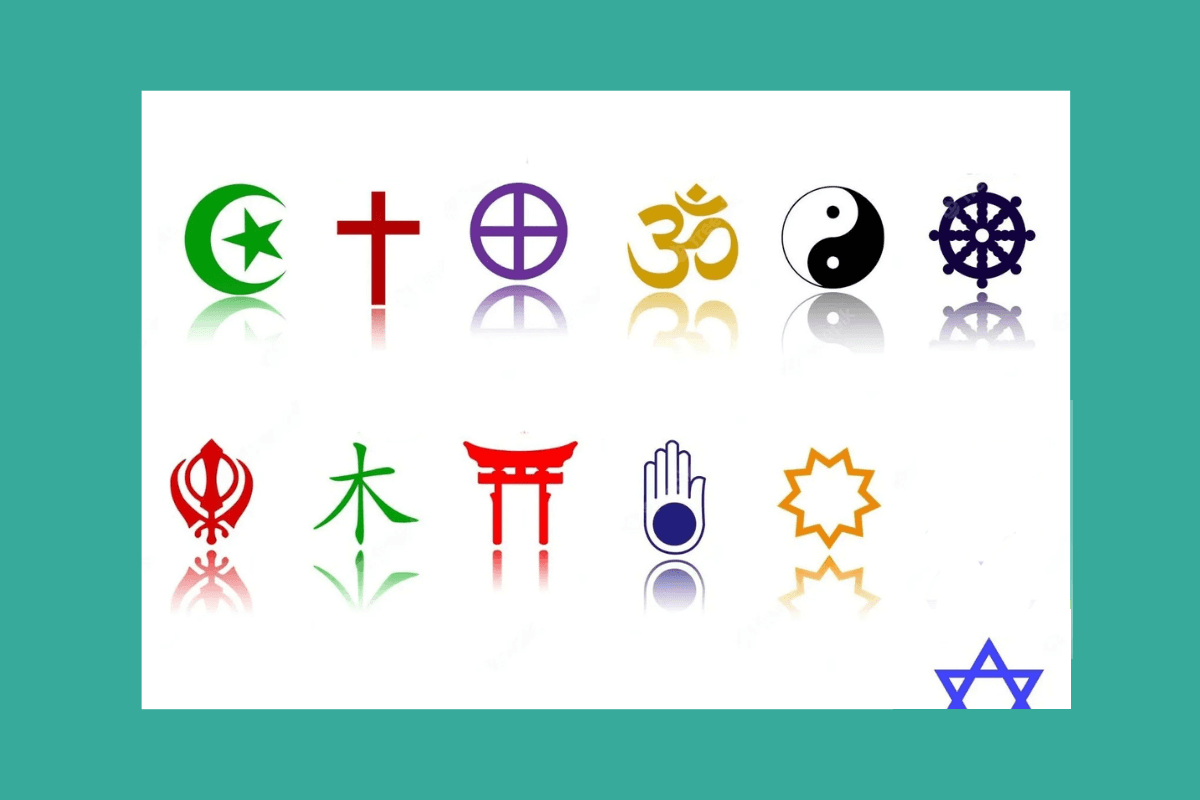
Another redefinition of Judaism – this time as a ‘world religion’ – was to take the Christianising of Judaism a step further. Scholars of religion Christopher R. Cotter and David G. Robertson define the idea of world religions as "a particular way of thinking about religions which organises them into a set of discrete traditions with a supposedly ‘global’ import". World religions are also said to include Christianity, Islam, Buddhism, Hinduism. They are usually described as being large, spread internationally, and having influenced the development of Western society.

For a multitude of reasons (not least being that Judaism is not a religion in the Western understanding of the word) it is, however, a mischaracterisation to include Judaism in this category. Judaism is not large; there are only 15.7 million Jews in the world. We do not seek to convert those who are not Jews. And while Judaism did play a foundational role in Western society, this is because Judaism was exported around the world – not by Jews, but by Christians.

For Jews, and other indigenous peoples, culture encompasses religion (in the narrowest sense) but isn’t confined to it. Religion is a component of culture rather than a defining characteristic on its own.

While the World Religions paradigm was brought in to allow the inclusion of non-Christian religions in education, it has instead remodelled them according to liberal Western Protestant Christian values (akin to what the Church of England promotes), emphasising theological categories, argues religious studies academic Suzanne Owen.

While rejecting Judaism as a ‘World Religion’, a potentially more accurate definition of Judaism could be ‘Indigenous Religion’. Kenneth H. Lokensgard and Alejandro V. Gonzalez define ‘indigenous religions’ as "the ancestral religions of peoples who are native to particular landscapes. Their religions help them achieve the goal of living successfully in those places. Thus, indigenous religions vary, just as the places their practitioners inhabit vary. Yet, the many religions practiced by indigenous peoples share common themes. These themes include emphasis upon relationship and place".

This definition certainly fits the Jewish experience and relationship with the land, but Lokensgard and Gonzalez are more accurately outlining indigenous culture rather than just describing indigenous religion.

For Jews, as with other indigenous peoples, such as Inca people who worship Pachamama, the Earth Mother goddess, God cannot be separated from the daily culture and practices of the people. Therefore, it seems that even when identifying indigenous religions and attempting to understand the diversity of belief which exists, Lokensgard and Gonzalez continue to use a Christian view of the world, where ideas of God can be delineated from other aspects of culture.

For Jews, and other indigenous peoples, culture encompasses religion (in the narrowest sense) but isn’t confined to it. Religion is a component of culture rather than a defining characteristic on its own.

A crucial part of reclaiming our identity as Jews is reframing our understanding of Judaism. While it includes a belief in God, it is not a religion in the Christian sense of the word; it is the indigenous culture of the Jewish people, which contains God. The process of reframing will not be easy, but it is essential for living our lives as Jews authentically. To achieve this, we must understand our civilisation through a Jewish lens.

This article is an edited extract from The Jews: An Indigenous People by Ben Freeman, published by No Pasaran Media on 27 February.

You might also like
  • The illusion of Just War: Conflict ethics in Judaism, Christianity and Islam
    Dave Moskovitz
  • I’m queer, I’m converting to Judaism, and I stand with my people
    Deni Todorovic
  • Religious doesn’t have to mean right wing
    Ittay Flescher
logomark.67a07ee3
We believe in the free flow of information

Republish our articles for free, online or in print, by using our Creative Commons licence

You might also like

    haredi street guitar
    Photo EssayArts & Culture

    Jerusalemites through the lens

    Sharon Gabay
    Btselem
    NewsIsrael

    ‘Israel is systemically eliminating Palestinian collective life’:  B’Tselem

    Deborah Stone
    Netanyahu
    Israel Hamas WarFeatureIsrael

    New evidence Netanyahu was warned about October 7

    Shahar Burla 2

About the author

Ben Freeman

Ben Freeman

Ben M. Freeman is a writer and advocate. He is the author of the Jewish pride trilogy: l Jewish Pride: Rebuilding a People; Reclaiming our Story: The Pursuit of Jewish Pride and The Jews: An Indigenous People.

More from the author

OpinionIsrael

The pomegranate proof: Jews as an indigenous people

Comments2

  • Avatar of M D Fisher

    M D Fisher6 March at 07:02 am

    I live alone in Prinz Willem Alexander Retirement Village and am 99 years old. My wife died, and I live alone. I am interested in Jewish history, do not believe in any form of supernatural, had a Jewish mother and father and was born in the USA. I do not identify with the state of Israel and favor countries which do not care what religious beliefs their citizens have. I came to Australia because my Australian wife wanted to come home to Australia when I retired. Although I have descendants in the USA, I no longer identify with Trumpland. I am very lonely and appreciate the article.

  • Avatar of John Kron

    John Kron21 February at 01:39 am

    I totally agree with the intent and sentiment of this book.
    But Ben, the solution is staring you in the face!
    Since 1948 every Israeli Jew is defined as a member of the ‘Jewish People’.
    This is stated clearly in their passports and ID cards.
    Today that includes 8 million Jews.
    It is the diaspora that needs to catch up with this definition.