Aa
  • Read, Watch, Listen
  • TJI Series
  • Community Action
  • Events
  • Zedi
Follow us and continue the conversation
  • LinkedIn
  • Instagram
  • FaceBook
  • X
  • YouTube
Test yourself with the TJI Quiz!

Adjust size of text

Aa

Follow us and continue the conversation

  • LinkedIn
  • Instagram
  • FaceBook
  • X
  • YouTube

Your saved articles

You haven't saved any articles

What are you looking for?

Original reporting, insightful analysis and diverse views, delivered straight to your inbox

  • LinkedIn
  • Instagram
  • FaceBook
  • X
  • YouTube
Your support fuels our mission to inform, entertain and inspire.

The Jewish Independent is bound by the Standards of Practice of the Australian Press Council. If you believe the Standards may have been breached, you may approach The Jewish Independent or make a complaint to the Australian Press Council in writing at www.presscouncil.org.au. The Council may also be contacted on 1800 025 712.

  • Our Story
  • Contact us
  • Our Team
  • Support us
  • Guidelines
  • Pitch your idea
  • Republishing us
  • Community Action
  • Our Awards
  • LinkedIn
  • Instagram
  • FaceBook
  • X
  • YouTube
Aboriginal FlagTorres Strait Islanders Flag

The Jewish Independent acknowledges Aboriginal and Torres Strait Islander peoples as the Traditional Owners and Custodians of Country throughout Australia. We pay our respects to Elders past and present, and strive to honour their rich history of storytelling in our work and mission.

© The Jewish Independent 2026All Rights Reserved
Website design and development by Your Creative, MelbourneTerms & ConditionsPrivacy Policy
HomeRead, Watch, ListenIsrael
Israel Hamas WarAnalysisIsrael

Tony Blair brings heavy political baggage to Middle-East leadership role

In the Trump plan for the "day after" the war, former British PM Tony Blair would initially govern Gaza. Can he do it?
Colin Shindler
Print this
Tony Blair

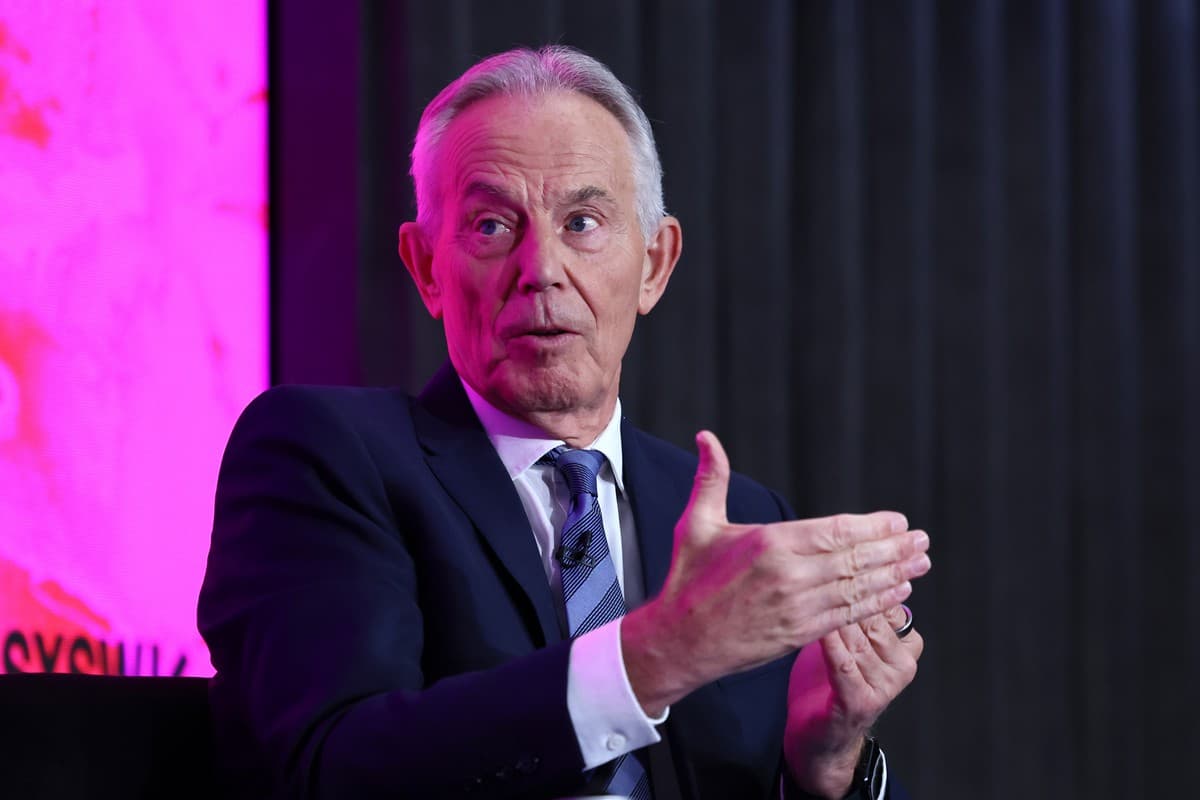
Tony Blair in London, June 2025 (Jack Taylor/Getty Images for SXSW London)

Published: 7 October 2025

Last updated: 9 October 2025

Last Friday, Hamas agreed to negotiate an end to hostilities in Gaza and the release of Israeli hostages on the basis of the Trump peace framework. Hamas has not said that it will disarm or that its leaders will go into exile and there are clear divisions of opinion within the organisation. The Israelis have said that they will not withdraw completely. Even so, this may well be the beginning of the end.

In the past, both Netanyahu and Hamas have demonstrated a penchant for the acceptance of a proposal, followed by a reinterpretation, then endowing it with a plethora of caveats and finally drawing out the proceedings for as long as possible. According to numerous recent opinion polls, they do so in defiance of majorities of both Israelis and Palestinians who want an end to this conflict. Both Netanyahu and Hamas are experts when it comes to moving the goalposts.  

One remarkable aspect of the Trump framework is for the former British prime minister, Tony Blair to become the “governor” of Gaza during its reconstruction period. Blair carries with him considerable political baggage. Unlike his predecessor, Harold Wilson, during the years of the Vietnam War, Blair chose to involve the UK in overthrowing Saddam Hussein in Iraq.

The “Dodgy Dossier” of September 2002 claimed that Saddam was in possession of weapons of mass destruction which could be deployed within 45 minutes. This and other claims at the time proved to be deceptive nonsense.

Blair’s public embrace of the invasion of Iraq, “standing shoulder to shoulder” with George W Bush, brought him worldwide opprobrium – and especially within his own Labour party. The Stop the War Coalition – led by a coalition of Trotskyists, Stalinists and offshoots of the Muslim Brotherhood – brought out huge numbers in protest in 2003.
Black cloud over legacy

This public display has only been rivalled by today’s demonstrations against the war in Gaza. Ever since his stepping down as British prime minister in 2007, Blair’s political legacy has been submerged in this black cloud.

The Arab world also remembers the invasion of Iraq. In a comment to the Iranian media last week, Husan Badran, a member of Hamas’s political bureau – a man with blood on his hands who is in exile in Qatar – labelled Blair “the devil’s brother” (AhlulBayt News Agency, September 29, 2025).

At the outset, Blair was seen by many as a middle-class outsider in Labour, more at home with the views of the Victorian Liberal prime minister, William Gladstone, than with the founder of his own party, Keir Hardie. Blair’s background was coloured by a belief in Christian socialism and his political journey led to his conversion to Catholicism in December 2007.

As Toby Greene notes in his highly informative book, Blair, Labour and Palestine: “The key elements of Blair’s emerging philosophy were a strong sense of absolutism, combined with a feeling of responsibility to society and social causes.”

In 1997, Blair became prime minister at a time when many of the traditional Foreign Office Arabists were retiring and the British Mandate of Palestine had become a distant memory. He also came into office during the period of the Declaration of Principles between Israel and the PLO. His views, however, about religious extremism was hardened by the assassination of Yitzhak Rabin (1995), September 11 (2001) and the Madrid train bombing (2004).

In July 2005, Blair secured a US$9 billion commitment from the G8 – then including both Bush and Putin – to support the Palestinian Authority. All this came to nothing as Hamas advanced in the elections of 2006 and implemented its takeover of Gaza in 2007.

Since then, the Tony Blair Institute for Global Change has played a quiet role in world politics. Blair has practiced a behind-the-scenes diplomacy through a wide array of contacts in government and business.

A year ago, Blair addressed a conference in London hosted by Ha’aretz. He argued that Israel had to accept a new structure of governance in Gaza outside of Hamas and called for an end to the war. He also described the situation of the Palestinians in Gaza.

“An enduring, intolerable situation of repeated displacement, an increasingly dire humanitarian situation and a mounting death toll with no horizon for a better future." (Ha’aretz, October 27, 2024)

Dealing with split Palestinian opinion

Such comments did not come out of thin air. Blair later worked with Trump’s son-in-law, Jared Kushner in advising Steve Witkoff, Trump’s special envoy to the Middle East.

It was also coloured by surveys of Palestinian opinion during the last couple of years. These were commissioned by the Tony Blair Institute – and the findings have been the bedrock of Blair’s involvement in the Gaza War.

The Institute’s 2025 report, conducted in April-May of this year, reports that in the three successive years of polling, Israeli policies have made it more complex to locate a way forward. The report does, however, indicate that there has been a huge swing by the Palestinians against Hamas during the last year.

Palestinians blame the Islamists and the Israelis equally – and overwhelmingly – for the war. Only 4% supported resistance to occupation including the armed struggle.

Some 63% of the 1,435 Palestinians polled still believed in a two-state solution but thought that they were actually closer to a one-state solution – presumably a Greater Israel.

There is a Palestinian acceptance for Trump’s proposal of “a transitional international coalition with a local Gaza administration” to govern initially. Then a reformed Palestinian Authority should take over. 

In the Blair Institute’s report, The Palestinians were split three equal ways as to their future. One third did not want to leave. Another third wanted to emigrate – and the final third accepted a temporary departure but to Europe and not to Trump’s United States. Palestinians strongly supported a massive Arab reconstruction plan for Gaza.

Blair’s trajectory into the Trump framework followed a loose association with the Boston Consulting Group which had suggested the building of artificial islands and the conversion of Gaza into a financial hub. Remarkably, it also suggested paying half a million Gazans $9000 each to temporarily vacate Gaza. (Financial Times July 7, 2025) Blair’s Institute seems to have rowed back from this idea in the face of criticism.

The road to the Trump plan

At the end of August this year, Blair and Jared Kushner discussed an evolving plan with Trump. This was followed by a meeting of Qatar’s emir, Jordan’s king, the Saudi foreign minister and the presidents of Turkey and Indonesia together with Trump in the White House.

A few weeks later, the first reports began to appear in the Israeli press of a 20-point plan for “the day after” in which Blair would initially be involved in the temporary governance of Gaza – albeit as a first stage in reconstruction. An international force would be present in Gaza to prevent Hamas from reforming.

Even within the rank and file of the British Labour party where Blair is not exactly remembered with affection, there is now a sense that since everything else has failed, if Blair has the opportunity to change then situation, then he should be backed.

While the Israeli offensive in Gaza City appears to have scaled back, without yet coming to a halt, there appears to be little incentive that Hamas will negotiate its own dissolution. The moving parts of this situation will continue to move wildly in the negotiations ahead. Tony Blair may have to wait some considerable time before beginning to rule Gaza.

.

You might also like
  • ‘Moroccan monkey’: Israel’s ethnic divide still shapes its elections
    Shahar Burla
  • Alleged Helen Haines attacker wrote anti-Israel, pro-Iran posts
    Deborah Stone
  • Do Israelis care that Trump has endorsed Netanyahu?
    Ruth Eglash
logomark.67a07ee3
We believe in the free flow of information

Republish our articles for free, online or in print, by using our Creative Commons licence

You might also like

    TOPSHOT-ISRAEL-POLITICS-ELECTION
    Israel Votes 2026ExplainerIsrael

    Your Israel election cheat sheet

    Deborah Stone
    shahar nevo east jerusalem
    AnalysisIsrael

    Terror plot to kill hundreds of Arab Israelis thwarted

    Ben Lynfield
    Netanyahu Eisenkot dubious
    Israel Votes 2026AnalysisIsrael

    Israel does not need another unity government. We need the courage to face our lack of unity

    Eetta Prince-Gibson 1

About the author

Colin Shindler

Colin Shindler

Colin Shindler is an emeritus professor of Israel Studies at SOAS, University of London. He is the author of several books about Israel: the latest "A Forever War: Israel, Palestine and the Struggles for Statehood" was published in 2026.

More from the author

AnalysisWorld

New evidence points to Iranian responsibility for Diaspora antisemitic attacks

AnalysisWorld

UK’s dramatic policy change on Israel-Palestine

AnalysisWorld

Diaspora leadership must be candid about its disillusion with Netanyahu

AnalysisWorld

Burnham and Miliband will have trust issues with future Israeli government