Aa
  • Read, Watch, Listen
  • TJI Series
  • Community Action
  • Events
  • Zedi
Follow us and continue the conversation
  • LinkedIn
  • Instagram
  • FaceBook
  • X
  • YouTube
Test yourself with the TJI Quiz!

Adjust size of text

Aa

Follow us and continue the conversation

  • LinkedIn
  • Instagram
  • FaceBook
  • X
  • YouTube

Your saved articles

You haven't saved any articles

What are you looking for?

Original reporting, insightful analysis and diverse views, delivered straight to your inbox

  • LinkedIn
  • Instagram
  • FaceBook
  • X
  • YouTube
Your support fuels our mission to inform, entertain and inspire.

The Jewish Independent is bound by the Standards of Practice of the Australian Press Council. If you believe the Standards may have been breached, you may approach The Jewish Independent or make a complaint to the Australian Press Council in writing at www.presscouncil.org.au. The Council may also be contacted on 1800 025 712.

  • Our Story
  • Contact us
  • Our Team
  • Support us
  • Guidelines
  • Pitch your idea
  • Republishing us
  • Community Action
  • Our Awards
  • LinkedIn
  • Instagram
  • FaceBook
  • X
  • YouTube
Aboriginal FlagTorres Strait Islanders Flag

The Jewish Independent acknowledges Aboriginal and Torres Strait Islander peoples as the Traditional Owners and Custodians of Country throughout Australia. We pay our respects to Elders past and present, and strive to honour their rich history of storytelling in our work and mission.

© The Jewish Independent 2026All Rights Reserved
Website design and development by Your Creative, MelbourneTerms & ConditionsPrivacy Policy
HomeRead, Watch, ListenIsrael
AnalysisIsrael

What does Syria’s crisis mean for Israel?

The attack on Assad exposes a weakened Iranian “Resistance Axis”. The longer term impacts will depend on Trump.
TJI Wrap
Print this
Syria Opposition

A Syrian flag lies on the ground as opposition fighters stand on the tarmac of the Aleppo international airport, Monday, Dec. 2, 2024 (AP Photo/Omar Albam).

Published: 3 December 2024

Last updated: 3 December 2024

For the first time in 13 months, the attention of the world was on the Middle East this weekend, but Israel was not the focus.

Syrian rebels launched an unexpected attack, capturing significant portions of Aleppo, Syria’s second-largest city after Damascus, and dealing a massive blow to President Bashar Assad.

What does it mean for Israel?

For Israel, this is good news (Amir Tibon, Haaretz)

Syria’s crisis will divert Iranian attention and resources to a front relatively removed from Tehran's conflict with Jerusalem. Since the war with Lebanon ended, Israeli officials had been talking about the need to exert indirect pressure on Assad in an effort to weaken his alliance with Iran. Now Assad's dependence on the Iranians and Russians has grown, but Tehran has another reason to worry.

Prime Minister Benjamin Netanyahu convened a security consultation by phone on Friday night about the events in Syria. But his main strategic concern remains Iran.

Israel's assessment is that Tehran is feeling pressured by the return of U.S. President-elect Donald Trump and will try to find a way to reach an agreement with the United States under which it would rein in its nuclear program in exchange for sanctions relief. But the Israeli defence establishment also hasn't ruled out the possibility that if the Iranians don't feel the negotiations are bearing fruit, they may take the opposite approach and announce that they have achieved nuclear weapons capability.
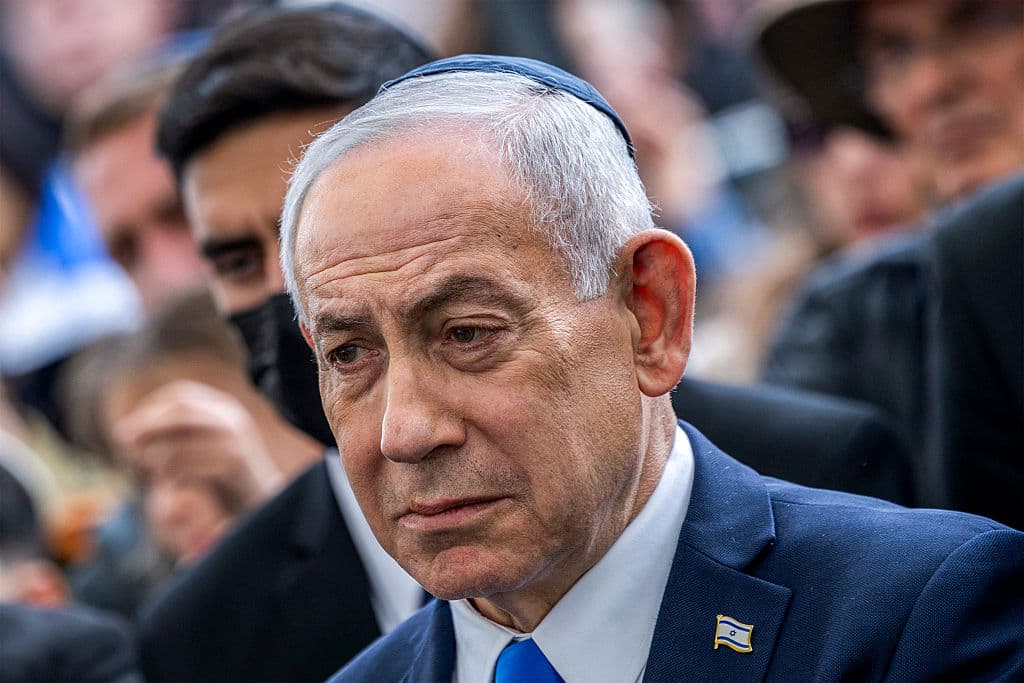
Netanyahu is still talking about this being a historic opportunity to deal with Iran's nuclear program, especially since its aerial defence systems were severely damaged by Israel's retaliatory strike on October 26. But the situation will become clear only after Trump re-enters the White House.

Critical, even historical, weakness in Iranian access (Lazar Berman, Times of Israel)

The primary reason for the success of the rebel offensive and the collapse of the regime forces is the effectiveness of Israel’s military operations against Hezbollah and Iran since October 8, 2023.

“The timing is not coincidental,” Carmit Valensi, head of the Northern Arena Program at the Institute for National Security Studies in Tel Aviv, told The Times of Israel.

“They identify well the critical, even historical, weakness that the ‘Resistance Axis,’ primarily Hezbollah and Iran, find themselves in,” she continued.

Some Hezbollah and Iran-backed Shiite militia fighters were moved from Syria to contend with the Israeli ground invasion in Lebanon in October. Thousands more were killed and wounded by Israeli air raids, ground forces, and special operations like the stunning attacks in September in which thousands of Hezbollah pagers exploded on their owners.

Iran itself is in a defensive crouch, having lost its two most effective deterrent threats against Israel in Hamas and Hezbollah, and after suffering significant damage in the October 26 Israeli air raid on Iran, itself a response to the regime’s second ballistic missile attack on the Jewish state on October 1.

To make matters worse for Assad’s government, while Hezbollah is diminished, so is Russia. Its focus has been on the long Ukraine fight for almost 3 years, with fewer troops and assets in Syria.

What’s more, with the Donald Trump administration set to take office in a matter of weeks, Iran will likely face increased sanctions and stepped-up pressure on its battered economy.

A weaker Iran, but a new jihadist enemy (Yaron Friedman, Jerusalem Post)

The timing of the events in northwestern Syria is no coincidence, occurring shortly after the ceasefire agreement between Israel and Lebanon. For the Syrian regime, the nightmare of instability is becoming a reality. Rebels penetrated deep into Aleppo, revealing severe vulnerabilities. The Syrian army was caught off guard, Russian air support arrived too late, and Shi’ite militias vanished from the scene.

For Israel, the weakening of Iran's presence in Syria is beneficial because it disrupts the transfer of arms to Hezbollah.

However, the emergence of Islamist groups presents a new threat. A fragmented Syria, dominated by extremist factions, could result in a resurgence of global jihadism similar to the rise of ISIS.

Syria is effectively divided into three zones: Kurdish autonomy in the northeast (backed by the US), opposition-controlled areas in the northwest (under Turkey’s influence), and Assad-regime territories in the south-central region (supported by Russia).

The coming days will likely see intensified Russian airstrikes in Aleppo and Idlib, further displacing civilians and escalating the humanitarian crisis.

As the second round of Syria’s civil war unfolds, the question remains: Can the regime survive this latest challenge, or will the weakened Iranian axis mark a turning point?

You might also like
  • The leadership a wounded society needs
    Esther Takac
  • Fauda and the illusion of vengeance
    Ittay Flescher
  • Israel election explainer: the main parties
    Shahar Burla
logomark.67a07ee3
We believe in the free flow of information

Republish our articles for free, online or in print, by using our Creative Commons licence

You might also like

    Woman with land and houses behind her
    NewsAustralia

    Australia to increase sanctions against West Bank settlements

    Deborah Stone 2
    Netanyahu
    Israel Hamas WarFeatureIsrael

    New evidence Netanyahu was warned about October 7

    Shahar Burla 2
    haredi street guitar
    Photo EssayArts & Culture

    Jerusalemites through the lens

    Sharon Gabay

About the author

TJI Wrap

TJI Wrap

TJI wraps consolidate essential news and analysis from multiple sources into digestable summaries.

More from the author

NewsAustralia

War crimes allegations against Australian IDF soldier

NewsWorld

Wave of attacks on Jewish sites sparks international alarm

AnalysisIsrael

Gaza, Lebanon, Syria, Iran: Israel’s tense security landscape

AnalysisIsrael

Middle East on edge as Iran and Israel inch closer to another war

Comments1

  • Avatar of Ian Light

    Ian Light3 December at 12:54 am

    Israel is surrounded by barbarian militia that love killing and we already hear of heinous atrocities against captured Kurdish women .
    In the short term likely less pressure in the long term Generations of Barbarism.