Aa
  • Read, Watch, Listen
  • TJI Series
  • Community Action
  • Events
  • Zedi
Follow us and continue the conversation
  • LinkedIn
  • Instagram
  • FaceBook
  • X
  • YouTube
Test yourself with the TJI Quiz!

Adjust size of text

Aa

Follow us and continue the conversation

  • LinkedIn
  • Instagram
  • FaceBook
  • X
  • YouTube

Your saved articles

You haven't saved any articles

What are you looking for?

Original reporting, insightful analysis and diverse views, delivered straight to your inbox

  • LinkedIn
  • Instagram
  • FaceBook
  • X
  • YouTube
Your support fuels our mission to inform, entertain and inspire.

The Jewish Independent is bound by the Standards of Practice of the Australian Press Council. If you believe the Standards may have been breached, you may approach The Jewish Independent or make a complaint to the Australian Press Council in writing at www.presscouncil.org.au. The Council may also be contacted on 1800 025 712.

  • Our Story
  • Contact us
  • Our Team
  • Support us
  • Guidelines
  • Pitch your idea
  • Republishing us
  • Community Action
  • Our Awards
  • LinkedIn
  • Instagram
  • FaceBook
  • X
  • YouTube
Aboriginal FlagTorres Strait Islanders Flag

The Jewish Independent acknowledges Aboriginal and Torres Strait Islander peoples as the Traditional Owners and Custodians of Country throughout Australia. We pay our respects to Elders past and present, and strive to honour their rich history of storytelling in our work and mission.

© The Jewish Independent 2026All Rights Reserved
Website design and development by Your Creative, MelbourneTerms & ConditionsPrivacy Policy
HomeRead, Watch, ListenAustralia
FeatureAustralia

Why the census question about religion is crucial for the Jewish community

Ran Porat
Print this

Published: 7 August 2021

Last updated: 4 March 2024

Ahead of next week’s census, RAN PORAT examines demographic and political implications of how to accurately count the number of Jews in Australia

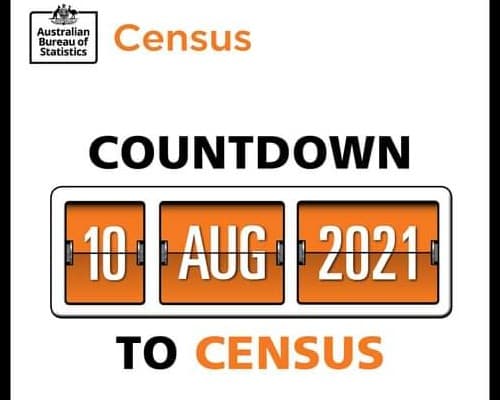
THE 2021 AUSTRALIAN Population Census opened a few days ago. Conducted every five years, this project is a vital and powerful tool for in-depth demographic trend analysis and long-term planning for policy makers at all levels. Its importance cannot be understated.

I have already filled in mine.

Most Australians are expected to fill in this census online. Five years ago, the prestige and credibility of the census suffered a major hit after a technical issue took down the census website for hours (#censusfail). This year, the technical security problems have reportedly been fixed.

Yet other problems have persisted or emerged since then. For instance, critics point to the lack of representation for LGBTQI+ community. One can only respond to the “what is your sex” question with “Male” or “Female”, omitting a “Non-binary” option.

More ‘no religion’ and less Jews? Not necessarily
Nothing is more significant for the Jewish community than the hotly debated question about religion. While religious organisations, including Jewish bodies, call on their constituents to list their religion in the census, secular groups and public figures engage in the #NoReligion counter campaign, encouraging respondents to choose the “No religion” option. The latter reflect a growing trend toward secularism and atheism in countries affiliated with the Western (or Judeo-Christian) culture.
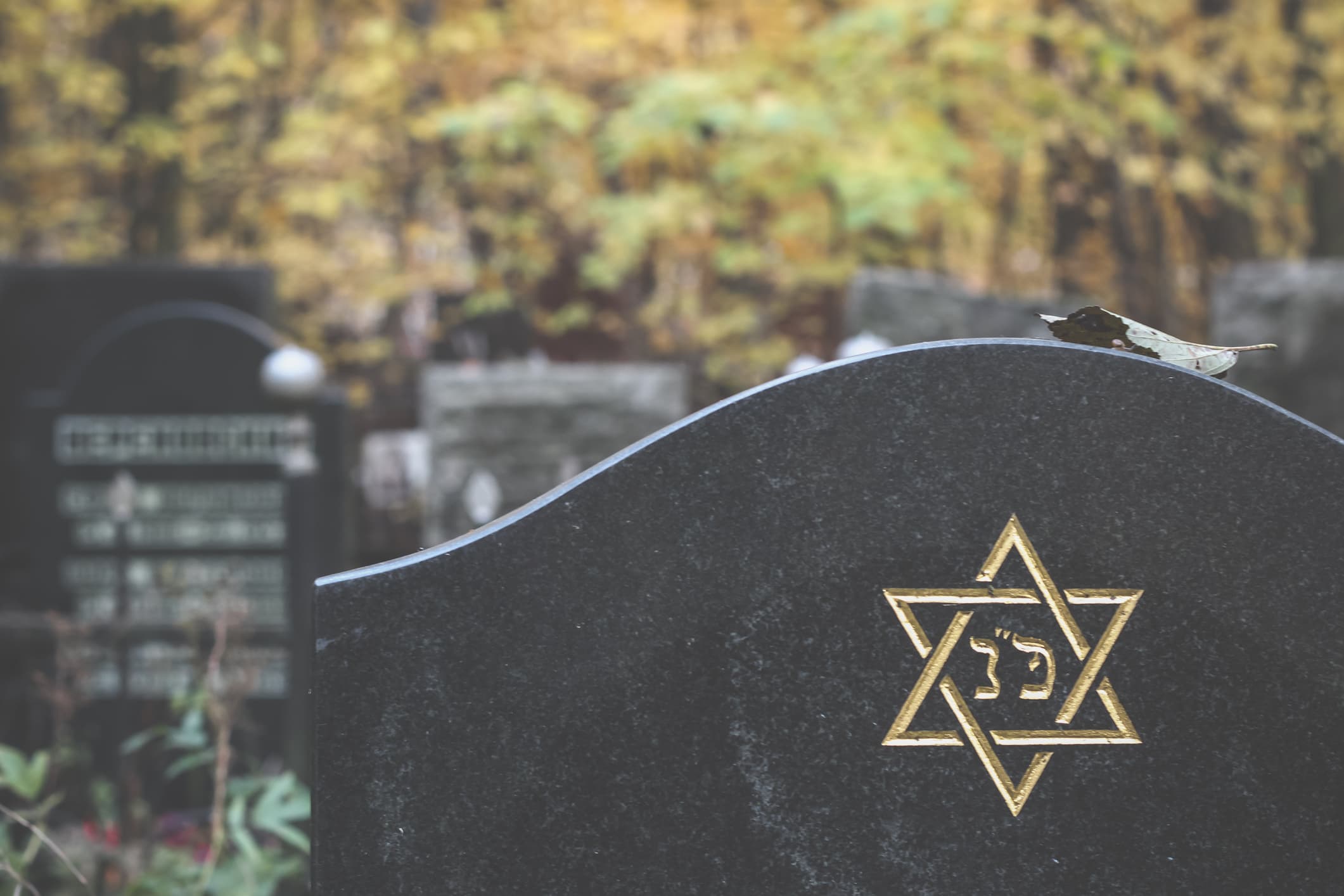
In 2016, the no-religion camp achieved an impressive outcome - 30 per cent of Australians declared they had no religion, a whopping 48 per cent increase from 2011.

Structural changes in the census online form are likely to have had a significant impact on this outcome. In 2016, “No religion” was the first answer listed  in the question about religion. And in 2016, as in 2021, the census documents noted that “Answering this question [on religion] is optional.” Assuming Australians opting not to respond to this question are more likely part of the “No religion” camp, these changes possibly resulted in unintended bolstering of the no-religion movement.

Another structural change further undermined the ability of the census to accurately count Jews and other religious minorities. For the past few censuses, only religions with the biggest number of followers according to the previous census, such as Christianity and Islam, appear as options for respondents to choose directly. Smaller religions must be added by the respondent in the “Other” field.

The Jewish Independent

These developments were one reason why the Jewish population appeared to suffer a numerical setback in 2016 compared to the previous census. In 2016, 91,022 Australians recorded their religion as Jewish, 6 per cent less than in 2011. This data, however, did not reflect the true number - demographers have shown the Jewish population grew by 1 per cent over the same period, to an estimated 121,000 people.

It can be assumed that the 2021 census will again incorrectly reflect the number of Jews in Australia by undercounting them. At the same time, the Australian Jewish population did not grow much (or at all) from 2016. A major source of growth dried up with the slowing of immigration of Jews (mostly Israelis) over recent years, especially following the Covid-19 pandemic.

Jewish by ancestry is also an option
Why is it a good idea for anyone with any sort of Jewish affiliation to indicate they are Jewish?

Some of us with a varying degree of Jewish connection may choose, or have already chosen, not to note their religion as Jewish in the census. They may contend that they are secular, or do not believe in God, and that they want to detach religion from politics. These are reasonable arguments but  irrelevant to the census.

To atheists, secular and the like (such as myself), the census offers a good alternative - the ancestry question.

To atheists, secular, and the like (such as myself), the census offers a good alternative - the ancestry question. I would strongly recommend you note “Jewish” in at least one of the two possible responses under ancestry. The other response could be country of family or personal origins (Israeli in my case). This would allow you to dodge any moral or political concerns attached to the religion questions, while opening the door for scholars to pinpoint more individuals to be counted as part of the Jewish cohort.

Support social bodies and protect Jewish voices
A popular argument for noting Judaism as one’s religion in the census is that Jewish bodies must show that they have a significant, strong and hopefully growing community behind them.

Even if you disagree with the political views of some in these institutions, many Jewish organisations are social in nature, and support Jews and non-Jews alike. Examples include Jewish schools, sporting associations like Maccabi, and Jewish Care, which tends to the needy, elderly and dependent individuals and their families. To correctly plan, obtain budgets and continue to operate, these social service providers must use certified census data.

Even if you disagree with Israel’s policies internally and internationally, you may want to ensure that the voice of the Jewish diaspora is heard vis-à-vis the Israeli government.

Another reason is Israel. Even if you disagree with Israel’s policies internally and internationally, you may want to ensure that the voice of the Jewish diaspora is heard vis-à-vis the Israeli government. A weakened and dwindling Australian Jewish community is a muted community.

The validity of Jewish voices in the internal discourse will also be influenced by the census data. An ugly wave of hatred and antisemitism swept Australia in response to the May conflict between Israel and the Palestinians. Whatever side of the debate you are on, it is vital that the census would clearly indicate to decision makers that the Jewish community is strong. The power of numbers is one important tool for taking a firm stand against racism and antisemitism.

A final request – please humour me and the others in the Jewish academic community. I love playing with polls and census data for research about Australian Jewry of all types. Be nice! Don’t take this away from me…

You might also like
  • The Altalena should be a warning, not a political weapon
    Shahar Burla
  • Turkey emerges as military threat to Israel
    Dror Doron
  • No action to stop Hezbollah ally beaming antisemitic and anti-Israel content into Australia
    Michael Visontay
logomark.67a07ee3
We believe in the free flow of information

Republish our articles for free, online or in print, by using our Creative Commons licence

You might also like

    Royal Commission final
    Royal CommissionNewsAustralia

    Strategies for cohesion final focus of Royal Commission hearings

    Peter Kohn 1
    Jewish-diversity copy
    FeatureAustralia

    Why you should take part in the Gen26 community survey 

    Adina Bankier Karp & David Graham
    funding handouts
    NewsAustralia

    Who will get the money from the Cranbourne windfall?

    Gideon Cohen

About the author

Ran Porat

Ran Porat

Dr Ran Porat is a published analyst on the Middle East and Israel, Iran's nuclear program. An expert on the Israeli diaspora in Australia, he is currently writing his book about Australian extremists. Ran teaches Israel studies and Middle Eastern History at Melbourne University and at Monash University, where he is a Research Associate at the Australian Centre for Jewish Civilisation. In addition, Porat is a Research Associate at the Australia/Israel & Jewish Affairs Council (AIJAC) and Research Fellow at the International Institute for Counter-Terrorism Interdisciplinary Centre, Herzliya.

More from the author

Australia

Australian Hebrew speakers jump by 52% since 2006: Census

The start of a broader conversation about Australian Jewry

Opinion

Hamas is a still a long way from renouncing terror