Aa
  • Read, Watch, Listen
  • TJI Series
  • Community Action
  • Events
  • Zedi
Follow us and continue the conversation
  • LinkedIn
  • Instagram
  • FaceBook
  • X
  • YouTube
Test yourself with the TJI Quiz!

Adjust size of text

Aa

Follow us and continue the conversation

  • LinkedIn
  • Instagram
  • FaceBook
  • X
  • YouTube

Your saved articles

You haven't saved any articles

What are you looking for?

Original reporting, insightful analysis and diverse views, delivered straight to your inbox

  • LinkedIn
  • Instagram
  • FaceBook
  • X
  • YouTube
Your support fuels our mission to inform, entertain and inspire.

The Jewish Independent is bound by the Standards of Practice of the Australian Press Council. If you believe the Standards may have been breached, you may approach The Jewish Independent or make a complaint to the Australian Press Council in writing at www.presscouncil.org.au. The Council may also be contacted on 1800 025 712.

  • Our Story
  • Contact us
  • Our Team
  • Support us
  • Guidelines
  • Pitch your idea
  • Republishing us
  • Community Action
  • Our Awards
  • LinkedIn
  • Instagram
  • FaceBook
  • X
  • YouTube
Aboriginal FlagTorres Strait Islanders Flag

The Jewish Independent acknowledges Aboriginal and Torres Strait Islander peoples as the Traditional Owners and Custodians of Country throughout Australia. We pay our respects to Elders past and present, and strive to honour their rich history of storytelling in our work and mission.

© The Jewish Independent 2026All Rights Reserved
Website design and development by Your Creative, MelbourneTerms & ConditionsPrivacy Policy
HomeRead, Watch, ListenIsrael
ReflectionIsrael

My tallit is fraying; my prayer should not

Women’s prayer at the Western Wall is joyful but fearful. Soon it may not be allowed at all.
Caryn Granek
Print this
Anat Hoffman women of the wall

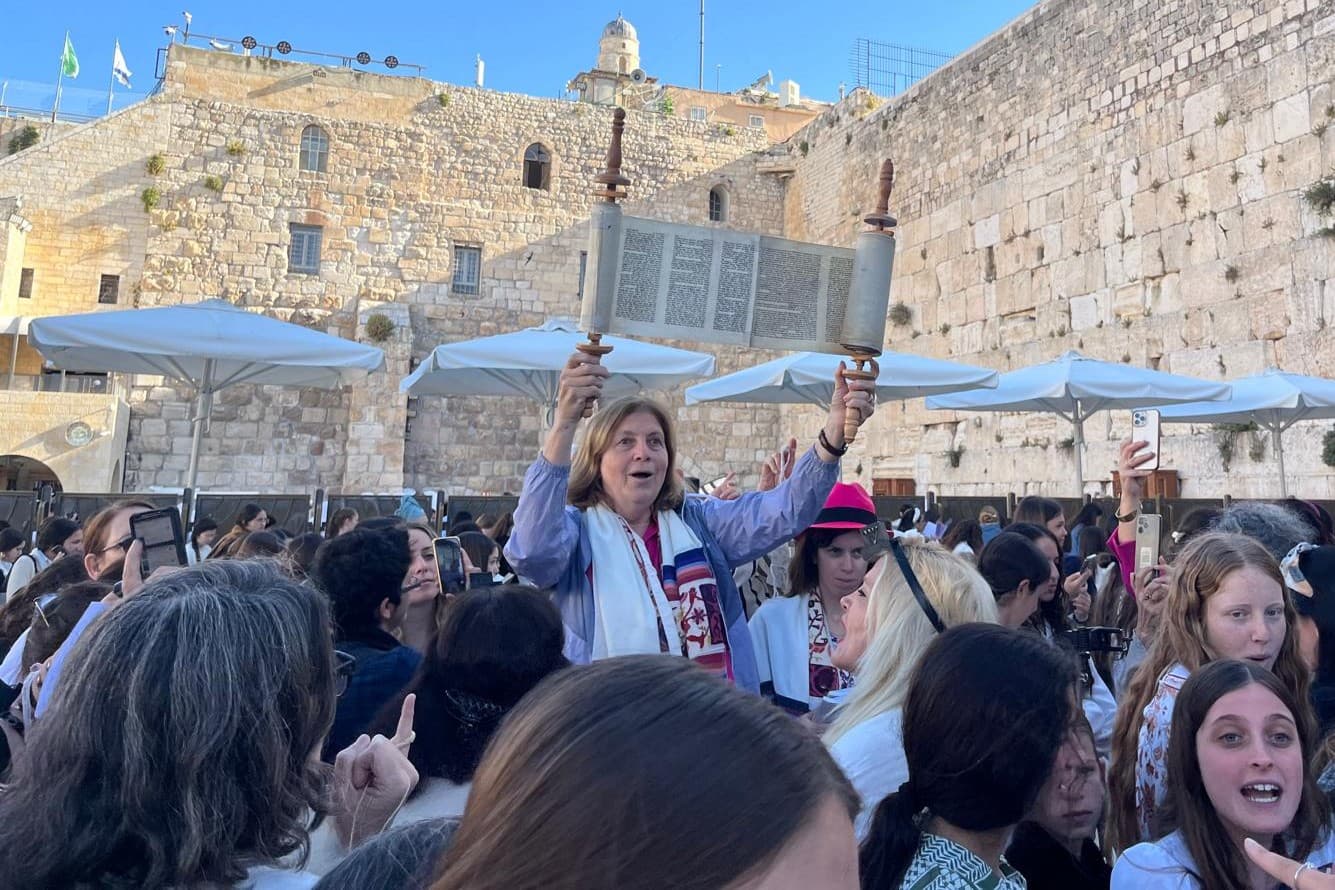
Executive director of Israel Religious Action Center Anat Hoffman holds the Torah at a Women of the Wall service (Caryn Granek)

Published: 16 March 2026

Last updated: 16 March 2026

On each corner of my tallit, embroidered in purple, red and blue are the names of our four matriarchs – Sarah, Rebecca, Rachel and Leah. I wear this beautiful tallit, made by the Women of the Wall, with pride. 

But when I wear it at the Kotel, the Western Wall in Jerusalem, I also wear it with fear, knowing that I may be attacked by those who disapprove of women wearing tallit.  

If Israel’s government passes a proposed new law, I will not be able to wear it at the Kotel at all. The proposed law to grant the Chief Rabbinate control of all prayer at the Kotel would prevent egalitarian services or women’s prayer groups at Judaism’s holiest site.  

 My beautiful tallit is now fraying from use. I bought it about 30 years ago, at the Kotel from the Women of the Wall. These women, from all walks of life, including Orthodox and Progressive Jews, first formed as a group in 1998 to hold services at the Wall and advocate for the rights of women to pray there, wearing tallit and kippah and reading from the Torah.  

Women of the Wall prays each month at the Kotel, holding a morning service on Rosh Chodesh, the day beginning of the new month which is traditionally a day gifted to women. 

A woman wears tefilin and reads from the Torah during a Rosh Chodesh service at the Western Wall (Caryn Granek)

They stay in the women’s section, which is cordoned off by mechitzah (separation barrier) in accordance with the Orthodox tradition of separating men and women in prayer. At my first service, they prayed so softly that standing at the back of the group I could barely hear them, though they have since become braver and louder. 

They begin at 7am and by 8.30 am, after reading from the Torah and singing the celebratory Hallel prayers, the service is usually at an end, and the women leave the Kotel. It all sounds simple and wonderful. But in reality, it is not. 

The Western Wall is arguably the most iconic locus of Jewish existence. But ironically, it has become the flashpoint of greatest conflict: between past and present; between entrenched ultra-Orthodoxy and dynamic, progressive faith; between men in charge and determined feminists; between one Jew and another. 

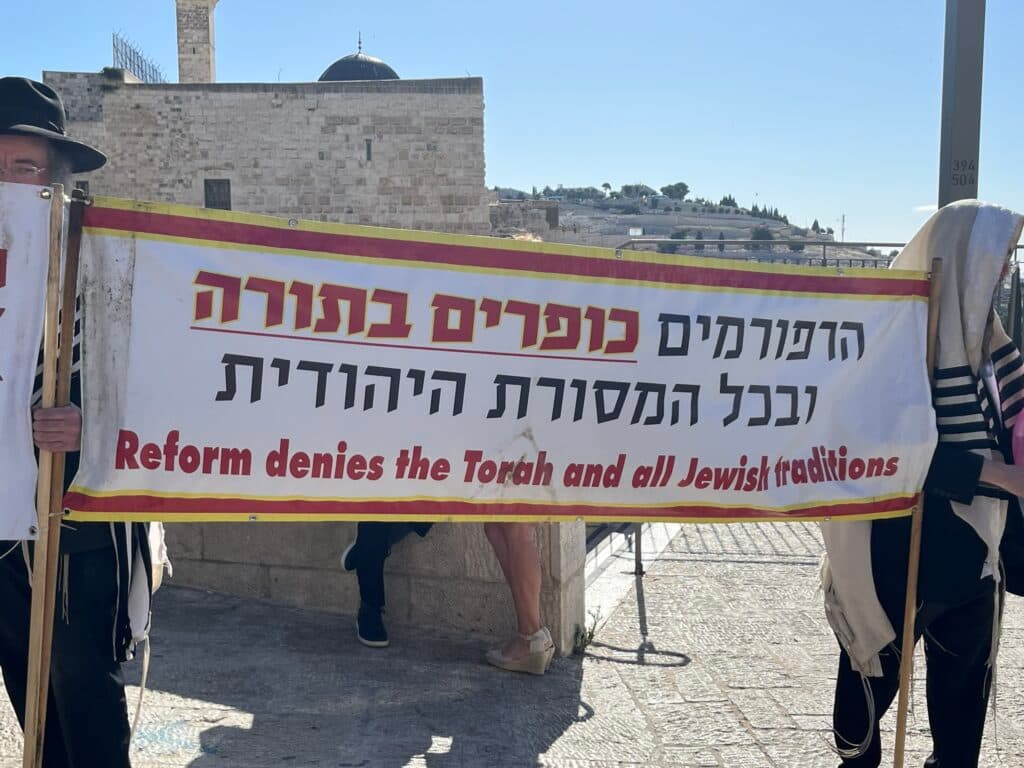
Every month for the past few years there has been a call from the ultra-Orthodox Rabbinate and in response hundreds of young Ultra-Orthodox girls come to wreak havoc upon the group. 

They push and crowd the women, to the point where some suffer panic attacks, cannot breathe or keep their balance. They scream obscenities and pray desperately, some choking back tears. At the same time on the other side of the mechitzah loudspeakers are erected and the men shout and scream their prayers loudly in the hope of drowning out the sound of the women. 

Once chairs were thrown by the men over the mechitzah causing injury to a few women. On another occasion, I was spat upon and called a bat zonah (prostitute) by Orthodox women walking by. Police and security are thin on the ground and do nothing to stop this behaviour. 

Haredim protests non-Orthodox services at the Western Wall (Caryn Granek)

Several agreements have been made with the government and the Rabbi of the Kotel to enable women to pray. In 2016 it was agreed that an alternative egalitarian platform would be built at Robinson’s Arch, slightly removed from the main plaza. 

Little more than a year later, Prime Minister Benjamin Netanyahu reneged on the agreement. He needed to curry favour with the ultra-Orthodox to maintain his coalition. 

On my most recent visit to the Kotel last May, the same behaviour occurred and once again I was frightened. At the same time, there was joy in being close to these brave women who raise their voices and assert our rights and our dignity as modern, enlightened Jewish women, and to encourage others to embrace Jewish life in the way that is most meaningful and authentic to them.  

My beautiful tallit is fraying after 30 years of wear. Trying to sew it together was a disaster: a reminder of why my high school sewing teacher announced I was the only girl in the school ever to fail needlework. A friend, who is a superb needlewoman, carefully unpicked my efforts and announced that there was nothing to be done. 

On my last visit to Israel, I showed my fraying tallit to a friend who is an activist at the Women of the Wall. She kindly said that it could be exchanged for a new one, but that maybe I needed to think carefully about whether I want to do this, as mine is one of the few original ones still in existence. The recent tallitot are much improved with better materials and a new design, making the originals something of a collector’s item or maybe a badge of honour. 

Then, standing at the Kotel, I noticed that one of the leading activists also had a fraying tallit. I asked her whether this bothered her and she said no it did not – for her it was a symbol of her journey through life. 

And there it was – my answer was now obvious. I will wear my frayed tallit with pride. It is a metaphor for my life and the life of our people. Nothing is perfect. Nothing lasts. Not only does this beautiful tallit connect me to my foremothers and my own mother – named Leah. It serves as a reminder of the fragility of our lives, of our vulnerable souls and of the frayed lives of our people.  

Not only does this beautiful tallit connect me to my foremothers and my own mother – named Leah – but it also serves as a reminder of the fragility of our lives, of our vulnerable souls, and of the frayed lives of our people.

You might also like
  • ‘Israel is systemically eliminating Palestinian collective life’:  B’Tselem
    Deborah Stone
  • Tame apologises – but with little grace
    Deborah Stone
  • Confronting Richard Flanagan and the myth of the Israel lobby
    Mary Garden
logomark.67a07ee3
We believe in the free flow of information

Republish our articles for free, online or in print, by using our Creative Commons licence

You might also like

    haredi street guitar
    Photo EssayArts & Culture

    Jerusalemites through the lens

    Sharon Gabay
    Erdogan Turkey
    AnalysisIsrael

    Turkey emerges as military threat to Israel

    Dror Doron
    Arab Israeli Palestinian election vote
    Israel Votes 2026FeatureIsrael

    Fear of Netanyahu victory may drive big surge in Palestinian voter turnout

    Ben Lynfield

About the author

Caryn Granek

Caryn Granek

Caryn Granek is a retired lawyer, feminist and active progressive Jew. She is a former president of ARZA and wrote a thesis on on Jewish feminism in the Melbourne Progressive community.

Comments1

  • Avatar of cheryl birkner mack

    cheryl birkner mack16 March at 12:21 pm

    Caren,
    Next time you come to Jerusalem, please join Original Women of the Wall. We pray on other days of the month. We are committed to staying at the Kotel so that our Orthodox sisters can remain with us (something which will not be possible at Robinson’s Arch). Our tefilot are quiet and generally undisturbed.
    Cheryl Birkner Mack
    Chair of Original Women of the Wall (former board member of Women of the Wall)